Ottawa, Canada – Immigration, Refugees and Citizenship Canada (IRCC) has released significant updates to the Home Care Worker Immigration Pilot Programs, including new eligibility requirements and a revised processing timeline.
Two Streams Introduced
IRCC has confirmed that the pilot program will now be divided into two separate streams:
Workers in Canada Stream – This stream will officially start processing applications on March 31, 2025 and is designed for those already working in Canada.
Applicants Not Working in Canada Stream – This stream is set to open in the coming months for applicants outside Canada or those not currently employed in the country.
New Eligibility Criteria: No Canadian Work Experience Required
One of the most significant changes in the program is the removal of the previous requirement for Canadian work experience in a caregiving occupation. Instead, applicants must meet the following:
A full-time job offer in home care within Canada, and
Recent and relevant work experience, or Completion of at least six months of home care-related training
Where Can Home Care Workers Be Employed?
Under the new guidelines, home care workers can be employed in various settings, including:
Private households
Home health care service providers
Home care support service providers
Direct care agencies
Pediatric home health care service providers
Personal care services in residential settings
However, recruitment or placement agencies will not be eligible to provide job offers under this program.
Important Requirements for Caregivers Currently in Canada
If you are already working in Canada and plan to apply under the Workers in Canada Stream, make sure to have the following documents ready:
Language test – Minimum CLB 4 (Canadian Language Benchmark)
Educational Credential Assessment (ECA) – Minimum of high school equivalent to Canadian standards
What’s Next?
These changes mark a significant shift in how caregivers can qualify for permanent residency, making the program more accessible to those with relevant training and experience. With the Workers in Canada Stream opening on March 31, 2025, eligible applicants are encouraged to prepare their documents early to ensure a smooth application process.
For expert assistance with your application, JCA LAW is ready to help caregivers navigate these updates and secure their pathway to permanent residency.
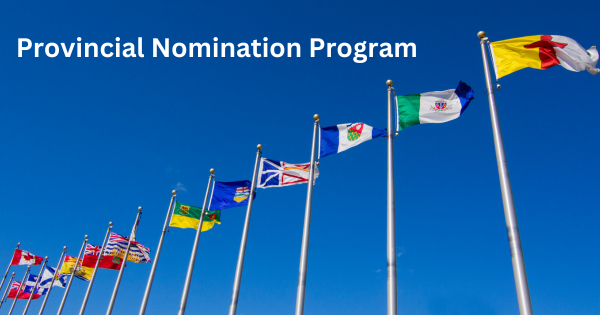
Canada remains a sought-after destination for skilled workers worldwide, including many Filipinos looking for better opportunities. One of the ways to get permanent residency in Canada is through the Provincial Nominee Program (PNP), integrated within the Express Entry system. This program empowers provinces and territories to nominate those who can significantly contribute to their local economies.
📘 Complete Immigration Guide: PNP is just one of many pathways to Canadian PR. For a comprehensive overview of all immigration options for Filipinos, including Express Entry, Family Sponsorship, Caregiver Programs, and more, read our Filipino Immigrant Guide to Canada – From Visa to PR (2026).
Understanding the Provincial Nominee Program (PNP)
PNP allows Canadian provinces and territories to nominate individuals who:
Possess the skills, education, and work experience to bolster their economy.
Intend to reside in that particular province or territory.
Aspire to become permanent residents of Canada.
Each province and territory has its own “streams” or immigration programs targeting specific groups. For example, certain streams may focus on:
Students
Business professionals
Skilled workers
Semi-skilled workers
The Express Entry System
Express Entry is an online system that manages applications for three federal economic immigration programs:
Federal Skilled Worker Program (FSWP)
Federal Skilled Trades Program (FSTP)
Canadian Experience Class (CEC)
Provinces and territories can nominate candidates through Express Entry by selecting individuals from the pool who meet their specific labor market needs.
How Does the PNP Work with Express Entry?
There are two primary pathways to apply:
1. Express Entry Process
Step 1: Check Your Eligibility. Ensure you qualify for both:
The PNP of the desired province or territory.
One of the three federal programs managed through Express Entry.
Step 2: Obtain a Nomination
Direct Application. Contact the province or territory directly and apply for a nomination.
Express Entry Profile. Create an Express Entry profile and indicate your interest in specific provinces or territories. If a province or territory sends a “notification of interest” to your account, you can then apply for a nomination.
Step 3: Update Your Profile. If nominated, update your Express Entry profile to reflect this. A provincial nomination adds 600 points to your Comprehensive Ranking System (CRS) score, significantly enhancing your chances of receiving an invitation to apply for permanent residence.
Step 4: Apply for Permanent Residence. Upon receiving an invitation, submit your application for permanent residence online.
2. Non-Express Entry Process
Step 1: Check Your Eligibility. Confirm you meet the criteria for the PNP of your chosen province or territory.
Step 2: Obtain a Nomination. Apply directly to the province or territory for a nomination.
Step 3: Apply for Permanent Residence. After securing a nomination, apply for permanent residence through the non-Express Entry process.
Choosing a Province or Territory
Each province and territory (except Nunavut and Quebec) has its own PNP with specific streams and criteria. It’s essential to research and select the one that aligns with your qualifications and aspirations. Here are some provinces and their respective immigration websites:
For Filipinos aiming to establish a life in Canada, the Provincial Nominee Program (PNP) offers several advantages. Many provinces have immigration streams tailored to specific skills and experiences that align with common Filipino professions, making it easier to qualify for nomination. Additionally, various provinces have thriving Filipino communities that could provide a supportive environment. Most importantly, securing a provincial nomination significantly boosts an applicant’s Comprehensive Ranking System (CRS) score, greatly increasing their chances of receiving an Invitation to Apply (ITA) for permanent residence through the Express Entry system.
The Provincial Nominee Program, in conjunction with the Express Entry system, provides a viable pathway for Filipinos to achieve permanent residency in Canada. By understanding the processes and applying to the appropriate provincial immigration programs, you may have a better chance at PR.
For personalized assistance and to navigate the complexities of the application process, consider reaching out to immigration professionals or legal experts familiar with Canadian immigration laws.
Note: Immigration policies and procedures are subject to change. It’s advisable to consult the official IRCC website or seek professional advice for the most current information.
Canada offers various immigration pathways for skilled workers, and one of the fastest and most accessible options is the Canadian Experience Class (CEC). This program is designed for individuals who have gained skilled work experience in Canada and wish to transition to permanent residency.
What is the Canadian Experience Class (CEC)?
The Canadian Experience Class is an immigration program under the Express Entry system. It allows skilled workers who have already gained professional work experience in Canada to apply for permanent residence. The program is ideal for temporary foreign workers and international graduates who have accumulated at least one year of work experience in Canada.
Who is Eligible to Apply?
To qualify for the Canadian Experience Class, applicants must meet the following criteria:
1. Work Experience
Applicants must have at least one year of full-time (or equivalent part-time) skilled work experience in Canada within the last three years.
The work must be in one or more of these job categories under the National Occupational Classification (NOC):
TEER 0: Managerial jobs (e.g., project managers, marketing managers)
TEER 1: Professional jobs requiring a degree (e.g., engineers, accountants, doctors)
TEER 2 & 3: Skilled trades and technical jobs (e.g., electricians, chefs, IT specialists)
The work experience must have been gained legally while on a valid work permit.
2. Language Proficiency
Applicants must meet the Canadian Language Benchmark (CLB) levels:
CLB 7 for NOC TEER 0 and TEER 1 jobs
CLB 5 for NOC TEER 2 and TEER 3 jobs
Accepted language tests include IELTS, CELPIP (for English), TEF, or TCF (for French).
3. Residency Requirement
Applicants must plan to live outside Quebec, as Quebec has its own immigration programs.
4. Education (Optional but Beneficial)
There is no education requirement for CEC. However, holding a Canadian degree, diploma, or an Educational Credential Assessment (ECA) for foreign education can improve the Comprehensive Ranking System (CRS) score in Express Entry.
Benefits of the Canadian Experience Class
Applications are usually processed within six months under the Express Entry system, making it one of the fastest routes to permanent residency.
Unlike other Express Entry programs, CEC applicants do not need to provide proof of settlement funds.
Applicants with Canadian work experience receive higher CRS scores, increasing their chances of receiving an Invitation to Apply (ITA) for permanent residency.
How to Apply for the Canadian Experience Class
Check Your Eligibility. Ensure you meet the work experience, language, and residency requirements.
Create an Express Entry Profile. Submit details about your work experience, education, and language test results.
Receive an Invitation to Apply (ITA). If your CRS score is high enough, you will be invited to apply for permanent residence.
Submit a Complete Application. Provide documents such as work reference letters, language test results, and medical and police clearances.
Wait for Processing. Most applications are processed within six months.
Receive Confirmation of Permanent Residence (COPR). If approved, you can transition to permanent resident status in Canada.
How JCA Law Can Help
If you are a Filipino in Canada with skilled work experience and are considering permanent residency, JCA Law can assist you in:
Evaluating your eligibility for the Canadian Experience Class
Preparing a strong Express Entry profile
Ensuring your application is complete and error-free
Guiding you through the next steps after receiving permanent residence
Applying for permanent residency can be complex, but with expert legal guidance, you can avoid mistakes and maximize your chances of success.
The Canadian Experience Class is one of the best pathways to permanent residency for skilled workers already in Canada. If you meet the requirements, applying through Express Entry can be your ticket to building a future in Canada.
Need help with your immigration application? Contact JCA Law today for expert assistance!
Canada continues to recognize the important role that home care workers or caregivers play in supporting families, seniors, and individuals with disabilities. In line with this, Immigration, Refugees and Citizenship Canada (IRCC) has announced two new Home Care Worker Immigration Pilots, which will officially open on March 31, 2025. These pilot programs are set to replace the previous programs for caregivers which already closed.

📘 Complete Immigration Guide: The caregiver pathway is one of several routes to Canadian PR. For a complete overview of all immigration options for Filipinos, including Express Entry, PNP, and Family Sponsorship, read our Filipino Immigrant Guide to Canada – From Visa to PR (2026).
This new initiative aims to make it easier for home care workers to obtain permanent residence (PR) while addressing Canada’s growing demand for in-home caregiving services. Here’s what we know so far about the program and how it may benefit Filipino caregivers and their families in Canada.
What Are the Home Care Worker Immigration Pilots?
The Home Care Worker Immigration Pilots are designed to streamline the PR process for foreign caregivers seeking to work and settle in Canada. The new pilots will:
Offer permanent residency (PR) upon arrival to eligible caregivers, eliminating the need for them to first work under temporary status before applying for PR.
Provide a clearer and faster pathway for home care workers to immigrate.
Help address labor shortages in Canada’s home care sector, particularly for seniors and people with disabilities.
Who Can Apply?
While full details are expected closer to the launch date, eligible applicants will likely need to meet the following:
Work Experience: Relevant experience in caregiving, such as caring for children, the elderly, or individuals with disabilities.
Job Offer: A valid job offer from an eligible Canadian home care organization.
Language Requirement: Meet the minimum language proficiency in English or French.
Education: Completion of at least a high school diploma or equivalent.
Admissibility: Must pass standard medical, security, and background checks for Canadian immigration.
These requirements are expected to be more flexible compared to previous programs, ensuring more caregivers can qualify.
Next Steps
Many Filipino caregivers are already working in Canada under temporary work permits, often facing uncertainty in securing PR due to employer dependency and changing immigration policies. With the March 31, 2025 launch approaching, here’s what caregivers and aspiring applicants should do:
Stay Updated – Follow IRCC announcements and consult licensed immigration professionals to ensure compliance with program requirements.
Prepare Documents Early – Those interested should start gathering required documents, including proof of work experience, education credentials, and language test results (IELTS/CELPIP).
Explore Job Opportunities – Look for job offers from authorized home care agencies in Canada.
For more information on Canadian immigration programs or to book a consultation, reach out to JCA LAW—your trusted Filipino legal experts in Canada!
The Immigration, Refugees and Citizenship Canada (IRCC) has launched two new programs to help smaller communities attract skilled workers and French speakers. The Rural Community Immigration Pilot (RCIP) and the Francophone Community Immigration Pilot (FCIP) provide pathways to permanent residency (PR) for eligible individuals.
What Are These New Immigration Programs?
1. Rural Community Immigration Pilot (RCIP)
This program connects skilled workers with rural communities in need of labor for essential jobs. If you have the right skills, you may qualify for permanent residency.
Participating communities include:
Ontario: North Bay, Sudbury, Timmins, Sault Ste. Marie, Thunder Bay
Manitoba: Steinbach, Altona/Rhineland, Brandon
Saskatchewan: Moose Jaw
Alberta: Claresholm
British Columbia: West Kootenay, North Okanagan Shuswap, Peace Liard
Nova Scotia: Pictou County
Eligibility Criteria for RCIP: To be eligible for the RCIP, applicants must have a valid job offer from an employer located in one of the participating communities. They must meet the minimum educational requirements, which typically include having at least a high school diploma. Additionally, candidates must demonstrate sufficient language proficiency in either English or French, at a level of CLB/NCLC 4 or higher. Financial stability is also necessary, as applicants must show they have enough funds to support themselves and their family if applicable. Lastly, they must have a genuine intention to reside in the community that extends the job offer.
Job Offer Requirements for RCIP: The job offer under RCIP must be full-time, non-seasonal, and permanent. It must meet the wage standards set by the province where the community is located. Additionally, the employer providing the job offer must be approved by the local economic development organization in that community to ensure reliability and sustainability.
2. Francophone Community Immigration Pilot (FCIP)
The FCIP is designed for French-speaking immigrants who want to settle outside Quebec. If you speak French or are willing to improve your French skills, this program could be an excellent opportunity.
Participating communities include:
New Brunswick: Acadian Peninsula
Ontario: Sudbury, Timmins, Superior East Region
Manitoba: St. Pierre Jolys
British Columbia: Kelowna
Eligibility Criteria for FCIP: To be eligible for the FCIP, applicants must be French-speaking and demonstrate a minimum proficiency of CLB/NCLC 5 or higher. They must have a valid job offer from an employer in one of the participating communities and must intend to live in that community. In addition to language requirements, applicants must also meet educational and work experience qualifications as outlined by IRCC.
Job Offer Requirements for FCIP: A qualifying job offer under FCIP must be full-time, non-seasonal, and permanent. The employer providing the job offer must be recognized by the local economic development organization to ensure compliance with program standards. These job offers are designed to support labor market needs in Francophone minority communities outside Quebec.
How Do These Programs Work?
For Interested Employers
Employers in participating communities can support the RCIP and FCIP by hiring skilled workers to fill essential job vacancies. To participate, they must offer full-time, non-seasonal jobs with competitive wages that meet provincial standards. They must also work with their local economic development organization to obtain a designation, ensuring that job offers align with community labor needs and program requirements.
Employer Training and Support
To assist employers in the hiring process, the Government of Canada provides training and resources on recruitment, onboarding, and retention of skilled workers through RCIP and FCIP. Employers receive guidance on program requirements, compliance with labor standards, and best practices for integrating newcomers into their workforce. This training ensures that both employers and employees benefit from a smooth transition and long-term employment success. More details on training opportunities and employer support services will be provided by local economic development organizations in each participating community.
Once designated, employers can actively recruit skilled workers to fill essential positions in their communities. This process includes submitting documentation to verify compliance with labor standards, confirming the job offer’s long-term nature, and demonstrating its contribution to local economic growth. By participating in RCIP and FCIP, employers help address labor shortages while providing newcomers with stable employment opportunities in Canada.
Why Consider These Immigration Pathways?
Easier access to permanent residency: Designed to fill labor shortages, these programs may offer faster processing times.
Welcoming communities: Enjoy a lower cost of living and better work-life balance in smaller towns.
High-demand jobs: Opportunities in healthcare, construction, hospitality, and other sectors.
French language advantage: The Francophone pilot opens doors for French-speaking immigrants.
JCA Law Can Assist You
At JCA Law, we provide expert guidance for both skilled workers and employers interested in the RCIP and FCIP programs. For prospective applicants, we assist in assessing eligibility, gathering required documents, and ensuring a strong application for permanent residency.
For employers, we offer support in understanding the designation process and meeting program requirements. We help businesses comply with immigration regulations while finding qualified employees who contribute to community growth.
Whether you are a worker looking for a new opportunity or an employer seeking to fill labor shortages, JCA Law is here to guide you every step of the way.
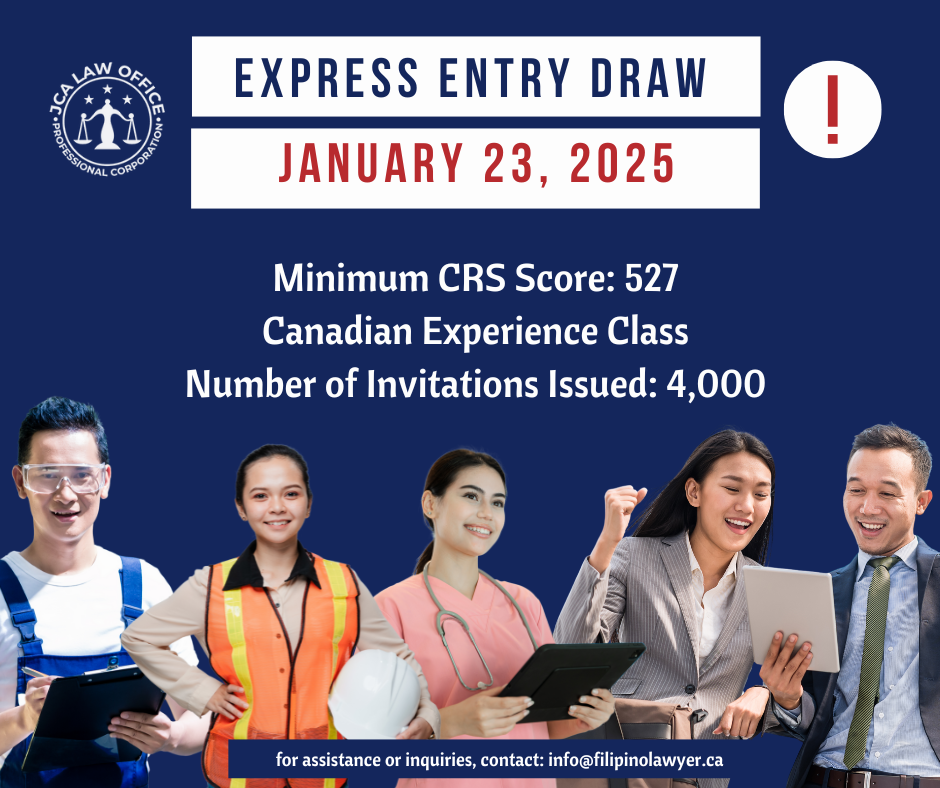
On January 23, 2025, Immigration, Refugees and Citizenship Canada (IRCC) held the latest Canadian Experience Class (CEC) draw, inviting candidates with a Comprehensive Ranking System (CRS) score of 527 or higher to apply for permanent residency (PR) in Canada. A total of 4,000 Invitations to Apply (ITAs) were issued.
The CEC program provides a pathway for skilled workers already in Canada who wish to transition to PR. To be eligible, applicants must have at least one year of skilled work experience in Canada within the last three years, gained under a valid work permit. They must also meet the required language proficiency levels in English or French and plan to live outside of Quebec. Unlike other Express Entry programs, the CEC does not require proof of settlement funds, making it an attractive option for those already working in Canada.
If you have Canadian work experience and meet the eligibility criteria, this could be your opportunity to secure permanent status in the country.
At JCA Law, we help skilled workers navigate Express Entry applications, improve CRS scores, and provide immigration consultations. If you received an ITA or want to know your chances in future draws, contact us for guidance!
Last updated: February 8, 2026 | Based on the official 2026-2028 Immigration Levels Plan released by IRCC on November 5, 2025
On November 5, 2025, the Government of Canada released its 2026-2028 Immigration Levels Plan, replacing the previous 2025-2027 plan with significant changes that affect every immigration pathway. For Filipino-Canadians and prospective Filipino immigrants, this plan brings both opportunities and challenges that require careful attention.
The new plan stabilizes permanent resident (PR) admissions at 380,000 per year through 2028, while dramatically cutting temporary resident arrivals. It also introduces a one-time pathway for 33,000 skilled temporary workers to gain permanent residence, and increases Provincial Nominee Program (PNP) allocations by 66%.
As the Philippines consistently ranks as one of Canada’s top three source countries for immigrants, these changes have a direct and significant impact on the Filipino community. Below, we break down everything you need to know.
Overview: A Shift Toward Sustainable Immigration
The 2026-2028 Immigration Levels Plan signals a fundamental shift in Canada’s immigration strategy. After years of record-high immigration targets (peaking at 485,000 PRs in 2024), the government is now prioritizing sustainability over volume. The key themes are:
Stable permanent immigration: PR admissions fixed at 380,000 per year for all three years (2026-2028)
Dramatic temporary resident cuts: New temporary arrivals dropping from 673,650 in 2025 to 385,000 in 2026 (a 43% reduction)
Economic immigration priority: Economic class will represent 64% of all PR admissions by 2027-2028, the highest proportion in decades
Population target: Reducing temporary residents to less than 5% of Canada’s total population by end of 2027
Pathway for existing workers: A new one-time initiative to transition 33,000 skilled temporary workers to PR over 2026-2027
Year-by-Year Permanent Resident Targets
The new plan keeps PR targets flat at 380,000, a notable change from the previous plan’s declining trajectory. Here is how the 2026-2028 plan compares to the previous 2025-2027 plan:
Year
Previous Plan (2025-2027)
New Plan (2026-2028)
Change
2025
395,000
N/A (not covered)
–
2026
380,000
380,000
No change
2027
365,000
380,000
+15,000
2028
N/A (not covered)
380,000
New
Key Insight: While 2026 targets remain the same as the old plan, the new plan actually increases the 2027 target by 15,000 compared to the previous plan’s 365,000 projection. This signals the government wants to maintain a stable baseline rather than continue cutting.
Category Breakdown: Where the 380,000 Spots Go
Understanding how the 380,000 annual PR spots are allocated across categories is essential for planning your immigration strategy.
Category
2026
2027
2028
% of Total (2027)
Economic Class
239,800
244,700
244,700
64%
Family Class
84,000
81,000
81,000
21%
Refugees & Protected Persons
49,300
49,300
49,300
13%
Humanitarian & Other
6,900
5,000
5,000
1%
TOTAL
380,000
380,000
380,000
100%
Economic Class: Detailed Breakdown
The economic class is where the most significant changes occur, and where most Filipino skilled workers will find their pathway to Canada. Economic immigration will account for 64% of all admissions by 2027-2028, the highest proportion in decades.
Express Entry (Federal High Skilled)
Program
2026
2027
2028
Federal High Skilled (Express Entry)
109,000
111,000
111,000
Federal Business
500
500
500
Provincial Nominee Program (PNP)
91,500
92,500
92,500
Atlantic Immigration Program
4,000
4,000
4,000
Economic Pilots (Caregivers, Agri-Food, Rural, Mobility)
8,175
8,775
8,775
Skilled Temporary Workers Initiative
Included
Included
–
Total Economic Class
239,800
244,700
244,700
Express Entry remains the primary pathway for skilled Filipino workers, with 109,000 to 111,000 spots allocated annually. This includes the Federal Skilled Worker Program (FSWP), Canadian Experience Class (CEC), and Federal Skilled Trades Program (FSTP).
In early 2026, Express Entry draws have been active, with CRS cutoffs in the 509-511 range for Canadian Experience Class draws. General draws have seen cutoffs around 400-500, with larger draw sizes of up to 8,500 invitations.
Provincial Nominee Program (PNP): Major Increase
Good News for Filipino Applicants: PNP allocations are jumping to 91,500 in 2026 and 92,500 in 2027-2028. This represents a 66% increase from the previous plan’s allocation of 55,000 per year. The PNP is one of the most accessible pathways for Filipino immigrants, especially those targeting provinces outside Ontario.
The PNP allows provinces and territories to nominate immigrants with skills that match their local labour market needs. Popular provincial programs for Filipino immigrants include:
Skilled Temporary Workers Initiative: New PR Pathway
One of the most significant developments in the 2026-2028 plan is a one-time, two-year initiative to fast-track permanent residence for 33,000 skilled temporary workers already working in Canada. This is particularly relevant for Filipino workers on employer-specific work permits.
What we know so far:
The program targets workers who have established strong roots in their communities, are paying taxes, and working in in-demand sectors
Focus will be on workers in rural areas and essential occupations such as healthcare, skilled trades, and agriculture
A minimum CLB 5 language score is expected to be required
The 33,000 spots will be split across 2026 and 2027
Selection is expected to be points-based, similar to the 2021 TR-to-PR pathway
Specific eligibility criteria and launch dates have not yet been announced
Action Required: If you are a Filipino worker currently in Canada on a work permit, start gathering your documents now. You will likely need proof of Canadian work experience, language test results (IELTS or CELPIP), and evidence of community integration. The 33,000 cap means demand will far exceed available spots.
Family Class Sponsorship
Family reunification remains a pillar of Canada’s immigration system, but the 2026-2028 plan brings some significant changes, particularly for parents and grandparents sponsorship.
Family Category
Previous Plan 2025
New Plan 2026
New Plan 2027
New Plan 2028
Spouses, Partners & Children
70,000
69,000
66,000
66,000
Parents & Grandparents
24,500
15,000
15,000
15,000
Total Family Class
94,500
84,000
81,000
81,000
Important Change for Filipino Families: The Parents and Grandparents Program (PGP) allocation has been cut by nearly 40%, dropping from 24,500 in 2025 to just 15,000 per year from 2026-2028. This means longer wait times and more competition for Filipino-Canadians looking to bring their parents or lolas and lolos to Canada. If you are planning to sponsor your parents, consider applying as early as possible or exploring the Super Visa as an alternative for extended visits.
Spousal and partner sponsorship remains relatively stable, with 69,000 spots in 2026 decreasing slightly to 66,000 in 2027-2028. This pathway continues to be one of the most reliable routes for family reunification.
Refugees and Protected Persons
The refugee and protected persons category is set at 49,300 per year from 2026 through 2028, down from 58,350 in 2025.
Refugee Category
2026
2027
2028
Government-Assisted Resettled
13,250
13,250
13,250
Blended Visa Office Referred
50
50
50
Privately Sponsored
16,000
16,000
16,000
Protected Persons in Canada
20,000
20,000
20,000
Total
49,300
49,300
49,300
Additionally, approximately 115,000 individuals who already have protected person status in Canada will be granted permanent residence over the next two years as a one-time measure.
Temporary Resident Reductions: The Biggest Change
The most dramatic shift in the 2026-2028 plan is the sharp reduction in temporary resident arrivals. The government aims to reduce Canada’s temporary population to less than 5% of the total population by the end of 2027.
Temporary Resident Category
2025 (Previous Plan)
2026
2027
2028
International Students
305,900
155,000
150,000
150,000
International Mobility Program (Work)
–
170,000
170,000
170,000
Temporary Foreign Worker Program
–
60,000
50,000
50,000
Total Workers
367,750
230,000
220,000
220,000
Total Temporary Arrivals
673,650
385,000
370,000
370,000
Key reductions:
International students: Down 49% from 305,900 in 2025 to 155,000 in 2026
Work permits: Down 37% from 367,750 in 2025 to 230,000 in 2026
Total temporary arrivals: Down 43% from 673,650 in 2025 to 385,000 in 2026
How These Changes Affect Filipino Immigrants
The Philippines consistently ranks as one of Canada’s top three source countries for immigration, contributing approximately 11% of all newcomers. Here is how the 2026-2028 plan specifically impacts Filipino applicants across different pathways:
1. Skilled Workers (Express Entry)
With 109,000-111,000 Express Entry spots annually, Filipino professionals in fields like healthcare, IT, engineering, and finance continue to have strong opportunities. The stable allocation means consistent draw sizes and potentially lower CRS cutoffs over time. Early 2026 draws suggest cutoffs in the 400-511 range depending on the stream.
Tip: Category-based selection draws (targeting healthcare, STEM, trades, transport, and agriculture) continue to offer lower CRS requirements for workers in high-demand occupations. Many Filipino healthcare workers benefit from these targeted draws.
2. Provincial Nominees
The 66% increase in PNP spots (from 55,000 to 91,500-92,500) is excellent news for Filipino immigrants willing to settle outside major cities. Provinces like Manitoba, Saskatchewan, and Alberta have large, established Filipino communities and active PNP streams that welcome Filipino workers.
3. Caregivers
Filipino caregivers have historically been a significant part of Canada’s immigration story. The 2026-2028 plan allocates spots under “Economic Pilots” (8,175-8,775 combined), which includes caregivers along with Agri-Food, Rural, and Mobility programs. However, IRCC has paused new caregiver pilot applications as of early 2026 to process the existing backlog. No reopening date has been announced.
Caregiver Alert: If you are a Filipino caregiver already in Canada, focus on maintaining your work permit status and meeting the requirements for permanent residence under the existing pilot programs. The new Skilled Temporary Workers Initiative (33,000 spots) may also provide an alternative pathway if you qualify. Read our complete Caregiver Pathway Guide for more details.
4. Family Sponsorship
Family reunification is deeply important in Filipino culture. While spousal sponsorship remains relatively stable (66,000-69,000 spots), the 40% cut to the Parents and Grandparents Program (from 24,500 to 15,000) will create longer wait times. Filipino-Canadians who want to bring their parents to Canada should apply at the earliest opportunity and consider the Super Visa as an interim solution for extended family visits.
5. International Students
The 49% reduction in study permits (from 305,900 to 155,000) is the most dramatic cut in the plan. Filipino students planning to study in Canada will face significantly more competition for study permits. Those already studying in Canada should focus on securing their Post-Graduation Work Permit (PGWP) and building Canadian work experience toward PR eligibility.
6. Temporary Foreign Workers
Work permit allocations under the Temporary Foreign Worker Program are dropping from higher levels to just 60,000 in 2026 and 50,000 in 2027-2028. Filipino workers seeking LMIA-based work permits will face more restricted access. However, the International Mobility Program (open work permits, PGWP, etc.) remains at 170,000 per year.
What Current Applicants Should Do Now
Whether you are already in Canada or planning your immigration journey from the Philippines, here are the steps you should take in light of the 2026-2028 plan:
If You Are Already in Canada
Check your Express Entry profile. With stable allocations of 109,000-111,000, regular draws are expected throughout 2026. Improve your CRS score through language tests, education credential assessments, or provincial nominations.
Explore PNP options. The 66% increase in PNP spots is a major opportunity. If you have a job offer or work experience in a province, apply for a provincial nomination to boost your CRS score by 600 points.
Prepare for the Skilled Temporary Workers Initiative. If you are on a work permit, gather your employment records, language test results, and community ties documentation now.
Maintain your legal status. With temporary resident reductions, ensure your work permits and status documents are current and renewed on time.
Consider spousal sponsorship. If you have a Canadian citizen or PR spouse, spousal sponsorship remains a stable pathway with 66,000-69,000 spots.
If You Are Applying from the Philippines
Take your IELTS or CELPIP early. Language scores are critical for Express Entry and PNP applications. Aim for CLB 7 or higher.
Get your Educational Credential Assessment (ECA). This is required for Express Entry and takes several weeks to process.
Research provincial programs. With PNP allocations at all-time highs, identify provinces where your skills are in demand and where Filipino communities are established.
Plan study permit applications carefully. With the 49% reduction in student permits, ensure your application is strong with clear ties to a Designated Learning Institution (DLI) and a genuine study plan.
Consult an immigration lawyer. The changing landscape makes professional guidance more important than ever.
Comparison: Previous Plan vs. New Plan at a Glance
The following table provides a side-by-side comparison of key allocations between the previous 2025-2027 plan and the new 2026-2028 plan:
Category
Previous Plan (2026)
New Plan (2026)
Difference
Total PRs
380,000
380,000
No change
Economic Class
229,750
239,800
+10,050
Express Entry
47,400
109,000
+61,600
PNP
55,000
91,500
+36,500 (+66%)
Family Class
88,000
84,000
-4,000
Parents & Grandparents
21,500
15,000
-6,500 (-30%)
Refugees
55,350
49,300
-6,050
Temporary Arrivals
516,600
385,000
-131,600 (-25%)
Study Permits
305,900
155,000
-150,900 (-49%)
Frequently Asked Questions
Will Canada stop accepting immigrants?
No. Canada will continue accepting 380,000 permanent residents per year through 2028. The reductions are primarily in temporary residents (students and workers), not in permanent immigration. Canada remains one of the most welcoming countries for immigrants globally.
Is it harder to get PR now?
It depends on your pathway. Express Entry and PNP allocations have actually increased compared to the previous plan, making skilled immigration more accessible. However, pathways that rely on transitioning from temporary to permanent status (like PGWP to CEC) may become more competitive due to fewer temporary resident entries.
How does this affect my pending application?
Applications already in processing are generally not affected by changes to levels plans. The levels plan sets targets for new admissions, not for applications in progress. However, processing times may fluctuate as IRCC adjusts to the new targets.
Should I apply for Express Entry or PNP?
Both pathways have increased allocations. If your CRS score is competitive (generally above 470-510 for general draws), Express Entry is a strong option. If your CRS score is lower, a provincial nomination adds 600 points and virtually guarantees an invitation. Many Filipino applicants successfully use PNP-aligned Express Entry streams.
What happened to the Parents and Grandparents Program?
PGP allocations have been reduced from 24,500 to 15,000 per year. The program remains active, but with fewer spots, wait times will likely increase. Filipino-Canadians should consider applying early and exploring the Super Visa as an alternative that allows parents and grandparents to visit for up to 5 years at a time.
What is the Skilled Temporary Workers Initiative?
This is a new one-time program to transition 33,000 work permit holders to permanent residence over 2026-2027. It targets workers already in Canada in in-demand sectors, particularly in rural areas. Details on eligibility and application process are expected to be announced in 2026.
Can Filipino caregivers still come to Canada?
The caregiver pilot programs exist in the levels plan, but IRCC has paused new applications as of early 2026 to process existing backlogs. No reopening date has been announced. Caregivers already in Canada should focus on meeting their PR requirements under existing programs.
How JCA Law Office Can Help
At JCA Law Office Professional Corporation, we specialize in serving the Filipino-Canadian community with expert immigration guidance. Our team understands the unique challenges Filipino immigrants face and can help you navigate the 2026-2028 immigration landscape effectively.
Our immigration services include:
Express Entry profile optimization and application preparation
Provincial Nominee Program applications across all provinces
Family sponsorship for spouses, partners, children, parents, and grandparents
Work permit applications (LMIA and LMIA-exempt)
Study permit applications and post-graduation pathways
Caregiver program applications and PR transitions
Citizenship applications and test preparation
Book a Consultation with JCA Law Office
The 2026-2028 Immigration Levels Plan creates new opportunities and challenges. Whether you are planning your first application or need to adjust your strategy, our experienced immigration team is here to help. We serve clients across the Greater Toronto Area and throughout Canada.
Sources: This article is based on the official Supplementary Information for the 2026-2028 Immigration Levels Plan published by Immigration, Refugees and Citizenship Canada (IRCC). All figures and targets are sourced directly from official government publications. This article is for informational purposes only and does not constitute legal advice.
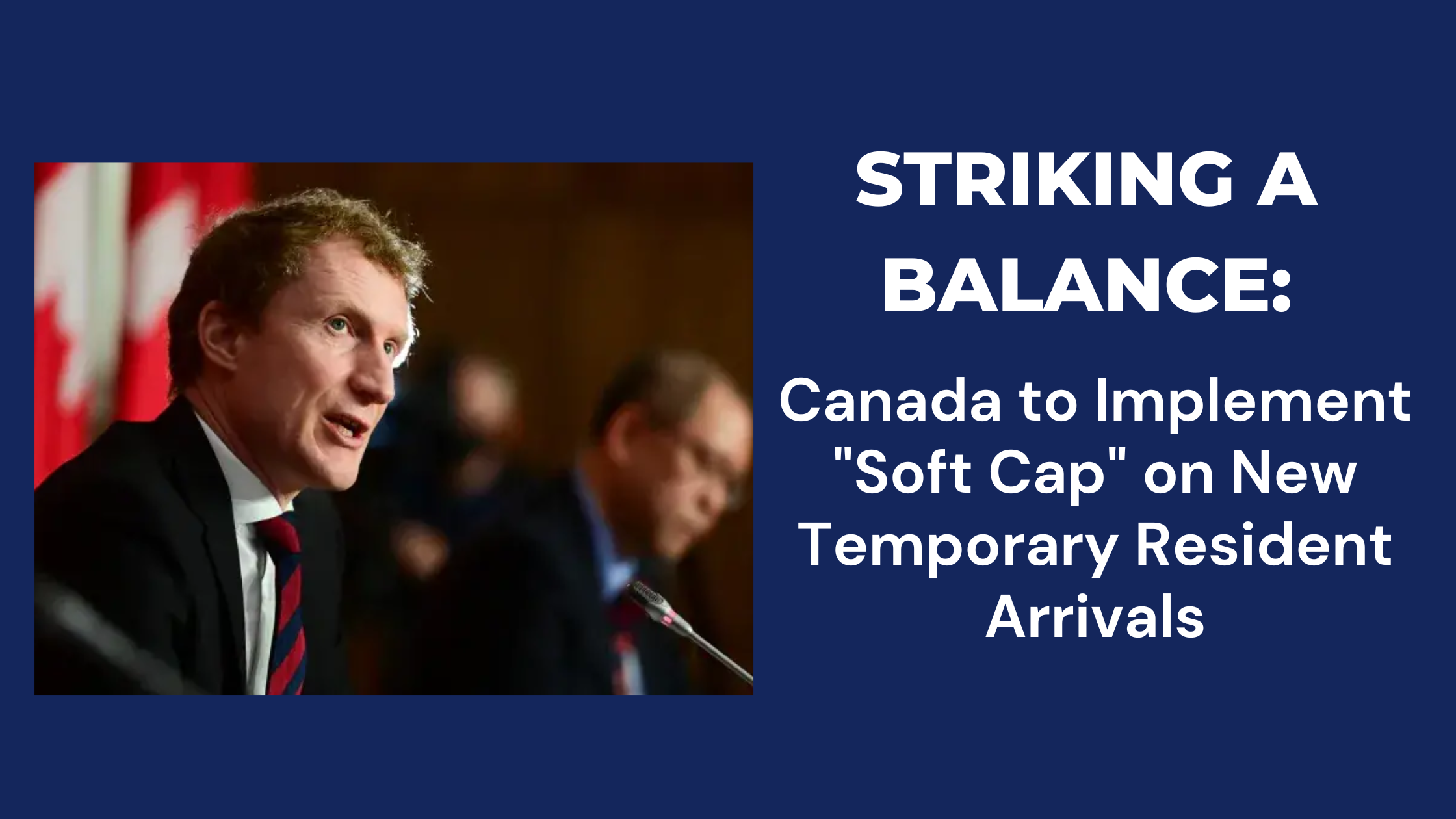
Minister Marc Miller Outlines Plans for Strengthening Canada’s Temporary Resident Programs
Ottawa, Ontario – September 18, 2024
In a pivotal speech delivered at a recent gathering in Ottawa, the Honourable Marc Miller, Canada’s Minister of Immigration, Refugees and Citizenship, laid out a comprehensive framework aimed at strengthening Canada’s temporary resident programs and migration pathways. The address highlighted the significant role immigration plays in the country’s labor force growth and outlined necessary adaptations to ensure the system effectively meets evolving needs.
Minister Miller acknowledged the long-standing tradition of Canada as a welcoming nation, emphasizing the importance of newcomers in sustaining the economy, particularly in light of an aging population. He stated, “Our economic future depends on those we bring to Canada,” reiterating a commitment to identifying newcomers with the right skills who can thrive in Canadian society.
Reflecting on the challenges posed by the COVID-19 pandemic, Miller noted how temporary measures were instituted to address severe labor shortages as businesses emerged from lockdowns. However, he acknowledged that some of these measures had extended beyond their intended purpose, necessitating a recalibration of immigration targets and processes.
“The challenges—and actions needed—are clear: Canada has seen a sharp increase in the volume of temporary residents, driven by a rise in international students, temporary foreign workers, and asylum claimants,” he explained. He underscored the need to balance the influx with community capacities and the job market’s current landscape.
Key Policy Changes Announced
As part of this initiative, Minister Miller announced that, for the first time in Canadian history, targets for temporary residents will be included in annual immigration levels planning. Specific changes include:
Reduction in Temporary Resident Numbers: A goal to decrease temporary resident numbers from 6.5% to 5% of Canada’s total population over the next three years.
Study Permit Targets: A 10% reduction in study permits, aiming for a cap of 437,000 permits for 2025 and 2026.
New Language Proficiency Requirements: Effective November 1, 2024, post-graduation work permit applicants will need to meet Canadian Language Benchmark (CLB) requirements, set at CLB 7 for university graduates and CLB 5 for college graduates.
Limitations on Spousal Work Permits: Expected changes to work permits for spouses of international students, focusing eligibility on highly skilled workers and those in critical labor shortage sectors.
Enhanced Fraud Prevention Measures: Plans to review visa officer procedures and implement measures to combat fraud in temporary worker programs, ensuring the integrity of Canada’s immigration system.
Looking Ahead
Miller assured attendees that these adjustments aim to align immigration with the realities of the job market while facilitating successful integration for newcomers. “We have listened to Canadians” he stated, reiterating the government’s commitment to a balanced and fair immigration policy that recognizes the contributions of all newcomers while ensuring the stability of communities.
Looking ahead, the minister confirmed that by November 1, he will table the annual immigration levels plan for 2025-2027, which will reflect the ongoing needs of the economy and communities across Canada.
As discussions around immigration continue, Minister Miller’s announcement marks a significant shift towards a more managed and strategic approach to Canada’s temporary resident programs, aiming to ensure that everyone has access to opportunities that promote a productive and inclusive society.
For further details and updates, visit the IRCC newsroom.
Need help navigating Canada’s changing immigration policies? JCA Law Office can guide you through the process.
In a significant announcement today, the Honourable Marc Miller, Minister of Immigration, Refugees and Citizenship, outlined the Canadian government’s plans to revise its temporary residence programs in response to evolving economic conditions and labour market demands. These changes come against the backdrop of a noticeable softening in the labour market and an increasing number of asylum claims.
Canada has long prided itself on its welcoming stance towards newcomers, providing vital support to its economy and enriching its cultural landscape. However, to sustain this commitment while addressing emerging economic pressures, the government announced a strategic plan to reduce the proportion of temporary residents from the current 6.5% of Canada’s total population to 5% by 2026.
Key Measures Unveiled Include:
1. Reduction in International Student Study Permits:
– A 10% decrease in the intake cap for international student study permits will see the number issued drop to 437,000 in 2025 from the previous target of 485,000. The intake will stabilize thereafter for 2026.
– Master’s and doctoral students will now be required to submit a provincial or territorial attestation letter as part of their application, emphasizing the value they bring to the Canadian workforce.
2. Updates to the Post-Graduation Work Permit (PGWP) Program:
– All PGWP applicants will now need to demonstrate a minimum language proficiency, with the Canadian Language Benchmark set at level 7 for university graduates and level 5 for college graduates. This change, effective November 1, 2024, aims to enhance the ability of graduates to transition to permanent residency and adapt to evolving labor market needs.
3. Tighter Regulations for Temporary Foreign Workers:
– The eligibility for work permits will be restricted to spouses of master’s degree students only for those enrolled in programs lasting 16 months or longer. Additionally, spouses of foreign workers will be limited to those in management or professional roles and in sectors experiencing labour shortages.
4. Enhanced Asylum Process Management:
– To respond to the rising number of asylum claims, the government will be implementing partial visa requirements for Mexican nationals and reviewing processing efficiencies to maintain the integrity of the asylum system.
Minister Miller emphasized the importance of crafting a balanced approach that ensures Canada continues to attract skilled newcomers while prioritizing the needs of Canadian workers. “The reality is that not everyone who wants to come to Canada will be able to,” he stated, reiterating the necessity of managing and strengthening the immigration system.
These measures are aimed at aligning temporary residence programs with the current needs of Canada’s economy, safeguarding the integrity of the immigration system, and protecting vulnerable populations. The full details of these updates will be included in the 2025–2027 Immigration Levels Plan, set for release by November 1, 2024.
Stay tuned for more updates as we continue to follow developments from IRCC and the impact of these changes on prospective immigrants and the Canadian economy.
New Bill C-71 Aims to Expand Canadian Citizenship by Descent
Expanding citizenship rights for children born abroad to Canadian parents and restoring status to “Lost Canadians.”
In a significant move for Canadian citizenship, Bill C-71 was introduced on May 23, 2024, in Ottawa, with the aim of amending the Citizenship Act. This proposed legislation seeks to extend citizenship by descent beyond the current first-generation limit, providing more inclusivity for children born outside Canada to Canadian parents.
Current Limitations
Currently, a Canadian citizen parent can only directly pass on citizenship to a child born abroad if they were born in Canada or naturalized before the child’s birth. Bill C-71 intends to change this by automatically granting citizenship to anyone born to a Canadian parent outside the country before the legislation is enacted.
Restoring “Lost Canadians”
Additionally, the bill addresses the plight of the “Lost Canadians,” individuals who were unable to obtain or maintain their citizenship due to outdated laws. The new amendments aim to rectify this, restoring citizenship to those affected and their descendants.
Key Provisions of Bill C-71
Substantial Connection Test: If a Canadian parent born outside Canada has spent at least three years in the country before their child’s birth, their child can inherit Canadian citizenship.
Automatic Citizenship: Anyone born to a Canadian parent outside the country before the legislation is enacted would automatically be granted citizenship.
Equal Treatment for Adopted Children: Adopted children will be able to access citizenship even if they were previously excluded by the first-generation limit.
Lost Canadians Restored: Citizenship restored to individuals and their descendants who lost status due to outdated laws.
These changes are designed to create a clearer, fairer, and more accessible citizenship process in Canada, promoting values of democracy, equality, and inclusion.
For more details, please refer to the announcement from the IRCC newsroom.
Stay informed through JCA Law Office Professional Corporation for updates relevant to the Filipino community and beyond.
Have questions about Canadian citizenship by descent? JCA Law Office can help you understand your options.
Canada Enhances Support for French-Speaking International Students and Immigrants
New Francophone Minority Communities Student Pilot (FMCSP) program launched to attract French-speaking students and strengthen Francophone communities.
In a significant step towards enhancing the vitality of Francophone communities, Canada has announced the launch of the Francophone Minority Communities Student Pilot (FMCSP) program, which began on August 26, 2024. This initiative aims to attract French-speaking international students and immigrants, further enriching the linguistic, social, and economic landscape of Francophone minority communities (FMCs).
The Honourable Marc Miller, Minister of Immigration, Refugees and Citizenship, unveiled the new program during the Acadian World Congress, emphasizing its role in bolstering Canada’s national identity. The FMCSP is designed to improve access to the International Student Program for French-speaking students from Africa, the Middle East, and the Americas, where study permit approval rates have been historically low.
Key Features of the FMCSP
Exemption from Intent to Leave: Students and their families are exempt from the usual requirement to demonstrate intent to leave Canada after their studies.
Revised Financial Threshold: Set to 75% of the low-income cut-off relevant to the municipality of the educational institution.
Direct Pathway to PR: Participants are afforded a direct pathway to permanent residency following graduation.
Settlement Services: Integration support to facilitate settlement into Canadian society.
Application Cap: Maximum of 2,300 study permit applications accepted in its first year, with plans to expand.
Expanded Welcoming Francophone Communities
In addition to launching the FMCSP, Minister Miller announced the inclusion of ten new communities into the Welcoming Francophone Communities (WFC) initiative, which now encompasses a total of 24 communities nationwide. This initiative aims to create a more welcoming environment for French-speaking newcomers, ensuring they feel integrated and valued in their new surroundings.
Minister Miller emphasizes the importance of promoting the French language and revitalizing these communities with skilled workers. This program aligns with Canada’s broader Action Plan for Official Languages 2023–2028, reinforcing the commitment to support Francophone immigration and integration.
This news is sourced from the IRCC newsroom. For more details on this initiative, please visit the IRCC website.
Interested in studying or immigrating to a Francophone community in Canada? JCA Law Office can help you explore your options.
PR Upon Arrival: Canada Introduces Enhanced Pilot Programs to Support Caregivers and Families
June 3, 2024 — New caregiver pilot programs offer permanent residence on arrival for home care workers coming to Canada.
Caregivers from abroad, including our hardworking Filipino caregivers, are invaluable to Canadian families. Their dedication and compassion profoundly impact the lives of children, seniors, and individuals with disabilities across Canada.
As the Home Child Care Provider Pilot and the Home Support Worker Pilot come to a close later this month, the Honourable Marc Miller, Minister of Immigration, Refugees and Citizenship, has announced new, enhanced caregiver pilots. This initiative will allow caregivers to continue to come to Canada, as the government works towards making the caregiver pilot programs permanent.
New Pilot Programs: Permanent Residence on Arrival
The newly introduced pilot programs will offer home care workers permanent residence (PR) status upon their arrival in Canada. Additionally, caregivers will be permitted to work for organizations providing temporary or part-time care for individuals who are semi-independent or recovering from injuries or illnesses. This new pathway ensures caregivers can more easily secure appropriate employment with reliable employers and have clear, straightforward access to permanent resident status immediately upon arrival in Canada.
Eligibility Criteria
Candidates interested in participating in Canada’s home care sector through these new pilot programs must meet the following criteria:
Attain a minimum of level 4 based on the Canadian Language Benchmarks (CLB)
Hold the equivalent of a Canadian high school diploma
Have recent and relevant work experience
Receive an offer for a full-time home care job
These PR-on-arrival pilot programs signify an essential step forward in addressing the evolving home care needs of Canada’s diverse population. More detailed information will be made available prior to the full launch of the pilots, including complete eligibility criteria and application procedures.
Government Statements
“Caregivers play a critical role in supporting Canadian families, and our programs need to reflect their invaluable contributions. As we work to implement a permanent caregivers program, these two new pilots will not only improve support for caregivers but also provide families with the quality care they deserve.”
The Honourable Marc Miller, Minister of Immigration, Refugees and Citizenship
“After hearing stories and feedback from caregivers across Canada, I am proud that we are taking concrete action to create policies to support the caregiver community. Generations of women and men have advocated for this important pathway and have cared for our families and loved ones here in Canada. Now is the time to return the care they deserve.”
The Honourable Rechie Valdez, Minister of Small Business
Quick Facts
In June 2014, there was an inventory of over 60,000 persons for the Live-in Caregiver Program. Today, less than 1% of that inventory remains.
As part of the 2024–2026 Immigration Levels Plan, Canada will admit over 15,000 caregivers as permanent residents.
As of April 30, 2024, nearly 5,700 caregivers and their family members have become permanent residents since the launch of the Home Child Care Provider Pilot and the Home Support Worker Pilot in 2019.
A Message to Our Filipino Caregivers
To our dedicated Filipino caregivers who have long dreamed of building a life in Canada, this announcement brings renewed hope and opportunity. Your unwavering commitment and exceptional care are deeply valued by Canadian families, and these new pilot programs are designed to honor your contributions by providing a clear and accessible path to permanent residency.
For more information on how these new pilot programs can benefit caregivers and Canadian families, and to stay updated on eligibility criteria and application details, visit the Immigration, Refugees and Citizenship Canada website.
Your journey toward a brighter future in Canada is closer than ever. Thank you for your hard work and dedication—Canada welcomes you with open arms.
Are you a caregiver looking to come to Canada? JCA Law Office can help you navigate the new pilot programs.
Last Updated: February 2026 — In 2024, Canada announced plans to cap temporary residents. Two years later, those plans are fully in effect — and the impact on Filipino workers, students, and families is significant. Here is everything you need to know about the temporary resident cap, how it works, and what you can do to protect your status.
What Is the Temporary Resident Cap?
In October 2024, the Government of Canada announced a historic shift in immigration policy: for the first time, the federal government would set binding targets to reduce the number of temporary residents in the country. This includes international students, temporary foreign workers, and visitors.
The reason? By mid-2024, temporary residents made up approximately 7.5% of Canada’s total population — an unprecedented level that the government said was putting unsustainable pressure on housing, healthcare, and public services.
The government’s goal is to bring temporary residents down to less than 5% of the population by the end of 2027. As of October 2025, the temporary resident population had already dropped to approximately 2.85 million (6.8% of the population), down from 3.02 million (7.3%) just three months earlier — driven by record-high outflows of 339,505 people whose permits expired or were not renewed.
Key Fact: Canada’s population actually contracted in Q3 2025 — the first decline in years — driven almost entirely by the departure of temporary residents.
The 2026–2028 Immigration Levels Plan: The Numbers
Released in late 2025, the 2026–2028 Immigration Levels Plan lays out the most restrictive temporary immigration targets in recent Canadian history. Here are the key numbers:
Permanent Residents
Year
Target
Range
2026
380,000
350,000 – 420,000
2027
380,000
350,000 – 420,000
2028
380,000
350,000 – 420,000
This is down from the 500,000 target set for 2025 just two years ago. Economic immigration will account for 64% of all admissions in 2027–2028, the highest proportion in decades.
Temporary Residents (New Arrivals)
Year
Total New Arrivals
Workers
Students
2025
673,650
—
—
2026
385,000
230,000
155,000
2027
370,000
220,000
150,000
2028
370,000
220,000
150,000
The 2026 target of 385,000 represents a 43% reduction from 2025. Student arrivals are cut by nearly 50%. Temporary Foreign Worker Program (TFWP) admissions drop to just 60,000 in 2026 and 50,000 by 2027.
Warning: These are targets, not hard caps. However, IRCC is enforcing them through application caps, higher refusal rates, and program restrictions. In 2024, over 2.36 million temporary resident applications were refused — a 50% refusal rate, up from 35% in 2023.
How the Cap Is Being Enforced: 5 Key Mechanisms
The temporary resident cap is not a single policy. It is enforced through a combination of interconnected restrictions across study permits, work permits, and visitor visas.
1. Study Permit Cap and Provincial Attestation Letters (PAL)
Starting in 2024, IRCC introduced a national cap on study permits, requiring most applicants to obtain a Provincial Attestation Letter (PAL) before applying. For 2026:
Up to 408,000 study permits will be issued in total (155,000 new arrivals + 253,000 extensions)
A maximum of 309,670 PAL-required applications will be accepted
Master’s and doctoral students at public institutions are exempt from PAL requirements
PALs must be issued between January 1 and December 31, 2026
2026 Provincial Study Permit Allocations
Province / Territory
2026 Allocation
Ontario
104,780
Quebec
93,069
British Columbia
32,596
Alberta
32,271
Saskatchewan
11,349
Manitoba
11,196
Nova Scotia
8,480
New Brunswick
8,004
Newfoundland and Labrador
5,507
Prince Edward Island
1,376
Northwest Territories
785
Yukon
257
Nunavut
0
Total
309,670
2. Post-Graduation Work Permit (PGWP) Restrictions
The PGWP — long considered one of the most attractive pathways for international students — has been significantly restricted:
Field of study requirements: Graduates from non-degree programs (college, polytechnic) must have studied in a field aligned with long-term labour shortages to qualify for a PGWP
Language requirements: Bachelor’s/master’s/doctoral graduates need CLB 7 in all four skills; college graduates need CLB 5
Eligible programs frozen for 2026: IRCC confirmed on January 15, 2026, that the list of 1,107 PGWP-eligible programs will not change for the rest of the year
These new requirements apply to study permits issued on applications submitted on or after November 1, 2024
3. Temporary Foreign Worker Program (TFWP) Overhaul
The TFWP has undergone the most dramatic reforms in its history:
Low-wage LMIA moratorium: Since September 2024, Labour Market Impact Assessment (LMIA) applications for low-wage positions are frozen in regions with unemployment at or above 6%
LMIA validity shortened from 12 months to 6 months
Workforce cap reduced: Employers can only have 10% of their workforce as temporary foreign workers (down from 20%)
Enforcement tripled: In 2024–2025, penalties more than doubled to $4.88 million, and 36 employers were banned — a threefold increase
As of January 2026, some regions saw the moratorium lifted as unemployment dropped below 6%, including Vancouver, Winnipeg, Halifax, and Montreal. However, major centres including Toronto, Calgary, Edmonton, Hamilton, and Windsor remain under the moratorium.
What This Means: If you are a Filipino worker in the GTA on a low-wage LMIA, your employer cannot currently obtain a new LMIA to extend your work permit through the low-wage stream. This is one of the most impactful restrictions for our community.
4. Visitor Visa Tightening
While visitor visas are not subject to a formal cap, IRCC has dramatically increased scrutiny:
Visitor visa refusal rates have risen to approximately 50% (up from 39%)
Some regions see refusal rates above 70%
The primary refusal reason remains insufficient proof of home ties under section 179(b) of IRPR
Officers are more strictly assessing whether visitors will leave at the end of their authorized stay
5. Spousal and Dependent Work Permit Changes
Work permits for spouses and dependents of international students and foreign workers have been restricted:
Spouses of college-level students are no longer eligible for open work permits
Only spouses of students in master’s, doctoral, or professional programs remain eligible
Spouses of TFWP workers face additional eligibility restrictions based on the principal worker’s wage level and occupation
Impact on the Filipino Community in Canada
These changes hit the Filipino-Canadian community particularly hard. The Philippines has consistently been among the top source countries for temporary foreign workers in Canada, alongside Mexico, India, Guatemala, and Jamaica — together accounting for nearly 70% of all TFWP work permits.
Caregiver Programs Paused
On December 19, 2025, IRCC announced that it was pausing application intake for the Home Child Care Provider Pilot and Home Support Worker Pilot — the two primary caregiver immigration pathways. These programs, which launched on March 31, 2025, were overwhelmed within hours on the first day they opened, hitting their application caps almost immediately.
Important: As of February 2026, IRCC has confirmed the Home Care Worker Immigration Pilots will not reopen in 2026. Processing times for existing applications have expanded to 55 months. If you submitted an application before the pause, it will still be processed — but no new applications are being accepted.
TFWP Workers Facing Uncertainty
Filipino workers in sectors like food processing, hospitality, agriculture, and construction are directly affected by the TFWP restrictions. With the low-wage LMIA moratorium in effect across Toronto and other major centres:
Employers cannot obtain new LMIAs for low-wage positions, making it difficult to extend or renew work permits
Some employers are opting to hire permanent residents instead, which means fewer contract renewals for temporary workers
Workers whose permits expire without renewal face the prospect of losing their legal status
TFWP arrivals have dropped to the lowest level in two years, with a 50% decline in new worker arrivals in the first half of 2025 compared to 2024
Filipino Students Affected by Study Permit Cap
Filipino students planning to study in Canada face a more competitive and uncertain landscape:
The total number of new study permits is capped at 155,000 — nearly half of previous levels
Students must obtain a Provincial Attestation Letter (PAL) from their chosen province before applying
PGWP eligibility now depends on your field of study and language scores, not just completing a Canadian program
Spouses of college-level students can no longer get open work permits
Year-by-Year Reduction Timeline
Year
Key Milestones
Temporary Resident % of Population
2024
Cap announced; study permit cap introduced; TFWP moratorium begins
~7.5%
2025
Caregiver pilots launch and hit caps; PGWP restrictions take effect; population contracts
~6.8% (Q3 2025)
2026
385,000 new temporary resident target; caregiver pilots paused; TFWP at 60,000
Target: ~6%
2027
370,000 new temporary resident target; TFWP drops to 50,000
Target: <5%
2028
Targets maintained at 2027 levels
Target: <5%
A Silver Lining: Transition to Permanent Residence
While the overall picture is restrictive, the government has included some measures that benefit temporary residents already in Canada:
Positive Development: The government has committed to accelerating the transition of up to 33,000 temporary workers to permanent residency in 2026–2027, targeting workers who have established roots in their communities, pay taxes, and contribute to the economy. Additionally, approximately 115,000 protected persons will be transitioned to permanent residency over two years.
Economic immigration will account for 64% of all permanent resident admissions in 2027–2028 — the highest proportion in decades. This means that if you are a temporary worker with Canadian work experience, your chances of transitioning to PR through programs like Express Entry, Provincial Nominee Programs (PNPs), or the Canadian Experience Class may actually improve relative to other categories.
What Should You Do If You Are Affected?
If you are a Filipino temporary resident in Canada — or planning to come — here are concrete steps to protect yourself:
If You Are Currently in Canada on a Work Permit
Apply for PR as soon as you are eligible. Do not wait. Express Entry, PNPs, and the Canadian Experience Class remain open. The transition of 33,000 workers to PR status shows the government wants eligible workers to stay permanently.
Check your LMIA region. If you are in a moratorium area (Toronto, Calgary, Edmonton, Hamilton, Windsor), your employer may not be able to renew your LMIA through the low-wage stream. Explore alternative pathways before your permit expires.
Maintain your status. Apply for extensions well before your permit expires. If you apply before expiry, you maintain implied status while your application is processed.
Consider upskilling. If your current occupation is in the low-wage category, upgrading your skills or obtaining additional certifications could qualify you for a high-wage LMIA, which is not subject to the moratorium.
If You Are a Caregiver
If you have an existing application, it will still be processed. Keep your contact information and documents up to date with IRCC.
If you have not yet applied, the caregiver pilots are currently paused with no reopening date announced for 2026. Speak with an immigration lawyer about alternative pathways to PR, including Provincial Nominee Programs.
Explore other work permit options. The Interim Pathway for Caregivers or employer-specific work permits through the high-wage TFWP stream may still be available depending on your situation.
If You Are Planning to Study in Canada
Obtain your PAL early. Provincial Attestation Letters are allocated on a limited basis. Apply to your institution and province as early as possible.
Choose your program strategically. Select a program that is PGWP-eligible and aligned with long-term labour shortages. Check the IRCC list of eligible fields before committing.
Prepare for language tests. You will need CLB 7 (university) or CLB 5 (college) to qualify for a PGWP upon graduation. Take your IELTS or CELPIP test early.
Budget for the full cost. With spousal work permit restrictions, families can no longer rely on a spouse’s income during studies at the college level.
If You Are Applying for a Visitor Visa
Demonstrate strong home ties. The number one refusal reason is insufficient proof of ties to the Philippines. Document your employment, property, family obligations, and reasons to return.
Show sufficient financial support. Whether you or your Canadian sponsor is funding the trip, provide clear and complete financial documentation.
Consider a Super Visa if you are a parent or grandparent of a Canadian citizen or permanent resident. The Super Visa allows stays of up to 5 years.
Future Outlook: What to Expect in 2027 and Beyond
The current trajectory is clear: Canada is significantly reducing temporary immigration while stabilizing permanent immigration. Here is what to expect:
Further reductions in 2027–2028: Temporary resident targets drop to 370,000 per year, with TFWP admissions falling to 50,000
The 5% target will likely be reached: At current departure rates, Canada is on track to hit the <5% temporary resident population target by late 2027
Permanent residence pathways remain open: Economic immigration is being prioritized, particularly for workers already in Canada with labour market attachment
Caregiver programs may be redesigned: The current pilots are paused, but the government has acknowledged the need for caregivers. A redesigned program could emerge in 2027
Provincial Nominee Programs are more important than ever: With Express Entry draws becoming more competitive, PNPs offer an alternative pathway to PR for workers in specific provinces
Frequently Asked Questions
Is Canada closing its doors to immigrants?
No. Canada is reducing temporary immigration while maintaining permanent resident admissions at 380,000 per year. The government is shifting toward permanent immigration and away from temporary programs. If you qualify for PR, your chances may actually be better now because economic immigration is a higher proportion of total admissions than ever before.
Can I still apply for a work permit in 2026?
Yes, but it depends on the stream. High-wage LMIA work permits remain available nationwide. Low-wage LMIA work permits are frozen in regions with unemployment at or above 6%, including Toronto. International Mobility Program (IMP) work permits, including PGWP and spousal work permits, are still available but with new restrictions.
What happens if my work permit expires and I cannot renew it?
If you apply for a renewal or extension before your current permit expires, you maintain implied status and can continue working while your application is processed. If your permit expires without a pending application, you must stop working and may need to apply to restore your status within 90 days. Speak with an immigration lawyer immediately if you are in this situation.
Will the caregiver program reopen?
IRCC has confirmed that the Home Care Worker Immigration Pilots will not reopen in 2026. No specific date has been announced for a future reopening. Existing applications submitted before the December 2025 pause will continue to be processed, though processing times are currently around 55 months.
Should I apply for PR now or wait?
Apply now if you are eligible. Immigration policy is becoming more restrictive, not less. The government’s stated intention is to continue reducing temporary residents while transitioning eligible workers to permanent status. Waiting only adds risk — programs can change, caps can be reached, and processing times can increase.
How JCA Law Office Can Help
At JCA Law Office Professional Corporation, we understand the unique challenges facing Filipino-Canadians navigating these changes. Our immigration team provides:
Work permit strategy: We assess your current situation and identify the best pathway to maintain your status — whether through LMIA renewals, open work permits, or bridging permits
PR applications: We prepare Express Entry profiles, PNP applications, and Canadian Experience Class applications to help you transition from temporary to permanent status
Caregiver immigration: For caregivers with pending applications, we monitor processing and ensure your file is complete. For those exploring alternatives, we identify other pathways to PR
Study permit applications: We guide students through the PAL process, program selection, and PGWP planning
Visitor visa and Super Visa: We help families prepare strong applications that address common refusal reasons
Book a Consultation Today
The temporary resident landscape is changing rapidly. Whether you need to renew a work permit, apply for permanent residence, or understand how the new restrictions affect your plans, our team is here to help.
This article is for informational purposes only and does not constitute legal advice. Immigration law is complex and constantly changing. For advice specific to your situation, please contact JCA Law Office for a consultation.
Weighing the opportunities and challenges of living overseas, with a closer look at why Canada is a top destination for Filipinos.
For many Filipinos, the allure of living abroad is fueled by the promise of new opportunities, personal growth, and the pursuit of dreams that stretch far beyond the Philippine shores. At JCA Law Office Professional Corporation, we deeply understand the aspirations and challenges faced by Filipinos considering a life overseas. This comprehensive guide is crafted with empathy and insight, designed to navigate you through the complex landscape of establishing a life abroad, while also shedding light on Canada as a beacon of hope and opportunity for those ready to take the leap.
The Promise of Prosperity: Opportunities Await Filipinos Abroad
Elevated Economic Prospects: The search for financial stability is a key motivator for Filipinos abroad, offering the prospect of securing better-paying jobs. The act of sending remittances back home transcends financial assistance, symbolizing a deep commitment to the welfare of families, enabling access to better education, and healthcare.
Unleashing Potential: The global arena presents unparalleled opportunities for career advancement for Filipinos. Exposure to diverse work cultures and cutting-edge technologies promotes significant personal and professional growth.
Enhanced Quality of Life: Living in a new country often means access to superior healthcare, education, and social services, promising a safer and more comfortable environment for Filipinos and their families.
Cultural Richness and Diversity: Immersing in a new culture is both a journey of discovery and an opportunity for learning, enriching the Filipino’s perspective and fostering a deeper appreciation for the world’s diverse cultures.
The Other Side of the Coin: Navigating Challenges
The Loneliness of Distance: The emotional toll of leaving family and the familiar comforts of home can lead to feelings of isolation, requiring a delicate balance between adapting to a new culture and preserving one’s own.
Confronting Prejudice: Filipinos abroad may face discrimination, a harsh reality that calls for resilience and strength to overcome.
Professional Adjustments: The reality of the overseas job market can mean accepting roles outside one’s field of expertise, posing a challenge to fully realizing professional goals.
Family Separation: The significant emotional challenge of being away from loved ones is compounded by the joy and responsibility of providing for them.
Vulnerability to Exploitation: Awareness and vigilance are crucial, as Filipinos abroad can find themselves in less-than-ideal work conditions, highlighting the importance of knowing one’s rights.
The Adaptation Phase: Adjusting to new laws, languages, and cultural norms is a formidable task that demands patience and perseverance.
Why Consider Canada? A Closer Look for Filipinos Abroad
As you weigh the pros and cons of living abroad, let’s turn our gaze to Canada—a country that stands out for its welcoming embrace to immigrants, including Filipinos. Why does Canada emerge as a favored destination for those looking to work, study, or live abroad?
A Multicultural Mosaic: Canada’s diverse cultural landscape is a testament to its inclusive society, offering a warm welcome to people from all backgrounds, including the vibrant Filipino community that thrives across the country.
Robust Support Systems: The country is renowned for its strong social support systems, including healthcare and education, ensuring a high quality of life for its residents.
Economic Opportunities: With a stable economy and a wide array of industries, Canada offers numerous opportunities for employment and career advancement tailored to the skills and talents of Filipinos abroad.
Legal and Immigration Support: Understanding the nuances of Canadian immigration can be daunting. That’s where JCA Law Office Professional Corporation comes in. Specializing in Canadian immigration law, we provide the guidance and support you need to navigate your journey to Canada smoothly.
JCA Law Office: Your Partner in the Canadian Dream
Choosing to live abroad is a monumental decision, filled with both opportunities and challenges. As you consider your next steps, know that JCA Law Office Professional Corporation is here to support you, especially if those steps lead you to Canada. Our expertise in Canadian immigration law, combined with our deep understanding of the Filipino experience, makes us uniquely equipped to guide you through the process of making Canada your new home.
Embracing life abroad, particularly in Canada, is a journey best navigated with the right knowledge, a supportive community, and the expertise of JCA Law Office Professional Corporation. Let’s embark on this journey together, with the resilience and spirit of the Filipino heart guiding us toward a future filled with promise and success.
Ready to Start Your Canadian Journey?
JCA Law Office Professional Corporation specializes in Canadian immigration law with deep expertise in serving the Filipino community. Let us help you navigate the path to your new life.
A Definitive Guide to Canada Immigration for Filipinos
Everything you need to know about permanent and temporary residency pathways, work permits, student visas, and building your new life in Canada.
Unlock the Door to Your Dreams with Canada Immigration
Are you a Filipino envisioning a future filled with opportunity, stability, and growth? Canada beckons with open arms, offering a life that intertwines professional advancement with a high quality of living. The journey to Canada is not just a location change; it’s a transformative experience. For Filipinos, it’s a path well-trodden, marked with success stories and vibrant communities. This guide is your compass to navigating the Canada immigration process, a journey mapped out specifically for Filipinos.
Exploring Pathways: Permanent and Temporary Residency
Discover the array of options Canada offers, from temporary permits to permanent residency. Understand the intricacies of each program and identify the route that best aligns with your aspirations.
Permanent Residency: A Commitment to Your Future
Permanent residency is a status granted to a person who has been authorized to live and work in a country indefinitely. A permanent resident has the right to most social benefits that Canadian citizens receive, including healthcare coverage. They can live, work, or study anywhere in Canada.
Examples of Canadian permanent residency programs:
Family Sponsorship
Federal Skilled Worker Program
Canadian Experience Class
Home Child Care Provider
Temporary Residency: Your Gateway to Experience Canada
Embark on your Canadian journey with temporary resident visas. Be it for work, study, or tourism, each permit is a step toward your dream.
Work Permits: Your Launchpad to Canadian Professional Life
Canada offers different types of work permits, including open work permits and employer-specific work permits. An open work permit allows you to work for any employer in Canada, whereas an employer-specific work permit requires you to work for a specific employer under certain conditions. If you’re applying for an employer-specific work permit, your Canadian employer may need to obtain a Labour Market Impact Assessment (LMIA) to hire you. This document proves that there is a need for a foreign worker to fill the job and that no Canadian worker is available to do it.
Student Visas: Paving Your Educational Path in Canada
Canada’s reputation as a hub for high-quality education attracts students from around the globe. For Filipinos, a Canadian student visa is not just a permit; it’s a gateway to premium education, diverse cultural experiences, and a plethora of future opportunities.
Pathway to Permanent Residency: Canada values international graduates, and your Canadian education and work experience can significantly boost your chances under various immigration programs, including the Canadian Experience Class and Provincial Nominee Programs.
Understanding the Canadian Student Visa Process:
Choose Your Institution and Program: You must be accepted by a Designated Learning Institution (DLI) in Canada.
Obtain a Letter of Acceptance: This document is a primary requirement for your student visa application.
Check Your Eligibility: Prove you have enough funds to cover tuition fees, living expenses, and return transportation, and that you have no criminal record.
Apply for a Study Permit: You can apply online or at a visa application center with your acceptance letter, passport, and financial proof.
Prepare for Additional Requirements: You might need a medical exam, an interview, or biometric data collection.
Processing and Approval: Once submitted, an immigration officer will review and, if approved, issue your study permit.
Visitor Visas: Exploring Canada as a Tourist
Explore the beauty and diversity of Canada with a visitor visa and learn how temporary visits can contribute to your long-term immigration goals.
While a visitor visa does not directly lead to permanent residency, the connections you make and the understanding you gain about Canadian life can be invaluable in your future applications. Whether it’s finding a potential employer, choosing an educational institution, or simply confirming that Canada is the right fit for you, your visit can be a strategic step in your long-term immigration journey.
Building Your Bridge: Assembling Documents
Embarking on your Canada immigration journey requires a toolkit brimming with crucial documents. Your passport, birth certificate, educational credentials, work experience proofs, language test results, and police clearance certificates form the cornerstone of your application. Ensure these documents are current, accurately translated, and ready to present.
Mastering the Language: English and French Proficiency
In the mosaic of Canadian society, fluency in English or French is your key to unlocking a realm of possibilities. These languages are the threads that weave through every aspect of life in Canada, from professional interactions to daily social engagements. Enhance your language skills through courses and practice; let every word you master be a step closer to seamlessly integrating into your new Canadian community.
Mapping Your Career: Job Market Navigation
Set the stage for your professional life in Canada even before you arrive. The Canadian job market is a landscape rich with opportunities waiting to be seized. Utilize online job portals like Job Bank or Indeed, engage in networking within your industry, and tailor your resume to reflect Canadian standards. Remember, in Canada, your career is not just a job; it’s a testament to your skills and a reflection of your potential.
Budgeting Your Dream: Financial Planning
Understanding and preparing for the cost of living in Canada is crucial. It’s about crafting a budget that covers the essentials—housing, food, transportation, healthcare—while also allowing you to enjoy the richness of life in Canadian cities. Whether it’s Toronto’s dynamic urbanity or Vancouver’s scenic landscapes, ensure you’re financially prepared to embrace all that Canada has to offer.
Embracing the Culture: Community and Integration
Canada’s multicultural ethos is not just a policy; it’s a lived experience. Filipinos form a vibrant thread in this cultural tapestry, contributing to and benefiting from the diversity that defines Canadian society. While embracing Canadian customs and traditions, you’ll also find opportunities to connect with the Filipino community, celebrating the familiar amidst the new, and forging bonds that bridge distances.
In Conclusion
Canada immigration for Filipinos is more than a process; it’s a journey toward a future replete with promise and potential. It’s about crafting a life that aligns with your aspirations, in a country that values your contributions and offers opportunities for growth and fulfillment.
At JCA Law Office Professional Corporation, we understand the nuances of this journey. Our expertise and commitment are focused on guiding you through each step, ensuring that your path to Canada is smooth, successful, and tailored just for you. Welcome to your future, and welcome to Canada!
Ready to Immigrate to Canada?
JCA Law Office Professional Corporation guides Filipino families through every step of the Canadian immigration process — from work permits and student visas to permanent residency.
Unlock Your Future: The OINP Pathway for Filipino Skilled Workers
In an unprecedented move, the Ontario Immigrant Nominee Program (OINP) is rolling out the red carpet for Filipino skilled workers. With the launch of the Ontario Express Entry Skilled Trades stream, doors to new beginnings have swung wide open. A world of opportunities awaits in Ontario’s thriving and diverse labor market, and you could be part of it.
Why is the OINP Express Entry Skilled Trades Stream a Game-Changer?
1. Designed with You in Mind
This stream isn’t just another immigration pathway; it’s tailored for the skilled hands and sharp minds of Filipinos. Your proficiency in high-demand trades like electrical, carpentry, and plumbing isn’t just recognized — it’s sought after in Ontario’s dynamic job landscape.
2. Fast-Track Your Journey
Wave goodbye to complex immigration processes. With Express Entry, your skills, experience, and potential are fast-tracked, propelling you into a life in Canada where your contributions are celebrated.
3. Thrive in a Dynamic Economy
Ontario isn’t just Canada’s heartland; it’s a land of endless possibilities. Dive into a job market brimming with opportunities that promise not just employment, but a career that flourishes.
4. Feel at Home
Settling in is smoother when you’re surrounded by familiar faces and warmth. Ontario’s vibrant Filipino community means you’re never far from a helping hand, a shared meal, or a shoulder to lean on.
5. Dream of Tomorrow, Today
This isn’t about temporary fixes. The OINP Express Entry Skilled Trades Stream is your bridge to a future where you and your family can plant roots, and reap the benefits of health care, education, and a quality of life that’s second to none.
6. Be Valued
Canada knows your worth. Here, your skills aren’t just utilized; they’re celebrated. It’s a place where your dedication and talent open doors to a life of respect and fulfillment.
Embrace the Moment: Your Date with Destiny
The OINP isn’t just inviting candidates; it’s seeking the crème de la crème. If your skills align with the in-demand trades and your CRS score falls within the targeted range, you’re not just a candidate — you’re the future Ontario envisions.
Spotlight on Professions
From machining and mechanics to carpentry and construction, your expertise is the missing piece Ontario is eagerly seeking. If your NOC matches, this is your call to action.
Eligible NOC Codes:
Machining, metal forming, shaping, and erecting trades (NOC 72010–72014)
Mechanic trades and heavy equipment operator crews (NOC 72020–72022)
Machinists, tooling inspectors, and related trades (NOC 72100–72105)
Electricians, industrial electricians, and telecom technicians (NOC 72200–72205)
Plumbers, pipefitters, and carpenters (NOC 72300–72321)
Construction millwrights, industrial mechanics (NOC 72400–72423)
Navigating the application process might seem daunting, but it’s just a series of carefully placed steps toward your dream. Review, prepare, apply, and remember: a notification of interest isn’t just a letter; it’s a beacon of hope.
JCA Law Office: Your Partner on This Journey
Embarking on this path is monumental, and we at JCA Law Office Professional Corporation are here to ensure you’re not walking it alone. Our dedication goes beyond guidance; we’re your steadfast partner, committed to transforming this vision into your reality. Together, let’s make your Canadian dream come alive.
Ready to Start Your OINP Journey?
Let JCA Law Office guide you through the Ontario Express Entry Skilled Trades application process.
Last Updated: February 2026 | Canada’s international student landscape has undergone dramatic changes since 2024. The Student Direct Stream (SDS) is gone, a national study permit cap is in effect, and new rules around provincial attestation letters, financial requirements, and post-graduation work permits have reshaped the path for Filipino students. This comprehensive guide covers everything you need to know.
1. The Student Direct Stream (SDS) Is Cancelled
On November 8, 2024, Immigration, Refugees and Citizenship Canada (IRCC) officially cancelled the Student Direct Stream (SDS) and the Nigeria Student Express (NSE) program, effective immediately.
The SDS was launched in 2018 as a fast-track study permit pathway for students from 14 countries, including the Philippines. It offered processing times as fast as 20 days compared to several weeks or months through the regular stream.
Why Did IRCC Cancel the SDS?
According to IRCC, the cancellation was made to:
Strengthen program integrity and reduce fraud in the international student system
Address student vulnerability to exploitative recruitment practices
Give all students equal and fair access to the application process regardless of nationality
What this means for Filipino students: All study permit applications from the Philippines are now processed through the regular study permit stream. There is no longer a fast-track option based on nationality. Processing times from the Philippines now average 6 to 12 weeks, compared to the previous 20-day SDS timeline.
2. The New Study Permit Application Process
With the SDS gone, all international students, including Filipinos, must follow the regular study permit application process. Here is what is required:
Step-by-Step Application Process
Step 1: Get accepted to a Designated Learning Institution (DLI). You must have a valid letter of acceptance from a Canadian DLI before applying for a study permit.
Step 2: Obtain a Provincial Attestation Letter (PAL). Most students now need a PAL from the province where their DLI is located (more on this below).
Step 3: Gather your documents. Prepare your financial proof, language test results, passport, photos, and other supporting documents.
Step 4: Apply online through the IRCC portal. Submit your complete application, pay fees, and provide biometrics.
Step 5: Attend biometrics appointment. Provide fingerprints and a photo at a designated collection point.
Step 6: Wait for processing. Standard processing is 6 to 12 weeks from the Philippines. Doctoral students may benefit from a 14-day fast-track commitment from IRCC.
Step 7: Receive your study permit. If approved, you will receive a port of entry letter of introduction. Your actual study permit is issued when you arrive in Canada.
Important Change: As of November 8, 2024, international students wishing to change their DLI must apply for and obtain a new study permit before making the switch. You can no longer simply transfer between institutions.
3. Updated Financial Requirements
Canada has significantly increased the financial proof requirements for study permit applicants. These changes directly impact Filipino students and their families.
Current Financial Requirements (Effective September 1, 2025)
Requirement
Previous Amount
Current Amount (2025-2026)
Cost of Living Proof (Single Applicant)
$20,635 CAD
$22,895 CAD
First Year Tuition
Full amount
Full amount
Additional per Family Member
Varies
Additional funds required per dependent
This represents an increase of approximately $2,260 CAD (about 11%) from the previous requirement. The cost-of-living amount is updated annually based on 75% of the Low Income Cut-Off (LICO) for a single person.
Acceptable Proof of Funds
You can demonstrate your financial capacity through:
Guaranteed Investment Certificate (GIC) from a participating Canadian financial institution
Bank statements showing sufficient funds for at least 4 months
A bank draft or money order in a convertible currency
Proof of a Canadian scholarship or funding
A letter from the person or institution providing you with money
Tip for Filipino Applicants: A GIC is still one of the strongest forms of financial proof even though SDS is cancelled. It shows immigration officers that your funds are secured in a Canadian bank. The minimum GIC amount should cover the cost-of-living requirement of $22,895 CAD.
4. Provincial Attestation Letter (PAL) Explained
One of the most significant new requirements is the Provincial Attestation Letter (PAL), introduced on January 22, 2024 and now fully in effect for 2026. A PAL is a document issued by a Canadian province or territory that confirms your DLI has been allocated a spot under the national study permit cap.
Who Needs a PAL?
Most students applying for a first study permit need a PAL. However, there are important exemptions:
Category
PAL Required?
Undergraduate students at public DLIs
Yes
College diploma/certificate students
Yes
Master’s students at public DLIs (as of Jan 1, 2026)
No – Exempt
Doctoral (PhD) students at public DLIs (as of Jan 1, 2026)
No – Exempt
K-12 (elementary/secondary) students
No – Exempt
Study permit extensions/renewals
No – Exempt
Good News for Graduate Students: As of January 1, 2026, master’s and doctoral students enrolled at public DLIs are exempt from both the PAL requirement and the study permit cap. IRCC has also committed to processing doctoral study permit applications from outside Canada within 14 days.
How to Get a PAL
You do not apply for a PAL directly. Your Designated Learning Institution (DLI) obtains the attestation from the province, and provides it to you as part of your acceptance package. Each province has a limited number of attestation letters based on its allocation under the national cap.
Important: Your PAL must be valid at the time you apply for your study permit. You cannot use a PAL from a previous cap year (e.g., a 2025 PAL cannot be used for a 2026 application).
5. Study Permit Cap and Its Impact
In January 2024, the Canadian government introduced a national cap on study permits to address concerns about housing, infrastructure pressure, and program integrity. The cap has been extended through 2026 with reduced numbers.
Study Permit Cap Numbers
Year
Total Study Permits Target
New Students
Extensions
2024
485,000
—
—
2025
437,000
—
—
2026
408,000
155,000
253,000
For 2026, a total of 309,670 study permit application spaces are available under the cap. IRCC expects to issue approximately 180,000 study permits from these applications, indicating a projected approval rate of approximately 58%. This is a significant improvement from the first half of 2025, when the approval rate was just over 30%.
Provincial Allocations for 2026
The 180,000 capped study permits are distributed across provinces and territories based on population. Key allocations include:
Province
Allocated Application Spaces
Notes
Ontario
104,780
Largest allocation; home to 34.3% of Filipino students
Quebec
93,069
Separate system; French language programs
British Columbia
Population-based share
Home to 24.5% of Filipino students
Alberta
Population-based share
Home to 29.8% of Filipino students
Other Provinces
Population-based shares
Smaller allocations
What This Means: Competition for study permits is tighter than ever. With a 16% reduction from 2024 levels and limited provincial allocations, early and complete applications are critical. Filipino students should apply as soon as they receive their letter of acceptance and PAL.
6. Post-Graduation Work Permit (PGWP) Eligibility Changes
The Post-Graduation Work Permit (PGWP) allows international graduates to work in Canada after completing their studies. Significant changes have been made to PGWP eligibility since November 2024.
New Language Requirements (Effective November 1, 2024)
Program Type
Minimum Language Level
Bachelor’s, Master’s, or Doctoral degree
CLB/NCLC 7 in all 4 skills
College diploma, certificate, or post-grad certificate
CLB/NCLC 5 in all 4 skills
You must submit proof of your language test results with your PGWP application. Accepted tests include IELTS, CELPIP (English), and TEF/TCF (French).
Field of Study Requirements
If your study permit was issued based on an application submitted on or after November 1, 2024, and you graduated from a non-degree program (diploma, certificate, or post-graduate certificate), your program must fall under a PGWP-eligible field of study aligned to long-term labour shortages.
IRCC currently lists 1,107 eligible programs across key sectors including:
For 2026, IRCC has frozen this list — no programs will be added or removed during the year. If your field is currently eligible, it will remain eligible throughout 2026.
PGWP Duration
Program Completed
PGWP Duration
8 months to less than 2 years
Equal to program length
2 years or more
3 years
Master’s degree (8+ months)
3 years (regardless of program length)
Doctoral degree
3 years
Advantage for Master’s Graduates: Master’s graduates can now obtain a 3-year PGWP regardless of program length, as long as the program is at least 8 months. This is a significant improvement for students in shorter master’s programs.
Other PGWP Changes
Distance learning: Time spent studying outside Canada now reduces PGWP duration
In-class requirement: At least 50% of your studies must be completed in-person in Canada
Application deadline: You must apply within 180 days of receiving your final transcript
Not all Canadian schools can enrol international students. You must attend a Designated Learning Institution (DLI) approved by a provincial or territorial government. Recent changes have added new layers of accountability for DLIs.
Key DLI Changes
Compliance reporting: DLIs must now report student enrolment and compliance data to IRCC more frequently
Transfer restrictions: As of November 8, 2024, students must obtain a new study permit before changing to a different DLI
PGWP eligibility tied to DLI type: Only graduates from public post-secondary institutions or certain private institutions offering degree programs are eligible for a PGWP (private career colleges offering diplomas/certificates are generally not PGWP-eligible)
Provincial attestation: DLIs are responsible for obtaining PALs from their provincial government to distribute to admitted students
Warning for Filipino Students: Be cautious of private colleges or recruitment agencies that promise guaranteed admission or fast-track permits. With the SDS cancelled and stricter DLI oversight in place, attending a non-compliant institution could jeopardize your study permit, your PGWP eligibility, and your future immigration prospects.
8. Spousal Open Work Permit Restrictions
Another major change affects the spouses and common-law partners of international students. Effective January 21, 2025, spousal open work permits are now restricted.
Student’s Program
Spouse Eligible for Open Work Permit?
Master’s degree (16+ months)
Yes
Doctoral (PhD) program
Yes
Select professional programs (medicine, law, etc.)
Yes
Undergraduate degree
No
College diploma or certificate
No
Post-graduate certificate
No
This change is significant for Filipino families who previously relied on the spouse’s ability to work while the primary applicant studied. If you are enrolled in an undergraduate or college program, your spouse will need to obtain their own work permit through other means, or apply as a visitor.
9. Impact on Filipino Students
The Philippines has been one of the fastest-growing source countries for international students in Canada, with a reported 238% increase in recent years. These policy changes affect Filipino students in several specific ways:
Challenges
Longer processing times: Without the SDS, Filipino applicants face 6 to 12 week processing times instead of 20 days
Higher financial burden: The increase to $22,895 CAD (approximately PHP 950,000+) plus tuition is a significant financial requirement for Filipino families
Limited spots: The study permit cap means fewer permits are available overall, increasing competition
Spousal work restrictions: Families relying on dual income during studies will face challenges if enrolled in non-graduate programs
Private college risks: Some Filipino students recruited by private career colleges may find their programs are not PGWP-eligible
Opportunities
Graduate student advantages: Filipino students pursuing master’s or doctoral programs benefit from PAL exemptions, cap exemptions, spousal work permits, 3-year PGWPs, and faster processing
Strong English skills: Filipinos’ English proficiency is a significant advantage for meeting the new PGWP language requirements
K-12 alignment: The Philippines’ K-12 reform (2013) means Filipino high school graduates now meet Canadian university admission standards more easily
Healthcare and STEM pathways: Many Filipino students study in healthcare and STEM fields, which are PGWP-eligible and in high demand in Canada
Pathway to PR: Approximately 60% of international students pursue permanent residence after graduation through Express Entry and PNP programs
10. Timeline of Major Changes
Date
Change
January 22, 2024
Study permit cap introduced; PAL requirement announced
January 1, 2024
Cost-of-living proof increased to $20,635 CAD
November 1, 2024
New PGWP language and field of study requirements take effect
November 8, 2024
SDS and NSE cancelled; DLI transfer rules tightened
January 21, 2025
Spousal open work permit restrictions take effect
September 1, 2025
Cost-of-living proof increased to $22,895 CAD
January 1, 2026
Master’s and PhD students exempt from PAL and study permit cap
January 15, 2026
IRCC confirms PGWP-eligible fields of study frozen for 2026
11. Application Costs at a Glance
Fee
Amount (CAD)
Study permit application fee
$150
Biometrics fee
$85
GIC (cost of living proof)
$22,895+
Medical exam
$200 – $450 (varies)
Language test (IELTS/CELPIP)
$300 – $400
Total (excluding tuition)
$23,630 – $23,980+
12. Tips for Filipino Student Applicants
Before You Apply
Choose your program carefully. Research whether the program is PGWP-eligible by checking the CIP code on the IRCC website. Prioritize programs at public DLIs in high-demand fields.
Consider graduate studies. Master’s and doctoral students now enjoy significant advantages: PAL exemption, cap exemption, 3-year PGWP, spousal work permits, and faster processing.
Start financial planning early. The $22,895 CAD cost-of-living requirement (plus tuition) requires significant savings. Open a GIC account early with a participating Canadian bank.
Take your language test early. You will need language test results for both your study permit and your future PGWP application. Aim for CLB 7+ to keep all options open.
Research provincial options. Ontario, Alberta, and BC are the top destinations for Filipino students. Consider which province aligns best with your career goals and has available PAL allocations.
During Your Application
Apply early. Without the SDS fast-track, processing takes 6 to 12 weeks. Apply as soon as you have your letter of acceptance and PAL.
Submit a complete application. Incomplete applications are the most common cause of delays and refusals. Double-check every document.
Prepare a strong study plan. Immigration officers want to see genuine intent to study. Write a clear, detailed study plan explaining why you chose Canada and this specific program.
Show strong ties to the Philippines. Demonstrate that you have reasons to return home if required (family, property, career prospects).
Consider professional help. An immigration lawyer can review your application, ensure completeness, and help you present the strongest case possible.
After You Arrive
Maintain full-time student status. Dropping below full-time without authorization can jeopardize your study permit and PGWP eligibility.
Track your in-Canada study time. At least 50% of your studies must be completed in-person in Canada for PGWP eligibility.
Plan for PGWP early. Know your program’s CIP code, prepare your language test, and apply within 180 days of receiving your final transcript.
Explore PR pathways. Research Express Entry, Provincial Nominee Programs (PNPs), and Canadian Experience Class while you study.
How JCA Law Office Can Help
At JCA Law Office Professional Corporation, we understand the unique challenges Filipino students face navigating Canada’s rapidly changing immigration system. Our team provides personalized guidance in both English and Filipino to help you make informed decisions about your education and immigration journey.
Our services for Filipino students include:
Study permit applications — complete preparation and submission
Program and DLI selection advice — choosing PGWP-eligible programs at strong institutions
Financial documentation review — ensuring your proof of funds meets current requirements
PGWP applications — post-graduation work permit preparation
Permanent residence pathways — Express Entry, PNP, and CEC applications
Spousal and family immigration — navigating the new work permit restrictions
Refused application appeals — if your study permit was denied, we can help you understand why and reapply
Ready to Start Your Study in Canada Journey?
Book a consultation with JCA Law Office to discuss your study permit application, program selection, and immigration pathway.
Disclaimer: This guide is for informational purposes only and does not constitute legal advice. Immigration laws and policies change frequently. For advice specific to your situation, please consult with a licensed immigration lawyer. Information is current as of February 2026.
Planning to study in Canada? This comprehensive guide covers everything Filipino students need to know about the 2026 study permit requirements, including updated financial thresholds, the new Provincial Attestation Letter (PAL) system, the study permit cap, and Post-Graduation Work Permit (PGWP) eligibility changes.
Canada remains one of the top destinations for Filipino international students, offering world-class education, a pathway to permanent residence, and a welcoming Filipino community. However, the rules have changed significantly since 2024. This guide reflects the latest requirements as of 2026 so you can plan your application with confidence.
Overview of 2026 Study Permit Requirements
The Canadian government has introduced major changes to the international student program over 2024–2026. Here is a summary of the most important updates Filipino students should be aware of:
Requirement
2026 Status
Study Permit Cap
408,000 total permits (155,000 new + 253,000 extensions)
Financial Requirement (Single)
CAD $22,895 for living expenses + first year tuition
Provincial Attestation Letter (PAL)
Required for most applicants; master’s/doctoral exempt at public DLIs
Student Direct Stream (SDS)
Ended November 8, 2024 — all applications now through regular stream
PGWP Language Requirement
CLB 7 (university degrees) or CLB 5 (college programs)
Application Fee
CAD $150 + $85 biometrics
Processing Time (Philippines)
Approximately 7–12 weeks
Important: The Student Direct Stream (SDS), which previously offered faster processing for Filipino applicants, was permanently closed on November 8, 2024. All study permit applications from the Philippines are now processed through the regular stream.
Financial Requirements (Updated for 2026)
One of the biggest changes in recent years is the increase in the financial proof required for study permit applications. As of September 1, 2025, IRCC raised the minimum cost-of-living requirement by approximately 11%.
What You Need to Show
Study permit applicants must demonstrate they have enough funds to cover:
First year of tuition — as stated in your acceptance letter
Living expenses — minimum amounts set by IRCC (see table below)
Return transportation — funds for travel back to the Philippines
2026 Living Expense Requirements (Excluding Tuition and Transportation)
Number of Family Members
Amount Required (CAD)
1 (student alone)
$22,895
2 members
$28,502
3 members
$35,040
4 members
$42,543
5 members
$48,252
6 members
$54,420
7 members
$60,589
Each additional
+$6,170
Example: If your first-year tuition is CAD $18,000 and you are applying alone, you must show at least CAD $40,895 ($18,000 tuition + $22,895 living expenses), plus return airfare funds.
Acceptable Proof of Funds
Guaranteed Investment Certificate (GIC) from a participating Canadian financial institution — the most common method for Filipino students
Canadian bank account statement in your name showing transferred funds
Bank statements from your Philippine bank (covering 4–6 months of history)
A letter from a bank or financial institution confirming available funds
Proof of a scholarship, bursary, or Canadian-funded educational funding
A letter from the person or institution providing you with money (if being sponsored by a family member)
Tip for Filipino Students: A GIC is highly recommended as it clearly demonstrates you have the required funds deposited in a Canadian bank. Major banks offering GICs for international students include Scotiabank, CIBC, BMO, and RBC. The GIC locks your funds and releases them monthly after you arrive in Canada to help with living expenses.
Provincial Attestation Letter (PAL)
Since January 22, 2024, most study permit applicants must include a Provincial Attestation Letter (PAL) or Territorial Attestation Letter (TAL) with their application. This letter confirms that your application counts toward the province’s share of the national study permit cap.
Who Needs a PAL in 2026?
Most international students applying for a new study permit need a PAL. This includes:
Undergraduate students at colleges and universities
Graduate diploma and certificate students
Students at private designated learning institutions (DLIs)
Language program students (including ESL prerequisite courses)
Who Is Exempt from the PAL Requirement?
Starting January 1, 2026, the following groups do not need a PAL:
Master’s and doctoral students enrolled in degree-granting programs at a public DLI
Primary and secondary school (K–12) students
Students already in Canada extending their study permit at the same DLI and level of study
Exchange program students not paying tuition to a Canadian institution
Global Affairs Canada scholarship recipients
Protected persons or those eligible to apply for permanent residence in Canada
How to Get a PAL
Apply to your school first. You must have an acceptance letter from a designated learning institution (DLI).
Contact your school’s international student office. The DLI applies to the province on your behalf.
The province issues the PAL to you through the school, provided the provincial allocation has not been filled.
Include the PAL with your study permit application to IRCC.
Important: PALs issued in 2026 are only valid until December 31, 2026. You cannot use a PAL from a previous year. If your application is refused or you change schools, you will need a new PAL.
2026 Study Permit Cap by Province
Canada will issue up to 408,000 study permits in 2026 (down 7% from 437,000 in 2025). Of these, approximately 180,000 are allocated to applicants who require a PAL, distributed across provinces. The total number of application spaces accepted for processing is 309,670.
Ontario receives the largest share with 104,780 application spaces and a target of 70,074 issued permits for PAL-required students. This matters for Filipino students, as most Filipino-Canadians live in the Greater Toronto Area and many Filipino students apply to Ontario institutions.
Academic Requirements
Acceptance Letter from a DLI
You must have a valid letter of acceptance from a designated learning institution (DLI). The letter must show:
Transcript of Records (TOR) from your Philippine college or university
Diploma or certificate of your highest completed education
A credential evaluation (such as WES or IQAS) may be required by your Canadian school — check with the institution
If your documents are not in English, obtain certified translations
Language Requirements
While IRCC does not set a specific language test score for the study permit itself, your school sets admission requirements that typically include a language proficiency test. Additionally, if you plan to apply for a Post-Graduation Work Permit (PGWP) after your studies, you will need to meet specific language benchmarks (see PGWP section below).
Accepted Language Tests
Test
Typical Minimum (Undergraduate)
Typical Minimum (Graduate)
IELTS Academic
Overall 6.0–6.5 (no band below 5.5–6.0)
Overall 6.5–7.0 (no band below 6.0)
TOEFL iBT
79–89
90–100+
PTE Academic
56–65
65–73
CAEL
60–70
70+
CELPIP General
7–8
8–9
Advantage for Filipino Students: English is widely spoken in the Philippines, giving many Filipino applicants a natural advantage in meeting language requirements. However, always take the required test — self-assessed English proficiency is not accepted.
Medical Exam and Police Certificates
Immigration Medical Exam (IME)
All study permit applicants from the Philippines must complete an immigration medical exam (IME) conducted by a panel physician designated by IRCC. The exam includes:
Physical examination
Chest X-ray (to screen for tuberculosis)
Blood tests (for syphilis and HIV)
Urinalysis
The medical exam must be completed by a designated panel physician — regular doctors’ reports are not accepted. You can find a panel physician in the Philippines using the IRCC Panel Physician Finder. The cost is approximately PHP 8,000–15,000 (roughly CAD $200–$400) depending on the physician and location.
Police Certificates
You may be asked to provide a police clearance certificate from countries where you have lived for 6 months or more since turning 18. For Filipino applicants, this typically means:
NBI Clearance from the National Bureau of Investigation (Philippines)
Police certificates from any other country where you have lived
Here is the complete process for applying for a Canadian study permit from the Philippines:
Step 1: Get Accepted by a DLI
Research and apply to a designated learning institution. Once accepted, you will receive a letter of acceptance with your school’s DLI number.
Step 2: Obtain a Provincial Attestation Letter (PAL)
Contact your school’s international student office to request a PAL. The school applies to the province on your behalf. If you are enrolling in a master’s or doctoral program at a public DLI, you are exempt from this requirement as of January 1, 2026.
Step 3: Prepare Your Financial Proof
Arrange your GIC (recommended) or prepare bank statements showing you have at least CAD $22,895 (for a single applicant) plus your first year of tuition. If you are being financially supported by a family member, prepare a clear financial support letter along with their bank statements.
Step 4: Take Your Language Test
Complete an approved English language test (IELTS Academic, TOEFL iBT, PTE Academic, CAEL, or CELPIP) and ensure your scores meet your school’s requirements. Keep in mind the PGWP language requirements if you plan to work in Canada after graduation.
Step 5: Complete Your Medical Exam
Book an appointment with a designated panel physician in the Philippines. Medical results are typically sent directly to IRCC. Complete this early, as the results are valid for 12 months.
Step 6: Gather Your Documents
Compile all required documents:
Valid Philippine passport (valid for the duration of your studies)
Letter of acceptance from your DLI
Provincial Attestation Letter (if required)
Proof of financial support (CAD $22,895+ living expenses + tuition)
Language test results
Immigration medical exam results
NBI clearance and/or police certificates
Two passport-size photographs (meeting IRCC specifications)
Statement of purpose / letter of intent
Proof of ties to the Philippines (property, employment, family obligations)
Step 7: Create Your IRCC Account and Apply Online
Create an account on the IRCC online portal. Complete the application forms, upload all documents, and pay the application fee (CAD $150) and biometrics fee (CAD $85).
Step 8: Provide Biometrics
After submitting your application, you will receive a biometrics instruction letter. Visit a designated Visa Application Centre (VAC) in the Philippines to provide your fingerprints and photo. In Manila, the VAC is operated by VFS Global.
Step 9: Wait for a Decision
IRCC will process your application and may request additional documents. Once approved, you will receive a letter of introduction (to present at the Canadian port of entry) and, if required, a Temporary Resident Visa (TRV) sticker in your passport.
Processing Times and Fees
Current Processing Times
Processing times for study permit applications from the Philippines vary depending on the time of year and completeness of your application:
Season
Estimated Processing Time
Off-peak (October–March)
5–7 weeks
Peak (April–August)
8–12 weeks
Plan Ahead: Submit your application at least 3–4 months before your program start date. Incomplete applications or requests for additional documents can significantly extend processing times.
Fee Breakdown
Fee
Amount (CAD)
Study permit application
$150
Biometrics (per person)
$85
Medical exam (approximate, paid to panel physician)
$200–$450
Total government fees
$235
VAC service charge (if applicable)
Varies
Note: All IRCC fees are non-refundable, even if your application is refused. The medical exam fee is paid directly to the panel physician and varies by clinic.
Post-Graduation Work Permit (PGWP) Eligibility
One of the biggest advantages of studying in Canada is the Post-Graduation Work Permit (PGWP), which allows graduates to work in Canada after completing their studies. However, the rules have changed significantly — here is what you need to know for 2026.
PGWP Duration
Program Length
PGWP Duration
Less than 8 months
Not eligible
8 months to less than 2 years
Same length as program
2 years or more
Up to 3 years
Master’s degree (8+ months, as of Feb 15, 2024)
Up to 3 years
New Language Requirements (Since November 1, 2024)
All PGWP applicants must now submit proof of language proficiency. The required level depends on your program:
Graduate Type
Required Level
IELTS Equivalent (All Bands)
University degree (Bachelor’s, Master’s, PhD)
CLB 7 in all 4 skills
6.0 in each band
College diploma/certificate
CLB 5 in all 4 skills
5.0 in each band
Field of Study Requirements (2026)
Effective November 1, 2024, PGWP eligibility for college graduates now depends on what you study, not just where you study:
University degree graduates (Bachelor’s, Master’s, PhD): Any field of study qualifies for PGWP
College diploma and certificate graduates: Must graduate from a program linked to an approved Classification of Instructional Programs (CIP) code on IRCC’s eligible fields list
In January 2026, IRCC announced that the eligible fields of study list will be frozen for all of 2026 — no programs will be added or removed during the year. This provides stability for students planning their programs.
Critical Advice: If you are considering a college diploma program, verify that your program’s CIP code is on the IRCC eligible fields of study listbefore you enrol. Choosing an ineligible program means you will not qualify for a PGWP after graduation.
PGWP Application Timeline
You must apply within 180 days of receiving your final marks or transcript
Your study permit must still be valid (or you must have maintained status)
Apply online through your IRCC account
Tips for Filipino Students
Based on our experience helping Filipino students and families, here are practical tips to strengthen your application:
1. Start Saving Early and Document Everything
The CAD $22,895 living expense requirement (plus tuition) is a significant amount. Start saving well in advance and keep your bank statements organized. IRCC wants to see a consistent savings history, not a sudden large deposit. If family members are helping fund your studies, prepare a clear financial support letter with their bank statements.
2. Choose Your Program Strategically
If your goal is to eventually immigrate to Canada, choose a program that:
Is at a public DLI (better PGWP and immigration outcomes)
Is in an eligible field of study for PGWP (if a college program)
Is at least 2 years in duration (for a 3-year PGWP)
Aligns with in-demand occupations in your province (helps with Express Entry and PNP)
3. Demonstrate Ties to the Philippines
IRCC officers want to see that you are a genuine student who will comply with your permit conditions. Include evidence of ties to the Philippines, such as:
Family in the Philippines who depend on you
Property or assets in the Philippines
A career plan that shows how your Canadian education benefits your future
4. Write a Strong Statement of Purpose
Your statement of purpose (letter of intent) should clearly explain:
Why you chose this specific program and school
How the program connects to your previous education or work
Your career goals and how this program supports them
Why Canada (and not the Philippines or another country)
5. Apply Early and During Off-Peak Periods
Applications submitted during peak periods (April–August) take longer to process. If possible, submit your application during off-peak months to benefit from shorter processing times. Always apply at least 3–4 months before your program starts.
6. Understand the Pathway to Permanent Residence
Many Filipino students come to Canada with the long-term goal of becoming permanent residents. The most common pathway is:
Study permit — Complete your program
PGWP — Gain Canadian work experience
Express Entry (CEC) or Provincial Nominee Program (PNP) — Apply for permanent residence
Understanding why study permits are refused can help you avoid common mistakes:
Insufficient financial proof — Not meeting the CAD $22,895+ living expense threshold, or showing funds that appear to be recently deposited without a clear source
Lack of genuine student intent — The officer is not convinced you will leave Canada after your studies
Weak statement of purpose — Failure to explain why you chose this specific program and school
Incomplete documentation — Missing PAL, medical exam, or other required documents
Inadmissibility — Medical conditions, criminal history, or previous immigration violations
Program does not match your background — Choosing a program that does not logically follow from your previous education or career
Frequently Asked Questions
How much money do I need to show for a Canadian study permit in 2026?
For a single applicant studying outside Quebec, you must demonstrate at least CAD $22,895 for living expenses, plus your first year of tuition and return transportation costs. For a family of two, the living expense requirement increases to CAD $28,502.
Is the Student Direct Stream (SDS) still available for Filipino applicants?
No. The SDS was permanently closed on November 8, 2024. All study permit applications from the Philippines are now processed through the regular stream. The regular stream accepts GICs as proof of financial support.
What is a Provincial Attestation Letter (PAL) and do I need one?
A PAL is a letter from the province confirming that your study permit application counts toward the provincial allocation under the national cap. Most new study permit applicants need a PAL. Exemptions include master’s and doctoral students at public DLIs (as of January 1, 2026), K–12 students, and existing study permit holders extending at the same school and level.
Can I work while studying in Canada?
Yes. Study permit holders can generally work up to 20 hours per week during regular academic sessions and full-time during scheduled breaks (such as winter and summer holidays). You may also be eligible for co-op work permits if your program includes a mandatory work placement.
What happens if my study permit application is refused?
If your application is refused, you will receive a refusal letter explaining the reasons. You can address the issues and reapply, or in some cases, you may be able to request judicial review. Working with an immigration lawyer can help identify weaknesses in your application and improve your chances on a subsequent application.
How long does it take to process a study permit from the Philippines?
Processing times from the Philippines typically range from 5–7 weeks during off-peak periods to 8–12 weeks during peak season (April–August). Always check the IRCC processing times page for the most current estimates.
Can I bring my spouse or children with me on a study permit?
Your spouse or common-law partner may be eligible for an open work permit if you are studying at a public post-secondary DLI in a program of 8 months or more (subject to current eligibility rules). Your dependent children may also accompany you. You will need to show additional financial resources for each accompanying family member (see the financial requirements table above).
How JCA Law Office Can Help
At JCA Law Office Professional Corporation, we understand the unique challenges Filipino students face when applying for Canadian study permits. Our team provides personalized assistance with:
Application review and preparation — ensuring your documents are complete and meet IRCC standards
Statement of purpose drafting — crafting a compelling letter that addresses officer concerns
Financial documentation guidance — helping you organize and present your proof of funds effectively
PAL navigation — understanding provincial requirements and timelines
Refusal response — if your application was previously refused, we can identify the issues and prepare a stronger reapplication
PGWP and immigration planning — helping you plan your study-to-PR pathway from the beginning
Ready to Apply for Your Canadian Study Permit?
Our immigration team has helped hundreds of Filipino students successfully obtain their study permits. Book a consultation today to discuss your situation.
Last updated: February 8, 2026. This guide is for informational purposes only and does not constitute legal advice. Immigration rules change frequently — always verify current requirements on the IRCC website or consult with a licensed immigration professional.
Last Updated: February 2026 — Canada’s immigration landscape has fundamentally shifted. After years of record-high targets, the federal government has pivoted toward reduced admissions, tighter temporary resident controls, and sector-specific selection. This comprehensive roadmap covers everything Filipino immigrants need to know about navigating Canadian immigration from 2026 through 2028.
The Big Picture: Canada’s Immigration Pivot
Between 2022 and 2024, Canada experienced unprecedented immigration growth — welcoming over 470,000 permanent residents in 2024 alone and seeing its temporary resident population surge past 2.5 million. Housing affordability, healthcare strain, and public sentiment pushed the government to fundamentally recalibrate its approach.
The result? A dramatic shift from “growth at all costs” to managed, strategic immigration that prioritizes:
Economic alignment — Selecting immigrants who fill proven labour market gaps
In-Canada transitions — Prioritizing temporary residents already contributing to the economy
Reduced temporary volumes — Shrinking the temporary resident population to under 5% of Canada’s total population by end of 2027
Provincial distribution — Directing newcomers to regions beyond Toronto, Vancouver, and Montreal
What This Means for Filipinos: The Philippines remains one of Canada’s top source countries for immigration. However, competition is fiercer, spots are fewer, and strategic planning is now essential. Filipinos already in Canada — particularly those in healthcare, trades, and caregiving — are well-positioned for the new priority categories.
2026–2028 Immigration Levels Plan: The Numbers
Released in November 2025, the 2026–2028 Immigration Levels Plan represents the most significant course correction in Canadian immigration in decades. Here are the confirmed targets:
Permanent Resident Admissions
Category
2026
2027
2028
Total PR Admissions
380,000
380,000
380,000
Economic Class
239,800 (63%)
244,700 (64%)
244,700 (64%)
— Federal High Skilled (EE)
109,000
116,200
116,200
— Provincial Nominees (PNP)
91,500
91,500
91,500
— Atlantic Immigration (AIP)
4,000
4,000
4,000
— Federal Economic Pilots
8,175
8,175
8,175
Family Reunification
84,000
81,000
81,000
Refugees & Protected Persons
49,300
49,300
49,300
Humanitarian & Other
6,900
5,000
5,000
Temporary Resident Arrivals
Category
2026
2027
2028
Total TR Arrivals
385,000
370,000
370,000
International Mobility Program
170,000
170,000
170,000
Temporary Foreign Workers (LMIA)
60,000
50,000
50,000
International Students
155,000
150,000
150,000
Key Takeaway: International student permits drop from ~305,000 in 2025 to 155,000 in 2026 — a 49% reduction. LMIA-based work permits fall from 82,000 in 2025 to 60,000 in 2026 and just 50,000 by 2027. These are historic cuts that will affect hundreds of thousands of prospective immigrants.
Key Policy Changes Timeline (2024–2026)
Understanding the timeline of changes helps you see where things stand now and what triggered the current landscape:
2024: The Year of Restrictions
January 2024: Study permit GIC requirement doubled from $10,000 to $20,635
January 2024: National study permit intake cap introduced — 35% reduction in new permits
June 2024: LMIA validity reduced from 12 months to 6 months
September 2024: Low-wage LMIA moratorium in areas with 6%+ unemployment
September 2024: Low-wage workforce cap reduced from 20% to 10%; maximum employment duration cut from 2 years to 1 year
October 2024: 2025–2027 Immigration Levels Plan announced with reduced PR targets (395,000 in 2025, down from 500,000)
November 2024: Student Direct Stream (SDS) cancelled — all study permits now go through regular processing
November 2024: New PGWP language and field-of-study requirements take effect
2025: Tightening Continues
January 2025: Spousal Open Work Permit eligibility restricted — limited to spouses of high-skilled workers (TEER 0/1) and select TEER 2/3 occupations in shortage sectors
January 2025: Dependent children no longer eligible for open work permits
January 2025: Spousal work permits for international students restricted to partners of PhD, Master’s (16+ months), or professional degree students only
March 2025: PGWP field-of-study list revised — 119 fields added (healthcare, trades, education), 178 fields removed
September 2025: Study permit financial requirement increased to $22,895 (on top of tuition)
November 2025: 2026–2028 Immigration Levels Plan released with 380,000 PR target
December 2025: OINP exhausts full 10,750 nomination allocation (50% lower than 2024’s 21,500)
December 2025: BCPNP notified of reduced 2026 allocation of 5,254 nominations
December 2025: New caregiver pilot intakes paused — will not reopen in March 2026 as planned
2026: New Reality Takes Hold
January 2026: Agricultural LMIA advertising requirement reinstated
Early 2026: New Express Entry category — Physicians with Canadian Work Experience — launches
2026–2027: One-time initiative to fast-track ~115,000 protected persons to PR
2026–2027: Up to 33,000 skilled temporary workers accelerated to permanent residence
Ongoing 2026: Six major TFWP reforms expected — sector-specific permits, simplified LMIA, enhanced worker protections
Permanent Residence Pathways: What’s Changed
Express Entry (Federal Skilled Worker, CEC, FST)
Express Entry remains the primary pathway for skilled immigration, but the system has evolved significantly:
Category-Based Selection Dominates: In 2025, over 59% of all Invitations to Apply (ITAs) were issued through category-based draws — not general “all-program” rounds. This trend continues into 2026. The active categories include:
Category
Typical CRS Cutoff
Key Requirement
Healthcare Occupations
420–440
6+ months experience in healthcare NOCs
STEM Professions
440–470
6+ months in science/tech/engineering/math
Trades Occupations
430–460
6+ months in skilled trades
Transport Occupations
430–450
6+ months in transport sector
Agriculture & Agri-food
430–450
6+ months in agriculture NOCs
French-Language Proficiency
336–400
CLB 7+ in French
Physicians (NEW 2026)
TBD
Canadian work experience as physician
General All-Program Draws: When they occur, CRS cutoffs hover around 500+ — making them accessible mainly to candidates with provincial nominations (600-point boost), strong language scores, Canadian education, or significant work experience.
Filipino Advantage: Many Filipinos work in healthcare (nurses, personal support workers, medical technologists), trades, and caregiving — all priority categories for Express Entry. If you have 6+ months of Canadian work experience in these fields, you may qualify for lower-CRS category-based draws rather than the ultra-competitive general rounds.
Provincial Nominee Programs (PNPs)
PNPs remain one of the most reliable PR pathways — and their national allocation has increased to 91,500 in 2026 (up 66% from the 55,000 target in the 2025–2027 plan). However, provincial-level dynamics have shifted:
Ontario (OINP): Ontario’s allocation was cut by 50% in 2025 to 10,750 nominations (down from 21,500 in 2024). The province exhausted its entire allocation by December 2025. The 2026 allocation has not yet been confirmed, but competition is expected to remain intense. Ontario’s “As of Right” framework now allows certified professionals to begin work within 10 business days of credential validation — a significant benefit for Filipino engineers, architects, and healthcare professionals.
British Columbia (BCPNP): BC received a 2026 allocation of just 5,254 nominations — substantially lower than previous years. The province used 100% of its 2025 allocation and is lobbying Ottawa for additional spaces. Priority sectors include healthcare, tech, and construction.
Alberta (AAIP): Alberta continues to offer competitive pathways, particularly for workers in healthcare, trades, and the energy sector. The Alberta Advantage Immigration Program draws regularly and maintains one of the more accessible PNP streams for in-demand occupations.
Atlantic Provinces (AIP): The Atlantic Immigration Program targets approximately 4,000 admissions in 2026. Nova Scotia and Newfoundland have moved to Expression of Interest (EOI) models. Priority sectors include healthcare, construction, and manufacturing. Settlement fund requirements were increased in July 2025.
Family reunification remains a core pillar with 84,000 spots in 2026 (declining slightly to 81,000 in 2027–2028). Key programs include:
Spousal/Partner Sponsorship: Processing times have improved, with most inland applications processed within 12 months. Outland spousal sponsorship from the Philippines typically takes 12–18 months.
Parents and Grandparents Program (PGP): The interest-to-sponsor intake continues to be highly competitive. Meeting the Minimum Necessary Income (MNI) requirements for three consecutive tax years remains mandatory.
Super Visa: An alternative for parents/grandparents, allowing stays of up to 5 years per visit. Requires private medical insurance of at least $100,000 coverage and proof that the child/grandchild meets LICO income thresholds.
Caregiver Pathways
The caregiver pathway has historically been one of the most important immigration routes for Filipino families. Here is the current situation:
Important Update (December 2025): The Home Child Care Provider Pilot and Home Support Worker Pilot will not reopen for new intakes in March 2026 as previously expected. IRCC has paused new applications to focus on processing the existing backlog. If you already submitted an application, it continues to be processed.
What this means: Caregivers currently in Canada on valid work permits should focus on:
Accumulating qualifying work experience — Continue working in your NOC 44100 (Home Child Care Provider) or NOC 44101 (Home Support Worker) role
Language testing — Achieve at least CLB 4 in all four skills (the minimum), but aim for CLB 5+ to strengthen your profile
Monitoring IRCC announcements — The government may announce a new intake window or revised program structure at any time
Exploring alternative pathways — Some provinces offer PNP streams that accept caregivers and healthcare support workers
The caregiver program allocated 8,175 spots under “Federal Economic Pilots” in 2026. While intakes are currently paused, these spots indicate the government’s intention to continue accepting caregiver PR applications once the backlog clears.
Temporary Residence: Major Changes
Work Permits (TFWP and LMIA)
The Temporary Foreign Worker Program has undergone its most significant overhaul in years:
Change
Before
Now (2026)
Annual LMIA-based work permits
184,008 (2023)
60,000 cap
LMIA validity
12 months
6 months
Low-wage workforce cap
30% of employer workforce
10%
Low-wage max employment
2 years
1 year
Low-wage LMIA in high unemployment areas
Available
Moratorium (6%+ unemployment)
High-wage stream wages
Previous thresholds
20% increase applied
Coming in 2026: Six major TFWP reforms are expected, including sector-specific work permits, simplified LMIA processes for shortage occupations, and enhanced housing, transportation, and healthcare standards for temporary workers.
Study Permits
International students face the most dramatic changes of any immigration category:
Student Direct Stream (SDS) — Cancelled: As of November 8, 2024, the SDS fast-track program no longer exists. All study permit applications now go through regular processing, meaning longer wait times.
National Intake Cap: Study permits capped at 155,000 in 2026 — down 49% from 305,000 in 2025. Competition for spots is intense.
Financial Requirements Increased: Applicants must now show $22,895 CAD (as of September 2025) in addition to first-year tuition — more than double the pre-2024 requirement of $10,000.
Provincial Attestation Letters (PALs): Required for most study permit applications. Each province receives a capped allocation of attestation letters.
Post-Graduation Work Permits (PGWP)
For international students already studying in Canada, PGWP rules have changed substantially:
Language Requirements (New): University graduates (bachelor’s, master’s, PhD) need CLB 7 in all four skills. College/polytechnic graduates need CLB 5 in all four skills.
Field of Study Requirements (New): Non-degree program graduates must have studied in an eligible field aligned with Express Entry priorities. As of 2025, 119 fields were added (healthcare, trades, education) while 178 fields were removed.
College Bachelor’s Programs Exempted: As of March 2025, graduates of college bachelor’s degree programs are exempt from field-of-study requirements.
Transitional Protection: Students who applied for study permits before June 25, 2025 retain PGWP eligibility if their field was on the list at the time of application.
Spousal Open Work Permits
Effective January 21, 2025, eligibility for Spousal Open Work Permits (SOWPs) was significantly restricted:
Spouses of workers: Only eligible if the principal worker holds a TEER 0 or 1 occupation, or select TEER 2/3 occupations in shortage sectors (healthcare, construction, natural resources, STEM). The worker must also have 16+ months remaining on their work permit.
Spouses of students: Only eligible if the student is in a PhD, Master’s (16+ months), or professional degree program (law, medicine, engineering).
Dependent children: No longer eligible for open work permits under this measure.
Impact on Filipino Families: These SOWP restrictions particularly affect Filipino families who relied on spousal work permits to establish dual incomes while one partner studied or worked on a lower-skilled permit. Planning around these restrictions is now critical — especially regarding which partner should be the principal applicant and which program to pursue.
The Temporary Resident Cap: What You Need to Know
One of the most significant structural changes is the government’s commitment to reducing Canada’s temporary resident population to under 5% of the total population by end of 2027 (extended from the original 2026 target). As of mid-2025, temporary residents made up approximately 6.2% of the population — around 2.5 million people.
This means a net reduction of approximately 480,000 temporary residents over 2026–2027 through a combination of:
Fewer new study permits and work permits issued
Non-renewal of expiring permits for those who do not meet new criteria
Accelerated transition of 33,000 skilled workers and 115,000 protected persons to PR status (moving them from “temporary” to “permanent” counts)
Increased enforcement of status compliance
What’s Coming in 2027–2028
While the 2026–2028 Levels Plan provides confirmed targets, several factors will shape immigration policy beyond the current plan:
Confirmed Directions
Sustained 380,000 PR target: No increase planned through 2028
Economic class dominance: 64% of all PR admissions in 2027–2028 will be economic class
Further temporary resident reductions: TFWP drops to 50,000 LMIA permits by 2027; student permits at 150,000
Francophone immigration growth: Target increases to 10.5% of admissions outside Quebec by 2028, with 12% targeted by 2029
PNP expansion: Provincial nominees maintained at 91,500 — the largest single economic subcategory
Factors to Watch
Federal election dynamics: Immigration policy is a major political issue. Any change in government could result in further restrictions or a recalibration of targets.
Housing and infrastructure: The pace of housing construction and healthcare system capacity will directly influence whether targets are maintained, increased, or further reduced.
Labour market conditions: As unemployment rates shift by region and sector, LMIA availability and PNP priorities will adjust accordingly.
International agreements: Trade agreements and bilateral arrangements with countries including the Philippines may create new mobility pathways.
Caregiver program restart: IRCC has paused new intakes but has not cancelled the pilots. A revised intake or new program structure could be announced at any time.
Impact on the Filipino Community in Canada
The Filipino community is uniquely affected by these changes — both positively and negatively. Here is an honest assessment:
Challenges
Challenge
Impact
Who’s Affected
Caregiver pilot intake paused
No new applications accepted; uncertain timeline
Caregivers in Philippines waiting to apply
LMIA caps drastically reduced
Fewer employer-sponsored work permits available
Workers applying from abroad
SOWP restrictions
Many spouses lose work permit eligibility
Families with one partner on lower-skill permit
Study permit caps
Fewer spots available for Filipino students
Prospective international students
Higher financial requirements
$22,895+ needed for study permits; increased settlement funds
Students and AIP applicants
OINP allocation halved
Far fewer nominations available in Ontario
Filipino workers in the GTA
Opportunities
Opportunity
Why It Matters
Who Benefits
Category-based EE draws for healthcare
Lower CRS cutoffs for nurses, PSWs, medical techs
Filipino healthcare workers in Canada
Trades category draws
Lower CRS for electricians, welders, carpenters
Filipino tradespeople with Canadian experience
33,000 worker-to-PR fast-track
Accelerated PR for skilled TFWs in shortage sectors
Filipinos on work permits in priority sectors
PNP allocation increase to 91,500
More provincial nominations nationally
Filipinos in smaller provinces
In-Canada applicant priority
40%+ of PR admissions from people already in Canada
All Filipinos currently in Canada with status
Ontario “As of Right” framework
Faster credential recognition for regulated professions
Filipino engineers, architects, healthcare pros
Strategy Recommendations by Situation
Based on the current policy landscape, here are tailored strategies for different situations:
If You’re a Caregiver in Canada
Keep working — Maintain your employment in NOC 44100 or 44101 to accumulate qualifying experience
Renew your work permit before it expires to maintain legal status
Get language tested — Aim for CLB 5+ (above the minimum CLB 4) to strengthen any future application
Explore PNP options — Some provinces accept caregiver experience under healthcare or social services streams
Stay informed — Sign up for IRCC email updates on caregiver programs
If You’re a Skilled Worker in Canada
Create an Express Entry profile immediately if you haven’t already
Maximize your CRS score: Improve IELTS/CELPIP scores (CLB 9+ in each skill adds significant points), get your foreign credentials assessed (ECA), and accumulate Canadian work experience
Target category-based draws — If you work in healthcare, trades, STEM, transport, or agriculture, you may receive an ITA at a much lower CRS score
Apply to relevant PNP streams — A provincial nomination adds 600 CRS points, virtually guaranteeing an ITA
Consider the 33,000 worker-to-PR fast-track — If you’re in a shortage sector, you may be eligible for accelerated processing
If You’re Planning to Come to Canada from the Philippines
Focus on skills in demand: Healthcare (nursing, PSW), skilled trades (welding, electrical, plumbing), and STEM fields have the best pathways
Get your language scores first — Take IELTS or CELPIP before doing anything else. CLB 7+ opens most pathways
Consider provincial pathways — Look beyond Ontario and BC. Alberta, Saskatchewan, Manitoba, and Atlantic provinces may have more accessible streams
Budget realistically: Study permits now require $22,895+ proof of funds (plus tuition). LMIA work permits are harder to obtain. Factor in longer processing times.
Consult before committing funds — The landscape changes rapidly. Professional guidance can save months and thousands of dollars in misdirected applications
If You Want to Sponsor Family Members
Spousal sponsorship remains relatively stable — processing times of 12–18 months for outland applications from the Philippines
Parents/Grandparents: Consider a Super Visa as a faster alternative while you save for the PGP income requirements. Super Visas allow 5-year stays and are processed in approximately 8 weeks.
Maintain your income records — Three years of consecutive tax returns meeting MNI thresholds are required for PGP sponsorship
If You’re an International Student in Canada
Check your PGWP eligibility carefully — Verify your field of study is still on the eligible list and prepare for language testing requirements
Study in priority fields — Healthcare, trades, education, and STEM programs have the clearest pathways from PGWP to Express Entry to PR
Gain Canadian work experience — Co-op terms and post-graduation employment in your field strengthen your Express Entry profile significantly
Monitor your spouse’s SOWP eligibility — If you’re in a Master’s or PhD program, your spouse may still qualify for a work permit
Summary: The New Immigration Reality
Canada is not closing its doors to immigration — but it is narrowing them significantly. The era of broad, high-volume admissions is over. What has replaced it is a targeted, sector-driven system that rewards:
Canadian work experience in priority sectors
Strong language skills (English and/or French)
In-demand occupations (healthcare, trades, STEM)
Provincial connections and employer support
Willingness to settle outside major urban centres
For Filipino immigrants — whether you are already in Canada, planning your move, or sponsoring family members — strategic planning has never been more important. The right pathway chosen at the right time can mean the difference between a straightforward PR application and years of uncertainty.
How JCA Law Office Can Help
At JCA Law Office Professional Corporation, we specialize in helping the Filipino community navigate Canada’s complex and rapidly changing immigration system. Our services include:
Express Entry profile optimization — Maximizing your CRS score and identifying the best category-based draw for your occupation
Provincial Nominee Program applications — Strategic assessment of which province and stream gives you the best chance of nomination
Spousal and family sponsorship — Complete application preparation and submission for inland and outland sponsorship
Caregiver pathway guidance — Monitoring program intakes and preparing your application package for when new spots open
Work permit and LMIA support — Helping employers and workers navigate the new TFWP requirements
Study permit applications — Ensuring your application meets the new financial and institutional requirements
Status maintenance and restoration — Protecting your legal status while you pursue permanent residence
Book Your Immigration Consultation
The immigration landscape is changing fast. Whether you need help understanding how the new rules affect your situation, want to explore your best pathway to permanent residence, or need assistance with an application, our team is here to help.
We serve clients across the Greater Toronto Area and throughout Canada, with a special focus on the Filipino community.
Disclaimer: This article is for informational purposes only and does not constitute legal advice. Immigration laws and policies change frequently. The information in this guide is current as of February 2026. For advice specific to your situation, please consult with a licensed immigration lawyer or consultant. Sources include IRCC official publications, the 2026-2028 Immigration Levels Plan, and provincial immigration program websites.