Category: Filipinos in Canada

  • French Language Proficiency Express Entry: Complete Guide for Filipinos (2026)

    French Language Proficiency Express Entry: Complete Guide for Filipinos (2026)

    Canada’s Express Entry system now includes category-based selection draws that specifically target French-speaking candidates — and if you are a Filipino immigrant or prospective immigrant, this could be one of the most accessible pathways to Canadian permanent residency available today. In February 2026 alone, IRCC issued 8,500 invitations in a single French language proficiency draw with a minimum CRS score of just 400 points — far below the 520+ typically required in general draws.

    This comprehensive guide explains exactly how the French language proficiency Express Entry category works, what requirements you need to meet, how to prepare for the TEF Canada or TCF Canada tests, and why Filipino applicants should seriously consider learning French as a strategic immigration advantage.

    What Is the French Language Proficiency Category in Express Entry?

    The French language proficiency category is one of several priority categories under Canada’s Express Entry system. Introduced as part of category-based selection in 2023, it allows Immigration, Refugees and Citizenship Canada (IRCC) to conduct targeted draws that invite Express Entry candidates with strong French language skills — even if their overall Comprehensive Ranking System (CRS) score is lower than what general draws require.

    Unlike occupation-based categories (such as healthcare or trades), French language proficiency is the only language-based category in Express Entry. This reflects Canada’s commitment to strengthening Francophone communities outside Quebec and preserving its bilingual national identity.

    For 2025 and 2026, IRCC has confirmed that French language proficiency remains a designated priority category, meaning dedicated draws will continue throughout the year.

    French Category Express Entry Requirements

    To qualify for a French category draw in Express Entry, you must meet two sets of requirements:

    1. French Language Requirement

    You must achieve a minimum score of NCLC 7 (Niveaux de competence linguistique canadiens) in all four language skills:

    • Reading
    • Writing
    • Listening
    • Speaking

    NCLC 7 is roughly equivalent to a B2 level on the Common European Framework of Reference (CEFR) — an upper-intermediate proficiency level. You do not need to be a native French speaker. Many successful candidates learn French specifically for immigration purposes.

    2. Express Entry Program Eligibility

    You must also be eligible for at least one of the three Express Entry programs:

    • Federal Skilled Worker Program (FSWP) — For skilled workers with foreign work experience
    • Federal Skilled Trades Program (FSTP) — For qualified tradespersons
    • Canadian Experience Class (CEC) — For those with Canadian work experience

    You must have an active Express Entry profile in the pool with valid French language test results at the time a draw is conducted.

    Accepted French Language Tests: TEF Canada and TCF Canada

    IRCC accepts only two French language tests for Express Entry:

    TEF Canada (Test d’evaluation de francais pour le Canada)

    Administered by the Paris Chamber of Commerce and Industry (CCI Paris Ile-de-France). The TEF Canada tests all four skills in a single sitting. Results are scored on a scale of 0 to 699 for each skill.

    TCF Canada (Test de connaissance du francais pour le Canada)

    Administered by France Education International. The TCF Canada uses a scoring scale of 0 to 699 for listening and reading, and 0 to 20 for speaking and writing.

    Minimum Scores for NCLC 7

    The following table shows the minimum scores you need on each test to achieve NCLC 7 in all four skills:

    SkillTEF Canada (NCLC 7)TCF Canada (NCLC 7)
    Reading207 – 232453 – 498
    Writing310 – 34810 – 11 (out of 20)
    Listening249 – 279458 – 502
    Speaking310 – 34810 – 11 (out of 20)
    Minimum test scores required to achieve NCLC 7 for French language proficiency Express Entry draws. Source: IRCC Language Equivalency Charts.

    Important: Your test results must be less than two years old at the time you submit your Express Entry profile and when you apply for permanent residency. Plan your test timing accordingly.

    Testing centres are available across Canada, including in Toronto, Vancouver, Montreal, Ottawa, Calgary, and Edmonton. Slots fill up quickly — book your test at least 2 to 3 months in advance.

    CRS Points Boost for French Language Proficiency

    One of the biggest advantages of French proficiency in Express Entry is the significant CRS points boost you can earn. The bonus points depend on whether you also have English proficiency:

    ScenarioCRS Bonus Points
    NCLC 7+ in all four French skills AND CLB 5+ in all four English skills+50 points
    NCLC 7+ in all four French skills AND CLB 4 or lower in English (or no English test)+25 points
    CRS bonus points for French proficiency under the Express Entry Comprehensive Ranking System.

    This is a major advantage for Filipino applicants. Most Filipinos already have strong English skills (the Philippines ranks among the top English-speaking countries in Asia). If you achieve NCLC 7 in French and CLB 5 or higher in English, you earn the full 50 bonus CRS points — a substantial boost that can make the difference between receiving an Invitation to Apply (ITA) or remaining in the pool.

    French Language Proficiency Draw History and CRS Scores

    Since category-based draws began, the French language proficiency category has consistently featured some of the lowest CRS cutoff scores in the Express Entry system. Here is a summary of recent draw activity:

    Draw DateInvitations (ITAs)Minimum CRS Score
    February 6, 20268,500400
    December 17, 20256,000399
    October 29, 20256,000~420
    August 20255,500481
    March 21, 20257,500379
    March 6, 20254,500410
    Selected French language proficiency Express Entry draws. CRS cutoffs ranged from 379 to 481 — significantly lower than the 520–550 typical for general draws. Source: IRCC draw results.

    Key takeaway: French language proficiency draws typically require CRS scores of 379 to 481, compared to 520 to 550+ for general and Canadian Experience Class draws. In 2025 alone, IRCC issued over 30,000 invitations through French-language draws across 8 rounds — representing a massive expansion from previous years.

    The February 2026 draw (8,500 ITAs) was the largest French-language draw in Express Entry history, signalling that IRCC is accelerating its Francophone immigration targets.

    How Category-Based Draws Work

    Here is how the French language proficiency category-based selection process works:

    1. IRCC designates priority categories — Each year, the Minister of Immigration designates categories for Express Entry draws. French language proficiency has been a designated category since 2023.
    2. You create an Express Entry profile — Submit your profile to the Express Entry pool with your French language test results (TEF Canada or TCF Canada) showing NCLC 7 or higher.
    3. Your profile is automatically flagged — If your French test results meet the NCLC 7 threshold, your profile is automatically eligible for French category draws. No separate application is needed.
    4. IRCC conducts a category-based draw — When IRCC runs a French-language draw, it selects the highest-ranking candidates (by CRS score) who meet the French requirement.
    5. You receive an Invitation to Apply (ITA) — If your CRS score meets or exceeds the draw cutoff, you receive an ITA for permanent residency.
    6. You submit your PR application — You have 60 days from receiving your ITA to submit a complete application for permanent residency.

    You remain eligible for both general Express Entry draws and French category draws simultaneously. Having French proficiency does not exclude you from other draw types — it gives you an additional pathway.

    Step-by-Step: How to Qualify for the French Category

    1. Assess your French level. If you are starting from zero, budget 6 to 12 months of dedicated study to reach NCLC 7 (B2 level). Many candidates achieve this within 8 to 10 months with consistent effort.
    2. Register for the TEF Canada or TCF Canada. Book your test early — testing centres in Toronto and other major cities often have waitlists of 2 to 3 months. The TEF Canada costs approximately $400 to $450, while TCF Canada costs vary by location.
    3. Take an English language test. Also complete the IELTS General Training or CELPIP General to maximize your CRS score. Achieving CLB 5+ in English alongside NCLC 7+ in French earns you 50 bonus CRS points.
    4. Gather your Express Entry documents. Prepare your Educational Credential Assessment (ECA), work experience letters, police certificates, and other supporting documents.
    5. Create your Express Entry profile. Submit your profile online through the IRCC portal, including both your French and English test results.
    6. Wait for a French category draw. Keep your profile active and your test results valid. IRCC has been conducting multiple French-language draws per year.
    7. Respond to your ITA within 60 days. Once you receive an invitation, submit your complete PR application with all supporting documents.

    Why Filipino Immigrants Should Consider French Proficiency

    As a firm that serves the Filipino-Canadian community, we see firsthand how French proficiency can transform immigration outcomes for Filipino applicants. Here is why this matters:

    Lower CRS Cutoffs Mean Greater Access

    Many Filipino applicants have strong work experience and education but struggle to reach the 520+ CRS scores required in general draws. French category draws with cutoffs as low as 379 CRS open the door for candidates who would otherwise remain in the pool indefinitely.

    Filipinos Already Have Strong English Skills

    The Philippines is one of the largest English-speaking countries in the world. Most Filipino applicants easily achieve CLB 5+ in English, which means learning French to NCLC 7 automatically earns the maximum 50 CRS bonus points. This bilingual advantage is significant.

    Filipinos Excel at Language Learning

    Filipinos are well-known for their multilingual abilities — most speak at least two languages (Filipino and English), and many speak a third regional language. This strong foundation in language learning makes picking up French more achievable than many candidates expect.

    Career Advantages After Immigration

    Bilingual (English-French) professionals in Canada earn an average of 10 to 25 percent more than their unilingual counterparts. French proficiency opens doors to federal government positions, healthcare roles in bilingual communities, and management positions that require both official languages.

    Growing Filipino Communities in Francophone Areas

    Provinces such as Manitoba (with its bilingual city of Winnipeg), New Brunswick (Canada’s only officially bilingual province), and Ontario (with significant Francophone communities in Ottawa and Northern Ontario) all have growing Filipino populations and strong demand for bilingual workers.

    Resources for Learning French in Canada

    If you are in Canada, several free and subsidized programs can help you learn French:

    Government-Funded Programs

    • CLIC (Cours de langue pour les immigrants au Canada) — Free French language classes funded by IRCC for permanent residents and protected persons. Available in person and online through CLIC en ligne.
    • Ontario Adult French as a Second Language — Ontario school boards offer beginner, intermediate, and advanced French classes. Visit a language assessment centre near you to get started.
    • Centre Franco (Toronto) — Offers French language training with locations in Toronto, Brampton, Mississauga, Scarborough, and North York.
    • College Boreal (Mississauga) — Provides French language training and settlement services funded by the Government of Canada.

    Online Resources and Test Preparation

    • TV5Monde — Free French learning resources with Canadian content
    • Alliance Francaise — French courses available in Toronto, Vancouver, Ottawa, and other major cities (paid, but high quality)
    • Duolingo and Busuu — Good for building a foundation, but not sufficient on their own for NCLC 7
    • PrepMyFuture — Dedicated TEF Canada and TCF Canada practice tests and preparation materials

    Tip: For the best results, combine a structured course (such as CLIC or Alliance Francaise) with daily self-study and regular practice with native speakers. Most candidates who commit to consistent study can reach NCLC 7 within 6 to 12 months.

    Canada’s Francophone Immigration Targets

    The Canadian government has set ambitious and steadily increasing targets for Francophone immigration outside Quebec:

    • 2025 target: 8.5% of permanent resident admissions outside Quebec to be French-speaking (achieved — actual result was approximately 8.9%)
    • 2026 target: 9% of admissions outside Quebec
    • 2027 target: 10% of admissions outside Quebec — approximately 31,500 French-speaking newcomers

    In January 2026, Immigration Minister Lena Metlege Diab confirmed that Canada has exceeded its Francophone immigration target for the fourth consecutive year. This ongoing commitment means French category draws in Express Entry will likely continue and expand for the foreseeable future.

    Frequently Asked Questions

    What is the minimum CRS score for a French language proficiency Express Entry draw?

    CRS cutoffs for French category draws have ranged from 379 to 481 in 2025-2026. The most recent draw (February 2026) had a cutoff of 400. These scores are significantly lower than general Express Entry draws, which typically require 520 to 550+ points.

    Do I need to speak French fluently to qualify?

    No. You do not need to be fluent or a native French speaker. You need to demonstrate NCLC 7 proficiency (approximately B2/upper-intermediate level) in all four skills through an approved test. Many successful candidates learned French specifically for immigration.

    Which French test is easier — TEF Canada or TCF Canada?

    Neither test is officially easier than the other, but candidates report different experiences. The TEF Canada tends to be more widely available in Canada and has a more standardized format. The TCF Canada may feel more conversational in the speaking section. We recommend taking practice tests for both and choosing the one that better suits your strengths.

    Can I submit both French and English test results in my Express Entry profile?

    Yes, and you should. Submitting both French (TEF/TCF) and English (IELTS/CELPIP) results maximizes your CRS score. If you achieve NCLC 7+ in French and CLB 5+ in English, you earn 50 additional CRS points. Choose your strongest language as your first official language for maximum points.

    How long are French test results valid for Express Entry?

    Your TEF Canada or TCF Canada results must be less than two years old when you create your Express Entry profile and when you submit your PR application. Plan accordingly — if your results expire while you are waiting for a draw, you will need to retake the test.

    Do I need to settle in a French-speaking province?

    No. Qualifying for a French category draw does not require you to settle in a French-speaking area. You can live and work anywhere in Canada (outside Quebec, which has its own immigration system). However, bilingual cities such as Ottawa, Moncton, and Winnipeg may offer additional career advantages for French speakers.

    How often does IRCC conduct French language proficiency draws?

    In 2025, IRCC conducted 8 French-language draws, issuing over 30,000 invitations. The frequency and size of draws have been increasing each year. In 2026, the first draw (February 6) issued 8,500 ITAs — the largest single French-language draw in history.

    Can I qualify for both French category draws and general draws?

    Yes. Your Express Entry profile is automatically considered for all draws you are eligible for — including general draws, Canadian Experience Class draws, and French category draws. French proficiency gives you additional chances without limiting your eligibility for other draw types.

    How JCA Law Office Can Help

    At JCA Law Office Professional Corporation, we specialize in helping Filipino immigrants navigate the Canadian immigration system. Our team understands the unique challenges and opportunities that Filipino applicants face — including how to leverage French language proficiency for Express Entry success.

    We can assist you with:

    • Express Entry profile assessment — Evaluate your eligibility and CRS score potential
    • French category strategy — Determine whether learning French is a viable pathway for your immigration goals
    • Document preparation — Ensure your application is complete and error-free
    • CRS score optimization — Identify opportunities to maximize your points, including language test preparation strategies
    • Full application support — Guide you from profile creation through ITA response and PR application

    Whether you are already in Canada or applying from the Philippines, our bilingual Filipino-Canadian legal team is ready to help you explore every available pathway to permanent residency.


    Related Guides

    Last updated: February 2026. This guide is for informational purposes only and does not constitute legal advice. Immigration laws and policies change frequently — always verify current requirements with IRCC or consult a licensed immigration professional. Sources: IRCC — Express Entry for French-speaking skilled workers, IRCC — Language test results.

  • Paano Mag-Apply ng Visitor Visa sa Canada para sa mga Pilipinong Magulang at Pamilya (2026)

    Paano Mag-Apply ng Visitor Visa sa Canada para sa mga Pilipinong Magulang at Pamilya (2026)

    Isang kompletong gabay sa Tagalog para sa mga Pilipinong gustong mag-invite ng magulang, kapatid, o kamag-anak papuntang Canada. Mula sa mga requirements hanggang sa tips para ma-approve ang visa — lahat na rito.

    Bagong Update (Disyembre 2025): Simula Disyembre 27, 2025, ang mga Pilipinong may valid na US non-immigrant visa o nagkaroon ng Canadian visa sa nakaraang 10 taon ay pwede nang mag-apply ng Electronic Travel Authorization (eTA) para makapasok sa Canada nang walang visitor visa. Ang eTA ay nagkakahalaga lamang ng $7 CAD. Kung hindi ka pasok sa mga kondisyong ito, kailangan mo pa rin ng Visitor Visa (TRV).

    1. Ano ang Visitor Visa (Temporary Resident Visa)?

    Ang Visitor Visa, o tinatawag ding Temporary Resident Visa (TRV), ay isang opisyal na dokumento mula sa gobyerno ng Canada na idinadikit o inii-stamp sa iyong pasaporte. Ito ang nagbibigay-pahintulot sa iyo na pumasok sa Canada para sa pansamantalang panahon — karaniwang hanggang 6 na buwan.

    Para sa maraming Pilipinong pamilya sa Canada, ang visitor visa ang pinaka-karaniwang paraan para dalhin ang kanilang mga magulang, lolo at lola, kapatid, o iba pang kamag-anak para magbakasyon, dumalo sa graduation, kasal, binyag, o simpleng magkita-kita pagkatapos ng mahabang panahon na magkahiwalay.

    Ang visitor visa ay iba sa Super Visa. Narito ang pagkakaiba nila:

    DetalyeVisitor Visa (TRV)Super Visa
    Tagal ng pananatiliHanggang 6 na buwanHanggang 5 taon (2 taon per entry + extension)
    ValidityHanggang 10 taon (multiple entry)Hanggang 10 taon
    Sino ang pwedeng mag-applySinuman na gustong bumisita sa CanadaMagulang o lolo/lola lang ng Canadian citizen o PR
    Medical examHindi palaging requiredPalaging required
    Health insuranceHindi required (pero recommended)Required (minimum $100,000 coverage, 1 taon)
    Income requirement ng hostWala (pero tumutulong sa application)Kailangan matugunan ang LICO (Low Income Cut-Off)
    Application fee$100 CAD + $85 biometrics$100 CAD + $85 biometrics + medical + insurance

    2. Sino ang Kailangan Mag-Apply ng Visitor Visa?

    Ang mga Pilipino ay kabilang sa mga nasyonalidad na kailangang mag-apply ng visitor visa bago pumasok sa Canada — maliban na lamang kung eligible sila sa bagong eTA program (tingnan ang update sa itaas).

    Kailangan ng Visitor Visa kung:

    • Walang valid na US non-immigrant visa at walang nakaraang Canadian visa sa loob ng 10 taon
    • Papasok sa Canada sa pamamagitan ng lupa o dagat (hindi eroplano) — kahit eligible sa eTA, kailangan pa rin ng TRV
    • Magbabakasyon, bibisita sa pamilya, o dadalo sa espesyal na okasyon sa Canada
    • Gustong mag-extend ng stay sa Canada na lampas sa 6 na buwan

    Hindi na kailangan ng Visitor Visa kung:

    • Canadian citizen o permanent resident ka na
    • Eligible ka sa eTA (may valid US visa o dating Canadian visa sa loob ng 10 taon) at papasok sa eroplano

    3. Mga Kinakailangan para sa Application

    Ang isang malakas na visitor visa application ay nangangailangan ng masinsinang dokumentasyon. Narito ang mga pangunahing dokumento na kailangan ihanda:

    A. Mga Dokumento ng Applicant (sa Pilipinas)

    • Valid na pasaporte — kailangang may validity na hindi bababa sa 6 na buwan pagkatapos ng planong pag-uwi
    • Dalawang passport-sized na litrato na sumusunod sa IRCC photo specifications
    • Accomplished na IMM 5257 (Application for Temporary Resident Visa)
    • IMM 5645 (Family Information Form) para sa mga 18 taon gulang pataas
    • Proof of employment o business — Certificate of Employment, DTI/SEC registration, leave approval
    • Bank statements — hindi bababa sa 6 na buwan ng banking history
    • Property documents — TCT, tax declaration, o lease agreement
    • Travel history — lumang pasaporte na may mga dating visa stamps
    • Purpose of travel — detalyadong itinerary, flight booking, hotel reservation
    • Birth certificate (PSA) — lalo na kung ang host ay kamag-anak
    • Marriage certificate (PSA) — kung applicable

    B. Mga Dokumento ng Host/Sponsor (sa Canada)

    • Letter of Invitation — detalyadong sulat mula sa nag-iimbita (tingnan ang Section 4 para sa gabay)
    • Proof of Canadian status — kopya ng Canadian citizenship card, PR card, o pasaporte
    • Proof of income — Notice of Assessment (NOA), T4 slips, pay stubs, o employment letter
    • Bank statements — nagpapakita ng kakayahang suportahan ang bisita
    • Proof of accommodation — utility bill, lease, o mortgage statement na nagpapakita ng address

    Paalala: Ang pagbibigay ng pekeng dokumento o maling impormasyon sa iyong application ay maaaring magresulta sa permanent ban sa pag-apply ng visa sa Canada sa loob ng 5 taon. Laging magbigay ng totoo at tama na impormasyon.

    4. Paano Gumawa ng Invitation Letter

    Ang Letter of Invitation ay isa sa pinakamahalagang bahagi ng visitor visa application, lalo na kung mag-iimbita ka ng magulang o kamag-anak. Hindi ito garantiya na maa-approve ang visa, pero malaking tulong ito sa application.

    Dapat kasama sa invitation letter ang:

    Impormasyon Tungkol sa Nag-iimbita (Host sa Canada)

    • Buong pangalan, petsa ng kapanganakan, at address sa Canada
    • Occupation at employer details
    • Immigration status sa Canada (citizen, PR, study/work permit holder)
    • Kopya ng PR card, citizenship certificate, o pasaporte

    Impormasyon Tungkol sa Inimbitahan (Visitor/Applicant)

    • Buong pangalan, petsa ng kapanganakan, at address sa Pilipinas
    • Relasyon sa host (halimbawa: ina, ama, kapatid, pamangkin)
    • Passport number at expiry date

    Detalye ng Pagbisita

    • Layunin ng pagbisita (hal. “para dumalo sa graduation ng apo” o “para mag-bonding kasama ng pamilya”)
    • Malinaw na petsa ng pagdating at pag-alis
    • Sino ang magbabayad ng gastusin (accommodation, pagkain, transpo)
    • Kung saan titira ang bisita sa Canada
    • Bilang ng tao sa household ng host

    Tip: Gawing personal at detalyado ang invitation letter. Isulat kung bakit mahalaga ang pagbisita at paano mo susuportahan ang iyong bisita. Huwag gumamit ng generic template lang — mas gusto ng visa officer na makita ang tunay na kuwento ng pamilya.

    5. Financial Documents na Kailangan

    Ang pinansiyal na kakayahan ay isa sa pinaka-tinitingnan ng visa officer. Kailangan nilang makita na kaya mong suportahan ang iyong sarili (o na kaya kang suportahan ng iyong host) sa buong tagal ng pagbisita, at na may dahilan kang bumalik sa Pilipinas.

    Mula sa Applicant (sa Pilipinas)

    • Bank statements (savings at checking) — huling 6 na buwan, ideally mula sa isang major bank
    • Certificate of Employment na nagsasaad ng position, sahod, at petsa ng pagkakaemploy
    • Business registration documents (kung may sariling negosyo)
    • Property titles o tax declarations — nagpapakita ng pagmamay-ari ng lupa o bahay
    • Income Tax Return (ITR) — huling 2 taon
    • Pension statements (para sa mga retirado)

    Mula sa Host/Sponsor (sa Canada)

    • Notice of Assessment (NOA) mula sa CRA — huling taon
    • T4 slip o iba pang proof of income
    • Employment letter na nagpapakita ng salary at posisyon
    • Bank statements — huling 3-6 na buwan
    • Pay stubs — huling 3 buwan

    Mahalagang paalala: Iwasan ang biglaang pagdeposito ng malaking halaga sa bank account bago mag-apply. Tinatawag itong “fund parking” at ito ay red flag para sa visa officers. Mas magandang ipakita ang consistent na income at savings pattern sa loob ng maraming buwan.

    6. Biometrics — Ano Ito at Saan Ito Gagawin?

    Ang biometrics ay ang pagkuha ng iyong fingerprints at litrato para sa iyong visa application. Ito ay mandatory para sa karamihan ng mga first-time applicants mula sa Pilipinas.

    Kailan kailangan ang Biometrics?

    • Pag unang beses mag-apply ng Canadian visa (visitor, study, o work)
    • Pag expired na ang nakaraang biometrics (valid lang ng 10 taon)
    • Hindi kailangan kung mas bata sa 14 taong gulang o mas matanda sa 79

    Saan Mag-Biometrics sa Pilipinas?

    Ang biometrics ay kinukuha sa mga Canada Visa Application Centres (VAC) na pinapatakbo ng VFS Global sa Pilipinas:

    LokasyonAddressOras
    Manila VAC29th Floor, The World Center, 330 Sen. Gil J. Puyat Ave, Makati CityLunes-Biyernes, 7:00 AM – 4:00 PM
    Cebu VACUnit 1-4, 7th Floor, Faustina Center, Bonifacio District, F. Cabahug St., Kasambagan, Cebu CityLunes-Biyernes, 7:00 AM – 3:00 PM

    Tandaan: Kailangang mag-book ng appointment bago pumunta sa VFS Global. Mag-schedule sa pamamagitan ng VFS Global Philippines website. Walk-in appointments ay hindi tinatanggap para sa biometrics.

    Magkano ang Biometrics?

    • Individual: $85 CAD
    • Pamilya (2 o higit pa na nag-apply ng sabay): Maximum na $170 CAD
    • May dagdag na VFS service fee na humigit-kumulang CAD $27.26 (mga P1,090) bawat applicant

    Ano ang Dapat Dalhin sa Biometrics Appointment?

    • Valid na pasaporte (original)
    • Biometrics Instruction Letter (BIL) mula sa IRCC — matatanggap ito pagkatapos mag-submit ng application online
    • Appointment confirmation
    • Bayad para sa biometrics at VFS service fee

    7. Step-by-Step na Proseso ng Application

    Narito ang detalyadong proseso para mag-apply ng Canadian Visitor Visa, mula sa paghahanda hanggang sa desisyon:

    Online Application (Pinaka-Recommended)

    Step 1: Gumawa ng IRCC Online Account

    • Pumunta sa IRCC Portal
    • Gumawa ng account gamit ang GCKey o bank partner (Sign-In Partner)
    • Sagutin ang mga eligibility questions para makuha ang personalized document checklist

    Step 2: Kumpletuhin ang Application Forms

    • Punan ang IMM 5257 (Application for Visitor Visa) — gawin itong online o i-download ang PDF
    • Punan ang IMM 5645 (Family Information Form) kung 18 taong gulang pataas
    • Siguraduhing tama at kumpleto ang lahat ng sagot — maling impormasyon ay maaaring magdulot ng refusal

    Step 3: I-upload ang mga Dokumento

    • I-scan ang lahat ng supporting documents sa malinaw na kopya
    • I-upload sa tamang category sa IRCC portal
    • Siguraduhing ang bawat file ay hindi lalampas sa maximum file size (karaniwang 4 MB bawat dokumento)

    Step 4: Magbayad ng Application Fee

    • $100 CAD processing fee bawat tao
    • $85 CAD biometrics fee (kung applicable)
    • Pwedeng magbayad gamit ang Visa, Mastercard, American Express, o debit card

    Step 5: I-submit ang Application

    • I-review ang lahat ng impormasyon bago i-submit
    • Pagkatapos mag-submit, makakakuha ng confirmation number
    • Hintayin ang Biometrics Instruction Letter (BIL) sa email

    Step 6: Mag-Book at Dumalo sa Biometrics Appointment

    • Pagkatanggap ng BIL, mag-book ng appointment sa VFS Global Philippines
    • Pumunta sa appointment sa Manila o Cebu VAC
    • Dalhin ang pasaporte, BIL, at bayad
    • Kailangang makapag-biometrics sa loob ng 30 araw pagkatapos matanggap ang BIL

    Step 7: Hintayin ang Desisyon

    • Ang processing time mula sa Pilipinas ay karaniwang 6-8 linggo (pero maaaring tumagal depende sa dami ng applications)
    • Matatanggap ang update sa IRCC online account
    • Kung approved, kailangan ipadala ang pasaporte sa VFS Global para ma-stamp ang visa
    • Kung refused, makakakuha ng refusal letter na nagsasaad ng dahilan

    Paper Application (Kung Hindi Pwedeng Mag-Apply Online)

    Ang paper application ay puwede lang gamitin kung:

    • May disability ka na pumipigil sa paggamit ng online system
    • Gumagamit ka ng refugee travel document

    Para sa paper application:

    1. I-download ang application package mula sa IRCC website
    2. Punan ang lahat ng forms nang mano-mano o sa computer
    3. Ipasa ang kumpleto na application kasama ang mga supporting documents sa VFS Global VAC sa Manila o Cebu
    4. Magbayad ng fees sa VAC
    5. Kumuha ng biometrics sa parehong appointment (kung available)

    8. Processing Time at Gastos

    Narito ang buod ng mga gastos at processing times na dapat asahan:

    BayarinHalaga (CAD)Halaga (PHP, tinatayang)
    Visitor Visa Processing Fee$100~P4,200
    Biometrics Fee (Individual)$85~P3,570
    Biometrics Fee (Pamilya, max)$170~P7,140
    VFS Service Fee~$27.26~P1,090
    Kabuuang gastos (individual, tinatayang)~$212~P8,900

    Processing Time mula sa Pilipinas: Ang kasalukuyang processing time para sa visitor visa applications mula sa Pilipinas ay humigit-kumulang 6 hanggang 8 linggo. Gayunpaman, maaaring tumagal ng hanggang 12 linggo sa mga peak season (Abril-Hunyo at Nobyembre-Disyembre). Inirerekomenda naming mag-apply ng hindi bababa sa 3 buwan bago ang planong biyahe.

    Nota: Ang PHP conversion ay base sa approximate exchange rate na 1 CAD = P42. Maaaring mag-iba ang aktwal na halaga. Tingnan ang opisyal na IRCC fee schedule para sa pinaka-updated na halaga.

    9. Mga Common na Dahilan ng Refusal

    Ayon sa datos ng IRCC, ang refusal rate para sa visitor visa applications ay nasa 54% noong 2024, na nangangahulugang mahigit kalahati ng mga application ay tinatanggihan. Para sa mga Pilipino, narito ang mga pinaka-karaniwang dahilan:

    1. Mahinang Ties sa Pilipinas (Purpose of Visit / Dual Intent)

    Ito ang number one na dahilan ng refusal. Kailangan makumbinsi ng visa officer na babalik ka sa Pilipinas pagkatapos ng iyong bisita. Kung wala kang trabaho, property, o matibay na pamilya sa Pilipinas, maaaring isipin ng officer na baka mag-overstay ka sa Canada.

    2. Hindi Sapat na Financial Resources

    Kung mababa ang balanse sa bank account, walang steady income, o nagkaroon ng biglaang malalaking deposito (“fund parking”), maaaring ma-refuse ang application.

    3. Hindi Kumpleto o Mali ang Mga Dokumento

    Ang mga nawawalang dokumento, mali ang pangalan o petsa, o hindi malinaw na mga scanned copies ay maaaring magresulta sa refusal.

    4. Walang Travel History

    Kung wala kang naging visa sa ibang bansa dati, maaaring mas mahirap makuha ang Canadian visa. Ang pagkakaroon ng travel history (kahit sa Southeast Asia) ay nakakatulong.

    5. Hindi Malinaw na Layunin ng Pagbisita

    Ang vague o generic na sagot sa purpose of visit ay red flag. Kailangan maging specific — halimbawa, “dadalo sa graduation ng anak sa University of Toronto sa June 15, 2026” ay mas malakas kaysa “bibisita sa pamilya.”

    6. Nakaraang Refusal o Immigration Violations

    Kung dati ka nang na-refuse ng visa sa Canada o ibang bansa, o nag-overstay, ito ay negatibong factor. Hindi ibig sabihin na hindi ka na maa-approve, pero kailangan mong i-address ito sa iyong bagong application.

    Na-refuse ba ang visa ng magulang mo? Huwag panghinaan ng loob. Maraming mga kliyente namin ang na-approve sa pangalawa o pangatlong pagsubok pagkatapos i-strengthen ang kanilang application. Makipag-usap sa isang immigration lawyer para malaman kung paano mapapalakas ang iyong kaso. Makipag-ugnayan sa amin dito.

    10. Tips para Ma-approve ang Visa ng Magulang o Kamag-anak

    Batay sa karanasan namin sa JCA Law Office sa pag-aasikaso ng daan-daang visitor visa applications para sa mga Pilipinong pamilya, narito ang aming pinakamahalagang payo:

    Tip 1: Ipakita ang Matibay na Ties sa Pilipinas

    Ito ang pinakamahalaga. Ipakita na may dahilan ang iyong magulang o kamag-anak na bumalik sa Pilipinas:

    • Proof of property ownership (bahay, lupa)
    • Active na employment o negosyo
    • Mga anak o apo na nasa Pilipinas pa
    • Regular na pension o retirement benefits
    • Membership sa mga organisasyon o komunidad

    Tip 2: Maging Specific sa Purpose of Visit

    Huwag simpleng sabihing “para magbakasyon.” Maging detalyado:

    • “Para dumalo sa binyag ng apo ko sa Abril 12, 2026 sa St. Patrick’s Church, Toronto”
    • “Para alagaan ang aking anak na bagong panganak at tulungan siya sa unang 3 buwan”
    • “Para bisitahin ang pamilya ko sa Toronto mula Mayo hanggang Hulyo 2026 bago bumalik sa trabaho sa Pilipinas”

    Tip 3: Ihanda ang Financial Documents nang Maayos

    • Ipakita ang 6 buwan na bank statements na may consistent na balanse
    • Kung ang host sa Canada ang magsu-support, ipakita ang NOA, T4, at bank statements niya
    • Iwasan ang biglaang deposito — mas maganda ang steady savings pattern
    • Isama ang proof ng pension o regular income kung retirado ang applicant

    Tip 4: Magsulat ng Personalized Invitation Letter

    Ang invitation letter ay hindi lang listahan ng mga detalye — ito ang kwento ng pamilya mo. Isulat kung bakit mahalaga ang pagbisita, ano ang plano ninyong gawin, at paano mo susuportahan ang iyong bisita sa Canada.

    Tip 5: Mag-Apply nang Maaga

    • Mag-apply ng 3 buwan bago ang travel date
    • Ang peak season (summer at holidays) ay mas mabagal ang processing
    • Bigyan ng oras para sa possible delays o karagdagang requirements

    Tip 6: Build Travel History

    Kung walang travel history ang magulang mo, isaalang-alang muna ang pagpapadala sa mas madaling visa countries (Japan, South Korea, o mga ASEAN countries) bago mag-apply ng Canadian visa. Ang clean travel history ay nagpapalakas ng application.

    Tip 7: Kumonsulta sa Immigration Lawyer

    Lalo na kung na-refuse na dati ang application, may complicated na sitwasyon, o first-time applicant ang magulang mo, malaking tulong ang pagpapakonsulta sa isang immigration lawyer na may karanasan sa Filipino community.

    Success Story Pattern: Sa aming karanasan, ang mga application na may kumpletong dokumentasyon, malinaw na layunin ng pagbisita, matibay na financial evidence, at personalized na invitation letter ay may pinakamataas na chance na ma-approve. Ang mga kliyente naming nag-consult bago mag-apply ay may significantly higher approval rate kumpara sa mga nag-apply nang mag-isa.

    11. Paano Makakatulong ang JCA Law Office

    Sa JCA Law Office Professional Corporation, nauunawaan namin ang mga hamon na kinakaharap ng mga Pilipinong pamilya sa pag-aayos ng visitor visa para sa kanilang mga mahal sa buhay. Bilang isang law firm na naglilingkod sa Filipino-Canadian community sa Greater Toronto Area, mayroon kaming malalim na kaalaman at karanasan sa Canadian immigration law.

    Ang Aming mga Serbisyo para sa Visitor Visa:

    • Libreng Initial Consultation — Suriin namin ang iyong sitwasyon at bigyan ka ng honest assessment ng iyong kaso
    • Document Review at Preparation — Siguraduhin na kumpleto at tama ang lahat ng iyong dokumento
    • Invitation Letter Drafting — Tulong sa paggawa ng malakas at personalized na invitation letter
    • Application Filing — Ihahanda at isa-submit namin ang buong application sa IRCC
    • Refusal Response — Kung na-refuse, tutulungan ka naming i-analyze ang dahilan at mag-reapply nang mas malakas
    • Super Visa Applications — Para sa mga magulang at lolo/lola na gustong manatili ng mas matagal sa Canada

    Bakit Pumili sa JCA Law Office?

    • Nagsasalita kami ng Tagalog at English — komportable kang makapag-usap sa sarili mong wika
    • Daan-daang matagumpay na visitor visa applications para sa mga Pilipinong kliyente
    • Malalim na pag-unawa sa mga unique challenges na kinakaharap ng Filipino applicants
    • Matatagpuan sa Greater Toronto Area — malapit at accessible
    • Tumutulong din sa immigration, family law, real estate, at Philippine legal services

    Gusto Mong Dalhin ang Magulang o Pamilya Mo sa Canada?

    Huwag mag-atubiling makipag-ugnayan sa aming koponan. Nagsasalita kami ng Tagalog at handang tumulong sa bawat hakbang ng iyong visitor visa application. Mag-book ng libreng konsultasyon ngayon.

    Tumawag: (647) 694-8868 | Email: info@jcalaw.ca


    Mga Kaugnay na Gabay at Resources

    Para sa karagdagang impormasyon, narito ang aming iba pang mga gabay at opisyal na resources:

    Mga Gabay mula sa JCA Law Office

    Mga Opisyal na Website

    Disclaimer: Ang gabay na ito ay para sa pangkalahatang impormasyon lamang at hindi ito legal advice. Ang mga batas at patakaran sa immigration ay maaaring magbago. Para sa payo na akma sa iyong sitwasyon, kumonsulta sa isang lisensyadong immigration lawyer. Ang impormasyon sa gabay na ito ay tama base sa aming research noong Pebrero 2026.

  • Gabay sa Super Visa para sa mga Pilipinong Magulang at Lolo’t Lola (2026)

    Gabay sa Super Visa para sa mga Pilipinong Magulang at Lolo’t Lola (2026)

    Huling Updated: Pebrero 2026 | Basado sa pinakabagong IRCC requirements

    Kung ikaw ay isang Filipino-Canadian na nais dalhin ang iyong mga magulang o lolo at lola sa Canada para sa matagalang pagbisita, ang Super Visa ang isa sa pinakamahusay na opsyon para sa iyo. Sa gabay na ito, ipapaliwanag namin ang lahat ng kailangan mong malaman tungkol sa Super Visa — mula sa eligibility requirements hanggang sa application process — lahat sa wikang Tagalog para mas madali mong maunawaan.

    Bilang isang Filipino immigration lawyer sa Toronto, nakatulong na ang JCA Law Office sa daan-daang pamilyang Pilipino na matagumpay na nag-apply para sa Super Visa. Alam namin ang mga hamon na kinakaharap ng ating komunidad, at nandito kami para gabayan kayo sa bawat hakbang.

    1. Ano ang Super Visa?

    Ang Super Visa ay isang espesyal na uri ng visitor visa na inilaan para sa mga magulang at lolo/lola ng mga Canadian citizen at permanent resident. Hindi ito katulad ng regular na visitor visa — ang Super Visa ay nagbibigay ng mas matagalang pahintulot na manatili sa Canada.

    Narito ang mga pangunahing katangian ng Super Visa:

    • Hanggang 5 taon ang bawat pagbisita — hindi na kailangan mag-renew taon-taon
    • Multiple entry visa na valid hanggang 10 taon
    • Pwedeng mag-apply ng extension ng hanggang 2 taon habang nasa Canada pa
    • Mas mabilis ang processing kumpara sa Parent and Grandparent (PGP) Sponsorship Program

    Simula noong Hunyo 2022, pinalawak ng gobyerno ng Canada ang Super Visa program. Dati, 2 taon lang ang maximum na pananatili sa bawat pagbisita. Ngayon, 5 taon na ang pinapayagan — isang malaking bentahe para sa mga pamilyang Pilipino na nais magkasama nang mas matagal.

    Tandaan: Ang Super Visa ay para lang sa mga magulang at lolo/lola. Kung gusto mong dalhin ang iyong mga kapatid, pinsan, o ibang kamag-anak, kailangan nila ang regular na Visitor Visa.

    2. Super Visa vs Regular Visitor Visa — Ano ang Pagkakaiba?

    Maraming Pilipino ang nagtatanong: "Bakit hindi na lang regular visitor visa ang kunin ng magulang ko?" Narito ang detalyadong paghahambing para makita mo ang pagkakaiba:

    KatangianRegular Visitor VisaSuper Visa
    Pinapayagang Pananatili6 na buwan bawat pagbisitaHanggang 5 taon bawat pagbisita
    ValidityHanggang 10 taon (multiple entry)Hanggang 10 taon (multiple entry)
    ExtensionPwedeng mag-apply ng 6-month extensionPwedeng mag-extend ng 2 taon
    Income RequirementWalang minimum income requirement sa hostMinimum Necessary Income (MNI) required
    Medical InsuranceHindi mandatory (pero recommended)Mandatory — minimum $100,000 coverage
    Medical ExamHindi palaging kailanganMandatory immigration medical exam
    Sino ang PwedeKahit sinoMagulang at lolo/lola lang
    Application Fee$100 CAD$100 CAD

    Tip: Kung plano ng iyong magulang na manatili nang higit sa 6 na buwan, ang Super Visa ang mas praktikal at cost-effective na opsyon. Hindi na kailangan paulit-ulit mag-apply ng extension.

    3. Sino ang Eligible para sa Super Visa?

    Para ma-approve ang Super Visa application, kailangan matugunan ang mga sumusunod na requirements ng parehong applicant at host (ikaw bilang anak o apo sa Canada):

    Requirements para sa Applicant (ang iyong Magulang o Lolo/Lola)

    • Dapat magulang o lolo/lola ng host na nasa Canada
    • Dapat nasa labas ng Canada kapag nag-submit ng application
    • Dapat pumasa sa immigration medical examination
    • Dapat may valid na private medical insurance na minimum $100,000 coverage
    • Dapat walang inadmissibility issues (hal. criminal record, health concerns)
    • Hindi kasama ang dependents sa Super Visa application

    Requirements para sa Host (Ikaw bilang Anak o Apo sa Canada)

    • Dapat Canadian citizen, permanent resident, o registered Indian
    • Dapat 18 taong gulang o higit pa
    • Dapat naninirahan sa Canada
    • Dapat matugunan ang Minimum Necessary Income (MNI) requirements
    • Dapat magsulat ng letter of invitation na may pangako ng financial support

    4. Income Requirements (Minimum Necessary Income) para sa Sponsor

    Ito ang isa sa pinakamahalagang bahagi ng Super Visa application. Bilang host, kailangan mong patunayan na sapat ang iyong kita para suportahan ang iyong mga magulang o lolo/lola habang nasa Canada sila.

    Ang income requirement ay tinatawag na Minimum Necessary Income (MNI), na dating kilala bilang LICO (Low Income Cut-Off). Narito ang pinakabagong halaga para sa 2025-2026:

    Laki ng Pamilya (Family Size)Minimum Necessary Income (MNI)
    1 tao$30,526
    2 tao$38,002
    3 tao$46,720
    4 na tao$56,724
    5 tao$64,336
    6 na tao$72,560
    7 tao$80,784
    Bawat karagdagang taoDagdag na $8,224

    Paano Kinakalkula ang Family Size?

    Maraming Pilipino ang nagkakamali sa pagkalkula ng family size. Dapat isama ang mga sumusunod:

    1. Ikaw (ang host/sponsor)
    2. Ang iyong asawa o common-law partner
    3. Ang iyong mga dependent children
    4. Ang Super Visa applicant (hal. iyong nanay)
    5. Ang ibang Super Visa applicant na kasabay mag-apply (hal. iyong tatay)
    6. Mga dating sponsored na tao na may active na undertaking pa

    Halimbawa: Karaniwang Sitwasyon ng Pamilyang Pilipino

    Sitwasyon: Si Maria, isang permanent resident sa Toronto, ay nais dalhin ang kanyang nanay at tatay mula sa Pilipinas gamit ang Super Visa. Si Maria ay may asawa at isang anak.

    • Maria (host) = 1
    • Asawa ni Maria = 2
    • Anak ni Maria = 3
    • Nanay ni Maria (applicant) = 4
    • Tatay ni Maria (applicant) = 5
    • Kabuuang Family Size = 5

    Sa ganitong sitwasyon, kailangan ni Maria na may minimum gross annual income na $64,336 para maging eligible.

    Paalala: Ang income ay batay sa iyong gross income (bago ang tax) mula sa iyong Notice of Assessment (NOA) o Option C na nakuha mula sa Canada Revenue Agency (CRA). Kailangan mong ipakita ang income para sa pinakahuling tax year. Hindi kasama ang social assistance, EI benefits, o provincial top-ups.

    Paano Kung Hindi Sapat ang Income Mo?

    Kung hindi mo naabot ang MNI mag-isa, may mga opsyon ka:

    • Co-signer: Pwedeng mag-sign ang iyong asawa o common-law partner bilang co-signer. Pag-sasamahin ang inyong kita.
    • Pagbutihin ang income: Maghintay ng isang tax year kung malapit ka na sa threshold.
    • Kumonsulta sa lawyer: Minsan may mga creative solutions depende sa iyong sitwasyon.

    5. Medical Insurance Requirements

    Isa sa mga mandatory requirement ng Super Visa ay ang private medical insurance. Hindi ito optional — walang insurance, walang Super Visa.

    Mga Minimum na Requirement ng Insurance

    • Minimum coverage: $100,000 CAD
    • Dapat kasama ang health care, hospitalization, at repatriation
    • Dapat valid ng hindi bababa sa 1 taon mula sa araw ng pagpasok sa Canada
    • Dapat bayad na nang buo o may proof ng installment payment plan (hindi tinatanggap ang quotation lang)

    Saan Pwedeng Bumili ng Insurance?

    Simula noong Enero 2025, pinalawak ng IRCC ang mga tanggap na insurance provider:

    • Canadian insurance companies — pinakakaraniwang opsyon
    • Foreign insurance companies na approved ng Office of the Superintendent of Financial Institutions (OSFI) — bagong opsyon mula 2025

    Ang karaniwang halaga ng Super Visa insurance ay nasa pagitan ng $1,700 hanggang $4,600 kada taon, depende sa edad ng applicant, health status, at coverage level. Para sa mga matatandang magulang (65+), mas mataas ang premium.

    Tip ng JCA Law: Huwag pumili ng insurance batay lang sa presyo. Siguraduhing ang policy ay sumasaklaw sa pre-existing conditions kung may sakit ang iyong magulang. Maraming murang insurance na hindi nagco-cover ng pre-existing conditions, at ito ay pwedeng maging malaking problema kung magkasakit sila sa Canada.

    6. Mga Kinakailangang Dokumento

    Ang pagkumpleto ng lahat ng dokumento ang susi sa matagumpay na Super Visa application. Narito ang comprehensive checklist:

    Mga Dokumento ng Applicant (Magulang/Lolo/Lola sa Pilipinas)

    • Valid na Philippine passport (dapat valid pa ng hindi bababa sa 6 na buwan)
    • 2 passport-size photos (sundin ang IRCC photo specifications)
    • Accomplished application forms (IMM 5257, IMM 5645, IMM 5707)
    • Resulta ng immigration medical examination mula sa designated panel physician sa Pilipinas
    • Proof ng medical insurance (hindi lang quotation — dapat bayad na o may payment plan)
    • Proof ng ties sa Pilipinas (property, employment, bank accounts) para patunayan na babalik sila
    • Police clearance / NBI Clearance (kung hihilingin)
    • Travel history (kung may dating visa sa ibang bansa)

    Mga Dokumento ng Host (Anak/Apo sa Canada)

    • Letter of invitation na may pangako ng financial support
    • Proof ng Canadian citizenship o permanent residence (photocopy ng citizenship card, PR card, o passport)
    • Notice of Assessment (NOA) o Option C mula sa CRA para sa pinakahuling tax year
    • Employment letter na nagpapakita ng posisyon, salary, at tagal ng trabaho
    • Pay stubs (huling 3 buwan)
    • Bank statements (huling 3-6 buwan)
    • Proof ng relationship (birth certificate ng host na nagpapakita ng pangalan ng magulang)
    • List ng lahat ng miyembro ng pamilya na kasama sa family size calculation

    Ano ang Dapat Isama sa Letter of Invitation?

    Ang invitation letter ay isang mahalagang bahagi ng application. Dapat kasama ang:

    • Pangako na susuportahan mo ang iyong magulang financially habang nasa Canada sila
    • Kumpletong listahan ng lahat ng miyembro ng pamilya (pangalan, petsa ng kapanganakan)
    • Family size calculation para sa income verification
    • Iyong contact information at address sa Canada
    • Detalye ng planned duration ng pagbisita

    Paalala: Huwag gumamit ng generic template na nakuha mo sa internet. Ang IRCC officers ay madaling makakilala ng copy-paste letters. Mas maganda kung personalized at detalyado ang iyong letter. Ang JCA Law Office ay tumutulong sa pagsulat ng matibay na invitation letters para sa aming mga kliyente.

    7. Step-by-Step Application Process

    Narito ang detalyadong hakbang-hakbang na proseso para sa Super Visa application mula sa Pilipinas:

    Hakbang 1: Maghanda ng Lahat ng Dokumento

    Bago mag-apply, siguraduhing kumpleto na ang lahat ng kinakailangang dokumento — parehong sa applicant sa Pilipinas at sa host sa Canada. Gamitin ang checklist sa Section 6 sa itaas.

    Hakbang 2: Kumuha ng Medical Examination

    Ang iyong magulang o lolo/lola ay kailangan magpa-medical exam sa isang designated panel physician na approved ng IRCC. Sa Pilipinas, karamihan ng mga ito ay nasa Metro Manila. Ang medical exam ay kasama ang:

    • Physical examination
    • Chest X-ray
    • Blood tests at urinalysis
    • Medical history review

    Ang resulta ng medical exam ay valid ng 12 buwan lamang, kaya siguraduhing hindi masyadong maaga mag-take ng exam.

    Hakbang 3: Bumili ng Medical Insurance

    Bumili ng private medical insurance na nakakatugon sa lahat ng IRCC requirements (minimum $100,000, valid ng 1 taon, atbp.). Dapat bayad na ito o may proof ng installment agreement bago mag-submit ng application.

    Hakbang 4: Mag-apply Online sa IRCC Portal

    Ang Super Visa application ay ginagawa sa pamamagitan ng IRCC online portal:

    1. Gumawa ng account sa IRCC Secure Account
    2. Sagutan ang mga application forms (IMM 5257, IMM 5645, IMM 5707)
    3. I-upload ang lahat ng supporting documents
    4. Bayaran ang application fee na $100 CAD

    Hakbang 5: Magbigay ng Biometrics

    Pagkatapos ma-submit ang application, makakatanggap ng Biometric Instruction Letter (BIL) ang applicant. Kailangan nilang pumunta sa pinakamalapit na Visa Application Centre (VAC) sa Pilipinas para magbigay ng fingerprints at litrato. Ang biometrics fee ay $85 CAD.

    Mga VAC locations sa Pilipinas:

    • Manila — VFS Global, Ecoplaza Building, Chino Roces Avenue, Makati City
    • Cebu — VFS Global (kung available)

    Hakbang 6: Maghintay ng Desisyon

    Matapos ma-submit ang lahat, ang IRCC ang magpo-process ng application. Kung kailangan ng dagdag na impormasyon, magpapadala sila ng request. Kung approved, kailangan ng applicant na ipadala ang kanilang passport para ma-stamp ang Super Visa.

    Hakbang 7: Pagdating sa Canada

    Sa pagdating sa Canada, ang border officer ang magde-determine kung gaano katagal ang pinapayagang pananatili (hanggang 5 taon). Siguraduhing dala ang:

    • Valid na passport na may Super Visa stamp
    • Proof ng medical insurance
    • Letter of invitation
    • Proof ng financial support ng host

    8. Processing Time at Gastos

    Narito ang estimated processing time at breakdown ng mga gastos:

    Processing Time

    HakbangEstimated Time
    Paghahanda ng dokumento2-4 na linggo
    Medical examination1-2 linggo
    IRCC processing (mula sa Pilipinas)8-16 na linggo (average)
    Biometrics processing2-4 na linggo (pagkatapos ma-submit)
    Kabuuang estimated timeline3-6 na buwan

    Ang IRCC service standard para sa Super Visa ay 112 araw (humigit-kumulang 16 linggo), pero minsan mas mabilis o mas matagal depende sa kaso.

    Breakdown ng Gastos

    GastosHalaga (CAD)
    Application processing fee$100
    Biometrics fee$85
    Medical examination (Pilipinas)~$200-$300 (PHP equivalent)
    Medical insurance (1 taon)$1,700 – $4,600
    VFS Service charge~$40-$50
    Kabuuang estimated cost$2,125 – $5,135

    Tandaan: Ang mga halaga sa itaas ay mga estimate lamang at pwedeng magbago. Para sa pinakabagong fees, tingnan ang opisyal na IRCC fee schedule.

    9. Mga Pagbabago sa Super Visa Program (2026 Updates)

    Patuloy na nag-e-evolve ang Super Visa program. Narito ang mga pinakamahalagang pagbabago na dapat mong malaman:

    Pinahabang Pananatili: 5 Taon (Simula Hunyo 2022)

    Ang pinakamalaking pagbabago sa kasaysayan ng Super Visa: ang maximum stay ay tumaas mula 2 taon hanggang 5 taon bawat pagbisita. Ibig sabihin, ang iyong mga magulang ay pwedeng manatili sa Canada nang mas matagal nang hindi na kailangan umalis at bumalik.

    Pinalawak na Insurance Options (Simula Enero 2025)

    Hindi na kailangan bumili ng insurance mula sa Canadian company lang. Ngayon, tinatanggap din ang insurance mula sa foreign companies na approved ng OSFI (Office of the Superintendent of Financial Institutions). Ito ay nagbibigay ng mas maraming opsyon at potensyal na mas mababang presyo.

    Tumaas na Income Requirements (2025-2026)

    Ang MNI amounts ay tumaas ng approximately 3.9% para sa 2025-2026 kumpara sa nakaraang taon. Halimbawa, ang requirement para sa family of 4 ay tumaas mula $54,615 tungong $56,724. Ang pagtaas na ito ay batay sa cost of living adjustments.

    Extension Option

    Ang Super Visa holders na nasa Canada na ay pwedeng mag-apply ng extension ng hanggang 2 taon bago mag-expire ang kanilang 5-year stay. Ibig sabihin, theoretically, ang iyong magulang ay pwedeng manatili ng hanggang 7 taon nang walang break.

    10. Mga Tips para Ma-approve ang Super Visa Application

    Batay sa aming karanasan sa JCA Law Office sa pag-aasikaso ng daan-daang Super Visa applications, narito ang aming mga tips:

    Tip #1: Lagpasan ang Minimum Income Requirement

    Kung ang MNI requirement para sa iyong family size ay $64,336, mas maganda kung ang iyong actual income ay significantly higher kaysa rito. Nagpapakita ito sa visa officer na kaya mong suportahan ang iyong magulang nang walang problema.

    Tip #2: Ipakita ang Matibay na Ties sa Pilipinas

    Ito ang isa sa pinakakaraniwang dahilan ng refusal. Kailangan patunayan ng iyong magulang na may dahilan silang bumalik sa Pilipinas:

    • Property ownership (land title, condo title)
    • Active bank accounts na may laman
    • Pension o retirement benefits
    • Ibang mga anak o apo sa Pilipinas
    • Community involvement o church membership

    Tip #3: Kumpletuhin ang Lahat ng Dokumento

    Ang hindi kumpletong application ay isa sa mga pangunahing dahilan ng pagkaantala o refusal. I-double check ang lahat ng forms, signatures, at supporting documents bago mag-submit.

    Tip #4: Sumulat ng Matibay na Letter of Invitation

    Ang iyong invitation letter ay hindi lang formality — isa itong mahalagang bahagi ng application. Gawing personalized, detalyado, at tapat. Ipaliwanag kung bakit gusto mong bisitahin ka ng iyong magulang at paano mo sila susuportahan.

    Tip #5: Huwag Itago ang Negatibong Impormasyon

    Kung ang iyong magulang ay may dating na visa refusal, medical issue, o ibang concern, huwag itago ito. Mas mainam na ipaliwanag nang maayos kaysa madiskubre ng visa officer na may itinatago kayo. Ang katapatan ay palaging pinahahalagahan ng IRCC.

    Tip #6: Mag-hire ng Experienced Immigration Lawyer

    Bagaman pwede namang mag-apply mag-isa, ang pagkuha ng immigration lawyer ay malaking tulong, lalo na kung:

    • May dating refusal ang iyong magulang
    • May medical issues o inadmissibility concerns
    • Hindi mo nakakamit ang exact MNI requirement
    • Komplikado ang family situation (hal. may dating sponsored na tao pa)

    11. Mga Madalas Itanong (FAQ)

    Pwede bang magtrabaho ang magulang ko sa Canada gamit ang Super Visa?

    Hindi. Ang Super Visa ay visitor visa lang. Hindi pinapayagan ang pagtatrabaho sa Canada. Kung gusto ng iyong magulang na magtrabaho, kailangan nila ng work permit.

    Pwede bang mag-apply ng OHIP ang magulang ko habang nasa Canada siya sa Super Visa?

    Hindi. Ang Super Visa holders ay hindi eligible para sa provincial health insurance tulad ng OHIP. Kaya naman mandatory ang private medical insurance.

    Paano kung na-deny ang Super Visa application?

    Kung na-refuse ang application, makatatanggap kayo ng refusal letter na nagsasabi ng mga dahilan. Pwede kayong:

    • Mag-apply ulit na may mas matibay na dokumento
    • I-address ang mga isyu na binanggit sa refusal letter
    • Kumonsulta sa immigration lawyer para sa professional advice

    Pwede bang i-convert ang Super Visa sa permanent residence?

    Hindi direkta. Ang Super Visa ay hindi nagbibigay ng pathway sa permanent residence. Kung gusto mong gawing permanent resident ang iyong magulang, kailangan mag-apply sa Parents and Grandparents Program (PGP) kapag bumukas ang intake.

    Gaano katagal bago maka-apply ulit kung na-deny?

    Walang waiting period. Pwedeng mag-apply ulit kaagad pagkatapos ng refusal, basta nai-address na ang mga dahilan ng pagkaka-refuse. Gayunpaman, mas magandang maghintay hanggang sa ma-strengthen ang application kaysa mag-submit ng parehong application.

    Kailangan ba talaga ng invitation letter kung magulang ko naman ang mag-a-apply?

    Oo, mandatory ito. Kahit magulang mo pa, kailangan ng formal letter of invitation na may pangako ng financial support. Ito ay bahagi ng requirements ng IRCC.

    Pwede bang dalawang magulang ang mag-apply ng sabay?

    Oo. Pwedeng mag-apply ang iyong nanay at tatay nang sabay. Pero tandaan na pareho sila ay ibibilang sa family size calculation para sa income requirement, kaya mas mataas ang kailangan mong kita.

    12. Paano Makakatulong ang JCA Law Office

    Sa JCA Law Office Professional Corporation, espesyalista kami sa immigration law para sa komunidad na Pilipino sa Greater Toronto Area at buong Canada. Nauunawaan namin ang mga natatanging hamon na kinakaharap ng mga pamilyang Pilipino pagdating sa immigration.

    Narito kung paano namin kayo matutulungan sa Super Visa application:

    • Libreng initial consultation para i-assess ang inyong eligibility
    • Kumpletong paghahanda ng lahat ng dokumento — forms, invitation letter, at supporting documents
    • Income assessment at family size calculation para siguraduhing pasado kayo sa MNI
    • Gabay sa pagpili ng tamang medical insurance
    • Pagsusuri ng application bago i-submit para maiwasan ang pagkakamali
    • Representasyon sa IRCC kung may mga issue o karagdagang requirements
    • Tulong sa mga na-refuse na application — pag-aralan ang refusal letter at pagplanuhan ang reapplication

    Ang aming team ay nagsasalita ng Tagalog, Bisaya, at English, kaya komportable kayong makipag-usap sa amin sa wikang inyong gusto.

    Handa Ka Na Bang Dalhin ang Iyong Mga Magulang sa Canada?

    Makipag-usap sa aming immigration team ngayon. Tutulong kami sa iyo mula sa assessment hanggang approval.

    MAG-BOOK NG CONSULTATION

    Tumawag sa 1-855-522-5290 o mag-email sa info@jcalaw.ca

    Mga Kaugnay na Gabay at Mapagkukunan


    Disclaimer: Ang artikulong ito ay para sa pangkalahatang impormasyon lamang at hindi ito legal advice. Ang bawat kaso ay naiiba, at ang mga batas at patakaran ay pwedeng magbago. Para sa personalized na legal advice tungkol sa iyong sitwasyon, kumonsulta sa isang licensed immigration lawyer. Ang JCA Law Office Professional Corporation ay isang law firm na naka-base sa Toronto, Ontario na nagse-serve sa buong Canada.

  • Gabay sa Spousal Sponsorship sa Canada: Kumpleto at Pinakabagong Impormasyon (2026)

    Gabay sa Spousal Sponsorship sa Canada: Kumpleto at Pinakabagong Impormasyon (2026)

    Isang kumpleto at pinakabagong gabay para sa mga Pilipinong nais mag-sponsor ng kanilang asawa, common-law partner, o conjugal partner papuntang Canada. Lahat ng kailangan mong malaman — mula sa eligibility hanggang sa proseso ng application — nandito na.

    Ang spousal sponsorship ay isa sa pinakasikat at pinakamabilis na paraan para makapag-migrate ang pamilyang Pilipino sa Canada. Kung ikaw ay Canadian citizen o permanent resident, maaari mong i-sponsor ang iyong asawa o partner para maging permanent resident din ng Canada.

    Sa gabay na ito, ipapaliwanag namin ang bawat hakbang ng proseso — sa wikang Tagalog — para mas madali mong maintindihan ang iyong mga karapatan at responsibilidad bilang sponsor o sponsored person.

    Talaan ng Nilalaman

    1. Ano ang Spousal Sponsorship?
    2. Sino ang Pwedeng Mag-Sponsor?
    3. Sino ang Pwedeng I-Sponsor?
    4. Inland vs Outland Processing
    5. Mga Kinakailangang Dokumento
    6. Proseso ng Application — Step by Step
    7. Processing Time at Timeline
    8. Mga Karaniwang Dahilan ng Refusal
    9. Open Work Permit Habang Naghihintay
    10. Paano Makakatulong ang JCA Law Office

    1. Ano ang Spousal Sponsorship?

    Ang Spousal Sponsorship ay isang immigration program ng Canada kung saan ang isang Canadian citizen o permanent resident ay maaaring mag-sponsor ng kanilang spouse (legal na asawa), common-law partner, o conjugal partner para maging permanent resident ng Canada.

    Ito ay bahagi ng Family Class Immigration — isang programa na pinapahalagahan ang reunification ng mga pamilya. Para sa maraming Pilipino, ito ang pinaka-direct na paraan para makapiling ang kanilang asawa sa Canada.

    Sa ilalim ng programang ito, ang sponsor ang nag-aako ng financial responsibility sa kanilang sponsored person sa loob ng tatlong (3) taon mula sa araw na maging permanent resident ang kanilang asawa o partner. Ibig sabihin, kahit maghiwalay kayo sa loob ng tatlong taon na iyon, may obligasyon pa rin ang sponsor na suportahan ang sponsored person kung kinakailangan.

    Paalala: Ang tatlong taon na undertaking ay hindi pwedeng bawiin o i-cancel, kahit pa maghiwalay o mag-divorce kayo. Ito ay isang legal na obligasyon sa gobyerno ng Canada.

    2. Sino ang Pwedeng Mag-Sponsor?

    Hindi lahat ay pwedeng mag-sponsor. Upang maging eligible, kailangan mong matugunan ang mga sumusunod na requirements:

    Mga Pangunahing Kuwalipikasyon ng Sponsor

    • Edad: Hindi bababa sa 18 taong gulang
    • Status: Dapat Canadian citizen, permanent resident, o person registered under the Indian Act
    • Tirahan: Dapat nakatira sa Canada (may mga exception para sa Canadian citizens na nasa abroad pero may planong bumalik)
    • Income: Para sa spousal sponsorship, walang minimum income requirement — maliban kung ang iyong spouse ay may dependent children na kasama sa application

    Hindi Ka Pwedeng Mag-Sponsor Kung:

    • Ikaw mismo ay na-sponsor at naging PR wala pang 5 taon ang nakakaraan
    • Mayroon kang active na undertaking mula sa dating sponsorship na hindi pa tapos ang 3-year period
    • Ikaw ay nakakulong o may pending criminal charges para sa violent o sexual offences
    • Hindi ka nakabayad ng immigration loan, court-ordered support payments, o performance bond
    • Tumatanggap ka ng social assistance (maliban kung dahil sa disability)
    • Ikaw ay undischarged bankrupt
    • May removal order laban sa iyo

    Tip para sa mga Pilipino: Maraming nag-aalala na kailangan nila ng mataas na sahod para mag-sponsor. Ang totoo, walang income requirement para sa spousal sponsorship — basta ikaw ay Canadian citizen o PR at nakatira sa Canada. Iba ito sa Parent and Grandparent Sponsorship na may minimum income (LICO) requirement.

    3. Sino ang Pwedeng I-Sponsor?

    Mayroong tatlong kategorya ng relasyon na tinatanggap ng IRCC para sa spousal sponsorship:

    A. Spouse (Legal na Asawa)

    Ang iyong spouse ay ang taong legal na ikinasal sa iyo. Ang kasal ay dapat legally valid sa lugar kung saan ito ginawa AT kinikilala sa ilalim ng batas ng Canada. Para sa mga Pilipinong ikinasal sa Pilipinas, kailangan ang:

    • PSA-issued Marriage Certificate
    • Kung church wedding — dapat may civil registration din
    • Kung ikinasal abroad — kailangang legal ang kasal sa bansang iyon

    B. Common-Law Partner

    Ang common-law partner ay isang taong nagsasama kayo sa iisang bahay nang tuloy-tuloy na hindi bababa sa 12 buwan (1 taon). Hindi kailangan na kasal kayo. Ang partnership na ito ay kinikilala ng IRCC basta kaya ninyong patunayan ang cohabitation gamit ang:

    • Magkasamang lease o utility bills
    • Joint bank account o shared finances
    • Letters mula sa pamilya at kaibigan
    • Photos at communication records

    C. Conjugal Partner

    Ang conjugal partner ay isang taong may romantikong relasyon sa iyo nang hindi bababa sa isang taon, pero hindi kayo pwedeng magsama o magpakasal dahil sa mga seryosong hadlang tulad ng:

    • Immigration barriers (hindi pwedeng lumipat sa iisang bansa)
    • Legal barriers (hal. hindi pa tapos ang annulment sa Pilipinas)
    • Political o religious barriers sa bansa ng partner

    Importante para sa mga Pilipino: Dahil walang divorce sa Pilipinas (maliban sa Muslim divorce at mga nullity/annulment cases), maraming Pilipinong may nakaraang kasal na hindi pa makapakasal muli. Sa ganitong sitwasyon, maaaring mag-apply bilang conjugal partner — pero kailangan mong patunayan na talagang hindi ka makakasal dahil sa legal na hadlang, hindi dahil sa personal na pagpili lamang.

    4. Inland vs Outland Processing — Ano ang Pagkakaiba?

    Isa sa mga pinakaimportanteng desisyon na gagawin mo ay kung Inland o Outland ang ipa-process ang iyong application. Narito ang pagkakaiba:

    Inland Sponsorship (Nasa loob na ng Canada ang Sponsored Person)

    • Ang sponsored person ay nasa Canada na at may valid immigration status (visitor, student, o worker)
    • Maaaring mag-apply ng Open Work Permit (SOWP) habang hinihintay ang PR approval
    • Hindi kailangan umalis ng Canada habang naka-process ang application
    • Processing time: Karaniwang 18 hanggang 24 buwan
    • Walang right of appeal kung ma-refuse (pero pwede mag-apply ng judicial review)

    Outland Sponsorship (Nasa labas ng Canada ang Sponsored Person)

    • Ang sponsored person ay nasa labas ng Canada (hal. nasa Pilipinas pa)
    • Hindi pwedeng mag-apply ng open work permit
    • Pwedeng bisitahin ang Canada gamit ang visitor visa habang pending ang application
    • Processing time: Karaniwang 10 hanggang 13 buwan — mas mabilis kaysa inland
    • May right of appeal kung ma-refuse ang application

    Alin ang Mas Maganda? Inland o Outland?

    SalikInlandOutland
    Nasaan ang spouse?Nasa Canada naNasa Pilipinas o ibang bansa
    Open Work PermitPwede mag-apply (SOWP)Hindi available
    Processing Time18-24 buwan10-13 buwan
    BilisMas mabagalMas mabilis
    Right of AppealWala (judicial review lang)Meron
    Pwede ba umalis ng Canada?Maaari, pero may risk na matigil ang processingN/A — nasa abroad na

    Rekomendasyon: Kung ang iyong asawa ay nasa Canada na at may valid status, ang inland sponsorship ang pinakamagandang opsyon dahil maaari siyang magtrabaho habang naghihintay gamit ang open work permit. Kung nasa Pilipinas pa ang iyong asawa at gusto mong mas mabilis ang process, ang outland sponsorship ang mas angkop.

    5. Mga Kinakailangang Dokumento

    Ang spousal sponsorship ay nangangailangan ng napakaraming dokumento. Narito ang kumpleto at detalyadong listahan:

    Mga Dokumento ng Sponsor

    • Kopya ng Canadian citizenship card o PR card
    • Valid na passport
    • Proof of income (Notice of Assessment o T4 mula sa CRA) — kung may dependent children
    • Sponsorship Agreement at Undertaking (IMM 1344)
    • Proof of address sa Canada (utility bills, bank statements)
    • Kung dati nang nag-sponsor — proof na tapos na ang dating undertaking period

    Mga Dokumento ng Sponsored Person (Applicant)

    • Valid na passport
    • PSA Birth Certificate (para sa mga Pilipino)
    • PSA Marriage Certificate (kung spouse) o Statutory Declaration of Common-Law Union (IMM 5409)
    • Police clearance/NBI Clearance mula sa lahat ng bansang tinirhan nang 6 na buwan o higit pa matapos ang edad na 18
    • Medical examination results (mula sa designated panel physician)
    • Passport-sized photos (ayon sa IRCC specifications)
    • Proof of immigration status sa Canada (kung inland — visitor record, study permit, work permit)

    Mga Ebidensya ng Tunay na Relasyon (Pinakaimportante!)

    Ang IRCC ay napakahigpit pagdating sa pagpapatunay na ang relasyon ay genuine at hindi marriage of convenience. Kailangan mong magbigay ng maraming ebidensya tulad ng:

    • Mga larawan magkasama — sa iba’t ibang okasyon at iba’t ibang panahon (hindi puro sa isang araw lang!)
    • Communication records — chat history, call logs, video call screenshots (lalo na kung LDR)
    • Travel records — plane tickets, boarding passes, hotel bookings ng mga pagbisita sa isa’t isa
    • Shared finances — joint bank account, padala records (remittance receipts), shared bills
    • Letters mula sa pamilya at kaibigan — notarized statements na nagpapatunay sa relasyon
    • Wedding photos at invitation (kung kasal)
    • Birth certificates ng mga anak (kung meron)
    • Proof of cohabitation — lease, utility bills sa parehong address (kung common-law)

    Mahalagang Paalala: Huwag i-underestimate ang relationship evidence. Ito ang number one reason kung bakit maraming application ang nare-refuse — hindi dahil kulang ang dokumento, kundi dahil hindi sapat ang patunay na totoo ang relasyon. Mag-submit ng marami at detalyadong ebidensya!

    6. Proseso ng Application — Step by Step

    Narito ang hakbang-hakbang na proseso para sa spousal sponsorship application:

    Hakbang 1: Maghanda ng Lahat ng Dokumento

    Kolektahin ang lahat ng kailangang dokumento bago mag-umpisa. Siguraduhing updated ang mga ito — ang NBI Clearance, halimbawa, ay may expiration date. Ang medical exam ay dapat ginawa ng designated panel physician na kinikilala ng IRCC.

    Hakbang 2: Kumpletuhin ang mga Application Forms

    Ang mga pangunahing forms na kailangan ay:

    • IMM 1344 — Application to Sponsor, Sponsorship Agreement, and Undertaking
    • IMM 0008 — Generic Application Form for Canada
    • IMM 5285 — Schedule A: Background/Declaration (para sa principal applicant)
    • IMM 5409 — Statutory Declaration of Common-Law Union (kung common-law)
    • IMM 5532 — Relationship Information and Sponsorship Evaluation
    • IMM 5406 — Additional Family Information

    Hakbang 3: Bayaran ang Fees

    Ang kabuuang government fees para sa spousal sponsorship ay $1,290 CAD, na binubuo ng:

    BayarinHalaga (CAD)
    Sponsorship Fee$75
    Processing Fee (Principal Applicant)$475
    Right of Permanent Residence Fee (RPRF)$575
    Biometrics Fee$85
    Kabuuan$1,290

    Tandaan: Ang sponsorship fee ($75) at processing fee ($475) ay non-refundable kapag binuksan na ng IRCC ang iyong file. Ang RPRF ($575) lang ang posibleng ma-refund kung ma-withdraw o ma-refuse ang application.

    Hakbang 4: I-Submit ang Application Online

    Simula noong 2023, halos lahat ng spousal sponsorship application ay ini-submit online sa pamamagitan ng IRCC Portal. Kailangan mong gumawa ng account sa IRCC online portal at i-upload ang lahat ng dokumento at forms.

    Hakbang 5: Hintayin ang Acknowledgment of Receipt (AOR)

    Pagkatapos ma-submit, tatanggap ka ng AOR letter mula sa IRCC. Ito ang nagpapatunay na natanggap at kumpleto ang iyong application. Karaniwang natatanggap ito sa loob ng ilang linggo matapos mag-submit.

    Pagkatanggap ng AOR, kung inland application — pwede nang mag-apply ng Spousal Open Work Permit (SOWP).

    Hakbang 6: Biometrics

    Ang sponsored person ay kailangang magpa-biometrics (fingerprints at photo) sa isang designated collection site. Sa Pilipinas, ito ay sa VFS Global office sa Manila o Cebu. Kailangan itong gawin sa loob ng 30 araw pagkatapos matanggap ang biometrics instruction letter.

    Hakbang 7: Medical Exam at Background Checks

    Ang IRCC ay magsasagawa ng background check (security at criminality screening) at kailangang pumasa sa medical examination ang sponsored person. Ang medical exam ay ginagawa ng mga panel physicians na kinikilala ng IRCC — sa Pilipinas, may mga accredited doctors sa Manila, Cebu, at Davao.

    Hakbang 8: Desisyon at COPR

    Kung approved ang application, tatanggap ang sponsored person ng Confirmation of Permanent Residence (COPR) at permanent resident visa (kung outland). Para sa inland applicants, ise-schedule ang COPR at landing formalities sa Canada.

    7. Processing Time at Timeline

    Narito ang kasalukuyang estimated processing times ng IRCC para sa 2026:

    Uri ng ApplicationEstimated Processing Time
    Outland (Spouse o Partner nasa abroad)10-13 buwan
    Inland (Spouse o Partner nasa Canada)18-24 buwan
    Open Work Permit (SOWP)Mga 4 na buwan (120 araw)

    Paalala: Ang mga processing times na ito ay estimates lamang at maaaring magbago depende sa dami ng applications at iba pang factors. Hindi ito guarantee. Ang ilang kaso ay maaaring mas mabilis o mas matagal depende sa complexity ng application at sa responsiveness ng applicant kapag may additional documents na hinihingi.

    Tipikal na Timeline para sa Outland Application (Pilipinas)

    1. Buwan 1: Paghahanda ng dokumento at pagsagot ng forms
    2. Buwan 1-2: Pag-submit ng application online at pagbayad ng fees
    3. Buwan 2-3: Pagtanggap ng AOR mula sa IRCC
    4. Buwan 3-4: Biometrics at medical exam
    5. Buwan 4-10: Processing, background checks, at decision
    6. Buwan 10-13: Pagtanggap ng COPR at PR visa, paglipad sa Canada

    8. Mga Karaniwang Dahilan ng Refusal

    Ang mga sumusunod ay ang pinaka-karaniwang dahilan kung bakit na-rerefuse ang spousal sponsorship applications:

    1. Hindi Sapat na Ebidensya ng Tunay na Relasyon

    Ito ang number one reason ng refusal. Kung hindi ma-convince ng IRCC officer na totoo at genuine ang inyong relasyon, mare-refuse ang application. Nangyayari ito kung:

    • Kakaunti ang submitted na photos o puro sa isang event lang
    • Walang communication history (chat logs, call records)
    • Hindi consistent ang kwento ng magka-partner sa interview
    • Malaking age gap na walang malinaw na paliwanag
    • Maikli ang relationship period bago nagpakasal

    2. Suspetsa ng Marriage of Convenience

    Ang IRCC ay may mga “red flags” na tinitingnan tulad ng:

    • Nagpakasal kaagad pagkatapos ng unang pagkikita
    • Nagpakasal pagkatapos i-deny ang ibang immigration application
    • Walang common language o hindi nagkakaintindihan
    • Hindi kilala ang mga detalye ng buhay ng isa’t isa

    3. Hindi Kumpleto ang Dokumento

    Ang mga incomplete applications ay karaniwang ibininabalik o dine-deny agad. Siguraduhin na kumpleto ang lahat ng forms, signatures, at supporting documents bago mag-submit.

    4. Medical o Criminal Inadmissibility

    Kung ang sponsored person ay may seryosong health condition na maaaring maging burden sa Canadian healthcare system, o may criminal record, maaari siyang ma-declare na inadmissible.

    5. Misrepresentation

    Ang pagbibigay ng maling impormasyon o peke na dokumento ay isa sa pinaka-seryosong dahilan ng refusal. Kung mahuli, maaari kang ma-ban sa immigration sa Canada nang 5 taon at maaari pang magkaroon ng criminal charges.

    Huwag kailanman mag-submit ng pekeng dokumento. Mas mainam na maging honest tungkol sa iyong sitwasyon at humingi ng tulong sa isang experienced immigration lawyer kaysa i-risk ang iyong application at future immigration prospects.

    9. Open Work Permit Habang Naghihintay (SOWP)

    Ang Spousal Open Work Permit (SOWP) ay isang malaking advantage para sa mga nag-a-apply ng inland sponsorship. Ito ay nagpapahintulot sa sponsored person na magtrabaho para sa kahit anong employer sa Canada habang hinihintay ang permanent residence application.

    Sino ang Eligible sa SOWP?

    • Ikaw ay sponsored bilang spouse o common-law partner
    • Ikaw ay nakatira sa Canada kasama ang iyong sponsor
    • Mayroon kang valid immigration status sa Canada (visitor, student, o worker)
    • Natanggap mo na ang Acknowledgment of Receipt (AOR) para sa iyong PR application

    Mga Pagbabago sa SOWP Rules (Enero 2025)

    Noong Enero 21, 2025, nagpatupad ang IRCC ng mas mahigpit na rules para sa SOWP. Hindi na automatic ang eligibility — depende na rin ito sa immigration status ng principal applicant (kung siya ay student o worker) at sa job classification nito.

    Halaga ng SOWP: $255 CAD ($155 processing fee + $100 open work permit holder fee), dagdag pa ang $85 para sa biometrics kung kinakailangan.

    10. Paano Makakatulong ang JCA Law Office

    Ang JCA Law Office Professional Corporation ay nakatulong na sa daan-daang pamilyang Pilipino sa kanilang spousal sponsorship applications. Bilang isang law firm na pinamumunuan ng Filipino-Canadian lawyer, naiintindihan namin ang mga natatanging hamon na kinakaharap ng mga Pilipino sa immigration process.

    Mga Serbisyong Inaalok Namin

    • Libreng Initial Consultation — Suriin namin ang iyong sitwasyon at ipaliwanag ang iyong mga opsyon
    • Kumpleto na Application Preparation — Tutulong kami sa lahat ng forms, dokumento, at relationship evidence
    • Inland at Outland Processing — Gabay at representasyon sa alinmang uri ng application
    • Open Work Permit Application — Tulong sa pag-apply ng SOWP
    • Refused Application Review — Kung na-refuse ang iyong application, ire-review namin at tutulungan kang mag-reapply o mag-appeal
    • Interview Preparation — Kung kinakailangan ng IRCC ang interview, ipre-prepare ka namin

    Bakit Kami ang Piliin?

    • Nag-se-serbisyo sa Filipino community sa GTA at buong Canada
    • Nakakapagsalita ng Tagalog at English
    • May malalim na kaalaman sa Philippine documents at proseso (PSA, NBI, DFA, consular services)
    • Naiintindihan ang mga karaniwang hamon ng Filipino applicants tulad ng annulment issues, incomplete civil registration, at conjugal partner situations
    • Mataas na success rate sa spousal sponsorship applications

    Handa Ka Na Bang Mag-Sponsor ng Iyong Asawa sa Canada?

    Huwag nang mag-atubili pa. Makipag-ugnayan sa JCA Law Office ngayon para sa isang libreng konsultasyon. Tutulong kami sa bawat hakbang ng iyong spousal sponsorship application — mula sa paghahanda ng dokumento hanggang sa pagtanggap ng permanent residence.

    Tumawag sa (647) 625-2522 | Email: info@jcalaw.ca


    Mga Kaugnay na Gabay at Resources

    Disclaimer: Ang gabay na ito ay para sa pangkalahatang impormasyon lamang at hindi ito legal advice. Ang mga patakaran at requirements ng immigration ay maaaring magbago anumang oras. Para sa personalized na payo batay sa iyong specific na sitwasyon, makipag-konsulta sa isang licensed immigration lawyer. Huling in-update: Pebrero 2026.

  • Visitor Visa Canada for Filipino Parents and Family: Complete Guide (2026)

    If you’re a Canadian citizen or permanent resident looking to invite your Filipino parents, siblings, or other family members to visit Canada, understanding the visitor visa (Temporary Resident Visa or TRV) process is crucial. This comprehensive guide covers everything Filipino applicants need to know in 2026, including the new eTA option for eligible travelers.

    Understanding Visitor Visa vs. eTA for Filipino Citizens

    As of June 6, 2023, Canada introduced a streamlined entry option for eligible Filipino travelers. Here’s what you need to know:

    Electronic Travel Authorization (eTA)

    Filipino citizens may qualify for an eTA instead of a visa if they meet ONE of these criteria:

    • Have held a Canadian visitor visa in the past 10 years, OR
    • Currently hold a valid US non-immigrant visa

    eTA Advantages:

    • Digital application approved within minutes (most cases)
    • Valid for up to 5 years or until passport expires
    • Only costs CAD $7
    • No biometric appointment required

    Important Limitation: eTA is ONLY valid for air travel. If you’re entering Canada by land (car, bus) or sea (cruise ship), you need a traditional visitor visa even if you qualify for eTA.

    Traditional Visitor Visa (TRV)

    You need a TRV if:

    • You don’t meet eTA eligibility criteria
    • You’re traveling by land or sea (even if you qualify for eTA)
    • You’re planning to stay longer than 6 months

    TRV Requirements:

    • Application fee: CAD $100
    • Biometrics fee: CAD $85
    • Biometric appointment at visa application centre
    • Processing time: Several weeks (varies by visa office workload)

    Visitor Visa Eligibility Requirements

    To qualify for a Canadian visitor visa, Filipino applicants must demonstrate:

    1. Valid Travel Document

    • Valid Philippine passport (must be valid for the duration of your stay)
    • Two recent passport-sized photos meeting Canadian specifications

    2. Proof of Financial Support

    • Bank statements for the past 6 months showing sufficient funds
    • Proof of employment (employment certificate, payslips)
    • If self-employed: business registration, tax returns, financial statements
    • Letter from your Canadian inviter confirming financial support (if applicable)

    3. Strong Ties to the Philippines

    This is critical. You must convince the visa officer that you will return home after your visit:

    • Property ownership documents (land titles, condominium certificates)
    • Employment letter stating your position, salary, and approved leave
    • Business ownership documents
    • Family ties: birth certificates of children staying in Philippines, marriage certificate
    • School enrollment for children remaining in Philippines

    4. Letter of Invitation

    • Written by your Canadian host (citizen or permanent resident)
    • Notarization not required but recommended

    5. Travel Itinerary

    • Round-trip flight booking (confirmation only, don’t purchase until visa approved)
    • Planned dates of arrival and departure
    • Accommodation details

    6. Clean Criminal Record

    • Police clearance from the Philippines (if requested)
    • No criminal inadmissibility to Canada

    How to Write a Strong Invitation Letter

    An invitation letter is a formal document that significantly strengthens the visitor visa application. While it doesn’t guarantee approval, it provides crucial context about the purpose and support for the visit.

    Essential Elements of an Invitation Letter

    Your invitation letter must include:

    • About the Inviter (You):
      • Full legal name as it appears on ID
      • Date of birth
      • Address and phone number in Canada
      • Immigration status (Canadian citizen, permanent resident with PR card number, or work/study permit details)
      • Occupation and employer name
    • About the Visitor:
      • Full legal name as it appears on passport
      • Date of birth and passport number
      • Address in the Philippines
      • Relationship to you (mother, father, sister, brother, friend)
    • Visit Details:
      • Purpose of visit (family visit, tourism, special occasion)
      • Planned duration of stay with specific dates
      • Where they will stay (your address or hotel)
      • Who will pay for the trip (you, them, or shared)
      • Planned activities during the visit
    • Financial Support:
      • Clear statement of what expenses you will cover (accommodation, meals, transportation)
      • What expenses the visitor will cover themselves
      • Reference to attached proof of your financial capacity
    • Declaration:
      • Statement confirming the information is truthful
      • Your signature and date

    Sample Invitation Letter Structure

    [Your Full Name]
    [Your Complete Address in Canada]
    [Your Phone Number]
    [Your Email]
    [Date]

    Immigration, Refugees and Citizenship Canada
    [Visa Application Centre Address]

    Re: Letter of Invitation for [Visitor’s Full Name]

    Dear Visa Officer,

    I, [Your Full Name], born on [Date of Birth], am a [Canadian citizen/permanent resident] residing at [Address]. I am writing to invite my [relationship], [Visitor’s Full Name], born on [Date of Birth], passport number [Number], residing at [Philippine Address], to visit me in Canada.

    Purpose of Visit:
    [Describe the purpose – family visit, celebration, tourism, etc.]

    Duration of Stay:
    [Visitor’s Name] plans to arrive on [Date] and depart on [Date], for a total stay of [X weeks/months].

    Accommodation and Financial Support:
    During their stay, [Visitor’s Name] will reside at my home at [Address]. I will provide accommodation and meals. [He/She] will cover [his/her] airfare and personal expenses from [his/her] own funds.

    I am employed as [Job Title] at [Company Name] with an annual income of [Amount]. I have attached my recent pay stubs and Notice of Assessment to demonstrate my financial capacity to support this visit.

    [Visitor’s Name] has strong ties to the Philippines, including [employment/business/property/family], and will return home after the visit to resume [his/her] responsibilities.

    Please find attached copies of my Canadian [passport/PR card], proof of income, and proof of residence.

    I declare that all information provided is truthful and accurate.

    Sincerely,
    [Your Signature]
    [Your Printed Name]

    Important Reminder

    An invitation letter helps strengthen the application but does not guarantee visa approval. IRCC considers the applicant’s complete financial situation, ties to the Philippines, travel history, and intent to return when making their decision.

    Write your letter in good faith, tell the truth, and plan to keep all promises made in the letter.

    Required Documents for the Applicant

    Filipino applicants must submit a comprehensive document package:

    Travel Documents

    • Valid Philippine passport (with blank pages for visa sticker)
    • Two passport-sized photos (35mm x 45mm, white background, taken within last 6 months)

    Financial Documents

    • Bank statements for the past 6 months (personal or savings account)
    • Certificate of employment stating position, salary, and approved leave dates
    • Income Tax Returns (ITR) for the past year
    • Payslips for the past 3-6 months
    • If self-employed: DTI/SEC registration, business financial statements, tax returns

    Proof of Ties to the Philippines

    • Property ownership: land titles, condominium certificates, Tax Declaration
    • Business ownership documents (if applicable)
    • Marriage certificate
    • Birth certificates of dependent children remaining in the Philippines
    • School enrollment certificates for children

    Travel History

    • Copies of previous visas to Canada, USA, UK, Australia, Schengen countries
    • Entry/exit stamps in old passports
    • Photos from previous international trips (optional but helpful)

    Additional Documents

    • Invitation letter from Canadian host
    • Travel itinerary and flight booking confirmation
    • Travel insurance (recommended)
    • Purpose of visit explanation letter

    Required Documents from the Inviter in Canada

    If you’re inviting a family member or friend from the Philippines, you should provide:

    Proof of Status in Canada

    • Copy of Canadian passport (information pages), OR
    • Copy of Permanent Resident card (front and back), OR
    • Copy of valid work permit or study permit

    Proof of Financial Capacity

    • Most recent Notice of Assessment (NOA) from Canada Revenue Agency
    • Recent pay stubs (past 3 months)
    • Bank statements (past 3 months)
    • Employment letter stating position, salary, and employment duration

    Proof of Residence

    • Utility bills (hydro, gas, water, internet)
    • Lease agreement or property ownership documents
    • Driver’s license or provincial ID showing address

    Proof of Relationship

    • Birth certificate showing parent-child relationship
    • Marriage certificate (for spouse invitations)
    • Photos together from past visits or events
    • Communication history (call logs, messages – optional)

    Fees and Processing Times (2026)

    Fee TypeAmount (CAD)Details
    Visitor Visa (TRV)$100Per person application fee
    Biometrics$85Fingerprints and photo (required for most applicants)
    eTA$7For eligible travelers (valid 5 years)

    Processing Times from the Philippines

    As of early 2026, the Philippines has experienced relatively stable processing times compared to other high-volume countries. Current estimates indicate:

    • Visitor Visa: Several weeks (processing times vary based on visa office workload)
    • Study Permit: Approximately 5 weeks
    • eTA: Most applications approved within minutes

    Important: Processing times fluctuate based on application volume and visa office capacity. The Philippines is among the countries that have NOT experienced increased processing delays, unlike many other nations. For the most current processing times, check the official IRCC processing times website.

    Common Reasons for Visitor Visa Refusal

    Understanding why applications get refused helps you avoid these pitfalls:

    1. Insufficient Ties to the Philippines

    The Problem: Visa officers must be convinced you will return home after your visit. Weak ties are the most common reason for refusal.

    Red Flags:

    • Unemployed or recently unemployed
    • No property ownership
    • All immediate family members already in Canada
    • Young, single, with no dependents
    • No stable employment history

    Solution: Demonstrate multiple strong ties – employment, property, business, family responsibilities, children’s education.

    2. Inadequate Financial Resources

    The Problem: You must show you can afford the trip without working in Canada.

    Red Flags:

    • Insufficient bank balance for duration of stay
    • Sudden large deposits before application (appears suspicious)
    • No documented income source
    • Inconsistent income with planned expenses

    Solution: Show stable, consistent income over 6+ months. If your inviter is covering costs, they must provide proof of their financial capacity (NOA, pay stubs, bank statements).

    3. Unclear or Inconsistent Purpose of Visit

    The Problem: Vague or contradictory information raises doubts about true intentions.

    Red Flags:

    • Conflicting information in application forms and supporting documents
    • Duration of visit doesn’t match stated purpose
    • Itinerary doesn’t align with invitation letter

    Solution: Be specific and consistent. All documents should tell the same story.

    4. Previous Immigration Violations

    The Problem: History of overstaying, working without authorization, or providing false information.

    Red Flags:

    • Overstayed previous visitor visa in Canada or other countries
    • Worked illegally during previous visit
    • Misrepresentation in past applications
    • Refused entry or deported from any country

    Solution: Declare all past immigration issues honestly. Explain circumstances and demonstrate how situation has changed.

    5. Incomplete or Inconsistent Documentation

    The Problem: Missing documents or information that doesn’t match across forms.

    Red Flags:

    • Missing required supporting documents
    • Dates or information don’t match between forms
    • Poor quality document scans (unreadable)
    • Translations not certified

    Solution: Triple-check all forms before submission. Ensure dates, names, and information are consistent. Provide clear, legible scans.

    Visitor Visa vs. Super Visa: Which to Choose?

    If you’re inviting your parents or grandparents, you have two options:

    FeatureVisitor VisaSuper Visa
    EligibilityAny family member or friendParents or grandparents ONLY
    Stay DurationUp to 6 months per visitUp to 5 years per visit
    ValidityUp to 10 years (multiple entries)Up to 10 years (multiple entries)
    Medical InsuranceNot requiredRequired ($100,000 minimum coverage)
    Income RequirementInviter must show ability to supportInviter must meet LICO + 30%
    Medical ExamNot required (usually)Required upfront
    Application Fee$100$100
    Best ForShort visits, siblings, friendsParents/grandparents staying long-term

    For detailed information about the Super Visa program, including the enhanced 2022 changes, read our complete guide: Enhanced Super Visa Canada Program

    Tips for Filipino Applicants to Strengthen Your Application

    1. Apply Well in Advance

    • Start preparing documents at least 3-4 months before planned travel
    • Submit application 6-8 weeks before intended departure date
    • Account for potential delays during peak seasons (summer, Christmas)

    2. Document Financial Stability

    • Maintain consistent bank account activity for at least 6 months before application
    • Avoid sudden large deposits that might appear suspicious
    • Show multiple income sources if possible (employment + business/investments)
    • If your Canadian inviter is providing support, include their complete financial documentation

    3. Demonstrate Strong Ties to the Philippines

    • Employment: Get a detailed employment certificate stating your position, salary, tenure, and approved leave dates with return-to-work date
    • Property: Include land titles, tax declarations, or condominium ownership documents
    • Family: If you have spouse or children staying in Philippines, highlight this (birth certificates, marriage certificate, school enrollment)
    • Business: Provide business registration, tax returns, proof of ongoing operations

    4. Provide a Clear Travel Itinerary

    • Book refundable flight reservations or get a confirmed itinerary (don’t purchase non-refundable tickets before visa approval)
    • Show planned activities during the visit
    • Confirm accommodation arrangements
    • Demonstrate clear departure plans

    5. Build Travel History

    • Previous visas to developed countries (USA, UK, Australia, Schengen, Japan) strengthen credibility
    • Demonstrate you returned from previous trips as required
    • Include copies of old passport stamps and visas

    6. Be Truthful and Consistent

    • Never provide false information or forged documents
    • Ensure all dates, names, and details match across all forms and supporting documents
    • If you’ve been refused before, acknowledge it and explain what has changed
    • Misrepresentation can lead to 5-year ban from Canada

    7. Write a Detailed Cover Letter

    • Summarize your application in a personal letter
    • Explain purpose of visit, your ties to Philippines, and intention to return
    • Address any potential concerns proactively
    • Keep it concise (1-2 pages maximum)

    8. Quality Over Quantity

    • Include all required documents, but avoid overwhelming with unnecessary papers
    • Organize documents logically with clear labels
    • Provide certified translations for documents not in English or French
    • Ensure all scans are clear and legible

    Need Help with Your Visitor Visa Application?

    Navigating Canada’s visitor visa process can be complex, especially when dealing with invitation letters, proving ties to the Philippines, and assembling the right documentation. A refused application can delay family reunions for months and result in lost application fees.

    JCA Law Office helps Filipino families successfully bring their loved ones to Canada. As a Filipino-Canadian immigration lawyer, I understand the unique challenges Filipino applicants face and what visa officers look for in applications from the Philippines.

    We can help you:

    • Assess your case and determine the best approach (visitor visa, eTA, or Super Visa)
    • Prepare a compelling invitation letter and supporting documentation
    • Review your financial documents and ties to the Philippines
    • Organize and submit a complete, professional application package
    • Address previous refusals or immigration issues
    • Provide representation throughout the application process

    We offer consultations in English and Filipino (Tagalog).
    Serving clients across Ontario and the Philippines.

    Frequently Asked Questions

    How long can Filipino visitors stay in Canada with a visitor visa?

    Typically up to 6 months per visit. The border officer determines the exact duration when you enter Canada. If you need to extend your stay, you must apply for an extension before your authorized stay expires.

    Can I work in Canada with a visitor visa?

    No. A visitor visa does not authorize work in Canada. If you want to work, you need a work permit. Working without authorization can result in deportation and future inadmissibility to Canada.

    What if my visitor visa is refused?

    You can reapply anytime, but you must address the reasons for refusal in your new application. The refusal letter will state the reasons. Consider consulting with an immigration lawyer to strengthen your reapplication. There is no formal appeal process for visitor visa refusals.

    Do I need travel insurance for a visitor visa?

    Travel medical insurance is not required for a regular visitor visa (unlike the Super Visa), but it is highly recommended. Healthcare in Canada is expensive for visitors, and insurance protects you from unexpected medical costs.

    Can I apply for permanent residence while in Canada as a visitor?

    In some cases, yes. However, arriving in Canada as a visitor with the intention of staying permanently (dual intent) must be declared upfront. Misrepresenting your intentions can lead to removal and future inadmissibility. Consult with an immigration lawyer for specific guidance.

    How much money should I show in my bank account?

    There’s no fixed minimum, but a general guideline is CAD $1,000-2,000 per month of stay, depending on whether you’re paying for accommodation or your host is providing it. Consistency and stability of funds over time is more important than a single large balance.

    Conclusion

    Bringing your Filipino family members to visit Canada is an achievable goal with proper preparation and documentation. Whether you’re eligible for the streamlined eTA process or need to apply for a traditional visitor visa, understanding the requirements and avoiding common pitfalls significantly improves your chances of approval.

    Key takeaways:

    • Check eTA eligibility first – it can save significant time and money
    • Demonstrate strong ties to the Philippines through employment, property, and family
    • Provide comprehensive financial documentation showing ability to support the visit
    • Prepare a detailed, truthful invitation letter from your Canadian host
    • Apply well in advance and ensure all documentation is complete and consistent
    • Consider the Super Visa option for parents and grandparents planning extended stays

    With patience, thorough preparation, and attention to detail, you can successfully reunite with your loved ones in Canada. If you need professional assistance navigating the visitor visa process, JCA Law Office is here to help Filipino families every step of the way.


    This article is for informational purposes only and does not constitute legal advice. Immigration rules and processing times change regularly. For the most current information, consult the official IRCC website or speak with a licensed immigration lawyer.

    Last updated: February 2026

  • Philippine Dual Citizenship from Canada: How to Apply Under RA 9225 (2026 Guide)

    Are you a natural-born Filipino who became a Canadian citizen? You can reacquire your Philippine citizenship without giving up your Canadian citizenship. Republic Act 9225, also known as the Citizenship Retention and Re-acquisition Act of 2003, allows Filipinos who were naturalized as citizens of other countries to retain or reacquire Philippine citizenship.

    This comprehensive guide covers everything you need to know about applying for Philippine dual citizenship from Canada in 2026, including eligibility requirements, the application process, required documents, fees, and the many benefits of holding dual citizenship.

    What is RA 9225?

    Republic Act No. 9225, signed into law on August 29, 2003, is officially known as the Citizenship Retention and Re-acquisition Act of 2003. This landmark legislation allows natural-born Filipino citizens who acquired foreign citizenship through naturalization to reacquire or retain their Philippine citizenship.

    Key Feature: The Philippine Oath of Allegiance required under RA 9225 does NOT require you to renounce your allegiance to any other country. This means you can retain both Philippine and Canadian citizenship simultaneously.

    The law recognizes the reality that many Filipinos have made lives abroad while maintaining strong ties to the Philippines. It provides a legal pathway to restore Philippine citizenship rights without sacrificing the citizenship of your adopted country.

    Who is Eligible for Philippine Dual Citizenship?

    To qualify for dual citizenship under RA 9225, you must meet the following eligibility criteria:

    Natural-Born Filipinos Who Became Foreign Citizens

    You are eligible if you are a natural-born Filipino citizen who acquired foreign citizenship (such as Canadian citizenship) through naturalization. According to Philippine law, you are considered natural-born if:

    • You were born on January 17, 1973 or after and had at least one Filipino parent at the time of your birth
    • You were born to a Filipino mother before January 17, 1973 and elected Philippine citizenship upon reaching the age of majority (21 years old)
    • You were born under the 1935 or 1973 Philippine Constitutions and your father was a Filipino citizen at the time of your birth

    Derivative Citizenship for Children

    Under the principle of derivative citizenship, unmarried children below 18 years of age—whether legitimate, illegitimate, or adopted—of former Filipino parents who retained or reacquired their Philippine citizenship under RA 9225 may also be deemed Filipino citizens if they are included in the parent’s application.

    Important Note: If you were born a dual citizen (for example, born in Canada to Filipino parents), you are not eligible under RA 9225 because you never lost your Philippine citizenship. If you need to prove your Philippine citizenship, you would follow a different process through recognition or registration.

    Benefits of Philippine Dual Citizenship for Canadians

    Reacquiring Philippine citizenship offers significant advantages, especially if you maintain ties to the Philippines or plan to retire, invest, or do business there.

    1. Unrestricted Property Ownership

    As a dual citizen, you can own land in the Philippines without restrictions. This is one of the most valuable benefits. Foreign citizens (including former Filipinos without dual citizenship) are limited to owning only:

    • 5,000 square meters of residential land
    • One hectare of agricultural land

    With dual citizenship, these restrictions disappear. You can purchase residential, agricultural, or commercial property just like any Filipino citizen.

    2. Voting Rights in Philippine Elections

    Dual citizens have the right to vote in Philippine national elections through the Overseas Absentee Voting (OAV) program. After registering, you can vote for:

    • President
    • Vice-President
    • Senators
    • Party-list representatives

    You can vote from Canada at Philippine diplomatic missions during election periods, allowing you to participate in shaping the Philippines’ political future even while living abroad.

    3. Engage in Business Without Foreign Investment Restrictions

    As a dual citizen, you can engage in business and commerce in the Philippines without foreign investment limitations. Certain industries in the Philippines restrict foreign ownership (such as retail trade, mass media, and public utilities). With Philippine citizenship, you can own 100% of businesses in these sectors.

    4. Practice Your Profession

    Many professions in the Philippines (such as law, medicine, engineering, and accounting) are reserved for Filipino citizens. With dual citizenship, you have the right to practice your profession in the Philippines, subject to meeting local licensing and regulatory requirements.

    5. Travel with a Philippine Passport

    You can apply for and hold a Philippine passport, which provides visa-free or visa-on-arrival access to many countries. You can also enter and exit the Philippines without needing a visa or dealing with immigration requirements that apply to foreign nationals.

    6. Retire in the Philippines

    With dual citizenship, retiring in the Philippines becomes much simpler. You don’t need to apply for retirement visas or special permits. You can live in the Philippines indefinitely as a citizen with full rights and privileges.

    7. Inheritance and Estate Rights

    Dual citizenship simplifies inheritance and estate planning matters. As a Filipino citizen, you can inherit property in the Philippines without restrictions that apply to foreign heirs. Estate taxes and inheritance procedures are also more straightforward for citizens.

    Learn more about estate planning in our guide: Estate Tax in the Philippines.

    8. No Philippine Income Tax on Foreign Income

    Filipinos abroad who have reacquired their Philippine citizenship are exempt from paying Philippine income tax on income earned abroad. You continue to pay taxes only in Canada based on your Canadian tax residency.

    Good News: Residency in the Philippines is NOT a requirement for those who reacquired Philippine citizenship. You can enjoy all the benefits of dual citizenship while continuing to live in Canada.

    Does Dual Citizenship Affect Your Canadian Citizenship?

    This is one of the most common questions Filipino-Canadians ask, and the answer is clear: No, reacquiring Philippine citizenship does NOT affect your Canadian citizenship or permanent resident status.

    Canada recognizes and allows dual citizenship. You can hold citizenship in multiple countries simultaneously. The Canadian government will not revoke your Canadian citizenship if you reacquire Philippine citizenship under RA 9225.

    Similarly, the Philippine government does not require you to renounce your Canadian citizenship when you take the Oath of Allegiance to the Philippines.

    Reassurance for Filipino-Canadians: You can freely pursue dual citizenship and enjoy the benefits of both countries without fear of losing your status in either nation. Both the Philippines and Canada fully support dual citizenship.

    How to Apply for Philippine Dual Citizenship from Canada: Step-by-Step Process

    The application process for dual citizenship under RA 9225 involves several steps. Here’s what you need to do:

    Step 1: Schedule an Appointment at the Philippine Consulate

    Filipinos in Canada can apply for dual citizenship at one of the Philippine consular offices:

    • Philippine Consulate General in Toronto (serving Ontario, Manitoba, and Saskatchewan)
    • Philippine Consulate General in Vancouver (serving British Columbia, Alberta, Yukon, Northwest Territories, and Nunavut)
    • Philippine Consulate General in Calgary (serving Alberta, Saskatchewan, and Manitoba)

    You must book an appointment to submit your application in person. Check the consulate’s website for their online appointment booking system or contact them directly.

    Philippine Consulate General in Toronto:
    7th Floor, 160 Eglinton Avenue East
    Toronto, Ontario M4P 3B5
    Website: www.philcongen-toronto.com

    Step 2: Complete the Application Form

    Download and complete the dual citizenship application form from the Philippine consulate’s website. The form requires basic personal information, details about your birth, naturalization, and family members.

    Step 3: Gather Required Documents

    You will need to prepare the following documents for your application:

    For All Applicants:

    • Philippine Birth Certificate — Original or certified true copy from the Philippine Statistics Authority (PSA), plus two photocopies
    • Canadian Citizenship Certificate or Canadian Citizenship Card — Original plus two photocopies
    • Canadian Passport — Valid passport with two photocopies of the data page
    • Philippine Passport — If available, bring the original and two photocopies
    • Passport Photos — Three recent colored passport photos (2″ x 2″) with white background
    • Completed Application Form

    For Married Female Applicants:

    • Marriage Certificate — PSA-authenticated original or certified true copy, plus two photocopies
    • If applicable: Death certificate of spouse, divorce decree, or annulment order (each with two photocopies)

    For Derivative Citizenship (Children Under 18):

    • Child’s Birth Certificate — PSA-authenticated, plus two photocopies
    • Parent’s Marriage Certificate — If applicable, plus two photocopies
    • Child’s Canadian Citizenship Documents — If the child is a Canadian citizen or permanent resident

    Document Tip: All Philippine civil registry documents (birth certificates, marriage certificates) must be from the Philippine Statistics Authority (PSA). Certificates from local civil registrars are generally not accepted unless PSA-authenticated.

    Step 4: Attend Your Appointment and Take the Oath of Allegiance

    On your scheduled appointment date, bring all required documents to the Philippine consulate. After your application is reviewed and approved, you will be scheduled to take the Oath of Allegiance to the Republic of the Philippines before a Philippine consular officer.

    The oath-taking ceremony is a brief but significant moment. You will swear allegiance to the Philippines, but as mentioned earlier, this does not require you to renounce your Canadian citizenship.

    Step 5: Receive Your Order of Approval and Identification Certificate

    After taking the oath, you will receive:

    • Order of Approval — Official confirmation that your Philippine citizenship has been reacquired
    • Identification Certificate (IC) — A document certifying your dual citizenship status

    These documents are typically provided on the day of your oath-taking. Keep them in a safe place, as you will need them for future transactions in the Philippines (such as applying for a Philippine passport or registering property).

    Fees for Dual Citizenship Application

    The Philippine Consulate General in Toronto charges the following fees for dual citizenship applications:

    Service Fee (CAD)
    Dual Citizenship Application (Adult) $77.50
    Derivative Citizenship (Child under 18) $38.75

    Payment Methods: The consulate accepts cash, money orders, or bank drafts payable to the Philippine Consulate General in Toronto. Personal cheques are not accepted. If you submit your application in person, you can also pay electronically using a credit card, debit card, Apple Pay, or Google Pay.

    Fees at other consulates (Vancouver, Calgary) may vary slightly. Check with your local consulate for the most current fee schedule.

    Processing Times

    According to the Philippine Consulate General in Toronto, the typical processing time for dual citizenship applications is approximately one month.

    Processing times can vary depending on the volume of applications and the completeness of your documents. If your documents are incomplete or require additional verification, processing may take longer.

    Once your application is approved, the consulate will contact you to schedule your oath-taking ceremony. After taking the oath, your dual citizenship documents are usually provided the same day.

    After Getting Dual Citizenship: Next Steps

    Congratulations! You’ve reacquired your Philippine citizenship. Here’s what you can do next:

    1. Apply for a Philippine Passport

    As a dual citizen, you can apply for a Philippine passport at the Philippine consulate. You will need your Identification Certificate (IC) and Order of Approval along with other standard passport requirements (birth certificate, photos, application form, fee).

    Having a Philippine passport makes travel to the Philippines much easier and provides visa-free or visa-on-arrival access to many countries.

    2. Register to Vote (Overseas Absentee Voting)

    To exercise your right to vote in Philippine elections, you must register with the Commission on Elections (COMELEC) as an overseas absentee voter. Registration is done through the Philippine consulate.

    Once registered, you can vote in Philippine national elections at the consulate during election periods.

    3. Buy Property in the Philippines

    With your dual citizenship, you can now purchase land and property in the Philippines without foreign ownership restrictions. You will need your Identification Certificate when registering the property with the Registry of Deeds.

    Make sure to work with a reputable real estate lawyer in the Philippines to ensure all property transactions comply with Philippine law.

    4. Estate Planning and Inheritance

    If you have assets in both the Philippines and Canada, dual citizenship simplifies estate planning. As a Filipino citizen, you can inherit property in the Philippines without restrictions, and your Canadian heirs can also benefit from clearer inheritance rights.

    Consider consulting with a lawyer who specializes in cross-border estate planning to ensure your assets are protected in both countries. Learn more in our guide: Estate Tax in the Philippines.

    Common Questions About Philippine Dual Citizenship

    Can I pass dual citizenship to my Canadian-born children?

    Children born to a Filipino parent (including those who reacquired citizenship under RA 9225) may be entitled to Philippine citizenship by descent. However, children born abroad to Filipino parents after the parent reacquired citizenship may need to apply for recognition or registration of Philippine citizenship separately. The process depends on when the child was born and the parents’ citizenship status at the time of birth.

    If your children were born before you reacquired dual citizenship and are under 18 years old and unmarried, they may qualify for derivative citizenship when included in your application.

    Do I need to pay Philippine taxes if I live in Canada?

    No. Filipinos who reacquired citizenship under RA 9225 and live abroad are exempt from paying Philippine income tax on income earned outside the Philippines. You will continue to file and pay taxes in Canada based on your Canadian tax residency.

    If you earn income in the Philippines (such as rental income from property or business income), you may be required to file Philippine tax returns and pay tax on that Philippine-sourced income.

    Can I use my Philippine passport to enter Canada?

    As a Canadian citizen, you must enter and exit Canada using your Canadian passport. Canada requires its citizens to present a valid Canadian passport when entering or leaving the country.

    When traveling between Canada and the Philippines, you would use your Canadian passport to enter and exit Canada, and your Philippine passport to enter and exit the Philippines.

    What if I lost my Philippine birth certificate?

    If you don’t have a copy of your Philippine birth certificate, you can request a PSA-authenticated copy from the Philippine Statistics Authority. The Philippine consulate can assist you in ordering a copy, or you can request it online through authorized PSA service providers.

    Can I apply by mail or does it have to be in person?

    The Philippine Consulate in Toronto accepts both mailed and in-person submissions. However, you must appear in person to take the Oath of Allegiance. Check with your local consulate about their specific procedures for mail-in applications.

    How JCA Law Office Can Help with Your Philippine Services

    Reacquiring your Philippine citizenship is just the first step. Whether you’re planning to buy property in the Philippines, invest in a business, handle estate matters, or navigate other legal requirements, having the right legal support makes all the difference.

    Need Help with Philippine Legal Matters?

    At JCA Law Office, we assist Filipino-Canadians with a wide range of Philippine legal services, including:

    • Special Powers of Attorney (SPA) for property transactions, business matters, and family affairs
    • Estate planning and inheritance matters involving Philippine assets
    • Property purchase and sale transactions in the Philippines
    • Business and investment advisory for Filipinos investing in the Philippines
    • Document authentication and notarization for use in the Philippines

    Our team understands the unique challenges Filipino-Canadians face when dealing with legal matters in both countries. We provide practical, results-oriented legal services to help you protect your interests and achieve your goals.

    Conclusion

    Reacquiring your Philippine citizenship under RA 9225 opens up a world of opportunities without requiring you to give up your Canadian citizenship. Whether you want to own property, vote in elections, do business, or simply maintain stronger ties to your homeland, dual citizenship provides significant benefits.

    The application process through the Philippine consulate is straightforward, and with proper preparation, you can complete it in about a month. Once you’ve reacquired your citizenship, you’ll enjoy the rights and privileges of being a Filipino citizen while continuing to live your life in Canada.

    If you have questions about dual citizenship or need legal assistance with Philippine matters, don’t hesitate to reach out to JCA Law Office. We’re here to help Filipino-Canadians navigate the legal complexities of both countries.

  • NBI Clearance from Canada: Complete 2026 Guide for Filipinos

    Need NBI Clearance? Visit NBI Renewal Canada for fast, reliable NBI clearance processing from anywhere in Canada.

    This Guide Has Moved

    We’ve published a more comprehensive, updated version of this guide.

    Read the Updated NBI Clearance Canada Guide

    You will be redirected automatically.

  • OINP Shifts to Employer-Led Process for Job Offer Streams: What Applicants Need to Know

    OINP Shifts to Employer-Led Process for Job Offer Streams: What Applicants Need to Know

    Starting July 2, 2025, the Ontario Immigrant Nominee Program (OINP) is introducing major changes to how applications are submitted under its Employer Job Offer streams—a key pathway to permanent residency (PR) for many workers and international graduates in the province. Under the new system, it is now the employer, not the candidate, who must initiate the application process.

    This shift affects those applying under the following Ontario Immigrant Nominee Program (OINP) streams:

    • Employer Job Offer: Foreign Worker

    • Employer Job Offer: International Student

    • Employer Job Offer: In-Demand Skills

    Here’s a clear breakdown of what’s changing, why it matters, and how to prepare.


    What’s Changing?

    Previously, candidates could start the process by submitting an Expression of Interest (EOI) on their own, then ask their employer to complete a supporting form. This will no longer be allowed.

    Starting July 2, employers must first register the job offer through a new OINP Employer Portal. Only once this is completed can a candidate submit their EOI using the employer-provided details.

    Importantly, any EOIs already submitted before June 21–22 will be automatically withdrawn. Candidates will need to re-register using the new employer-led process.


    Timeline of Changes

    • June 20 to July 2: No new EOIs accepted under any Employer Job Offer streams

    • June 21–22: All existing EOIs will be withdrawn from the system

    • June 27 5pm – June 29: OINP’s portal will be closed entirely.

    • July 2: New OINP Employer Portal will go live.

    This phased transition means that applicants and employers need to act quickly to stay on track for future PR applications.


    Why This Matters

    The Employer Job Offer streams are some of the most accessible PR pathways for those working or studying in Ontario who may not qualify under Express Entry. These include individuals working in skilled trades, healthcare, food service, and other in-demand sectors.

    Key implications:

    • Applicants can no longer apply independently. Coordination with an employer is now required from the outset.

    • Delays are likely if employers are unaware of or unfamiliar with the new process.

    • Candidates must take initiative to inform their employers and prepare early.


    What You Should Do

    Inform your employer. Let them know about the new process and portal launching July 2.
    Prepare your documents. Be ready to submit your EOI once the employer has registered the job offer.
    Track official updates. More guidance from the Ontario government is expected soon.
    Seek legal assistance if needed. This change adds a layer of complexity, especially for first-time applicants or employers.


    Background: What is OINP and How Does the PNP Work?

    The Ontario Immigrant Nominee Program (OINP) is Ontario’s provincial stream under Canada’s Provincial Nominee Program (PNP). It allows the province to nominate individuals for permanent residency based on local labor market needs.

    There are two main types of PNP streams:

    • Enhanced streams that align with Express Entry (offering 600 extra CRS points)

    • Base streams that involve a direct PR application outside Express Entry

    The Employer Job Offer streams are base streams, making them ideal for applicants who are not in the Express Entry pool or who have lower CRS scores.

    Through these streams, candidates with valid job offers can apply for a nomination and ultimately secure PR—provided their employer meets specific requirements, such as business operation history and compliance with employment standards.


    This transition to an employer-led model is more than an administrative change, it significantly impacts how candidates prepare, communicate, and apply.

    Whether you’re a worker, graduate, or employer, staying informed and acting early is the best way to avoid delays and seize upcoming Permanent Residency opportunities.

    Need help navigating these changes? JCA Law Office can assist with eligibility assessments, employer registration, and application filing. Book a consultation to discuss your case and next steps.

    Source:
    Ontario Website

  • Canada Announces New PR Pathway for Construction Workers

    Construction WorkerCanada is opening new permanent residency (PR) pathways for construction workers, a move aimed at tackling labor shortages and supporting the country’s growing housing needs. The initiative, announced by Immigration, Refugees and Citizenship Canada (IRCC), includes a significant provision: out-of-status construction workers may also be eligible to apply.

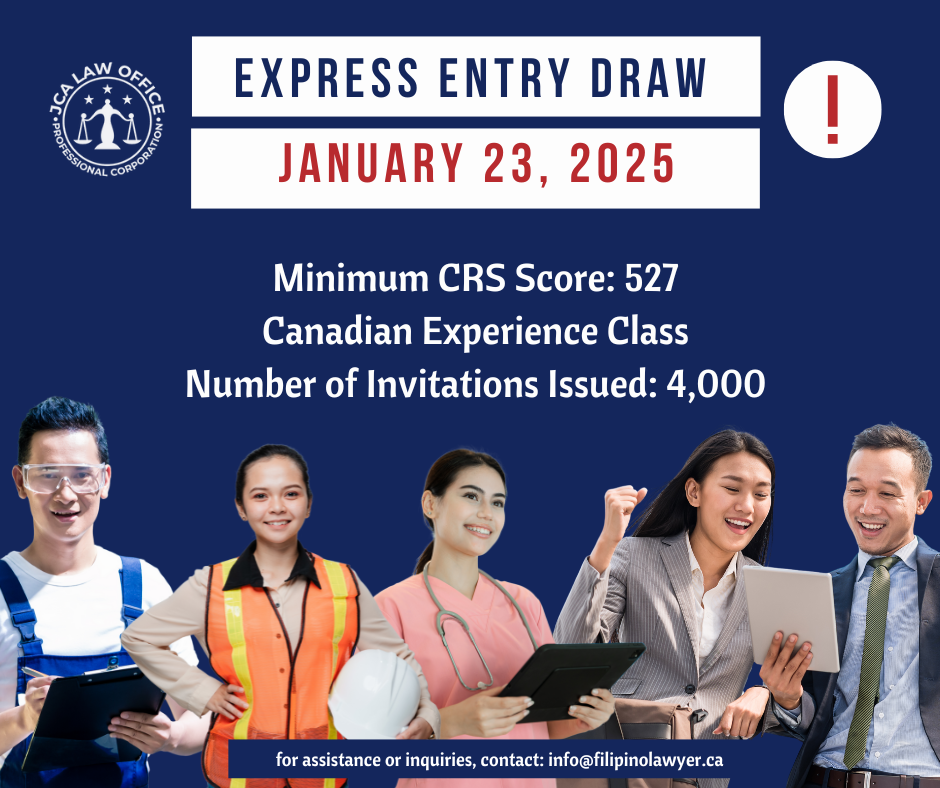
    Many out-of-status construction workers have been living and working in Canada for years, helping to build much-needed housing. Under this new pathway, they will now have the opportunity to regularize their status and stay in the country legally. According to the statement released by the IRCC, “These undocumented migrants are already living and working in Canada, and are contributing to the sector, and this pathway will keep them here legally so that they can continue to build the homes our economy and communities need with the proper protections.”

    In addition to supporting out-of-status workers, the government is also making it easier for foreign apprentices to complete their training in Canada. In the same news release, the IRCC stated, “to support foreign apprentices in construction programs and to address the current labour market needs in the construction sector, we are also introducing a temporary measure to allow foreign apprentices to complete their studies without a study permit, effective today. By removing this administrative barrier, apprentices will be able to gain the valuable skills they need to contribute to infrastructure projects more quickly.”

    The new immigration measures reflect Canada’s urgent need for skilled labor to meet the country’s growing housing demands. In addition to these new pathways, the government will form an advisory council with officials, industry employers, and union representatives to ensure fair wages and better protections for workers in the construction sector.

    How to Apply?

    More details on eligibility and the application process will be released soon. Construction workers and apprentices seeking legal guidance are encouraged to seek professional assistance.

    Contact us for a consultation
    Visit our website to learn more

    Email us at immigration@jcalaw.ca for more details

  • IRCC Announces Key Updates to Home Care Worker Immigration Pilots

    Home Care Worker Immigration Pilot
    Home Care Worker Immigration Pilot

    Ottawa, Canada – Immigration, Refugees and Citizenship Canada (IRCC) has released significant updates to the Home Care Worker Immigration Pilot Programs, including new eligibility requirements and a revised processing timeline. 

    Two Streams Introduced

    IRCC has confirmed that the pilot program will now be divided into two separate streams:

    1. Workers in Canada Stream – This stream will officially start processing applications on March 31, 2025 and is designed for those already working in Canada.
    2. Applicants Not Working in Canada Stream – This stream is set to open in the coming months for applicants outside Canada or those not currently employed in the country.

    New Eligibility Criteria: No Canadian Work Experience Required

    One of the most significant changes in the program is the removal of the previous requirement for Canadian work experience in a caregiving occupation. Instead, applicants must meet the following:

    • A full-time job offer in home care within Canada, and 
    • Recent and relevant work experience, or Completion of at least six months of home care-related training

    Where Can Home Care Workers Be Employed?

    Under the new guidelines, home care workers can be employed in various settings, including:

    • Private households
    • Home health care service providers
    • Home care support service providers
    • Direct care agencies
    • Pediatric home health care service providers
    • Personal care services in residential settings

    However, recruitment or placement agencies will not be eligible to provide job offers under this program.

    Important Requirements for Caregivers Currently in Canada

    If you are already working in Canada and plan to apply under the Workers in Canada Stream, make sure to have the following documents ready:

    • Language test – Minimum CLB 4 (Canadian Language Benchmark)
    • Educational Credential Assessment (ECA) – Minimum of high school equivalent to Canadian standards

    What’s Next?

    These changes mark a significant shift in how caregivers can qualify for permanent residency, making the program more accessible to those with relevant training and experience. With the Workers in Canada Stream opening on March 31, 2025, eligible applicants are encouraged to prepare their documents early to ensure a smooth application process.

    For expert assistance with your application, JCA LAW is ready to help caregivers navigate these updates and secure their pathway to permanent residency.

    Contact us for a consultation
    Visit our website to learn more

    Email us at immigration@jcalaw.ca for more details


  • Provincial Nominee Program (PNP) Under Express Entry: A Pathway to Canadian PR for Filipinos

    PNP Express Entry PR

    Canada remains a sought-after destination for skilled workers worldwide, including many Filipinos looking for better opportunities. One of the ways to get permanent residency in Canada is through the Provincial Nominee Program (PNP), integrated within the Express Entry system. This program empowers provinces and territories to nominate those who can significantly contribute to their local economies.

    📘 Complete Immigration Guide: PNP is just one of many pathways to Canadian PR. For a comprehensive overview of all immigration options for Filipinos, including Express Entry, Family Sponsorship, Caregiver Programs, and more, read our Filipino Immigrant Guide to Canada – From Visa to PR (2026).

    Understanding the Provincial Nominee Program (PNP)

    PNP allows Canadian provinces and territories to nominate individuals who:

    • Possess the skills, education, and work experience to bolster their economy.
    • Intend to reside in that particular province or territory.
    • Aspire to become permanent residents of Canada.

    Each province and territory has its own “streams” or immigration programs targeting specific groups. For example, certain streams may focus on:

    • Students
    • Business professionals
    • Skilled workers
    • Semi-skilled workers

    The Express Entry System

    Express Entry is an online system that manages applications for three federal economic immigration programs:

    1. Federal Skilled Worker Program (FSWP)
    2. Federal Skilled Trades Program (FSTP)
    3. Canadian Experience Class (CEC)

    Provinces and territories can nominate candidates through Express Entry by selecting individuals from the pool who meet their specific labor market needs.

    How Does the PNP Work with Express Entry?

    There are two primary pathways to apply:

    1. Express Entry Process

    Step 1: Check Your Eligibility. Ensure you qualify for both:

    • The PNP of the desired province or territory.
    • One of the three federal programs managed through Express Entry.

    Step 2: Obtain a Nomination

    • Direct Application. Contact the province or territory directly and apply for a nomination.
    • Express Entry Profile. Create an Express Entry profile and indicate your interest in specific provinces or territories. If a province or territory sends a “notification of interest” to your account, you can then apply for a nomination.

    Step 3: Update Your Profile. If nominated, update your Express Entry profile to reflect this. A provincial nomination adds 600 points to your Comprehensive Ranking System (CRS) score, significantly enhancing your chances of receiving an invitation to apply for permanent residence.

    Step 4: Apply for Permanent Residence. Upon receiving an invitation, submit your application for permanent residence online.

    2. Non-Express Entry Process

    Step 1: Check Your Eligibility. Confirm you meet the criteria for the PNP of your chosen province or territory.

    Step 2: Obtain a Nomination. Apply directly to the province or territory for a nomination.

    Step 3: Apply for Permanent Residence. After securing a nomination, apply for permanent residence through the non-Express Entry process.

    Choosing a Province or Territory

    Each province and territory (except Nunavut and Quebec) has its own PNP with specific streams and criteria. It’s essential to research and select the one that aligns with your qualifications and aspirations. Here are some provinces and their respective immigration websites:

    Benefits for Filipinos

    For Filipinos aiming to establish a life in Canada, the Provincial Nominee Program (PNP) offers several advantages. Many provinces have immigration streams tailored to specific skills and experiences that align with common Filipino professions, making it easier to qualify for nomination. Additionally, various provinces have thriving Filipino communities that could provide a supportive environment. Most importantly, securing a provincial nomination significantly boosts an applicant’s Comprehensive Ranking System (CRS) score, greatly increasing their chances of receiving an Invitation to Apply (ITA) for permanent residence through the Express Entry system.

    The Provincial Nominee Program, in conjunction with the Express Entry system, provides a viable pathway for Filipinos to achieve permanent residency in Canada. By understanding the processes and applying to the appropriate provincial immigration programs, you may have a better chance at PR.

    For personalized assistance and to navigate the complexities of the application process, consider reaching out to immigration professionals or legal experts familiar with Canadian immigration laws.

    Note: Immigration policies and procedures are subject to change. It’s advisable to consult the official IRCC website or seek professional advice for the most current information.

    Sources:

    https://www.canada.ca/en/immigration-refugees-citizenship/services/immigrate-canada/provincial-nominees.html

    https://www.canada.ca/en/immigration-refugees-citizenship/services/immigrate-canada/provincial-nominees/express-entry.html

    https://www.canada.ca/en/immigration-refugees-citizenship/services/immigrate-canada/provincial-nominees/non-express-entry.html


  • Canadian Experience Class (CEC): Your Pathway to PR in Canada

    Canada offers various immigration pathways for skilled workers, and one of the fastest and most accessible options is the Canadian Experience Class (CEC). This program is designed for individuals who have gained skilled work experience in Canada and wish to transition to permanent residency.

    What is the Canadian Experience Class (CEC)?

    The Canadian Experience Class is an immigration program under the Express Entry system. It allows skilled workers who have already gained professional work experience in Canada to apply for permanent residence. The program is ideal for temporary foreign workers and international graduates who have accumulated at least one year of work experience in Canada.

    Who is Eligible to Apply?

    To qualify for the Canadian Experience Class, applicants must meet the following criteria:

    1. Work Experience

    • Applicants must have at least one year of full-time (or equivalent part-time) skilled work experience in Canada within the last three years.
    • The work must be in one or more of these job categories under the National Occupational Classification (NOC):
      • TEER 0: Managerial jobs (e.g., project managers, marketing managers)
      • TEER 1: Professional jobs requiring a degree (e.g., engineers, accountants, doctors)
      • TEER 2 & 3: Skilled trades and technical jobs (e.g., electricians, chefs, IT specialists)
    • The work experience must have been gained legally while on a valid work permit.

    2. Language Proficiency

    • Applicants must meet the Canadian Language Benchmark (CLB) levels:
      • CLB 7 for NOC TEER 0 and TEER 1 jobs
      • CLB 5 for NOC TEER 2 and TEER 3 jobs
    • Accepted language tests include IELTS, CELPIP (for English), TEF, or TCF (for French).

    3. Residency Requirement

    • Applicants must plan to live outside Quebec, as Quebec has its own immigration programs.

    4. Education (Optional but Beneficial)

    • There is no education requirement for CEC. However, holding a Canadian degree, diploma, or an Educational Credential Assessment (ECA) for foreign education can improve the Comprehensive Ranking System (CRS) score in Express Entry.

    Benefits of the Canadian Experience Class

    • Applications are usually processed within six months under the Express Entry system, making it one of the fastest routes to permanent residency.
    • Unlike other Express Entry programs, CEC applicants do not need to provide proof of settlement funds.
    • Applicants with Canadian work experience receive higher CRS scores, increasing their chances of receiving an Invitation to Apply (ITA) for permanent residency.

    How to Apply for the Canadian Experience Class

    1. Check Your Eligibility. Ensure you meet the work experience, language, and residency requirements.
    2. Create an Express Entry Profile. Submit details about your work experience, education, and language test results.
    3. Receive an Invitation to Apply (ITA). If your CRS score is high enough, you will be invited to apply for permanent residence.
    4. Submit a Complete Application. Provide documents such as work reference letters, language test results, and medical and police clearances.
    5. Wait for Processing. Most applications are processed within six months.
    6. Receive Confirmation of Permanent Residence (COPR). If approved, you can transition to permanent resident status in Canada.

    How JCA Law Can Help

    If you are a Filipino in Canada with skilled work experience and are considering permanent residency, JCA Law can assist you in:

    • Evaluating your eligibility for the Canadian Experience Class
    • Preparing a strong Express Entry profile
    • Ensuring your application is complete and error-free
    • Guiding you through the next steps after receiving permanent residence

    Applying for permanent residency can be complex, but with expert legal guidance, you can avoid mistakes and maximize your chances of success.

    The Canadian Experience Class is one of the best pathways to permanent residency for skilled workers already in Canada. If you meet the requirements, applying through Express Entry can be your ticket to building a future in Canada.

    Need help with your immigration application? Contact JCA Law today for expert assistance!

    Sources:
    IRCC

  • Canada Launches New Immigration Pilot Programs: RCIP and FCIP

    Canada Launches New Immigration Pilot Programs: RCIP and FCIP

    The Immigration, Refugees and Citizenship Canada (IRCC) has launched two new programs to help smaller communities attract skilled workers and French speakers. The Rural Community Immigration Pilot (RCIP) and the Francophone Community Immigration Pilot (FCIP) provide pathways to permanent residency (PR) for eligible individuals.

    What Are These New Immigration Programs?

    1. Rural Community Immigration Pilot (RCIP)

    This program connects skilled workers with rural communities in need of labor for essential jobs. If you have the right skills, you may qualify for permanent residency.

    Participating communities include:

    • Ontario: North Bay, Sudbury, Timmins, Sault Ste. Marie, Thunder Bay
    • Manitoba: Steinbach, Altona/Rhineland, Brandon
    • Saskatchewan: Moose Jaw
    • Alberta: Claresholm
    • British Columbia: West Kootenay, North Okanagan Shuswap, Peace Liard
    • Nova Scotia: Pictou County

    Eligibility Criteria for RCIP: To be eligible for the RCIP, applicants must have a valid job offer from an employer located in one of the participating communities. They must meet the minimum educational requirements, which typically include having at least a high school diploma. Additionally, candidates must demonstrate sufficient language proficiency in either English or French, at a level of CLB/NCLC 4 or higher. Financial stability is also necessary, as applicants must show they have enough funds to support themselves and their family if applicable. Lastly, they must have a genuine intention to reside in the community that extends the job offer.

    Job Offer Requirements for RCIP: The job offer under RCIP must be full-time, non-seasonal, and permanent. It must meet the wage standards set by the province where the community is located. Additionally, the employer providing the job offer must be approved by the local economic development organization in that community to ensure reliability and sustainability.

    2. Francophone Community Immigration Pilot (FCIP)

    The FCIP is designed for French-speaking immigrants who want to settle outside Quebec. If you speak French or are willing to improve your French skills, this program could be an excellent opportunity.

    Participating communities include:

    • New Brunswick: Acadian Peninsula
    • Ontario: Sudbury, Timmins, Superior East Region
    • Manitoba: St. Pierre Jolys
    • British Columbia: Kelowna

    Eligibility Criteria for FCIP: To be eligible for the FCIP, applicants must be French-speaking and demonstrate a minimum proficiency of CLB/NCLC 5 or higher. They must have a valid job offer from an employer in one of the participating communities and must intend to live in that community. In addition to language requirements, applicants must also meet educational and work experience qualifications as outlined by IRCC.

    Job Offer Requirements for FCIP: A qualifying job offer under FCIP must be full-time, non-seasonal, and permanent. The employer providing the job offer must be recognized by the local economic development organization to ensure compliance with program standards. These job offers are designed to support labor market needs in Francophone minority communities outside Quebec.

    How Do These Programs Work?

    For Interested Employers

    Employers in participating communities can support the RCIP and FCIP by hiring skilled workers to fill essential job vacancies. To participate, they must offer full-time, non-seasonal jobs with competitive wages that meet provincial standards. They must also work with their local economic development organization to obtain a designation, ensuring that job offers align with community labor needs and program requirements.

    Employer Training and Support

    To assist employers in the hiring process, the Government of Canada provides training and resources on recruitment, onboarding, and retention of skilled workers through RCIP and FCIP. Employers receive guidance on program requirements, compliance with labor standards, and best practices for integrating newcomers into their workforce. This training ensures that both employers and employees benefit from a smooth transition and long-term employment success. More details on training opportunities and employer support services will be provided by local economic development organizations in each participating community.

    Once designated, employers can actively recruit skilled workers to fill essential positions in their communities. This process includes submitting documentation to verify compliance with labor standards, confirming the job offer’s long-term nature, and demonstrating its contribution to local economic growth. By participating in RCIP and FCIP, employers help address labor shortages while providing newcomers with stable employment opportunities in Canada.

    Why Consider These Immigration Pathways?

    • Easier access to permanent residency: Designed to fill labor shortages, these programs may offer faster processing times.
    • Welcoming communities: Enjoy a lower cost of living and better work-life balance in smaller towns.
    • High-demand jobs: Opportunities in healthcare, construction, hospitality, and other sectors.
    • French language advantage: The Francophone pilot opens doors for French-speaking immigrants.

    JCA Law Can Assist You

    At JCA Law, we provide expert guidance for both skilled workers and employers interested in the RCIP and FCIP programs. For prospective applicants, we assist in assessing eligibility, gathering required documents, and ensuring a strong application for permanent residency.

    For employers, we offer support in understanding the designation process and meeting program requirements. We help businesses comply with immigration regulations while finding qualified employees who contribute to community growth. 

    Whether you are a worker looking for a new opportunity or an employer seeking to fill labor shortages, JCA Law is here to guide you every step of the way.

    Contact us for a consultation
    Visit our website to learn more

    Email us at info@filipinolawyer.ca for more details

    Explore your options today!

    Sources: 

  • Latest Express Entry Draw: Minimum CRS Score Set at 527

    January 23 2025 Express Entry
    January 23 2025 Express Entry

    On January 23, 2025, Immigration, Refugees and Citizenship Canada (IRCC) held the latest Canadian Experience Class (CEC) draw, inviting candidates with a Comprehensive Ranking System (CRS) score of 527 or higher to apply for permanent residency (PR) in Canada. A total of 4,000 Invitations to Apply (ITAs) were issued.

    The CEC program provides a pathway for skilled workers already in Canada who wish to transition to PR. To be eligible, applicants must have at least one year of skilled work experience in Canada within the last three years, gained under a valid work permit. They must also meet the required language proficiency levels in English or French and plan to live outside of Quebec. Unlike other Express Entry programs, the CEC does not require proof of settlement funds, making it an attractive option for those already working in Canada. 

    If you have Canadian work experience and meet the eligibility criteria, this could be your opportunity to secure permanent status in the country.

    At JCA Law, we help skilled workers navigate Express Entry applications, improve CRS scores, and provide immigration consultations. If you received an ITA or want to know your chances in future draws, contact us for guidance!

    Contact us for a consultation
    Visit our website to learn more

    Email us at info@filipinolawyer.ca for more details

    Don’t miss this opportunity—your pathway to Canadian PR starts now!

  • Selling Real Estate in the Philippines: A Comprehensive Guide by JCA Law Office Professional Corporation

    Selling Real Estate in the Philippines: A Comprehensive Guide by JCA Law Office Professional Corporation

    Navigating the Process of Selling Real Estate in the Philippines for Filipinos in Canada

    A JCA Law Office specialty — combining legal expertise with a deep understanding of Filipino cultural values to guide you through cross-border real estate transactions.

    At JCA Law Office Professional Corporation, we specialize in the intricacies of selling real estate in the Philippines, particularly for Filipinos residing in Canada. Our approach to these real estate transactions combines legal expertise with a profound understanding of the emotional and cultural nuances involved. We aim to provide comprehensive guidance in selling real estate in the Philippines, simplifying the legal process while respecting the deep cultural connections inherent in these significant decisions.


    Understanding Emotional and Cultural Ties in Selling Real Estate

    For Filipinos in Canada, selling property in the Philippines is more than a financial decision; it’s about managing a part of their legacy and cultural identity. Our team, deeply rooted in Filipino culture and values, offers not just legal expertise in selling real estate but also a sensitive understanding of the emotional ties involved, particularly in cases of inheritances or properties that hold sentimental value.


    Expertise in Selling Real Estate Across Legal and Geographical Boundaries

    Managing the sale of real estate in the Philippines from overseas presents unique challenges, such as navigating the legalities in two different countries and coordinating across time zones. Our team is adept at handling these complexities, offering tailored legal solutions for selling real estate in the Philippines that keep you well-informed and comfortable throughout the process.


    Comprehensive Services for Selling Real Estate in the Philippines

    Preparing your property in the Philippines for sale requires careful planning. We assist in enhancing your property’s appeal and suggest improvements that can increase its market value. Our team guides you through obtaining necessary documents like the Title Certificate, Tax Declaration, and Real Property Tax clearances, ensuring your documentation complies with Philippine law. We also provide insights into the latest trends in selling real estate in the Philippines, helping you position your property attractively for potential buyers.


    Transparent Negotiations and Transactions in Real Estate Sales

    Handling negotiations and transactions from afar can be daunting. When selling real estate in the Philippines, we represent your interests, ensuring transparency and fairness in all dealings. Our goal is to secure the best possible outcome for you, considering both financial and emotional aspects.


    Navigating Tax Obligations and Legal Requirements in Real Estate Sales

    Our services include advising on tax obligations such as Capital Gains Tax and Documentary Stamp Tax, ensuring that these are settled correctly when selling your real estate in the Philippines. We handle all legal aspects of the sale, providing peace of mind that every facet of the transaction complies with Philippine law.


    Ensuring Smooth Title Transfer and Registration When Selling Real Estate

    The transfer of ownership is a critical phase in the process of selling real estate. We meticulously oversee the drafting of the Deed of Absolute Sale, Special Power of Attorney, and Deed of Extrajudicial Settlement (for inherited property), submission for registration, and the entire title transfer process, ensuring accuracy and legal compliance.

    Related Guide: SPA for Selling Property in the Philippines from Canada (2026 Guide) — A step-by-step guide to authorizing a representative to sell your Philippine property while you remain in Canada.


    Your Partner in Decisions of Selling Real Estate in the Philippines

    JCA Law Office Professional Corporation is more than just a law firm; we are your partner in the journey of selling real estate in the Philippines, aligning our legal expertise with an understanding of Filipino values and culture. We are committed to making your real estate transactions as seamless and respectful of your heritage as possible.


    Bridging Two Homes in Real Estate

    For Filipinos in Canada looking to sell their properties in the Philippines, JCA Law offers a bridge between two homes, ensuring that the process of selling real estate is handled with care, professionalism, and cultural empathy. Contact us for comprehensive support and guidance tailored to the Filipino community in Canada.

    Need Help Selling Property in the Philippines?

    Our Filipino-Canadian lawyers specialize in cross-border real estate transactions. Let us handle the legal complexities while you focus on what matters most.