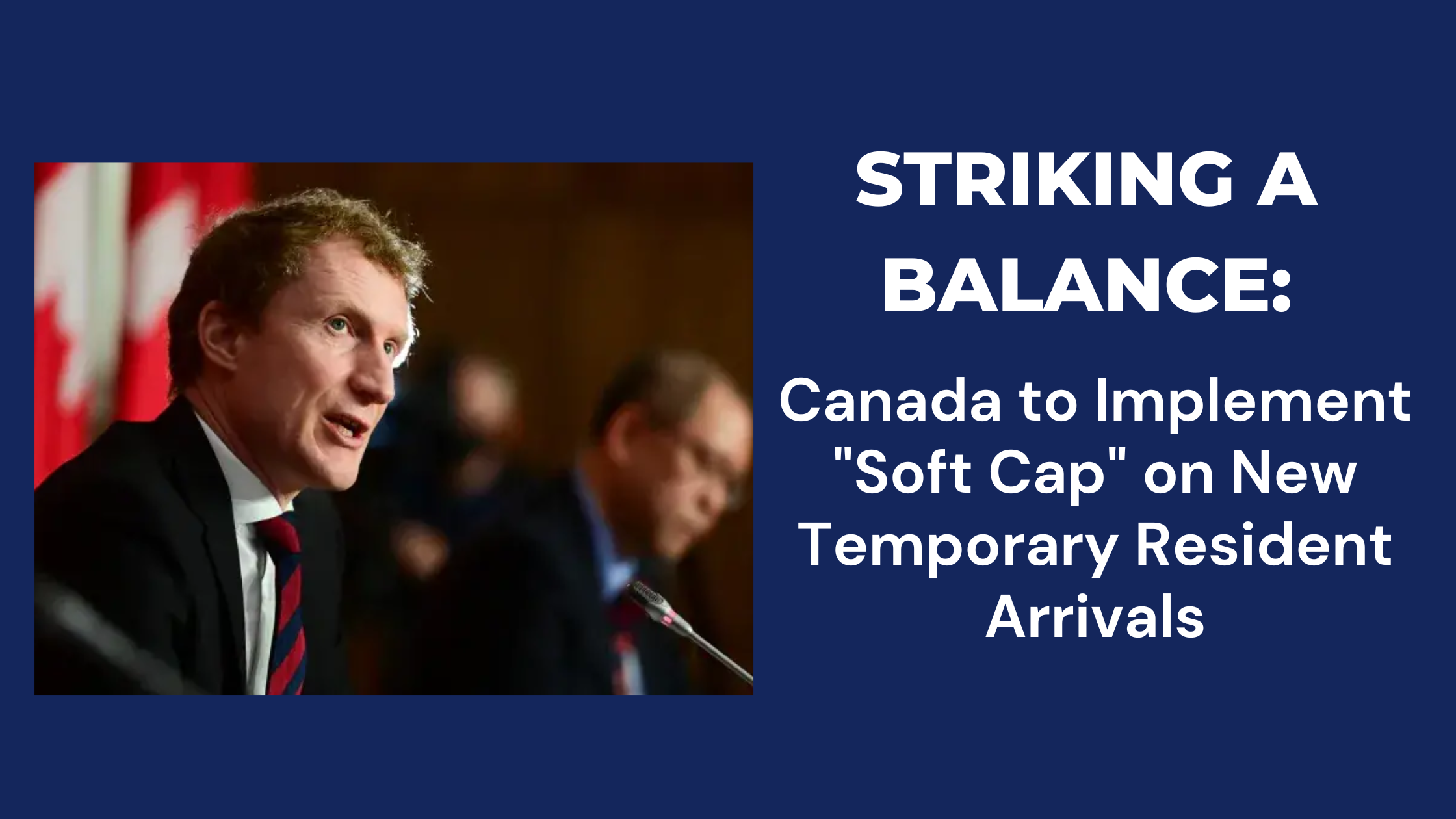
Last Updated: February 2026 — In 2024, Canada announced plans to cap temporary residents. Two years later, those plans are fully in effect — and the impact on Filipino workers, students, and families is significant. Here is everything you need to know about the temporary resident cap, how it works, and what you can do to protect your status.
What Is the Temporary Resident Cap?
In October 2024, the Government of Canada announced a historic shift in immigration policy: for the first time, the federal government would set binding targets to reduce the number of temporary residents in the country. This includes international students, temporary foreign workers, and visitors.
The reason? By mid-2024, temporary residents made up approximately 7.5% of Canada’s total population — an unprecedented level that the government said was putting unsustainable pressure on housing, healthcare, and public services.
The government’s goal is to bring temporary residents down to less than 5% of the population by the end of 2027. As of October 2025, the temporary resident population had already dropped to approximately 2.85 million (6.8% of the population), down from 3.02 million (7.3%) just three months earlier — driven by record-high outflows of 339,505 people whose permits expired or were not renewed.
Key Fact: Canada’s population actually contracted in Q3 2025 — the first decline in years — driven almost entirely by the departure of temporary residents.
The 2026–2028 Immigration Levels Plan: The Numbers
Released in late 2025, the 2026–2028 Immigration Levels Plan lays out the most restrictive temporary immigration targets in recent Canadian history. Here are the key numbers:
Permanent Residents
| Year | Target | Range |
|---|---|---|
| 2026 | 380,000 | 350,000 – 420,000 |
| 2027 | 380,000 | 350,000 – 420,000 |
| 2028 | 380,000 | 350,000 – 420,000 |
This is down from the 500,000 target set for 2025 just two years ago. Economic immigration will account for 64% of all admissions in 2027–2028, the highest proportion in decades.
Temporary Residents (New Arrivals)
| Year | Total New Arrivals | Workers | Students |
|---|---|---|---|
| 2025 | 673,650 | — | — |
| 2026 | 385,000 | 230,000 | 155,000 |
| 2027 | 370,000 | 220,000 | 150,000 |
| 2028 | 370,000 | 220,000 | 150,000 |
The 2026 target of 385,000 represents a 43% reduction from 2025. Student arrivals are cut by nearly 50%. Temporary Foreign Worker Program (TFWP) admissions drop to just 60,000 in 2026 and 50,000 by 2027.
Warning: These are targets, not hard caps. However, IRCC is enforcing them through application caps, higher refusal rates, and program restrictions. In 2024, over 2.36 million temporary resident applications were refused — a 50% refusal rate, up from 35% in 2023.
How the Cap Is Being Enforced: 5 Key Mechanisms
The temporary resident cap is not a single policy. It is enforced through a combination of interconnected restrictions across study permits, work permits, and visitor visas.
1. Study Permit Cap and Provincial Attestation Letters (PAL)
Starting in 2024, IRCC introduced a national cap on study permits, requiring most applicants to obtain a Provincial Attestation Letter (PAL) before applying. For 2026:
- Up to 408,000 study permits will be issued in total (155,000 new arrivals + 253,000 extensions)
- A maximum of 309,670 PAL-required applications will be accepted
- Master’s and doctoral students at public institutions are exempt from PAL requirements
- PALs must be issued between January 1 and December 31, 2026
2026 Provincial Study Permit Allocations
| Province / Territory | 2026 Allocation |
|---|---|
| Ontario | 104,780 |
| Quebec | 93,069 |
| British Columbia | 32,596 |
| Alberta | 32,271 |
| Saskatchewan | 11,349 |
| Manitoba | 11,196 |
| Nova Scotia | 8,480 |
| New Brunswick | 8,004 |
| Newfoundland and Labrador | 5,507 |
| Prince Edward Island | 1,376 |
| Northwest Territories | 785 |
| Yukon | 257 |
| Nunavut | 0 |
| Total | 309,670 |
2. Post-Graduation Work Permit (PGWP) Restrictions
The PGWP — long considered one of the most attractive pathways for international students — has been significantly restricted:
- Field of study requirements: Graduates from non-degree programs (college, polytechnic) must have studied in a field aligned with long-term labour shortages to qualify for a PGWP
- Language requirements: Bachelor’s/master’s/doctoral graduates need CLB 7 in all four skills; college graduates need CLB 5
- Eligible programs frozen for 2026: IRCC confirmed on January 15, 2026, that the list of 1,107 PGWP-eligible programs will not change for the rest of the year
- These new requirements apply to study permits issued on applications submitted on or after November 1, 2024
3. Temporary Foreign Worker Program (TFWP) Overhaul
The TFWP has undergone the most dramatic reforms in its history:
- Low-wage LMIA moratorium: Since September 2024, Labour Market Impact Assessment (LMIA) applications for low-wage positions are frozen in regions with unemployment at or above 6%
- LMIA validity shortened from 12 months to 6 months
- Workforce cap reduced: Employers can only have 10% of their workforce as temporary foreign workers (down from 20%)
- Enforcement tripled: In 2024–2025, penalties more than doubled to $4.88 million, and 36 employers were banned — a threefold increase
As of January 2026, some regions saw the moratorium lifted as unemployment dropped below 6%, including Vancouver, Winnipeg, Halifax, and Montreal. However, major centres including Toronto, Calgary, Edmonton, Hamilton, and Windsor remain under the moratorium.
What This Means: If you are a Filipino worker in the GTA on a low-wage LMIA, your employer cannot currently obtain a new LMIA to extend your work permit through the low-wage stream. This is one of the most impactful restrictions for our community.
4. Visitor Visa Tightening
While visitor visas are not subject to a formal cap, IRCC has dramatically increased scrutiny:
- Visitor visa refusal rates have risen to approximately 50% (up from 39%)
- Some regions see refusal rates above 70%
- The primary refusal reason remains insufficient proof of home ties under section 179(b) of IRPR
- Officers are more strictly assessing whether visitors will leave at the end of their authorized stay
5. Spousal and Dependent Work Permit Changes
Work permits for spouses and dependents of international students and foreign workers have been restricted:
- Spouses of college-level students are no longer eligible for open work permits
- Only spouses of students in master’s, doctoral, or professional programs remain eligible
- Spouses of TFWP workers face additional eligibility restrictions based on the principal worker’s wage level and occupation
Impact on the Filipino Community in Canada
These changes hit the Filipino-Canadian community particularly hard. The Philippines has consistently been among the top source countries for temporary foreign workers in Canada, alongside Mexico, India, Guatemala, and Jamaica — together accounting for nearly 70% of all TFWP work permits.
Caregiver Programs Paused
On December 19, 2025, IRCC announced that it was pausing application intake for the Home Child Care Provider Pilot and Home Support Worker Pilot — the two primary caregiver immigration pathways. These programs, which launched on March 31, 2025, were overwhelmed within hours on the first day they opened, hitting their application caps almost immediately.
Important: As of February 2026, IRCC has confirmed the Home Care Worker Immigration Pilots will not reopen in 2026. Processing times for existing applications have expanded to 55 months. If you submitted an application before the pause, it will still be processed — but no new applications are being accepted.
TFWP Workers Facing Uncertainty
Filipino workers in sectors like food processing, hospitality, agriculture, and construction are directly affected by the TFWP restrictions. With the low-wage LMIA moratorium in effect across Toronto and other major centres:
- Employers cannot obtain new LMIAs for low-wage positions, making it difficult to extend or renew work permits
- Some employers are opting to hire permanent residents instead, which means fewer contract renewals for temporary workers
- Workers whose permits expire without renewal face the prospect of losing their legal status
- TFWP arrivals have dropped to the lowest level in two years, with a 50% decline in new worker arrivals in the first half of 2025 compared to 2024
Filipino Students Affected by Study Permit Cap
Filipino students planning to study in Canada face a more competitive and uncertain landscape:
- The total number of new study permits is capped at 155,000 — nearly half of previous levels
- Students must obtain a Provincial Attestation Letter (PAL) from their chosen province before applying
- PGWP eligibility now depends on your field of study and language scores, not just completing a Canadian program
- Spouses of college-level students can no longer get open work permits
Year-by-Year Reduction Timeline
| Year | Key Milestones | Temporary Resident % of Population |
|---|---|---|
| 2024 | Cap announced; study permit cap introduced; TFWP moratorium begins | ~7.5% |
| 2025 | Caregiver pilots launch and hit caps; PGWP restrictions take effect; population contracts | ~6.8% (Q3 2025) |
| 2026 | 385,000 new temporary resident target; caregiver pilots paused; TFWP at 60,000 | Target: ~6% |
| 2027 | 370,000 new temporary resident target; TFWP drops to 50,000 | Target: <5% |
| 2028 | Targets maintained at 2027 levels | Target: <5% |
A Silver Lining: Transition to Permanent Residence
While the overall picture is restrictive, the government has included some measures that benefit temporary residents already in Canada:
Positive Development: The government has committed to accelerating the transition of up to 33,000 temporary workers to permanent residency in 2026–2027, targeting workers who have established roots in their communities, pay taxes, and contribute to the economy. Additionally, approximately 115,000 protected persons will be transitioned to permanent residency over two years.
Economic immigration will account for 64% of all permanent resident admissions in 2027–2028 — the highest proportion in decades. This means that if you are a temporary worker with Canadian work experience, your chances of transitioning to PR through programs like Express Entry, Provincial Nominee Programs (PNPs), or the Canadian Experience Class may actually improve relative to other categories.
What Should You Do If You Are Affected?
If you are a Filipino temporary resident in Canada — or planning to come — here are concrete steps to protect yourself:
If You Are Currently in Canada on a Work Permit
- Apply for PR as soon as you are eligible. Do not wait. Express Entry, PNPs, and the Canadian Experience Class remain open. The transition of 33,000 workers to PR status shows the government wants eligible workers to stay permanently.
- Check your LMIA region. If you are in a moratorium area (Toronto, Calgary, Edmonton, Hamilton, Windsor), your employer may not be able to renew your LMIA through the low-wage stream. Explore alternative pathways before your permit expires.
- Maintain your status. Apply for extensions well before your permit expires. If you apply before expiry, you maintain implied status while your application is processed.
- Consider upskilling. If your current occupation is in the low-wage category, upgrading your skills or obtaining additional certifications could qualify you for a high-wage LMIA, which is not subject to the moratorium.
If You Are a Caregiver
- If you have an existing application, it will still be processed. Keep your contact information and documents up to date with IRCC.
- If you have not yet applied, the caregiver pilots are currently paused with no reopening date announced for 2026. Speak with an immigration lawyer about alternative pathways to PR, including Provincial Nominee Programs.
- Explore other work permit options. The Interim Pathway for Caregivers or employer-specific work permits through the high-wage TFWP stream may still be available depending on your situation.
If You Are Planning to Study in Canada
- Obtain your PAL early. Provincial Attestation Letters are allocated on a limited basis. Apply to your institution and province as early as possible.
- Choose your program strategically. Select a program that is PGWP-eligible and aligned with long-term labour shortages. Check the IRCC list of eligible fields before committing.
- Prepare for language tests. You will need CLB 7 (university) or CLB 5 (college) to qualify for a PGWP upon graduation. Take your IELTS or CELPIP test early.
- Budget for the full cost. With spousal work permit restrictions, families can no longer rely on a spouse’s income during studies at the college level.
If You Are Applying for a Visitor Visa
- Demonstrate strong home ties. The number one refusal reason is insufficient proof of ties to the Philippines. Document your employment, property, family obligations, and reasons to return.
- Show sufficient financial support. Whether you or your Canadian sponsor is funding the trip, provide clear and complete financial documentation.
- Consider a Super Visa if you are a parent or grandparent of a Canadian citizen or permanent resident. The Super Visa allows stays of up to 5 years.
Future Outlook: What to Expect in 2027 and Beyond
The current trajectory is clear: Canada is significantly reducing temporary immigration while stabilizing permanent immigration. Here is what to expect:
- Further reductions in 2027–2028: Temporary resident targets drop to 370,000 per year, with TFWP admissions falling to 50,000
- The 5% target will likely be reached: At current departure rates, Canada is on track to hit the <5% temporary resident population target by late 2027
- Permanent residence pathways remain open: Economic immigration is being prioritized, particularly for workers already in Canada with labour market attachment
- Caregiver programs may be redesigned: The current pilots are paused, but the government has acknowledged the need for caregivers. A redesigned program could emerge in 2027
- Provincial Nominee Programs are more important than ever: With Express Entry draws becoming more competitive, PNPs offer an alternative pathway to PR for workers in specific provinces
Frequently Asked Questions
Is Canada closing its doors to immigrants?
No. Canada is reducing temporary immigration while maintaining permanent resident admissions at 380,000 per year. The government is shifting toward permanent immigration and away from temporary programs. If you qualify for PR, your chances may actually be better now because economic immigration is a higher proportion of total admissions than ever before.
Can I still apply for a work permit in 2026?
Yes, but it depends on the stream. High-wage LMIA work permits remain available nationwide. Low-wage LMIA work permits are frozen in regions with unemployment at or above 6%, including Toronto. International Mobility Program (IMP) work permits, including PGWP and spousal work permits, are still available but with new restrictions.
What happens if my work permit expires and I cannot renew it?
If you apply for a renewal or extension before your current permit expires, you maintain implied status and can continue working while your application is processed. If your permit expires without a pending application, you must stop working and may need to apply to restore your status within 90 days. Speak with an immigration lawyer immediately if you are in this situation.
Will the caregiver program reopen?
IRCC has confirmed that the Home Care Worker Immigration Pilots will not reopen in 2026. No specific date has been announced for a future reopening. Existing applications submitted before the December 2025 pause will continue to be processed, though processing times are currently around 55 months.
Should I apply for PR now or wait?
Apply now if you are eligible. Immigration policy is becoming more restrictive, not less. The government’s stated intention is to continue reducing temporary residents while transitioning eligible workers to permanent status. Waiting only adds risk — programs can change, caps can be reached, and processing times can increase.
How JCA Law Office Can Help
At JCA Law Office Professional Corporation, we understand the unique challenges facing Filipino-Canadians navigating these changes. Our immigration team provides:
- Work permit strategy: We assess your current situation and identify the best pathway to maintain your status — whether through LMIA renewals, open work permits, or bridging permits
- PR applications: We prepare Express Entry profiles, PNP applications, and Canadian Experience Class applications to help you transition from temporary to permanent status
- Caregiver immigration: For caregivers with pending applications, we monitor processing and ensure your file is complete. For those exploring alternatives, we identify other pathways to PR
- Study permit applications: We guide students through the PAL process, program selection, and PGWP planning
- Visitor visa and Super Visa: We help families prepare strong applications that address common refusal reasons
Book a Consultation Today
The temporary resident landscape is changing rapidly. Whether you need to renew a work permit, apply for permanent residence, or understand how the new restrictions affect your plans, our team is here to help.
JCA Law Office Professional Corporation | Toronto, ON
Phone: (647) 985-1592 | Email: info@jcalaw.ca
Related Resources
Immigration Guides from JCA Law Office:
- The Complete Filipino Immigrant Guide to Canada
- Filipino Caregiver Pathway to Canada PR — Complete Guide
- Super Visa Canada Guide for Filipino Parents
- Ontario PNP (OINP) Guide for Filipino Immigrants
- Spousal Sponsorship Canada Guide for Filipino Couples
Official Government Sources:
This article is for informational purposes only and does not constitute legal advice. Immigration law is complex and constantly changing. For advice specific to your situation, please contact JCA Law Office for a consultation.
Leave a Reply