The Immigration, Refugees and Citizenship Canada (IRCC) has launched two new programs to help smaller communities attract skilled workers and French speakers. The Rural Community Immigration Pilot (RCIP) and the Francophone Community Immigration Pilot (FCIP) provide pathways to permanent residency (PR) for eligible individuals.
What Are These New Immigration Programs?
1. Rural Community Immigration Pilot (RCIP)
This program connects skilled workers with rural communities in need of labor for essential jobs. If you have the right skills, you may qualify for permanent residency.
Participating communities include:
Ontario: North Bay, Sudbury, Timmins, Sault Ste. Marie, Thunder Bay
Manitoba: Steinbach, Altona/Rhineland, Brandon
Saskatchewan: Moose Jaw
Alberta: Claresholm
British Columbia: West Kootenay, North Okanagan Shuswap, Peace Liard
Nova Scotia: Pictou County
Eligibility Criteria for RCIP: To be eligible for the RCIP, applicants must have a valid job offer from an employer located in one of the participating communities. They must meet the minimum educational requirements, which typically include having at least a high school diploma. Additionally, candidates must demonstrate sufficient language proficiency in either English or French, at a level of CLB/NCLC 4 or higher. Financial stability is also necessary, as applicants must show they have enough funds to support themselves and their family if applicable. Lastly, they must have a genuine intention to reside in the community that extends the job offer.
Job Offer Requirements for RCIP: The job offer under RCIP must be full-time, non-seasonal, and permanent. It must meet the wage standards set by the province where the community is located. Additionally, the employer providing the job offer must be approved by the local economic development organization in that community to ensure reliability and sustainability.
2. Francophone Community Immigration Pilot (FCIP)
The FCIP is designed for French-speaking immigrants who want to settle outside Quebec. If you speak French or are willing to improve your French skills, this program could be an excellent opportunity.
Participating communities include:
New Brunswick: Acadian Peninsula
Ontario: Sudbury, Timmins, Superior East Region
Manitoba: St. Pierre Jolys
British Columbia: Kelowna
Eligibility Criteria for FCIP: To be eligible for the FCIP, applicants must be French-speaking and demonstrate a minimum proficiency of CLB/NCLC 5 or higher. They must have a valid job offer from an employer in one of the participating communities and must intend to live in that community. In addition to language requirements, applicants must also meet educational and work experience qualifications as outlined by IRCC.
Job Offer Requirements for FCIP: A qualifying job offer under FCIP must be full-time, non-seasonal, and permanent. The employer providing the job offer must be recognized by the local economic development organization to ensure compliance with program standards. These job offers are designed to support labor market needs in Francophone minority communities outside Quebec.
How Do These Programs Work?
For Interested Employers
Employers in participating communities can support the RCIP and FCIP by hiring skilled workers to fill essential job vacancies. To participate, they must offer full-time, non-seasonal jobs with competitive wages that meet provincial standards. They must also work with their local economic development organization to obtain a designation, ensuring that job offers align with community labor needs and program requirements.
Employer Training and Support
To assist employers in the hiring process, the Government of Canada provides training and resources on recruitment, onboarding, and retention of skilled workers through RCIP and FCIP. Employers receive guidance on program requirements, compliance with labor standards, and best practices for integrating newcomers into their workforce. This training ensures that both employers and employees benefit from a smooth transition and long-term employment success. More details on training opportunities and employer support services will be provided by local economic development organizations in each participating community.
Once designated, employers can actively recruit skilled workers to fill essential positions in their communities. This process includes submitting documentation to verify compliance with labor standards, confirming the job offer’s long-term nature, and demonstrating its contribution to local economic growth. By participating in RCIP and FCIP, employers help address labor shortages while providing newcomers with stable employment opportunities in Canada.
Why Consider These Immigration Pathways?
Easier access to permanent residency: Designed to fill labor shortages, these programs may offer faster processing times.
Welcoming communities: Enjoy a lower cost of living and better work-life balance in smaller towns.
High-demand jobs: Opportunities in healthcare, construction, hospitality, and other sectors.
French language advantage: The Francophone pilot opens doors for French-speaking immigrants.
JCA Law Can Assist You
At JCA Law, we provide expert guidance for both skilled workers and employers interested in the RCIP and FCIP programs. For prospective applicants, we assist in assessing eligibility, gathering required documents, and ensuring a strong application for permanent residency.
For employers, we offer support in understanding the designation process and meeting program requirements. We help businesses comply with immigration regulations while finding qualified employees who contribute to community growth.
Whether you are a worker looking for a new opportunity or an employer seeking to fill labor shortages, JCA Law is here to guide you every step of the way.
Last updated: February 8, 2026 | Based on the official 2026-2028 Immigration Levels Plan released by IRCC on November 5, 2025
On November 5, 2025, the Government of Canada released its 2026-2028 Immigration Levels Plan, replacing the previous 2025-2027 plan with significant changes that affect every immigration pathway. For Filipino-Canadians and prospective Filipino immigrants, this plan brings both opportunities and challenges that require careful attention.
The new plan stabilizes permanent resident (PR) admissions at 380,000 per year through 2028, while dramatically cutting temporary resident arrivals. It also introduces a one-time pathway for 33,000 skilled temporary workers to gain permanent residence, and increases Provincial Nominee Program (PNP) allocations by 66%.
As the Philippines consistently ranks as one of Canada’s top three source countries for immigrants, these changes have a direct and significant impact on the Filipino community. Below, we break down everything you need to know.
Overview: A Shift Toward Sustainable Immigration
The 2026-2028 Immigration Levels Plan signals a fundamental shift in Canada’s immigration strategy. After years of record-high immigration targets (peaking at 485,000 PRs in 2024), the government is now prioritizing sustainability over volume. The key themes are:
Stable permanent immigration: PR admissions fixed at 380,000 per year for all three years (2026-2028)
Dramatic temporary resident cuts: New temporary arrivals dropping from 673,650 in 2025 to 385,000 in 2026 (a 43% reduction)
Economic immigration priority: Economic class will represent 64% of all PR admissions by 2027-2028, the highest proportion in decades
Population target: Reducing temporary residents to less than 5% of Canada’s total population by end of 2027
Pathway for existing workers: A new one-time initiative to transition 33,000 skilled temporary workers to PR over 2026-2027
Year-by-Year Permanent Resident Targets
The new plan keeps PR targets flat at 380,000, a notable change from the previous plan’s declining trajectory. Here is how the 2026-2028 plan compares to the previous 2025-2027 plan:
Year
Previous Plan (2025-2027)
New Plan (2026-2028)
Change
2025
395,000
N/A (not covered)
–
2026
380,000
380,000
No change
2027
365,000
380,000
+15,000
2028
N/A (not covered)
380,000
New
Key Insight: While 2026 targets remain the same as the old plan, the new plan actually increases the 2027 target by 15,000 compared to the previous plan’s 365,000 projection. This signals the government wants to maintain a stable baseline rather than continue cutting.
Category Breakdown: Where the 380,000 Spots Go
Understanding how the 380,000 annual PR spots are allocated across categories is essential for planning your immigration strategy.
Category
2026
2027
2028
% of Total (2027)
Economic Class
239,800
244,700
244,700
64%
Family Class
84,000
81,000
81,000
21%
Refugees & Protected Persons
49,300
49,300
49,300
13%
Humanitarian & Other
6,900
5,000
5,000
1%
TOTAL
380,000
380,000
380,000
100%
Economic Class: Detailed Breakdown
The economic class is where the most significant changes occur, and where most Filipino skilled workers will find their pathway to Canada. Economic immigration will account for 64% of all admissions by 2027-2028, the highest proportion in decades.
Express Entry (Federal High Skilled)
Program
2026
2027
2028
Federal High Skilled (Express Entry)
109,000
111,000
111,000
Federal Business
500
500
500
Provincial Nominee Program (PNP)
91,500
92,500
92,500
Atlantic Immigration Program
4,000
4,000
4,000
Economic Pilots (Caregivers, Agri-Food, Rural, Mobility)
8,175
8,775
8,775
Skilled Temporary Workers Initiative
Included
Included
–
Total Economic Class
239,800
244,700
244,700
Express Entry remains the primary pathway for skilled Filipino workers, with 109,000 to 111,000 spots allocated annually. This includes the Federal Skilled Worker Program (FSWP), Canadian Experience Class (CEC), and Federal Skilled Trades Program (FSTP).
In early 2026, Express Entry draws have been active, with CRS cutoffs in the 509-511 range for Canadian Experience Class draws. General draws have seen cutoffs around 400-500, with larger draw sizes of up to 8,500 invitations.
Provincial Nominee Program (PNP): Major Increase
Good News for Filipino Applicants: PNP allocations are jumping to 91,500 in 2026 and 92,500 in 2027-2028. This represents a 66% increase from the previous plan’s allocation of 55,000 per year. The PNP is one of the most accessible pathways for Filipino immigrants, especially those targeting provinces outside Ontario.
The PNP allows provinces and territories to nominate immigrants with skills that match their local labour market needs. Popular provincial programs for Filipino immigrants include:
Skilled Temporary Workers Initiative: New PR Pathway
One of the most significant developments in the 2026-2028 plan is a one-time, two-year initiative to fast-track permanent residence for 33,000 skilled temporary workers already working in Canada. This is particularly relevant for Filipino workers on employer-specific work permits.
What we know so far:
The program targets workers who have established strong roots in their communities, are paying taxes, and working in in-demand sectors
Focus will be on workers in rural areas and essential occupations such as healthcare, skilled trades, and agriculture
A minimum CLB 5 language score is expected to be required
The 33,000 spots will be split across 2026 and 2027
Selection is expected to be points-based, similar to the 2021 TR-to-PR pathway
Specific eligibility criteria and launch dates have not yet been announced
Action Required: If you are a Filipino worker currently in Canada on a work permit, start gathering your documents now. You will likely need proof of Canadian work experience, language test results (IELTS or CELPIP), and evidence of community integration. The 33,000 cap means demand will far exceed available spots.
Family Class Sponsorship
Family reunification remains a pillar of Canada’s immigration system, but the 2026-2028 plan brings some significant changes, particularly for parents and grandparents sponsorship.
Family Category
Previous Plan 2025
New Plan 2026
New Plan 2027
New Plan 2028
Spouses, Partners & Children
70,000
69,000
66,000
66,000
Parents & Grandparents
24,500
15,000
15,000
15,000
Total Family Class
94,500
84,000
81,000
81,000
Important Change for Filipino Families: The Parents and Grandparents Program (PGP) allocation has been cut by nearly 40%, dropping from 24,500 in 2025 to just 15,000 per year from 2026-2028. This means longer wait times and more competition for Filipino-Canadians looking to bring their parents or lolas and lolos to Canada. If you are planning to sponsor your parents, consider applying as early as possible or exploring the Super Visa as an alternative for extended visits.
Spousal and partner sponsorship remains relatively stable, with 69,000 spots in 2026 decreasing slightly to 66,000 in 2027-2028. This pathway continues to be one of the most reliable routes for family reunification.
Refugees and Protected Persons
The refugee and protected persons category is set at 49,300 per year from 2026 through 2028, down from 58,350 in 2025.
Refugee Category
2026
2027
2028
Government-Assisted Resettled
13,250
13,250
13,250
Blended Visa Office Referred
50
50
50
Privately Sponsored
16,000
16,000
16,000
Protected Persons in Canada
20,000
20,000
20,000
Total
49,300
49,300
49,300
Additionally, approximately 115,000 individuals who already have protected person status in Canada will be granted permanent residence over the next two years as a one-time measure.
Temporary Resident Reductions: The Biggest Change
The most dramatic shift in the 2026-2028 plan is the sharp reduction in temporary resident arrivals. The government aims to reduce Canada’s temporary population to less than 5% of the total population by the end of 2027.
Temporary Resident Category
2025 (Previous Plan)
2026
2027
2028
International Students
305,900
155,000
150,000
150,000
International Mobility Program (Work)
–
170,000
170,000
170,000
Temporary Foreign Worker Program
–
60,000
50,000
50,000
Total Workers
367,750
230,000
220,000
220,000
Total Temporary Arrivals
673,650
385,000
370,000
370,000
Key reductions:
International students: Down 49% from 305,900 in 2025 to 155,000 in 2026
Work permits: Down 37% from 367,750 in 2025 to 230,000 in 2026
Total temporary arrivals: Down 43% from 673,650 in 2025 to 385,000 in 2026
How These Changes Affect Filipino Immigrants
The Philippines consistently ranks as one of Canada’s top three source countries for immigration, contributing approximately 11% of all newcomers. Here is how the 2026-2028 plan specifically impacts Filipino applicants across different pathways:
1. Skilled Workers (Express Entry)
With 109,000-111,000 Express Entry spots annually, Filipino professionals in fields like healthcare, IT, engineering, and finance continue to have strong opportunities. The stable allocation means consistent draw sizes and potentially lower CRS cutoffs over time. Early 2026 draws suggest cutoffs in the 400-511 range depending on the stream.
Tip: Category-based selection draws (targeting healthcare, STEM, trades, transport, and agriculture) continue to offer lower CRS requirements for workers in high-demand occupations. Many Filipino healthcare workers benefit from these targeted draws.
2. Provincial Nominees
The 66% increase in PNP spots (from 55,000 to 91,500-92,500) is excellent news for Filipino immigrants willing to settle outside major cities. Provinces like Manitoba, Saskatchewan, and Alberta have large, established Filipino communities and active PNP streams that welcome Filipino workers.
3. Caregivers
Filipino caregivers have historically been a significant part of Canada’s immigration story. The 2026-2028 plan allocates spots under “Economic Pilots” (8,175-8,775 combined), which includes caregivers along with Agri-Food, Rural, and Mobility programs. However, IRCC has paused new caregiver pilot applications as of early 2026 to process the existing backlog. No reopening date has been announced.
Caregiver Alert: If you are a Filipino caregiver already in Canada, focus on maintaining your work permit status and meeting the requirements for permanent residence under the existing pilot programs. The new Skilled Temporary Workers Initiative (33,000 spots) may also provide an alternative pathway if you qualify. Read our complete Caregiver Pathway Guide for more details.
4. Family Sponsorship
Family reunification is deeply important in Filipino culture. While spousal sponsorship remains relatively stable (66,000-69,000 spots), the 40% cut to the Parents and Grandparents Program (from 24,500 to 15,000) will create longer wait times. Filipino-Canadians who want to bring their parents to Canada should apply at the earliest opportunity and consider the Super Visa as an interim solution for extended family visits.
5. International Students
The 49% reduction in study permits (from 305,900 to 155,000) is the most dramatic cut in the plan. Filipino students planning to study in Canada will face significantly more competition for study permits. Those already studying in Canada should focus on securing their Post-Graduation Work Permit (PGWP) and building Canadian work experience toward PR eligibility.
6. Temporary Foreign Workers
Work permit allocations under the Temporary Foreign Worker Program are dropping from higher levels to just 60,000 in 2026 and 50,000 in 2027-2028. Filipino workers seeking LMIA-based work permits will face more restricted access. However, the International Mobility Program (open work permits, PGWP, etc.) remains at 170,000 per year.
What Current Applicants Should Do Now
Whether you are already in Canada or planning your immigration journey from the Philippines, here are the steps you should take in light of the 2026-2028 plan:
If You Are Already in Canada
Check your Express Entry profile. With stable allocations of 109,000-111,000, regular draws are expected throughout 2026. Improve your CRS score through language tests, education credential assessments, or provincial nominations.
Explore PNP options. The 66% increase in PNP spots is a major opportunity. If you have a job offer or work experience in a province, apply for a provincial nomination to boost your CRS score by 600 points.
Prepare for the Skilled Temporary Workers Initiative. If you are on a work permit, gather your employment records, language test results, and community ties documentation now.
Maintain your legal status. With temporary resident reductions, ensure your work permits and status documents are current and renewed on time.
Consider spousal sponsorship. If you have a Canadian citizen or PR spouse, spousal sponsorship remains a stable pathway with 66,000-69,000 spots.
If You Are Applying from the Philippines
Take your IELTS or CELPIP early. Language scores are critical for Express Entry and PNP applications. Aim for CLB 7 or higher.
Get your Educational Credential Assessment (ECA). This is required for Express Entry and takes several weeks to process.
Research provincial programs. With PNP allocations at all-time highs, identify provinces where your skills are in demand and where Filipino communities are established.
Plan study permit applications carefully. With the 49% reduction in student permits, ensure your application is strong with clear ties to a Designated Learning Institution (DLI) and a genuine study plan.
Consult an immigration lawyer. The changing landscape makes professional guidance more important than ever.
Comparison: Previous Plan vs. New Plan at a Glance
The following table provides a side-by-side comparison of key allocations between the previous 2025-2027 plan and the new 2026-2028 plan:
Category
Previous Plan (2026)
New Plan (2026)
Difference
Total PRs
380,000
380,000
No change
Economic Class
229,750
239,800
+10,050
Express Entry
47,400
109,000
+61,600
PNP
55,000
91,500
+36,500 (+66%)
Family Class
88,000
84,000
-4,000
Parents & Grandparents
21,500
15,000
-6,500 (-30%)
Refugees
55,350
49,300
-6,050
Temporary Arrivals
516,600
385,000
-131,600 (-25%)
Study Permits
305,900
155,000
-150,900 (-49%)
Frequently Asked Questions
Will Canada stop accepting immigrants?
No. Canada will continue accepting 380,000 permanent residents per year through 2028. The reductions are primarily in temporary residents (students and workers), not in permanent immigration. Canada remains one of the most welcoming countries for immigrants globally.
Is it harder to get PR now?
It depends on your pathway. Express Entry and PNP allocations have actually increased compared to the previous plan, making skilled immigration more accessible. However, pathways that rely on transitioning from temporary to permanent status (like PGWP to CEC) may become more competitive due to fewer temporary resident entries.
How does this affect my pending application?
Applications already in processing are generally not affected by changes to levels plans. The levels plan sets targets for new admissions, not for applications in progress. However, processing times may fluctuate as IRCC adjusts to the new targets.
Should I apply for Express Entry or PNP?
Both pathways have increased allocations. If your CRS score is competitive (generally above 470-510 for general draws), Express Entry is a strong option. If your CRS score is lower, a provincial nomination adds 600 points and virtually guarantees an invitation. Many Filipino applicants successfully use PNP-aligned Express Entry streams.
What happened to the Parents and Grandparents Program?
PGP allocations have been reduced from 24,500 to 15,000 per year. The program remains active, but with fewer spots, wait times will likely increase. Filipino-Canadians should consider applying early and exploring the Super Visa as an alternative that allows parents and grandparents to visit for up to 5 years at a time.
What is the Skilled Temporary Workers Initiative?
This is a new one-time program to transition 33,000 work permit holders to permanent residence over 2026-2027. It targets workers already in Canada in in-demand sectors, particularly in rural areas. Details on eligibility and application process are expected to be announced in 2026.
Can Filipino caregivers still come to Canada?
The caregiver pilot programs exist in the levels plan, but IRCC has paused new applications as of early 2026 to process existing backlogs. No reopening date has been announced. Caregivers already in Canada should focus on meeting their PR requirements under existing programs.
How JCA Law Office Can Help
At JCA Law Office Professional Corporation, we specialize in serving the Filipino-Canadian community with expert immigration guidance. Our team understands the unique challenges Filipino immigrants face and can help you navigate the 2026-2028 immigration landscape effectively.
Our immigration services include:
Express Entry profile optimization and application preparation
Provincial Nominee Program applications across all provinces
Family sponsorship for spouses, partners, children, parents, and grandparents
Work permit applications (LMIA and LMIA-exempt)
Study permit applications and post-graduation pathways
Caregiver program applications and PR transitions
Citizenship applications and test preparation
Book a Consultation with JCA Law Office
The 2026-2028 Immigration Levels Plan creates new opportunities and challenges. Whether you are planning your first application or need to adjust your strategy, our experienced immigration team is here to help. We serve clients across the Greater Toronto Area and throughout Canada.
Sources: This article is based on the official Supplementary Information for the 2026-2028 Immigration Levels Plan published by Immigration, Refugees and Citizenship Canada (IRCC). All figures and targets are sourced directly from official government publications. This article is for informational purposes only and does not constitute legal advice.
Permanent Resident Card Renewal in the Time of Pandemic: What You Should Know
If you are one of the people affected by the travel ban due to the Coronavirus lockdown and you have some queries and concerns with regards to your Permanent Resident (PR) Card status in Canada, here’s some answers to the most frequently asked questions related to this matter during this time of pandemic, hoping we can at least provide some help and guidance to those who are affected:
Q: Do I need my PR Card while travelling outside Canada?
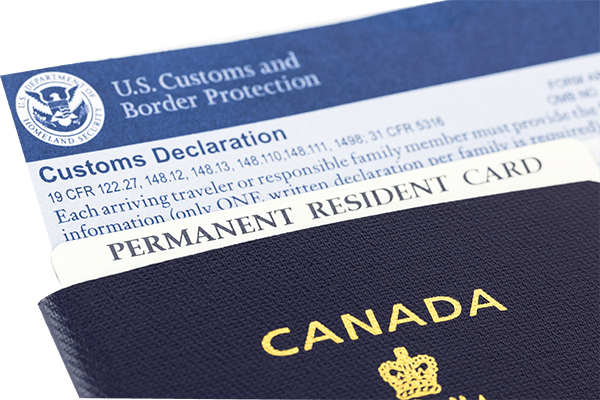
All permanent residents of Canada must have a valid permanent resident card (PR card) or permanent resident travel document (PRTD) to return to Canada via plane, train, bus, or boat. Without one, you may not be able to go on board your transportation. Your PR card should not be expired when you show it. If you have plans of travelling for a longer period of time and you know that your PR card will expire within 6 months while you’re travelling, it is best that you renew it before you leave.
If due to unavoidable circumstances and your card expired while outside Canada, you will have to apply for a new one online. Your status will still be a permanent resident though even if your card expires.
Q: What happens if my permanent resident card expires while I am outside Canada?
If due to unavoidable circumstances (such as the Coronavirus pandemic) and your PR card expires while you are outside of Canada, worry not since according to the Government of Canada website, you will still have your permanent resident (PR) status.
If you plan to come back to Canada using a commercial vehicle or public transportation such as airplane, train, bus, or boat, you must first apply for a permanent resident travel document (PRTD) to the nearest Visa Application Centre (VACs) in the country you are currently in. Kindly take note that you can only apply for a PRTD when you are outside Canada. If you try to return without a valid PR card or PRTD, chances are you may not be able to take your flight, train, bus, or boat to Canada.
On the other hand, if you plan on using a private vehicle (Some examples of private vehicles include, but are not limited to a car, truck, motorcycle, or recreational vehicle that you own, borrow, or rent; It is transportation NOT available for public use), you may use other supporting documents (such as but not limited to: Provincial Driver’s License, Provincial Identity Card, Health Card, SIN (Social Insurance Number) Card, Student Card with photo & signature) to re-enter the country. Once back in Canada, apply for a PR Card immediately especially if you are planning on travelling again.
To keep your PR status, you need to stay in Canada for a certain amount of time (or at least 730 days during the last 5 years).
Q: How do I renew my PR (permanent resident) card?
If your permanent resident (PR) card is expired or will expire in less than 9 months, you can apply for a new card. The new card will have a new expiration date. Most of the new PR cards being issued are valid for 5 years. Keep in mind that you need to submit your PR card application package in Canada. The application package includes a guide and all the forms you need to complete to apply for a PR card.
Make sure you include the following documents when you submit your application for your PR card renewal:
Keep your current PR card and include a photocopy of it along with your application.
A clear copy of your valid passport or travel document, or the passport or travel document you held at the time you became a permanent resident
2 photos that meet the photo specifications of Immigration Canada (with your name, date of birth, & date, name, and address of photo studio)
A copy of the receipt for the processing or fee of CAD$50 (it needs to be paid online)
Any other identity documents listed in the Document Checklist, including the checklist itself
Please take note that if you are applying to replace your PR card because it is damaged or the personal information indicated in your card is wrong, send the card with your application
Q: Where do I submit my PR Card application?
Send all the documents to the Case Processing Centre in Sydney, Nova Scotia, Canada.
By mail: Case Processing Centre — PR Card P.O. Box 10020 SYDNEY, NS B1P 7C1
Or via courier: Case Processing Centre – PR Card 49 Dorchester Street Sydney, NS B1P 5Z2
Q: When do I need to apply for a PR Card?
You should only apply for a PR card if:
your card has expired or will expire in less than 9 months
your card is lost, stolen, or destroyed
you did not receive your card within 180 days of immigrating to Canada
you need to update your card to:
legally change your name
change your citizenship
change your gender designation
correct your date of birth
Otherwise, your application may NOT be processed if not for the reasons mentioned above.
Q: How long will it take to process my PR Card Application?
The normal PR Card Processing time is as follows: Renew or replace: 27 days New PR card: 13 days
But due to disruptions in our working hours caused by the novel coronavirus (COVID-19) pandemic, processing times are no longer accurate and administering of applications takes much longer than the normal time.
If you need assistance in renewing your Permanent Resident (PR) Card to ensure that all the documents, applications, and forms are properly filled out and submitted during this time of the pandemic, our approachable and knowledgeable immigration consultants and lawyers at JCA LAW OFFICE can assist you in applying and submitting the documents to Immigration Canada.
You may send us a message through our Facebook Page, or you may also book your appointment by calling us at 1-855-522-5290. You may also send us an email at info@filipinolawyer.ca or you may also book it online: https://jcalaw.ca/book-an-appointment/
CANADA IMMIGRATION POLICIES: WHAT TO EXPECT AFTER THE RECENT 2019 CANADIAN FEDERAL ELECTION
By Gin Aguilar
Now that the Liberal Party has been confirmed as the official winning party in the recently concluded 2019 Canadian federal election, this means that the current immigration policies in Canada will most likely remain unchanged.
Despite winning a minority victory and getting fewer seats in the parliament, reports indicate that Liberals may still proceed with their plan to increase immigration population as long as they get the support of 1 of the other 3 political parties who also have similar views on Canada immigration policies.
Citizenship and Immigration Canada (CIC) further reported that Liberals will only need the support of one of the other three political parties who already have somewhat similar views on the subject.
Under the Liberals’ existing plan, the targeted number of immigrants will increase from 330,800 in 2019 to 350,000 by 2021, and their election platform displayed that this pattern would continue if they reached a new mandate.
We can expect immigration targets to increase to an average of 10,000 immigrants per year in the next two years beyond 2021, or an estimate of 370,000 newcomers by 2023, given the incremental approach employed by the Liberals in recent years.
Approximately 60% of newcomers will be admitted through Canada’s Economic Class immigration programs and based on the Liberals’ election platform, they will continue to focus on getting “highly skilled people who can help build a stronger Canada.”
Will there be any changes to Canada’s Express Entry system?
Canada’s Express Entry system, which was introduced in 2015 by the Conservatives to manage the pool of candidates for Canada’s main economic immigration programs – the Federal Skilled Worker Class, Canadian Experience Class and Federal Skilled Trades Class – is expected not to have any major changes from the Liberals.
The points-based system assigns eligible candidates a score based on several factors such as their age, education level, skilled work experience and proficiency in English or French. A set number of the highest-ranked candidates are then invited to apply for Canadian permanent residence through regular draws from the Express Entry pool. The Liberals reduced the number of points awarded for a job offer from 600 to a maximum of 200 in 2016 to ensure that those invited to apply for permanent residence are highly skilled and more likely to find economic success in Canada.
What will happen to the Immigration Pilot Programs?
The Liberal government under PM Justin Trudeau launched several economic class immigration pilot programs during the first term. The most notable among these was the Atlantic Immigration Pilot (AIP), a partnership between Canada’s government and provinces in the Atlantic region to bring in immigrants with various skill sets to work in the area. The fast-track program allows employers in Canada’s four Atlantic provinces — Nova Scotia, New Brunswick, Newfoundland and Labrador and Prince Edward Island — to hire foreign nationals for jobs they haven’t been able to fill locally. Now that the Liberals have earned another mandate, they have pledged to make the said program permanent.
However, it has been noted that the immigrants largely chose to settle in the larger cities leaving other parts of the country with a serious shortage of skilled labor. In order to address this challenge, the Liberal government plans to launch the Municipal Nominee Program (MNP), which will allow and ensure local communities of all sizes around Canada are able to attract and support skilled foreign workers and their families. Few details about the proposed program have emerged, but it is sure to gather national interest given the challenges that most cities across Canada face in attracting immigrants. The MNP’s selection criteria will most probably be modelled after the AIP and Rural Northern Immigration Pilot (RNIP), which was also launched by the Liberals. This means the MNP will enable employers in municipalities designated by the federal government to support the immigration applications of newcomers who meet their labour needs.
The Liberal government also pledged to waive fees for those planning to apply for citizenship saying that the “process of granting citizenship is a government service, not something that should be paid for with a user fee”, therefore making applying for Canadian citizenship free very soon.
If you need help or assistance regarding your immigration matter, JCA LAW OFFICE have approachable and knowledgeable Filipino-Canadian Immigration lawyers and consultants who can help and assist you, please feel free to drop by our office or schedule an appointment with us.
Our main office is located at 168B Eglinton Ave. East, Toronto, ON M4P 1A6. We have another location right within the Philippine Consulate building at 160 Eglinton Ave. East, Suite 406, Toronto, ON M4P 3B5.