Unlock Your Future: The OINP Pathway for Filipino Skilled Workers
In an unprecedented move, the Ontario Immigrant Nominee Program (OINP) is rolling out the red carpet for Filipino skilled workers. With the launch of the Ontario Express Entry Skilled Trades stream, doors to new beginnings have swung wide open. A world of opportunities awaits in Ontario’s thriving and diverse labor market, and you could be part of it.
Why is the OINP Express Entry Skilled Trades Stream a Game-Changer?
1. Designed with You in Mind
This stream isn’t just another immigration pathway; it’s tailored for the skilled hands and sharp minds of Filipinos. Your proficiency in high-demand trades like electrical, carpentry, and plumbing isn’t just recognized — it’s sought after in Ontario’s dynamic job landscape.
2. Fast-Track Your Journey
Wave goodbye to complex immigration processes. With Express Entry, your skills, experience, and potential are fast-tracked, propelling you into a life in Canada where your contributions are celebrated.
3. Thrive in a Dynamic Economy
Ontario isn’t just Canada’s heartland; it’s a land of endless possibilities. Dive into a job market brimming with opportunities that promise not just employment, but a career that flourishes.
4. Feel at Home
Settling in is smoother when you’re surrounded by familiar faces and warmth. Ontario’s vibrant Filipino community means you’re never far from a helping hand, a shared meal, or a shoulder to lean on.
5. Dream of Tomorrow, Today
This isn’t about temporary fixes. The OINP Express Entry Skilled Trades Stream is your bridge to a future where you and your family can plant roots, and reap the benefits of health care, education, and a quality of life that’s second to none.
6. Be Valued
Canada knows your worth. Here, your skills aren’t just utilized; they’re celebrated. It’s a place where your dedication and talent open doors to a life of respect and fulfillment.
Embrace the Moment: Your Date with Destiny
The OINP isn’t just inviting candidates; it’s seeking the crème de la crème. If your skills align with the in-demand trades and your CRS score falls within the targeted range, you’re not just a candidate — you’re the future Ontario envisions.
Spotlight on Professions
From machining and mechanics to carpentry and construction, your expertise is the missing piece Ontario is eagerly seeking. If your NOC matches, this is your call to action.
Eligible NOC Codes:
Machining, metal forming, shaping, and erecting trades (NOC 72010–72014)
Mechanic trades and heavy equipment operator crews (NOC 72020–72022)
Machinists, tooling inspectors, and related trades (NOC 72100–72105)
Electricians, industrial electricians, and telecom technicians (NOC 72200–72205)
Plumbers, pipefitters, and carpenters (NOC 72300–72321)
Construction millwrights, industrial mechanics (NOC 72400–72423)
Navigating the application process might seem daunting, but it’s just a series of carefully placed steps toward your dream. Review, prepare, apply, and remember: a notification of interest isn’t just a letter; it’s a beacon of hope.
JCA Law Office: Your Partner on This Journey
Embarking on this path is monumental, and we at JCA Law Office Professional Corporation are here to ensure you’re not walking it alone. Our dedication goes beyond guidance; we’re your steadfast partner, committed to transforming this vision into your reality. Together, let’s make your Canadian dream come alive.
Ready to Start Your OINP Journey?
Let JCA Law Office guide you through the Ontario Express Entry Skilled Trades application process.
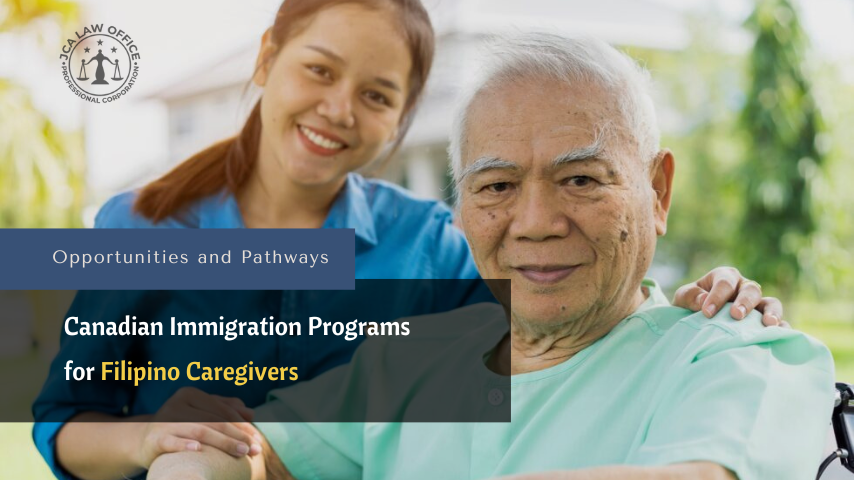
Canadian Immigration Programs for Filipino Caregivers: Opportunities and Pathways
Explore the key pathways for Filipino caregivers to work and obtain permanent residency in Canada.
Canada has long been a popular destination for Filipino caregivers seeking better opportunities and a higher quality of life. The Canadian government recognizes the significant contribution of these caregivers to the economy and society and has established several immigration programs to help them find employment and eventually obtain permanent residency. This article outlines some of the key Canadian immigration programs available for Filipino caregivers, detailing the requirements, application processes, and benefits of each program.
1. Home Child Care Provider and Home Support Worker Pilot Programs
These two five-year pilot programs, launched in 2019, aim to provide a direct pathway for eligible caregivers to secure permanent residency in Canada. The Home Child Care Provider Pilot targets caregivers providing in-home childcare, while the Home Support Worker Pilot focuses on those offering care to the elderly or those with disabilities.
Key Features
Both programs allow caregivers to bring their families with them to Canada.
Applicants must have a valid job offer from a Canadian employer.
Caregivers receive an occupation-restricted open work permit, which allows them to switch employers without obtaining a new work permit.
After completing 24 months (recently reduced to 12 months) of work experience within a 36-month period, caregivers can apply for permanent residency.
Eligibility Requirements
A genuine job offer from a Canadian employer in the relevant occupation.
At least one year of post-secondary education, equivalent to Canadian education standards.
Sufficient proficiency in English or French (minimum CLB/NCLC 5).
Eligible work experience may be required, depending on the program.
2. Live-in Caregiver Program (LCP)
The Live-in Caregiver Program (LCP), although closed to new applicants since 2014, still allows those who are already working in Canada as live-in caregivers to apply for permanent residency.
Eligibility Requirements
Must have entered Canada through the LCP and currently working as a live-in caregiver.
Must have completed 24 months of authorized full-time employment as a live-in caregiver within four years of arrival in Canada.
3. Provincial Nominee Programs (PNPs)
Many Canadian provinces and territories offer Provincial Nominee Programs (PNPs) with streams specifically designed for caregivers. These programs allow provinces to nominate candidates for permanent residency based on their specific labor market needs. Some popular PNPs for caregivers include:
Provincial Caregiver Programs
British Columbia: The BC PNP offers the Skills Immigration – Health Professional category for eligible healthcare professionals, including registered nurses, psychiatric nurses, and nurse practitioners.
Alberta: The Alberta Immigrant Nominee Program (AINP) offers the Alberta Opportunity Stream, which targets workers in certain in-demand occupations, including nurse aides and orderlies.
Eligibility requirements and application processes vary depending on the specific PNP stream. Caregivers interested in these programs should consult the official websites of the relevant provinces for more information.
Conclusion
Canada offers a variety of immigration programs for Filipino caregivers, providing them with opportunities to work, reunite with their families, and eventually become permanent residents. By understanding the different pathways available and their respective requirements, Filipino caregivers can make informed decisions about which program best suits their needs and goals.
Need Help with Your Caregiver Immigration?
Call us at 1-855-522-5290 or reach out online. Our immigration lawyers specialize in caregiver programs.
Canada’s immigration system is one of the most significant forces shaping the national economy — and in 2026, the relationship between immigration and economic growth is undergoing its most dramatic shift in decades. For Filipino newcomers and prospective immigrants, understanding this evolving landscape is essential for making informed decisions about your future in Canada.
Whether you are planning to apply through Express Entry, sponsoring family members, or already building your life in Canada, the economic forces tied to immigration policy directly affect your job prospects, housing costs, and long-term settlement success.
This comprehensive guide breaks down the immigration-economy relationship in 2026, what the federal government’s policy pivot means for you, and how Filipino immigrants continue to be vital contributors to Canada’s workforce and communities.
Canada’s Immigration-Economy Relationship: An Overview
Immigration has been the primary engine of Canada’s population and labour force growth for decades. In fact, immigration accounts for nearly 100% of Canada’s labour force growth, making it indispensable for sustaining economic output, funding public services, and supporting an aging population.
However, between 2022 and 2024, Canada experienced an unprecedented surge in both permanent and temporary immigration that strained housing, healthcare, and infrastructure. The result was a paradox: while aggregate GDP grew, real GDP per capita declined in five of the past six quarters and now sits approximately 2.5% below late-2019 levels. In other words, Canada’s economy got bigger, but the average Canadian did not get richer.
This disconnect between overall economic growth and individual prosperity became a central political issue, prompting the federal government to fundamentally rethink its approach to immigration levels.
Before the Pivot (2022-2024)
Record-high temporary and permanent immigration
Population growth exceeding 3% annually
Aggregate GDP growth, but declining per-capita GDP
Severe housing, rental, and healthcare pressure
After the Pivot (2025-2028)
Reduced permanent and temporary resident targets
Near-zero population growth projected for 2026
Per-capita GDP recovery expected
Focus on economic-class immigrants and labour gaps
The 2026-2028 Immigration Levels Plan: Canada’s Economic Pivot
In late 2025, the federal government released the 2026-2028 Immigration Levels Plan, marking a continued recalibration of immigration targets after the initial cuts announced in October 2024. The plan prioritizes economic sustainability over raw population growth.
Permanent Resident Targets
Year
PR Target
Range
Change from Previous Plan
2025
395,000
370,000 – 420,000
Down from 500,000
2026
380,000
350,000 – 420,000
Stabilized
2027
380,000
350,000 – 420,000
Stabilized
2028
380,000
350,000 – 420,000
Stabilized
Temporary Resident Targets
For the first time in Canadian history, the government set explicit targets for temporary residents:
Year
Total New Temporary Residents
Workers
Students
2026
385,000
230,000
155,000
2027
370,000
220,000
150,000
2028
370,000
220,000
150,000
This represents a 45% reduction in new temporary arrivals compared to 2025 levels of 673,650. The government’s goal is to reduce Canada’s total temporary resident population to below 5% of the total population by the end of 2027.
The Economic Shift: More Economic Immigrants, Fewer Overall Numbers
A critical change in the 2026-2028 plan is the increasing share of economic-class immigrants, rising from 59% to 64% of all permanent admissions by 2027-2028. This means:
Federal High Skilled (Express Entry): ~111,000 spaces annually
Provincial Nominee Program (PNP): ~92,500 spaces annually
Federal Economic Pilots: ~8,775 spaces annually
Family Reunification: ~81,000 (21-22% of admissions), including 15,000 for parents and grandparents
Refugees and Protected Persons: ~49,300 (13% of admissions)
What This Means for Filipino Applicants: With economic immigration taking a larger share, having strong language skills (English or French), Canadian work experience, and in-demand occupation credentials becomes even more important. Express Entry and PNP pathways remain the most accessible routes for Filipino skilled workers.
Labour Market Needs and Immigration
Despite the reduction in overall immigration numbers, Canada still faces significant labour shortages across key sectors. The government’s approach has shifted from “more workers” to “the right workers” — targeting specific high-demand occupations that complement the domestic workforce.
Key Sectors Facing Labour Shortages in 2026
Sector
Shortage Details
Immigration Response
Healthcare
Quadrupling of vacancies since 2015; 30%+ of nurses nearing retirement
New Express Entry category for doctors (5,000 spaces); 14-day expedited work permits; dedicated healthcare draws
Construction & Skilled Trades
Critical shortages in electricians, plumbers, welders
Strong demand for software developers, data analysts, cybersecurity
Tech-specific Express Entry draws; Global Talent Stream
Agriculture & Food Processing
Seasonal and year-round shortages
Temporary Foreign Worker Program; Agri-Food Pilot
Education
Teacher shortages, especially in rural areas
PNP nomination pathways
Healthcare: A Special Focus for 2026
Canada’s healthcare sector faces a particularly acute crisis. By 2030, one in four Canadians will be over 65, creating enormous demand for hospitals, long-term care, and home health support. The government has responded with several targeted immigration measures:
New Express Entry Doctor Category (2026): 5,000 federal admission spaces reserved for provinces and territories to nominate licensed doctors with job offers
Expedited Work Permits: Nominated doctors receive 14-day work permit processing, allowing them to work while awaiting permanent residence
Healthcare Express Entry Draws: In December 2025, 1,000 invitations were issued specifically for healthcare and social services workers (CRS cutoff: 476)
Credential Recognition Funding: $77.1 million over four years starting in 2025-26 to help internationally educated health professionals integrate into the workforce
Filipino Healthcare Workers Take Note: Filipinos represent over 34% of internationally trained nurses and 87-90% of migrant caregivers in Canada. With the government investing in credential recognition and creating new healthcare immigration pathways, 2026 presents significant opportunities for Filipino nurses, personal support workers, and other healthcare professionals.
Housing Affordability and Immigration: The 2026 Debate
The connection between immigration and housing costs has been one of the most contentious policy debates in recent Canadian history. For the first time, the federal government explicitly linked immigration reductions to housing affordability goals.
What the Data Shows
Research indicates that immigration is a factor, but not the dominant driver of rising housing costs:
New immigrant arrivals accounted for approximately 11% of the increase in housing prices and rents over a 15-year study period
Other factors — including supply constraints, zoning regulations, interest rates, and speculative investment — play larger roles
However, the pace of population growth between 2022-2024 did outstrip housing construction capacity, particularly in Toronto and Vancouver
Expected Housing Market Effects in 2026
Housing Indicator
2024
2026 Projection
Impact of Immigration Cuts
Rent Growth
6-7%
3-3.5%
Reduced demand, especially from international students
Housing Supply Gap
Significant deficit
Narrowing
CMHC estimates ~534,000 fewer units needed by 2030
Home Prices
Moderate growth
Stabilizing
Less demand pressure, but supply still constrained
Important for Newcomers: While reduced immigration may slow rent growth, housing affordability in the GTA remains challenging. Filipino newcomers should factor housing costs into settlement planning and explore areas outside downtown Toronto where costs are more manageable. The rental market is expected to soften, but not dramatically — plan your budget carefully.
Healthcare System and Immigration
Canada’s healthcare system is deeply intertwined with immigration — both as a source of critical healthcare workers and as a system under pressure from population growth.
The Challenge: Serving a Growing, Aging Population
Healthcare vacancies have quadrupled between 2015 and 2023
Over 30% of the current nursing workforce is nearing retirement age
Canadian colleges are not producing healthcare graduates fast enough to meet demand, especially in rural areas and provinces like Nova Scotia, Manitoba, and British Columbia
Wait times for family doctors and specialist care continue to increase
The Solution: Targeted Immigration
Rather than reducing healthcare immigration along with overall cuts, Canada is increasing targeted healthcare pathways. Between 2000 and 2022, 105,000 healthcare workers successfully transitioned from temporary to permanent residence in Canada. The government aims to accelerate this pattern through:
Dedicated Express Entry draws for healthcare workers (10,250 healthcare workers invited in 2024 alone)
Home Care Worker Immigration Pilots launched in March 2025
Provincial Nominee Program priority streams for healthcare occupations
$77.1 million federal investment in foreign credential recognition for health professionals
Filipino Economic Contributions to Canada
The Filipino community is one of the most economically active and impactful immigrant groups in Canada. With over 900,000 Filipino Canadians — the Philippines is the third-largest source country for immigration — the community’s contributions extend across virtually every sector of the economy.
Healthcare: The Filipino Backbone
Filipino immigrants have long been disproportionately represented in Canada’s healthcare system, filling critical gaps that would otherwise leave hospitals, long-term care facilities, and home care services severely understaffed:
Healthcare Role
Filipino Representation
Context
Internationally Trained Nurses
34.4%
More than one-third of all foreign-trained nurses in Canada are Filipino
Migrant Caregivers
87-90%
The vast majority of in-home caregivers under Canada’s caregiver programs
Nurse Aides & PSWs
30%
Nearly one-third of immigrant nurse aides, orderlies, and patient service associates
Total Healthcare Aide Workforce
5.6%
Share of Canada’s entire healthcare aide labour force
Beyond Healthcare: Diverse Economic Impact
Filipino Canadians contribute to the economy in ways that extend far beyond healthcare:
Skilled Trades and Construction: Increasing numbers of Filipino workers in electrician, plumbing, and welding trades — sectors with acute labour shortages
Hospitality and Food Services: A significant presence in hotels, restaurants, and food processing across Canada
Information Technology: Growing representation in tech roles, particularly in the GTA
Entrepreneurship: Filipino-owned businesses contribute to local economies, particularly in urban centres like Toronto, Vancouver, and Winnipeg
Remittances: Filipino Canadians send approximately $1.21 billion USD annually to the Philippines, strengthening transnational economic ties
The Overqualification Challenge
Despite their significant contributions, Filipino immigrants face a persistent challenge: 67% of nursing graduates from the Philippines are considered overqualified for their current jobs in Canada. This means many highly skilled professionals work in roles below their qualifications due to credential recognition barriers, costing both the individuals and the Canadian economy.
The government’s $77.1 million investment in foreign credential recognition — alongside new pathways for internationally educated healthcare professionals — is a step toward addressing this gap, but significant work remains.
Key Sectors Relying on Immigrant Workers
Canada’s economy depends on immigrant labour across multiple sectors. For Filipino newcomers planning their immigration strategy, understanding where demand is highest can help you position yourself for success.
In-Demand Sectors and Occupations for 2026
Sector
Key Occupations
Immigration Pathway
Filipino Relevance
Healthcare
Nurses, PSWs, doctors, pharmacists, medical technologists
The Economic Impact on Newcomers: Jobs, Wages, and Settlement
How do the 2026 policy changes affect Filipino newcomers already in Canada or planning to arrive? The effects are mixed — but there are reasons for cautious optimism.
Employment and Wages
Indicator
Current Trend (2025-2026)
What It Means for Newcomers
Unemployment Rate
Expected to decline from 6.8% to 6.3% by Q4 2026
Improving job market; less competition from temporary workers
Wage Growth
Tightening labour market expected to increase wages
Better earning potential, especially in shortage sectors
Median Entry Earnings
$42,900 (2021 cohort, rising trend)
Economic immigrants increasingly match or exceed Canadian-born wages
Per-Capita GDP
1.3% growth projected in 2026
Standard of living improvement after two years of decline
The Good News
Less competition: With fewer temporary residents arriving, there is less competition for entry-level and mid-level positions
Higher wages: A tighter labour market tends to push wages upward, benefiting workers in shortage sectors
Economic immigrants earn more: Data shows that principal applicants selected through economic programs surpass their Canadian-born counterparts in earnings soon after arrival
Rental market softening: Slower population growth is easing pressure on rental costs, with growth projected at 3-3.5% (roughly half of 2024’s rate)
The Challenges
More competitive immigration selection: With fewer spots available, CRS scores and eligibility thresholds may remain high
Credential recognition delays: Despite new funding, internationally educated professionals still face barriers to practising in their fields
Gender gaps persist: Immigrant men report higher employment rates than Canadian-born men, but immigrant women report substantially lower rates than their Canadian-born peers
Settlement service demand: Ontario is strengthening employment-related programming in settlement and language training, but waitlists can be long
The Bigger Picture: Zero Population Growth and What Comes Next
In 2026, Canada is expected to experience zero population growth for the first time since the 1950s. This is a historic shift with far-reaching economic consequences:
Economic Metric
Impact of Zero Population Growth
GDP Growth
Forecast at 1.3% in 2026 (down from 1.7% in 2025); approximately $16.2 billion less GDP than without cuts
Per-Capita GDP
Expected to grow at 1.3% — the same rate as total GDP — a significant improvement over recent declines
Labour Market
Unemployment expected to fall gradually; fewer workers needed to improve per-worker conditions
Consumer Spending
Weaker population growth may depress household spending in the short term
Rental Market
Softer rent growth, particularly in student-heavy areas
The Conference Board of Canada estimates that reduced immigration will lower GDP by $7.9 billion in 2025 and $16.2 billion in 2026, shaving approximately 0.3 percentage points of growth annually. However, the trade-off is that average income per person (real GDP per capita) is expected to rise by about 1.4% by 2027, because economic output is divided among a smaller population.
This is the core calculation behind the policy pivot: slower total growth, but better outcomes per person. Whether this strategy succeeds will depend on whether Canada can maintain productivity growth without the labour force expansion it has relied on for decades.
What This Means for Filipino Immigrants in 2026
For Filipino newcomers and prospective immigrants, the 2026 landscape presents both opportunities and challenges. Here is a practical summary of how these changes affect you:
If You Are Planning to Immigrate
Focus on economic pathways: With 64% of permanent admissions going to economic immigrants, Express Entry and PNP are your best routes. Strengthen your CRS score through language testing, education, and Canadian work experience.
Target in-demand occupations: Healthcare, skilled trades, and technology offer the strongest prospects. Category-based Express Entry draws give you an advantage if you qualify.
Consider provincial pathways: With ~92,500 PNP spaces annually, provinces like Ontario, BC, Alberta, Manitoba, and Saskatchewan offer alternative routes. Each province has streams aligned with its labour market needs.
Healthcare professionals — act now: New immigration pathways specifically target doctors, nurses, and caregivers. The $77.1 million credential recognition investment makes this the best time to pursue healthcare careers in Canada.
Be prepared for higher competition: Fewer total spots mean higher standards. Invest in IELTS preparation, credential assessments (WES/ECA), and skills upgrading before applying.
If You Are Already in Canada
Job market is improving: Less competition from temporary workers and a tightening labour market should improve employment prospects and wages.
Explore credential recognition programs: If you are working below your qualifications, the new federal funding for foreign credential recognition may open doors to roles matching your expertise.
Housing costs are stabilizing: While the GTA remains expensive, slower rent growth provides some relief. Consider secondary markets for better affordability.
Transition to PR if possible: If you are on a temporary permit, prioritize your pathway to permanent residence. The government is focused on converting qualified temporary residents to PRs rather than bringing in new temporary arrivals.
Access settlement services: Ontario is strengthening employment-related settlement programming, including women-only language classes, childcare support, and disability services.
Is Canada reducing immigration because of economic problems?
Not exactly. Canada is recalibrating immigration to better align with its economic capacity. The issue was not immigration itself, but the pace of growth — particularly in temporary residents — that outstripped housing, healthcare, and infrastructure capacity. The goal is sustainable immigration that improves per-capita outcomes rather than just aggregate GDP.
Will it be harder for Filipinos to immigrate to Canada in 2026?
It depends on your pathway. Economic immigration still has 64% of all permanent resident spots, and healthcare, skilled trades, and technology workers are in high demand. If you qualify for Express Entry or a PNP stream targeting your occupation, your chances remain strong. However, overall competition may increase due to fewer total spots available.
How does reduced immigration affect the Canadian job market?
With fewer temporary workers arriving, the labour market is tightening. Unemployment is expected to decline from 6.8% to 6.3% by the end of 2026, and wages in shortage sectors are expected to rise. For newcomers already in Canada, this generally means better employment prospects and earning potential.
Will housing become more affordable for newcomers?
Housing affordability is improving marginally. Rent growth is projected at 3-3.5% in 2026 (roughly half of 2024’s rate), and the housing supply gap is narrowing. However, the GTA remains one of the most expensive housing markets in North America. Newcomers should budget carefully and explore communities outside the downtown core.
What about family sponsorship — is it affected by the economic focus?
Family reunification remains a significant part of the plan at approximately 81,000 admissions (21-22% of total), including 15,000 spaces for parents and grandparents annually. While the economic class share is increasing, family sponsorship pathways are maintained. Spousal and partner sponsorship in particular remains a reliable pathway.
Are Filipino caregivers still welcome in Canada?
Yes. The government launched new Home Care Worker Immigration Pilots in March 2025, and caregiving remains a pathway to permanent residence. Filipino caregivers continue to fill a critical role in Canada’s home care system, representing 87-90% of migrant caregivers. The new pilots may offer improved conditions and clearer pathways to PR.
How JCA Law Office Can Help
Navigating Canada’s evolving immigration landscape requires expert guidance — especially as policies shift toward more targeted, competitive selection. At JCA Law Office Professional Corporation, we specialize in helping Filipino newcomers and families achieve their Canadian immigration goals.
Our immigration services include:
Express Entry applications — Federal Skilled Worker, Canadian Experience Class, and Federal Skilled Trades
Provincial Nominee Program (PNP) — Ontario OINP, BC PNP, Alberta AAIP, Manitoba MPNP, and Saskatchewan SINP
Family sponsorship — Spousal, partner, parent, and grandparent sponsorship
Work permits and LMIA applications — Including healthcare worker and caregiver pathways
Study permits and PGWP — For international students and post-graduation work
Credential recognition guidance — Helping healthcare professionals and skilled workers navigate Canadian credential assessment
As a firm rooted in the Filipino-Canadian community, we understand the unique challenges and opportunities facing Filipino immigrants. We provide services in English, Filipino, and Tagalog.
Phone:(416) 838-8122 Email:admin@jcalaw.ca Office: 168 Cannon Street East, Hamilton, Ontario Serving: Greater Toronto Area, Hamilton, and clients across Ontario
Last Updated: February 2026. This guide is for informational purposes only and does not constitute legal advice. Immigration policies and economic conditions change frequently. For advice specific to your situation, please book a consultation with JCA Law Office.
Sources: Immigration, Refugees and Citizenship Canada (IRCC); Statistics Canada; Conference Board of Canada; TD Economics; RBC Economics; Oxford Economics; CMHC; OECD International Migration Outlook 2025.
CANADA IMMIGRATION POLICIES: WHAT TO EXPECT AFTER THE RECENT 2019 CANADIAN FEDERAL ELECTION
By Gin Aguilar
Now that the Liberal Party has been confirmed as the official winning party in the recently concluded 2019 Canadian federal election, this means that the current immigration policies in Canada will most likely remain unchanged.
Despite winning a minority victory and getting fewer seats in the parliament, reports indicate that Liberals may still proceed with their plan to increase immigration population as long as they get the support of 1 of the other 3 political parties who also have similar views on Canada immigration policies.
Citizenship and Immigration Canada (CIC) further reported that Liberals will only need the support of one of the other three political parties who already have somewhat similar views on the subject.
Under the Liberals’ existing plan, the targeted number of immigrants will increase from 330,800 in 2019 to 350,000 by 2021, and their election platform displayed that this pattern would continue if they reached a new mandate.
We can expect immigration targets to increase to an average of 10,000 immigrants per year in the next two years beyond 2021, or an estimate of 370,000 newcomers by 2023, given the incremental approach employed by the Liberals in recent years.
Approximately 60% of newcomers will be admitted through Canada’s Economic Class immigration programs and based on the Liberals’ election platform, they will continue to focus on getting “highly skilled people who can help build a stronger Canada.”
Will there be any changes to Canada’s Express Entry system?
Canada’s Express Entry system, which was introduced in 2015 by the Conservatives to manage the pool of candidates for Canada’s main economic immigration programs – the Federal Skilled Worker Class, Canadian Experience Class and Federal Skilled Trades Class – is expected not to have any major changes from the Liberals.
The points-based system assigns eligible candidates a score based on several factors such as their age, education level, skilled work experience and proficiency in English or French. A set number of the highest-ranked candidates are then invited to apply for Canadian permanent residence through regular draws from the Express Entry pool. The Liberals reduced the number of points awarded for a job offer from 600 to a maximum of 200 in 2016 to ensure that those invited to apply for permanent residence are highly skilled and more likely to find economic success in Canada.
What will happen to the Immigration Pilot Programs?
The Liberal government under PM Justin Trudeau launched several economic class immigration pilot programs during the first term. The most notable among these was the Atlantic Immigration Pilot (AIP), a partnership between Canada’s government and provinces in the Atlantic region to bring in immigrants with various skill sets to work in the area. The fast-track program allows employers in Canada’s four Atlantic provinces — Nova Scotia, New Brunswick, Newfoundland and Labrador and Prince Edward Island — to hire foreign nationals for jobs they haven’t been able to fill locally. Now that the Liberals have earned another mandate, they have pledged to make the said program permanent.
However, it has been noted that the immigrants largely chose to settle in the larger cities leaving other parts of the country with a serious shortage of skilled labor. In order to address this challenge, the Liberal government plans to launch the Municipal Nominee Program (MNP), which will allow and ensure local communities of all sizes around Canada are able to attract and support skilled foreign workers and their families. Few details about the proposed program have emerged, but it is sure to gather national interest given the challenges that most cities across Canada face in attracting immigrants. The MNP’s selection criteria will most probably be modelled after the AIP and Rural Northern Immigration Pilot (RNIP), which was also launched by the Liberals. This means the MNP will enable employers in municipalities designated by the federal government to support the immigration applications of newcomers who meet their labour needs.
The Liberal government also pledged to waive fees for those planning to apply for citizenship saying that the “process of granting citizenship is a government service, not something that should be paid for with a user fee”, therefore making applying for Canadian citizenship free very soon.
If you need help or assistance regarding your immigration matter, JCA LAW OFFICE have approachable and knowledgeable Filipino-Canadian Immigration lawyers and consultants who can help and assist you, please feel free to drop by our office or schedule an appointment with us.
Our main office is located at 168B Eglinton Ave. East, Toronto, ON M4P 1A6. We have another location right within the Philippine Consulate building at 160 Eglinton Ave. East, Suite 406, Toronto, ON M4P 3B5.
Canada wants 1 million more immigrants over the next 3 years
By Mariana Teixeira
Canada, a country well-known for its diversity and mixed culture, has been taking in many immigrants from all across the world for the past hundred years. In fact, there are four categories of immigrants:
Family-class (closely related persons of Canadian residents living in Canada)
Economic immigrants (skilled workers and business people)
Refugees (people who are escaping persecution, war, torture or cruel and unusual punishment)
Humanitarian and other categories (people accepted as immigrants for humanitarian or compassionate reasons).
All these types of people come to Canada for better jobs, higher education and better lifestyle choices. Canada is a very welcoming and multicultural country, but it also comes with its own perks. In order to stay in Canada, you have to apply as a permanent resident (PR). Permanent residency is a person’s resident status in a country of which they are not citizens and this is usually for a permanent period.
Once you have applied as a permanent resident and you have been living in Canada for 3-5 years, you may eventually apply to become a Canadian citizen. Being a Canadian citizen is such a wonderful thing because that means you get to stay in Canada without any problems, plus you get to enjoy all the healthcare benefits being provided by the Government. Another option for you to legally stay in Canada is to get a visa. A visa is a temporary authorization for a person to live in or visit a country. It is reported that there are over 38,000 immigrants in Canada since early 2017. Many people who came here are always saying that they are going to go back to their home country because they miss it but in the end, they get used to staying in Canada and simply enjoy living here so they decide not to leave.
Canada is such a welcoming and multicultural country that it is impossible to leave. Canada is known for accepting everyone regardless of their race or background. If you come to Canada as a skilled immigrant, you and your family will benefit from world-class education and a high quality of life. Canada is a diverse and multicultural country with plenty of support to help you and your family achieve success once you’ve settled in. Canada is a great place to live and work. In fact, Canada is ranked as the second-best country in the world behind Germany, from a list of 60 countries for overall sustainability, cultural influence, entrepreneurship, economic influence and most importantly, quality of life.
Coming to Canada is such a great experience for everyone and people migrating to this beautiful country makes it a wonderful place to live in. No wonder Canada wants one million more immigrants over the next 3 years or until 2021.
So seize this opportunity, come and visit JCA LAW OFFICE to speak to one of our immigration lawyers and qualified consultants. Our main office is located at 168B Eglinton Ave. East, Toronto, ON M4P 1A6. We have another location right within the Philippine Consulate building at 160 Eglinton Ave. East, Suite 406, Toronto, ON M4P 3B5.
Immigration Pilot Project in Canada for Sponsorship of Undeclared Family Members is Now Open
By Gin Aguilar
A new immigration pilot project to sponsor undeclared family members has recently been opened in Canada last September 9th, 2019, giving a chance for eligible candidates to be with their loved ones again.
Immigration, Refugees and Citizenship Canada (IRCC) states that “for various reasons, including lack of awareness or lack of knowledge of a family member’s whereabouts in a conflict situation, many newcomers failed to declare some family members on their application. By not including these family members, applicants made them ineligible from being sponsored to come to Canada for life.”
People who apply for permanent residency in Canada are required to declare all their family members on their application (spouse, common-law partner, dependent children) – including those who are not accompanying them. Failure to declare a family member in your application results in a lifetime ban on the principal applicant being able to sponsor the undeclared family member in the future.
In order to address this concern, Minister Ahmed Hussen of Immigration, Refugees and Citizenship Canada (IRCC) issued a public policy last July 5th 2019 stating whereby a resettled refugee, a person conferred refugee protection in Canada, or a person who was sponsored as a spouse, partner or dependent child themselves, will be able to sponsor undeclared immediate family members (a spouse, partner or dependent child). The pilot program began on September 9, 2019, and will run for 2 years. It will facilitate family reunification and ensure that dependants who were not declared or stated in their family member’s immigration application are not further penalized and barred from coming to Canada. It will also enable some newcomers to sponsor undeclared family members.
There is no special process for sponsoring family members under the pilot project. You will still apply using the normal process to sponsor your spouse, partner or child, but applicants must still meet all eligibility requirements and prove that they are legally allowed to enter Canada.
Keep in mind that this public policy may be canceled anytime so do not miss your chance to get reunited with your loved ones. To find out whether you are eligible or not for this pilot program, book your appointment now with our Immigration lawyers and consultants here at JCA LAW OFFICE – we are more than happy to assist you and address your questions and concerns. You may visit our office at 168B Eglinton Ave. East, Toronto, ON.
Ontario Immigrant Nominee Program (OINP) Employer Job Offer: Foreign Worker Stream Now Accepting Applications
By Gin Aguilar
The Government of Ontario recently announced last August 27th that they are now accepting applications to the Employer Job Offer: Foreign Worker Stream, which simply means that Ontario employers now have the ability to support foreign workers applying for a provincial nomination and permanent residence via a job offer in Ontario.
In order to be nominated for permanent residency by the Ontario government, applicants must ensure that all mandatory requirements are met prior to applying online. All the needed supporting documents must be on hand and ready for submission to OINP via the e-Filing Portal, including an Employer Form and job offer letter completed by the employer to prove that all eligibility requirements are met.
A Nomination Approval Letter and an OINP Certificate of Nomination will be sent out to you if you are successful in your application. Once you are nominated, your next step is to apply to the federal government through Immigration, Refugees and Citizenship Canada (IRCC). They make the final decision on who among the applicants becomes a permanent resident.
Provincial nominee program in Canada: how does this work?
By Gin Aguilar
After recently spending a week in the Maritime provinces of Canada this summer, I can honestly tell you that the idea of living in the Canadian Maritimes is so inviting I might consider packing my bags and live in these hidden gems in the future. If you are someone who loves going to the beach in the summer, sit by the waterfront to eat fresh lobsters while drinking wine and munching on your potato wedges after a hard days’ work, or enjoy a big scoop of ice cream on a lazy weekend while watching the leaves change into a spectrum of colors during fall, or to just delightfully play in a sea of snow and enjoy endless tobogganing* during winter, the Maritimes might be the right place for you.
If this kind of life seems very enticing for you and your family, then the Canada provincial nominee program (PNP) might be the best option for you to come to work and live in Canada.
Understanding the Provincial Nominee Program (PNP) in Canada
In order for you to immigrate to Canada via the Provincial Nominee Program (PNP), a Canadian province or territory must nominate you. The first thing you need to do is apply to the PNP in the province or territory where you want to settle – (such as the Maritime provinces). To qualify, you must have the skills, education and work experience needed to live in Canada and support yourself and your family. They will make the assessment whether you meet their economic and labor market needs and will inform you as to how long it will take to process your application.
Once your application has been approved by the province or territory you are applying for, the next thing you need to do is to apply for permanent residence within the time period that the province or territory have provided and they will inform you whether you must apply through the Express Entry system or through regular application process. As part of the process, you will also need to pass a medical exam and provide a police check clearance or certificate. All applicants must provide these checks, no matter where they plan to settle in Canada.
List of Provinces and Territories you may select from:
Prairie Provinces
Alberta
Saskatchewan
Manitoba
Maritime Provinces
New Brunswick
Prince Edward Island
Nova Scotia
Newfoundland and Labrador
Territories
Yukon
Northwest Territories
British Columbia
Ontario
If you are open to change and would want to experience living in the beautiful provinces of Canada, our Immigration lawyers and immigration consultant may help you.
INDEX: *tobogganing – A Canadian winter activity of sliding downhill over snow on a long flat-bottomed light sled made usually of thin boards that is very popular with the kids
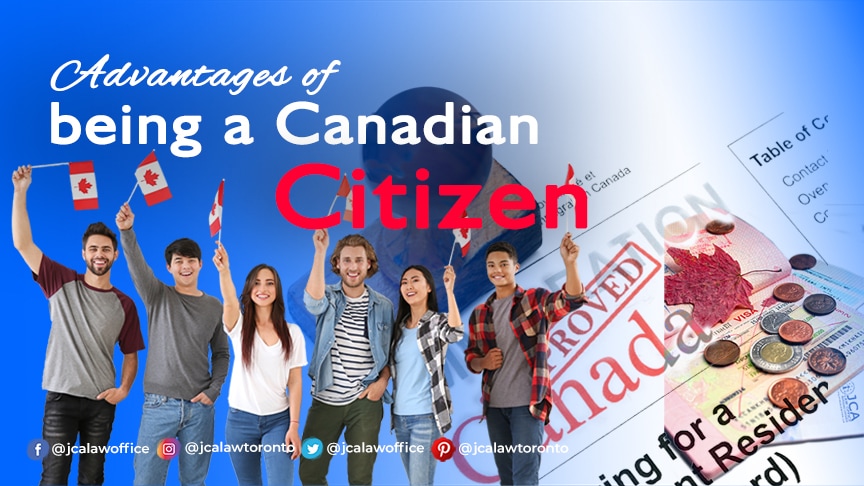
Being a Canadian Citizen is something to be proud of. Along with being a part of a country that is very welcoming and multicultural, there are also many other perks to being a Canadian Citizen that some people may not know about. When you become a Canadian Citizen, doors are opened to bigger opportunities, such as access to restricted jobs. Some jobs in Canada require you to have Canadian citizenship, such as government jobs or work at the federal level which requires a security clearance. If you have been living in Canada for quite some time, chances are you have an opinion on how the country, province or city should be run. By having Canadian citizenship, you have the privileges of voting in federal, provincial and municipal elections, and even run for public office.
Becoming a Canadian also means that you will be issued a Canadian passport, which happens to be one of the best and most powerful passports in the world. Holding a Canadian passport means that you may travel visa-free to 166 countries* and it also allows you to exit and re-enter Canada freely without any trouble. When you are a Canadian citizen, you never have to worry about losing status, unlike if you are a permanent resident, you will need to comply to some residency requirements.
If ever you are convicted of a crime in Canada as a citizen, you will not lose your citizenship, but if you are a permanent resident, you might face deportation. You also do not have to worry about renewing your immigration documents because once you gain your citizenship, it stays with you forever. The only document you need to renew every ten years is your Canadian passport.
Aside from these great benefits, being able to call yourself a Canadian citizen hold much more value – it means you have access to freedom, rights, and equality. Canada is an amazing, welcoming and multicultural country and I know you will be proud to call yourself a Canadian citizen because I am proud to be one.
Requirements for Becoming a Canadian Citizen:
After reading the above benefits, you are now fully convinced that you truly wanted to become a Canuck (a slang term for Canadians… don’t worry the article about Canadian slangs will be posted soon!!). But how do you become one?
The following are the requirements to be qualified to apply for Canadian Citizenship:
You must have a Permanent Resident (PR) status in Canada. Regardless of age, if you are applying for citizenship, you must have a PR status in Canada, which also signifies that you must NOT:
be under review for immigration or fraud reasons
be requested by Canadian officials to leave Canada (removal order)
have unfulfilled conditions related to your PR status, such as medical screening
Have lived in Canada for at least 3 years (out of the last 5 years). You need to ensure that you have been physically present in Canada for at least 1095 days (or 3 years) during the last five years from the date you submitted your application.
You have filed your Income Taxes, as needed
Proven Language Skills in English or French
If you’re 18 to 54 years of age on the day you sign and submit your application, you must prove that you can speak and listen at the Canadian Language Benchmarks (CLB) Level 4 or higher in either English or French (which is Canada’s 2 official languages). Certificates, Diplomas or tests that prove your language skills may be submitted along with your application.
Show how well you know about Canada by passing the citizenship test
If you’re 18 to 54 years of age on the day you sign and submit your application, you need to take the citizenship test. You’ll need to answer questions about the rights and responsibilities of Canadians and Canada’s (a) history, (b) geography, (c) economy, (d) government, (e) laws, etc.
The test may be taken in either English or French and consists of 20 multiple-choice and true-or-false questions. It is based on the official citizenship guide (Discover Canada) and you need to get a passing rate of at least 75% (or 15 correct answers out of 20).
Ready to take that leap of faith? JCA Law office can help you get started by assisting you in getting that Permanent Resident status.
Canada is a very diverse country. It is an excellent choice for new incoming students with nearly half a million coming in every year.
These are some reasons why it has become a top choice for international students:
1. Without a doubt, Canada has some of the world’s top-ranked universities. The University of Toronto, McGill University, and the University of British Columbia placed in the top 50 schools in the world, according to the Times’ 2019 World University rankings.
2. Canadian colleges and universities also have a ton of clubs, communities, and extracurricular activities that students go to participate. There are many ways for students to go out and enjoy their school years. Most universities and colleges also have programs specifically for international students, which allows others to get along and connect from around the world.
3. Canadian schools are fair in cost. On average, international students pay almost 50% less in tuition costs in Canada rather than in the United States. The cost of living in Canada is also affordable, with the housing and rental rates shifting based on where you choose to live.
4. The Canadian government has made it easy for international students to immigrate after they graduate. Most international students will be able to apply for a Post Graduation Work Permit, which allows them to stay in Canada and start working after graduating.
After just one year of Canadian work experience, many international students graduates are eligible to apply for permanent resident status.
Canada recently announced to accept more than 1 million new immigrants in the next three years. That’s the highest number in Canada history. Canadians recognize the importance of the new incomers, and they support immigration to Canada. The country is very open-minded towards newcomers from all over the world.
Is the online application for Canadian Immigrants discriminatory?
In case you missed the news about the first-come-first-served online application for immigrants last January 28, 2019. Some lawyers slammed the online application “profoundly discriminatory” after the opened and closed in less than 10 minutes! Yes, less 10 minutes and you read it right. And the form itself takes 10 minutes to fill up. Hmmm, quite interesting and worth considering how the system works. Isn’t it better the old-fashioned way to use papers instead of online since some of the Canadian Citizens here are not that tech guru?
The 27,000 family-reunification program 2019 were done in less than 10 minutes
The 27,000 family-reunification program 2019 were done in less than 10 minutes after it goes live. So, anyone who had trouble filing the form quickly due to disability or internet connection was already screened out.
The Toronto-based Immigration lawyer like Clifford McCarten is one of the many lawyers raising concerns about the fairness of the said program. They said that only those who have the skills in typing, quick internet, good understanding of English or French would be a great chance of success to get the spot.
“The system essentially collapsed and gave people a totally unfair expectation of how it would operate, as opposed to how it actually was deployed,” McCarten said.
The instructions themselves take 10 minutes to complete but due to time limit, the quota for the year was completed in much lesser time. The keyboard and technical people can complete the form so easily against the non-technical applicants.
Another Immigration Lawyer from Vancouver Will Tao said misrepresentations or mistakes on immigration forms can come with the prices, applicants with Limited English or French would have too cautious and slower just to fill up the form.
“It was a disaster, a total failure”, Tao said. “They never had an equal opportunity to access this process”. It is a valid concern and sentiments in my opinion because people never have a chance for equal opportunity when it comes to typing, language, computer skills and internet speed.
The first-come-first served online application for the family sponsorship program announce last August 2018 was a replacement from a “lottery-style process” for taking applications. Applications before 2017 were prioritized based on locations or geography and would have better odds for success if families could afford to pay for the experienced but expensive lawyers who knew how the system worked.
When it was announced last summer, Minister Ahmed Hussen said he knew this model would make the program fairer.
“The initial analysis was done. They said no technical issues were experienced nor identified”, a quote from Mat Genest, spokesperson for Hussen.
The anti-bot features were also used to ensure all applications were legitimate and not from automated computer codes design to trigger and act faster than humans, he said.
Around 100,000 people competing from 27,000 slots, there are more demand than spaces, as per Genest.
Will Tao has been gathering accounts from newcomers and other lawyers who tried to apply to this program and he said he has heard widespread concerns about the technical issues.
“One of the issues was some people can’t view nor see the form, he said. Many of them waiting for hours and yet they didn’t even saw the form until the system reached the 27000 applicants in less than 10 minutes.”
“Their system, by design, excludes a huge number of people for no other reason than their internet connection, their ability in reading English quickly, the ability to finish the complicated form details and justification how their family separated was discriminatory and totally not acceptable.”