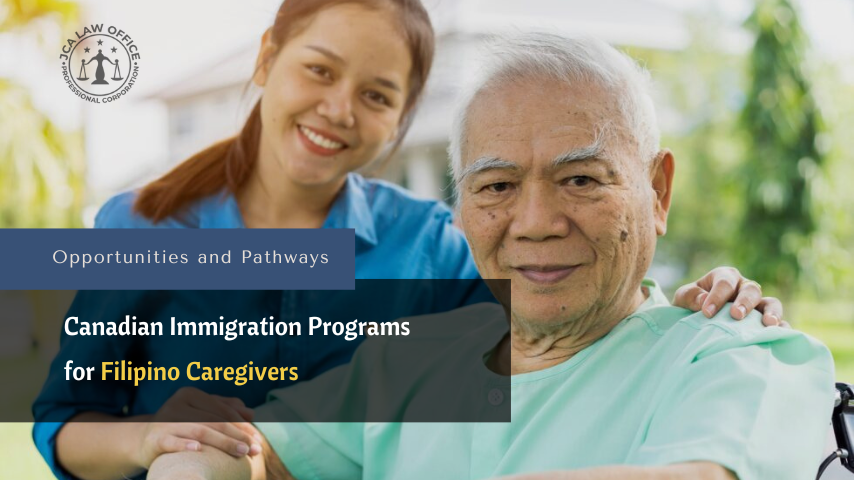
Canadian Immigration Programs for Filipino Caregivers: Opportunities and Pathways
Explore the key pathways for Filipino caregivers to work and obtain permanent residency in Canada.
Canada has long been a popular destination for Filipino caregivers seeking better opportunities and a higher quality of life. The Canadian government recognizes the significant contribution of these caregivers to the economy and society and has established several immigration programs to help them find employment and eventually obtain permanent residency. This article outlines some of the key Canadian immigration programs available for Filipino caregivers, detailing the requirements, application processes, and benefits of each program.
1. Home Child Care Provider and Home Support Worker Pilot Programs
These two five-year pilot programs, launched in 2019, aim to provide a direct pathway for eligible caregivers to secure permanent residency in Canada. The Home Child Care Provider Pilot targets caregivers providing in-home childcare, while the Home Support Worker Pilot focuses on those offering care to the elderly or those with disabilities.
Key Features
- Both programs allow caregivers to bring their families with them to Canada.
- Applicants must have a valid job offer from a Canadian employer.
- Caregivers receive an occupation-restricted open work permit, which allows them to switch employers without obtaining a new work permit.
- After completing 24 months (recently reduced to 12 months) of work experience within a 36-month period, caregivers can apply for permanent residency.
Eligibility Requirements
- A genuine job offer from a Canadian employer in the relevant occupation.
- At least one year of post-secondary education, equivalent to Canadian education standards.
- Sufficient proficiency in English or French (minimum CLB/NCLC 5).
- Eligible work experience may be required, depending on the program.
2. Live-in Caregiver Program (LCP)
The Live-in Caregiver Program (LCP), although closed to new applicants since 2014, still allows those who are already working in Canada as live-in caregivers to apply for permanent residency.
Eligibility Requirements
- Must have entered Canada through the LCP and currently working as a live-in caregiver.
- Must have completed 24 months of authorized full-time employment as a live-in caregiver within four years of arrival in Canada.
3. Provincial Nominee Programs (PNPs)
Many Canadian provinces and territories offer Provincial Nominee Programs (PNPs) with streams specifically designed for caregivers. These programs allow provinces to nominate candidates for permanent residency based on their specific labor market needs. Some popular PNPs for caregivers include:
Provincial Caregiver Programs
- British Columbia: The BC PNP offers the Skills Immigration – Health Professional category for eligible healthcare professionals, including registered nurses, psychiatric nurses, and nurse practitioners.
- Alberta: The Alberta Immigrant Nominee Program (AINP) offers the Alberta Opportunity Stream, which targets workers in certain in-demand occupations, including nurse aides and orderlies.
Eligibility requirements and application processes vary depending on the specific PNP stream. Caregivers interested in these programs should consult the official websites of the relevant provinces for more information.
Conclusion
Canada offers a variety of immigration programs for Filipino caregivers, providing them with opportunities to work, reunite with their families, and eventually become permanent residents. By understanding the different pathways available and their respective requirements, Filipino caregivers can make informed decisions about which program best suits their needs and goals.
Need Help with Your Caregiver Immigration?
Call us at 1-855-522-5290 or reach out online. Our immigration lawyers specialize in caregiver programs.