
Tag: canadian citizen

  • Canada Immigration Policies: What To Expect After The Recent 2019 Canadian Federal Election

    Canada Immigration Policies: What To Expect After The Recent 2019 Canadian Federal Election

    Canada Immigration Policies

    CANADA IMMIGRATION POLICIES: WHAT TO EXPECT AFTER THE RECENT 2019 CANADIAN FEDERAL ELECTION

    By Gin Aguilar

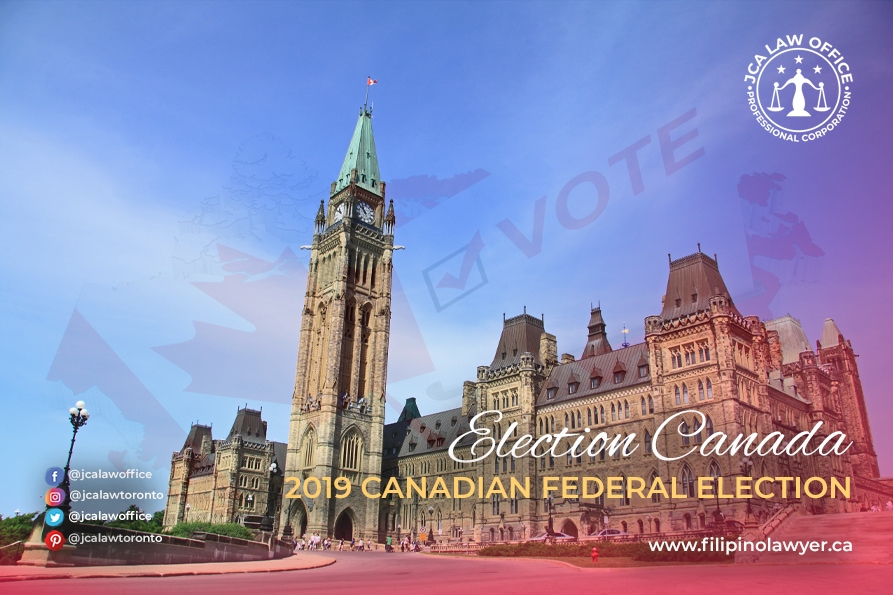
    Now that the Liberal Party has been confirmed as the official winning party in the recently concluded 2019 Canadian federal election, this means that the current immigration policies in Canada will most likely remain unchanged.

    Despite winning a minority victory and getting fewer seats in the parliament, reports indicate that Liberals may still proceed with their plan to increase immigration population as long as they get the support of 1 of the other 3 political parties who also have similar views on Canada immigration policies.

    Citizenship and Immigration Canada (CIC) further reported that Liberals will only need the support of one of the other three political parties who already have somewhat similar views on the subject.

    Under the Liberals’ existing plan, the targeted number of immigrants will increase from 330,800 in 2019 to 350,000 by 2021, and their election platform displayed that this pattern would continue if they reached a new mandate.

    We can expect immigration targets to increase to an average of 10,000 immigrants per year in the next two years beyond 2021, or an estimate of 370,000 newcomers by 2023, given the incremental approach employed by the Liberals in recent years.

    Approximately 60% of newcomers will be admitted through Canada’s Economic Class immigration programs and based on the Liberals’ election platform, they will continue to focus on getting “highly skilled people who can help build a stronger Canada.”

    Will there be any changes to Canada’s Express Entry system?

    Canada’s Express Entry system, which was introduced in 2015 by the Conservatives to manage the pool of candidates for Canada’s main economic immigration programs – the Federal Skilled Worker Class, Canadian Experience Class and Federal Skilled Trades Class – is expected not to have any major changes from the Liberals.

    The points-based system assigns eligible candidates a score based on several factors such as their age, education level, skilled work experience and proficiency in English or French. A set number of the highest-ranked candidates are then invited to apply for Canadian permanent residence through regular draws from the Express Entry pool. The Liberals reduced the number of points awarded for a job offer from 600 to a maximum of 200 in 2016 to ensure that those invited to apply for permanent residence are highly skilled and more likely to find economic success in Canada.

    What will happen to the Immigration Pilot Programs?

    The Liberal government under PM Justin Trudeau launched several economic class immigration pilot programs during the first term. The most notable among these was the Atlantic Immigration Pilot (AIP), a partnership between Canada’s government and provinces in the Atlantic region to bring in immigrants with various skill sets to work in the area. The fast-track program allows employers in Canada’s four Atlantic provinces — Nova Scotia, New Brunswick, Newfoundland and Labrador and Prince Edward Island — to hire foreign nationals for jobs they haven’t been able to fill locally. Now that the Liberals have earned another mandate, they have pledged to make the said program permanent.

    However, it has been noted that the immigrants largely chose to settle in the larger cities leaving other parts of the country with a serious shortage of skilled labor. In order to address this challenge, the Liberal government plans to launch the Municipal Nominee Program (MNP), which will allow and ensure local communities of all sizes around Canada are able to attract and support skilled foreign workers and their families. Few details about the proposed program have emerged, but it is sure to gather national interest given the challenges that most cities across Canada face in attracting immigrants. The MNP’s selection criteria will most probably be modelled after the AIP and Rural Northern Immigration Pilot (RNIP), which was also launched by the Liberals. This means the MNP will enable employers in municipalities designated by the federal government to support the immigration applications of newcomers who meet their labour needs.

    The Liberal government also pledged to waive fees for those planning to apply for citizenship saying that the “process of granting citizenship is a government service, not something that should be paid for with a user fee”, therefore making applying for Canadian citizenship free very soon.

    If you need help or assistance regarding your immigration matter, JCA LAW OFFICE have approachable and knowledgeable Filipino-Canadian Immigration lawyers and consultants who can help and assist you, please feel free to drop by our office or schedule an appointment with us.

    Our main office is located at 168B Eglinton Ave. East, Toronto, ON M4P 1A6. We have another location right within the Philippine Consulate building at 160 Eglinton Ave. East, Suite 406, Toronto, ON M4P 3B5.

    You may also book your appointment by sending us an email at info@filipinolawyer.ca.

    Reference

    https://www.cicnews.com/2019/10/canada-election-2019-what-to-expect-from-the-immigration-system-in-the-coming-years-1012988.html#gs.c6ejjw

  • Sponsoring Your Family & Relatives In Canada

    Sponsoring Your Family & Relatives In Canada

    Which Family Members Can I Sponsor?

    By Gin Aguilar

    It used to be just a dream, but here you are, and you made it! You were able to successfully migrate to Canada and finally got your Canadian citizenship or permanent resident status. And now you are thinking about how perfect life will be if you are with your family and relatives, wishing they can join you in this lovely maple leaf country. Despair not, in this article, we will provide you the information and everything you need to know with regards to your eligibility for sponsorship and who are the family or relatives you may sponsor to immigrate to Canada.

    What basic information do you need to know?

    Admit it, living alone is not fun. Good thing is, you may be able to sponsor certain relatives to immigrate to Canada under the Family Class if you’re at least 18 years old and a:

    • Canadian citizen, or
    • Permanent resident (PR) of Canada, or
    • A person registered in Canada as an Indian under the Canadian Indian Act

    If you are truly decided to sponsor a relative to come to Canada as a permanent resident (PR), you must:

    • Financially support your relative once they arrive
    • Be able to meet basic needs for yourself and your relatives, such as food, housing and clothing
    • Ensure that your relative does not need social assistance

    Are you qualified to sponsor?

    When you sponsor a relative to become a permanent resident of Canada, you must be:

    • At least 18 years old
    • A Canadian citizen, or a permanent resident (PR) of Canada, or registered in Canada as an Indian under the Canadian Indian Act
    • Meet set income guidelines by the Government of Canada
    • Agree in writing to give financial support to your eligible relatives
    • From the date, they become a permanent resident
    • For up to 20 years (depending on their age and how you are related)

    The relative you are sponsoring must sign an agreement saying they will make the effort to support themselves. This agreement includes sponsored dependent children 18 years old and older.

    Family Sponsorship – Filipino immigration lawyer
    Family Sponsorship – Filipino immigration lawyer

    Who is not qualified to sponsor a relative?

    You may not be able to sponsor a relative if you:

    • are in prison
    • have not paid your alimony or have not provided child support payments
    • have declared bankruptcy and have not been cleared out yet
    • got social assistance for reasons other than a disability
    • did not pay back an immigration loan, made late payments or missed payments
    • sponsored another relative in the past and didn’t meet the terms of the sponsorship agreement, were convicted of a violent crime or any offence against a relative or any sexual offence, depending on details of the case, such as:
      • the type of offence
      • how long ago when the offence happened
      • whether a record suspension or pardon was issued in Canada

    Who are the relatives you can sponsor?

    Depending on the circumstances, the relatives you may sponsor may either be your:

    (1) Orphaned brother, sister, nephew, niece or grandchild

    You may sponsor your orphaned brother, sister, nephew, niece or grandchild ONLY if they meet ALL of the listed conditions:

    a. They are related to you by blood or by adoption

    b. Both their mother and father passed away (they are orphans)

    c. They are under 18 years of age

    d. They are single (not married or in a common-law or conjugal relationship)

    However, please take note that you CANNOT sponsor your brother, sister, nephew, niece or grandchild if:

    a. One of their parents is still alive

    b. No one knows where their parents are

    c. They have been abandoned by their parents

    d. Somebody else other than their parents are taking care of them while one or both their parents are alive

    e. Any of the parents is in jail or otherwise detained

    (2) Other relative

    You may sponsor ONE relative, related by blood or by adoption, of any age, if you meet ALL of the following conditions:

    a. You (the possible sponsor) DO NOT have a living relative you could sponsor such as your:

    • spouse, common-law partner or conjugal partner
    • son or daughter
    • parent
    • grandparent
    • orphaned brother, sister, nephew, niece or grandchild

    b. You (the possible sponsor) do not have any relatives (aunt or uncle or any of the relatives listed above), who is a Canadian citizen, permanent resident or registered Indian under the Canadian Indian Act

    Kindly take note that if the relative you want to sponsor has a spouse, common-law partner, or dependent children who will come with them to Canada, you must also list them on the same sponsorship application.

    Interested to sponsor your family and relatives? Our immigration lawyers and consultants at JCA LAW OFFICE can guide and assist you every step of the way.

    You may also send us an email at info@filipinolawyer.ca.

  • The Perks of Being a Canadian Citizen

    The Perks of Being a Canadian Citizen

    Canadian Citizen – JCA Law office

    The Perks of Being a Canadian Citizen

    by Vanessa Simao and Gin Aguilar

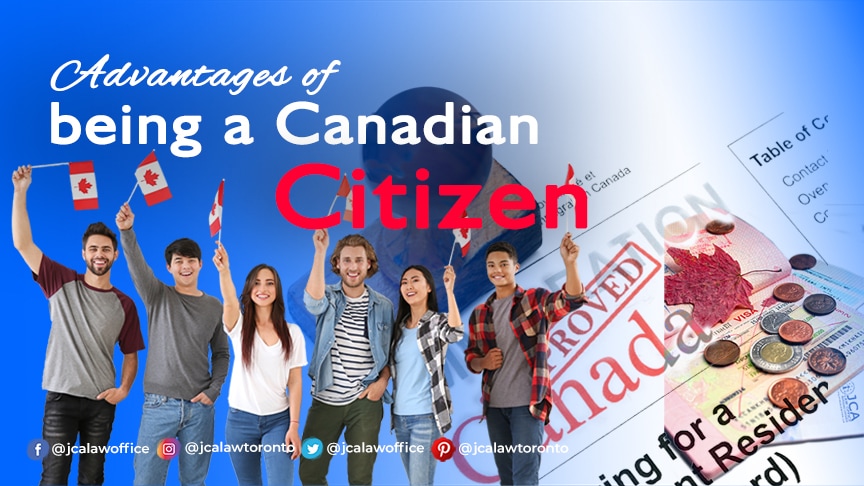
    Being a Canadian Citizen is something to be proud of. Along with being a part of a country that is very welcoming and multicultural, there are also many other perks to being a Canadian Citizen that some people may not know about. When you become a Canadian Citizen, doors are opened to bigger opportunities, such as access to restricted jobs. Some jobs in Canada require you to have Canadian citizenship, such as government jobs or work at the federal level which requires a security clearance. If you have been living in Canada for quite some time, chances are you have an opinion on how the country, province or city should be run. By having Canadian citizenship, you have the privileges of voting in federal, provincial and municipal elections, and even run for public office.

    Becoming a Canadian also means that you will be issued a Canadian passport, which happens to be one of the best and most powerful passports in the world. Holding a Canadian passport means that you may travel visa-free to 166 countries* and it also allows you to exit and re-enter Canada freely without any trouble. When you are a Canadian citizen, you never have to worry about losing status, unlike if you are a permanent resident, you will need to comply to some residency requirements.

    If ever you are convicted of a crime in Canada as a citizen, you will not lose your citizenship, but if you are a permanent resident, you might face deportation. You also do not have to worry about renewing your immigration documents because once you gain your citizenship, it stays with you forever. The only document you need to renew every ten years is your Canadian passport.

    Aside from these great benefits, being able to call yourself a Canadian citizen hold much more value – it means you have access to freedom, rights, and equality. Canada is an amazing, welcoming and multicultural country and I know you will be proud to call yourself a Canadian citizen because I am proud to be one.

    Requirements for Becoming a Canadian Citizen:

    After reading the above benefits, you are now fully convinced that you truly wanted to become a Canuck (a slang term for Canadians… don’t worry the article about Canadian slangs will be posted soon!!). But how do you become one?

    The following are the requirements to be qualified to apply for Canadian Citizenship:

    1. You must have a Permanent Resident (PR) status in Canada. Regardless of age, if you are applying for citizenship, you must have a PR status in Canada, which also signifies that you must NOT:
      • be under review for immigration or fraud reasons
      • be requested by Canadian officials to leave Canada (removal order)
      • have unfulfilled conditions related to your PR status, such as medical screening
    2. Have lived in Canada for at least 3 years (out of the last 5 years). You need to ensure that you have been physically present in Canada for at least 1095 days (or 3 years) during the last five years from the date you submitted your application.
    3. You have filed your Income Taxes, as needed
    4. Proven Language Skills in English or French
      • If you’re 18 to 54 years of age on the day you sign and submit your application, you must prove that you can speak and listen at the Canadian Language Benchmarks (CLB) Level 4 or higher in either English or French (which is Canada’s 2 official languages). Certificates, Diplomas or tests that prove your language skills may be submitted along with your application.
    5. Show how well you know about Canada by passing the citizenship test
      • If you’re 18 to 54 years of age on the day you sign and submit your application, you need to take the citizenship test. You’ll need to answer questions about the rights and responsibilities of Canadians and Canada’s (a) history, (b) geography, (c) economy, (d) government, (e) laws, etc.
      • The test may be taken in either English or French and consists of 20 multiple-choice and true-or-false questions. It is based on the official citizenship guide (Discover Canada) and you need to get a passing rate of at least 75% (or 15 correct answers out of 20).

    Ready to take that leap of faith? JCA Law office can help you get started by assisting you in getting that Permanent Resident status.

    You may also send us an email at info@filipinolawyer.ca.

    References:

    *Passport Index https://www.passportindex.org/?country=ca

    Government of Canada: https://www.canada.ca/en.html