Category: Filipino lawyer

  • Canada Immigration Roadmap 2026-2028: Complete Guide for Filipino Immigrants

    Canada Immigration Roadmap 2026-2028: Complete Guide for Filipino Immigrants

    Last Updated: February 2026 — Canada’s immigration landscape has fundamentally shifted. After years of record-high targets, the federal government has pivoted toward reduced admissions, tighter temporary resident controls, and sector-specific selection. This comprehensive roadmap covers everything Filipino immigrants need to know about navigating Canadian immigration from 2026 through 2028.

    The Big Picture: Canada’s Immigration Pivot

    Between 2022 and 2024, Canada experienced unprecedented immigration growth — welcoming over 470,000 permanent residents in 2024 alone and seeing its temporary resident population surge past 2.5 million. Housing affordability, healthcare strain, and public sentiment pushed the government to fundamentally recalibrate its approach.

    The result? A dramatic shift from “growth at all costs” to managed, strategic immigration that prioritizes:

    • Economic alignment — Selecting immigrants who fill proven labour market gaps
    • In-Canada transitions — Prioritizing temporary residents already contributing to the economy
    • Reduced temporary volumes — Shrinking the temporary resident population to under 5% of Canada’s total population by end of 2027
    • Provincial distribution — Directing newcomers to regions beyond Toronto, Vancouver, and Montreal

    What This Means for Filipinos: The Philippines remains one of Canada’s top source countries for immigration. However, competition is fiercer, spots are fewer, and strategic planning is now essential. Filipinos already in Canada — particularly those in healthcare, trades, and caregiving — are well-positioned for the new priority categories.

    2026–2028 Immigration Levels Plan: The Numbers

    Released in November 2025, the 2026–2028 Immigration Levels Plan represents the most significant course correction in Canadian immigration in decades. Here are the confirmed targets:

    Permanent Resident Admissions

    Category202620272028
    Total PR Admissions380,000380,000380,000
    Economic Class239,800 (63%)244,700 (64%)244,700 (64%)
    — Federal High Skilled (EE)109,000116,200116,200
    — Provincial Nominees (PNP)91,50091,50091,500
    — Atlantic Immigration (AIP)4,0004,0004,000
    — Federal Economic Pilots8,1758,1758,175
    Family Reunification84,00081,00081,000
    Refugees & Protected Persons49,30049,30049,300
    Humanitarian & Other6,9005,0005,000

    Temporary Resident Arrivals

    Category202620272028
    Total TR Arrivals385,000370,000370,000
    International Mobility Program170,000170,000170,000
    Temporary Foreign Workers (LMIA)60,00050,00050,000
    International Students155,000150,000150,000

    Key Takeaway: International student permits drop from ~305,000 in 2025 to 155,000 in 2026 — a 49% reduction. LMIA-based work permits fall from 82,000 in 2025 to 60,000 in 2026 and just 50,000 by 2027. These are historic cuts that will affect hundreds of thousands of prospective immigrants.

    Key Policy Changes Timeline (2024–2026)

    Understanding the timeline of changes helps you see where things stand now and what triggered the current landscape:

    2024: The Year of Restrictions

    • January 2024: Study permit GIC requirement doubled from $10,000 to $20,635
    • January 2024: National study permit intake cap introduced — 35% reduction in new permits
    • June 2024: LMIA validity reduced from 12 months to 6 months
    • September 2024: Low-wage LMIA moratorium in areas with 6%+ unemployment
    • September 2024: Low-wage workforce cap reduced from 20% to 10%; maximum employment duration cut from 2 years to 1 year
    • October 2024: 2025–2027 Immigration Levels Plan announced with reduced PR targets (395,000 in 2025, down from 500,000)
    • November 2024: Student Direct Stream (SDS) cancelled — all study permits now go through regular processing
    • November 2024: New PGWP language and field-of-study requirements take effect

    2025: Tightening Continues

    • January 2025: Spousal Open Work Permit eligibility restricted — limited to spouses of high-skilled workers (TEER 0/1) and select TEER 2/3 occupations in shortage sectors
    • January 2025: Dependent children no longer eligible for open work permits
    • January 2025: Spousal work permits for international students restricted to partners of PhD, Master’s (16+ months), or professional degree students only
    • March 2025: PGWP field-of-study list revised — 119 fields added (healthcare, trades, education), 178 fields removed
    • September 2025: Study permit financial requirement increased to $22,895 (on top of tuition)
    • November 2025: 2026–2028 Immigration Levels Plan released with 380,000 PR target
    • December 2025: OINP exhausts full 10,750 nomination allocation (50% lower than 2024’s 21,500)
    • December 2025: BCPNP notified of reduced 2026 allocation of 5,254 nominations
    • December 2025: New caregiver pilot intakes paused — will not reopen in March 2026 as planned

    2026: New Reality Takes Hold

    • January 2026: Agricultural LMIA advertising requirement reinstated
    • Early 2026: New Express Entry category — Physicians with Canadian Work Experience — launches
    • 2026–2027: One-time initiative to fast-track ~115,000 protected persons to PR
    • 2026–2027: Up to 33,000 skilled temporary workers accelerated to permanent residence
    • Ongoing 2026: Six major TFWP reforms expected — sector-specific permits, simplified LMIA, enhanced worker protections

    Permanent Residence Pathways: What’s Changed

    Express Entry (Federal Skilled Worker, CEC, FST)

    Express Entry remains the primary pathway for skilled immigration, but the system has evolved significantly:

    Category-Based Selection Dominates: In 2025, over 59% of all Invitations to Apply (ITAs) were issued through category-based draws — not general “all-program” rounds. This trend continues into 2026. The active categories include:

    CategoryTypical CRS CutoffKey Requirement
    Healthcare Occupations420–4406+ months experience in healthcare NOCs
    STEM Professions440–4706+ months in science/tech/engineering/math
    Trades Occupations430–4606+ months in skilled trades
    Transport Occupations430–4506+ months in transport sector
    Agriculture & Agri-food430–4506+ months in agriculture NOCs
    French-Language Proficiency336–400CLB 7+ in French
    Physicians (NEW 2026)TBDCanadian work experience as physician

    General All-Program Draws: When they occur, CRS cutoffs hover around 500+ — making them accessible mainly to candidates with provincial nominations (600-point boost), strong language scores, Canadian education, or significant work experience.

    Filipino Advantage: Many Filipinos work in healthcare (nurses, personal support workers, medical technologists), trades, and caregiving — all priority categories for Express Entry. If you have 6+ months of Canadian work experience in these fields, you may qualify for lower-CRS category-based draws rather than the ultra-competitive general rounds.

    Provincial Nominee Programs (PNPs)

    PNPs remain one of the most reliable PR pathways — and their national allocation has increased to 91,500 in 2026 (up 66% from the 55,000 target in the 2025–2027 plan). However, provincial-level dynamics have shifted:

    Ontario (OINP): Ontario’s allocation was cut by 50% in 2025 to 10,750 nominations (down from 21,500 in 2024). The province exhausted its entire allocation by December 2025. The 2026 allocation has not yet been confirmed, but competition is expected to remain intense. Ontario’s “As of Right” framework now allows certified professionals to begin work within 10 business days of credential validation — a significant benefit for Filipino engineers, architects, and healthcare professionals.

    British Columbia (BCPNP): BC received a 2026 allocation of just 5,254 nominations — substantially lower than previous years. The province used 100% of its 2025 allocation and is lobbying Ottawa for additional spaces. Priority sectors include healthcare, tech, and construction.

    Alberta (AAIP): Alberta continues to offer competitive pathways, particularly for workers in healthcare, trades, and the energy sector. The Alberta Advantage Immigration Program draws regularly and maintains one of the more accessible PNP streams for in-demand occupations.

    Atlantic Provinces (AIP): The Atlantic Immigration Program targets approximately 4,000 admissions in 2026. Nova Scotia and Newfoundland have moved to Expression of Interest (EOI) models. Priority sectors include healthcare, construction, and manufacturing. Settlement fund requirements were increased in July 2025.

    Related Guide: For detailed province-by-province breakdowns, including eligibility, points systems, and recent draws, explore our provincial guides: Ontario OINP | BC PNP | Alberta AAIP | Manitoba MPNP | Saskatchewan SINP

    Family Sponsorship

    Family reunification remains a core pillar with 84,000 spots in 2026 (declining slightly to 81,000 in 2027–2028). Key programs include:

    • Spousal/Partner Sponsorship: Processing times have improved, with most inland applications processed within 12 months. Outland spousal sponsorship from the Philippines typically takes 12–18 months.
    • Parents and Grandparents Program (PGP): The interest-to-sponsor intake continues to be highly competitive. Meeting the Minimum Necessary Income (MNI) requirements for three consecutive tax years remains mandatory.
    • Super Visa: An alternative for parents/grandparents, allowing stays of up to 5 years per visit. Requires private medical insurance of at least $100,000 coverage and proof that the child/grandchild meets LICO income thresholds.

    Caregiver Pathways

    The caregiver pathway has historically been one of the most important immigration routes for Filipino families. Here is the current situation:

    Important Update (December 2025): The Home Child Care Provider Pilot and Home Support Worker Pilot will not reopen for new intakes in March 2026 as previously expected. IRCC has paused new applications to focus on processing the existing backlog. If you already submitted an application, it continues to be processed.

    What this means: Caregivers currently in Canada on valid work permits should focus on:

    1. Accumulating qualifying work experience — Continue working in your NOC 44100 (Home Child Care Provider) or NOC 44101 (Home Support Worker) role
    2. Language testing — Achieve at least CLB 4 in all four skills (the minimum), but aim for CLB 5+ to strengthen your profile
    3. Monitoring IRCC announcements — The government may announce a new intake window or revised program structure at any time
    4. Exploring alternative pathways — Some provinces offer PNP streams that accept caregivers and healthcare support workers

    The caregiver program allocated 8,175 spots under “Federal Economic Pilots” in 2026. While intakes are currently paused, these spots indicate the government’s intention to continue accepting caregiver PR applications once the backlog clears.

    Temporary Residence: Major Changes

    Work Permits (TFWP and LMIA)

    The Temporary Foreign Worker Program has undergone its most significant overhaul in years:

    ChangeBeforeNow (2026)
    Annual LMIA-based work permits184,008 (2023)60,000 cap
    LMIA validity12 months6 months
    Low-wage workforce cap30% of employer workforce10%
    Low-wage max employment2 years1 year
    Low-wage LMIA in high unemployment areasAvailableMoratorium (6%+ unemployment)
    High-wage stream wagesPrevious thresholds20% increase applied

    Coming in 2026: Six major TFWP reforms are expected, including sector-specific work permits, simplified LMIA processes for shortage occupations, and enhanced housing, transportation, and healthcare standards for temporary workers.

    Study Permits

    International students face the most dramatic changes of any immigration category:

    • Student Direct Stream (SDS) — Cancelled: As of November 8, 2024, the SDS fast-track program no longer exists. All study permit applications now go through regular processing, meaning longer wait times.
    • National Intake Cap: Study permits capped at 155,000 in 2026 — down 49% from 305,000 in 2025. Competition for spots is intense.
    • Financial Requirements Increased: Applicants must now show $22,895 CAD (as of September 2025) in addition to first-year tuition — more than double the pre-2024 requirement of $10,000.
    • Provincial Attestation Letters (PALs): Required for most study permit applications. Each province receives a capped allocation of attestation letters.

    Post-Graduation Work Permits (PGWP)

    For international students already studying in Canada, PGWP rules have changed substantially:

    • Language Requirements (New): University graduates (bachelor’s, master’s, PhD) need CLB 7 in all four skills. College/polytechnic graduates need CLB 5 in all four skills.
    • Field of Study Requirements (New): Non-degree program graduates must have studied in an eligible field aligned with Express Entry priorities. As of 2025, 119 fields were added (healthcare, trades, education) while 178 fields were removed.
    • College Bachelor’s Programs Exempted: As of March 2025, graduates of college bachelor’s degree programs are exempt from field-of-study requirements.
    • Transitional Protection: Students who applied for study permits before June 25, 2025 retain PGWP eligibility if their field was on the list at the time of application.

    Spousal Open Work Permits

    Effective January 21, 2025, eligibility for Spousal Open Work Permits (SOWPs) was significantly restricted:

    • Spouses of workers: Only eligible if the principal worker holds a TEER 0 or 1 occupation, or select TEER 2/3 occupations in shortage sectors (healthcare, construction, natural resources, STEM). The worker must also have 16+ months remaining on their work permit.
    • Spouses of students: Only eligible if the student is in a PhD, Master’s (16+ months), or professional degree program (law, medicine, engineering).
    • Dependent children: No longer eligible for open work permits under this measure.

    Impact on Filipino Families: These SOWP restrictions particularly affect Filipino families who relied on spousal work permits to establish dual incomes while one partner studied or worked on a lower-skilled permit. Planning around these restrictions is now critical — especially regarding which partner should be the principal applicant and which program to pursue.

    The Temporary Resident Cap: What You Need to Know

    One of the most significant structural changes is the government’s commitment to reducing Canada’s temporary resident population to under 5% of the total population by end of 2027 (extended from the original 2026 target). As of mid-2025, temporary residents made up approximately 6.2% of the population — around 2.5 million people.

    This means a net reduction of approximately 480,000 temporary residents over 2026–2027 through a combination of:

    • Fewer new study permits and work permits issued
    • Non-renewal of expiring permits for those who do not meet new criteria
    • Accelerated transition of 33,000 skilled workers and 115,000 protected persons to PR status (moving them from “temporary” to “permanent” counts)
    • Increased enforcement of status compliance

    What’s Coming in 2027–2028

    While the 2026–2028 Levels Plan provides confirmed targets, several factors will shape immigration policy beyond the current plan:

    Confirmed Directions

    • Sustained 380,000 PR target: No increase planned through 2028
    • Economic class dominance: 64% of all PR admissions in 2027–2028 will be economic class
    • Further temporary resident reductions: TFWP drops to 50,000 LMIA permits by 2027; student permits at 150,000
    • Francophone immigration growth: Target increases to 10.5% of admissions outside Quebec by 2028, with 12% targeted by 2029
    • PNP expansion: Provincial nominees maintained at 91,500 — the largest single economic subcategory

    Factors to Watch

    • Federal election dynamics: Immigration policy is a major political issue. Any change in government could result in further restrictions or a recalibration of targets.
    • Housing and infrastructure: The pace of housing construction and healthcare system capacity will directly influence whether targets are maintained, increased, or further reduced.
    • Labour market conditions: As unemployment rates shift by region and sector, LMIA availability and PNP priorities will adjust accordingly.
    • International agreements: Trade agreements and bilateral arrangements with countries including the Philippines may create new mobility pathways.
    • Caregiver program restart: IRCC has paused new intakes but has not cancelled the pilots. A revised intake or new program structure could be announced at any time.

    Impact on the Filipino Community in Canada

    The Filipino community is uniquely affected by these changes — both positively and negatively. Here is an honest assessment:

    Challenges

    ChallengeImpactWho’s Affected
    Caregiver pilot intake pausedNo new applications accepted; uncertain timelineCaregivers in Philippines waiting to apply
    LMIA caps drastically reducedFewer employer-sponsored work permits availableWorkers applying from abroad
    SOWP restrictionsMany spouses lose work permit eligibilityFamilies with one partner on lower-skill permit
    Study permit capsFewer spots available for Filipino studentsProspective international students
    Higher financial requirements$22,895+ needed for study permits; increased settlement fundsStudents and AIP applicants
    OINP allocation halvedFar fewer nominations available in OntarioFilipino workers in the GTA

    Opportunities

    OpportunityWhy It MattersWho Benefits
    Category-based EE draws for healthcareLower CRS cutoffs for nurses, PSWs, medical techsFilipino healthcare workers in Canada
    Trades category drawsLower CRS for electricians, welders, carpentersFilipino tradespeople with Canadian experience
    33,000 worker-to-PR fast-trackAccelerated PR for skilled TFWs in shortage sectorsFilipinos on work permits in priority sectors
    PNP allocation increase to 91,500More provincial nominations nationallyFilipinos in smaller provinces
    In-Canada applicant priority40%+ of PR admissions from people already in CanadaAll Filipinos currently in Canada with status
    Ontario “As of Right” frameworkFaster credential recognition for regulated professionsFilipino engineers, architects, healthcare pros

    Strategy Recommendations by Situation

    Based on the current policy landscape, here are tailored strategies for different situations:

    If You’re a Caregiver in Canada

    • Keep working — Maintain your employment in NOC 44100 or 44101 to accumulate qualifying experience
    • Renew your work permit before it expires to maintain legal status
    • Get language tested — Aim for CLB 5+ (above the minimum CLB 4) to strengthen any future application
    • Explore PNP options — Some provinces accept caregiver experience under healthcare or social services streams
    • Stay informed — Sign up for IRCC email updates on caregiver programs

    If You’re a Skilled Worker in Canada

    • Create an Express Entry profile immediately if you haven’t already
    • Maximize your CRS score: Improve IELTS/CELPIP scores (CLB 9+ in each skill adds significant points), get your foreign credentials assessed (ECA), and accumulate Canadian work experience
    • Target category-based draws — If you work in healthcare, trades, STEM, transport, or agriculture, you may receive an ITA at a much lower CRS score
    • Apply to relevant PNP streams — A provincial nomination adds 600 CRS points, virtually guaranteeing an ITA
    • Consider the 33,000 worker-to-PR fast-track — If you’re in a shortage sector, you may be eligible for accelerated processing

    If You’re Planning to Come to Canada from the Philippines

    • Focus on skills in demand: Healthcare (nursing, PSW), skilled trades (welding, electrical, plumbing), and STEM fields have the best pathways
    • Get your language scores first — Take IELTS or CELPIP before doing anything else. CLB 7+ opens most pathways
    • Consider provincial pathways — Look beyond Ontario and BC. Alberta, Saskatchewan, Manitoba, and Atlantic provinces may have more accessible streams
    • Budget realistically: Study permits now require $22,895+ proof of funds (plus tuition). LMIA work permits are harder to obtain. Factor in longer processing times.
    • Consult before committing funds — The landscape changes rapidly. Professional guidance can save months and thousands of dollars in misdirected applications

    If You Want to Sponsor Family Members

    • Spousal sponsorship remains relatively stable — processing times of 12–18 months for outland applications from the Philippines
    • Parents/Grandparents: Consider a Super Visa as a faster alternative while you save for the PGP income requirements. Super Visas allow 5-year stays and are processed in approximately 8 weeks.
    • Maintain your income records — Three years of consecutive tax returns meeting MNI thresholds are required for PGP sponsorship

    If You’re an International Student in Canada

    • Check your PGWP eligibility carefully — Verify your field of study is still on the eligible list and prepare for language testing requirements
    • Study in priority fields — Healthcare, trades, education, and STEM programs have the clearest pathways from PGWP to Express Entry to PR
    • Gain Canadian work experience — Co-op terms and post-graduation employment in your field strengthen your Express Entry profile significantly
    • Monitor your spouse’s SOWP eligibility — If you’re in a Master’s or PhD program, your spouse may still qualify for a work permit

    Summary: The New Immigration Reality

    Canada is not closing its doors to immigration — but it is narrowing them significantly. The era of broad, high-volume admissions is over. What has replaced it is a targeted, sector-driven system that rewards:

    • Canadian work experience in priority sectors
    • Strong language skills (English and/or French)
    • In-demand occupations (healthcare, trades, STEM)
    • Provincial connections and employer support
    • Willingness to settle outside major urban centres

    For Filipino immigrants — whether you are already in Canada, planning your move, or sponsoring family members — strategic planning has never been more important. The right pathway chosen at the right time can mean the difference between a straightforward PR application and years of uncertainty.

    How JCA Law Office Can Help

    At JCA Law Office Professional Corporation, we specialize in helping the Filipino community navigate Canada’s complex and rapidly changing immigration system. Our services include:

    • Express Entry profile optimization — Maximizing your CRS score and identifying the best category-based draw for your occupation
    • Provincial Nominee Program applications — Strategic assessment of which province and stream gives you the best chance of nomination
    • Spousal and family sponsorship — Complete application preparation and submission for inland and outland sponsorship
    • Caregiver pathway guidance — Monitoring program intakes and preparing your application package for when new spots open
    • Work permit and LMIA support — Helping employers and workers navigate the new TFWP requirements
    • Study permit applications — Ensuring your application meets the new financial and institutional requirements
    • Status maintenance and restoration — Protecting your legal status while you pursue permanent residence

    Book Your Immigration Consultation

    The immigration landscape is changing fast. Whether you need help understanding how the new rules affect your situation, want to explore your best pathway to permanent residence, or need assistance with an application, our team is here to help.

    We serve clients across the Greater Toronto Area and throughout Canada, with a special focus on the Filipino community.

    Call us at (416) 838-2023 or email info@jcalaw.ca

    Related Resources

    Disclaimer: This article is for informational purposes only and does not constitute legal advice. Immigration laws and policies change frequently. The information in this guide is current as of February 2026. For advice specific to your situation, please consult with a licensed immigration lawyer or consultant. Sources include IRCC official publications, the 2026-2028 Immigration Levels Plan, and provincial immigration program websites.
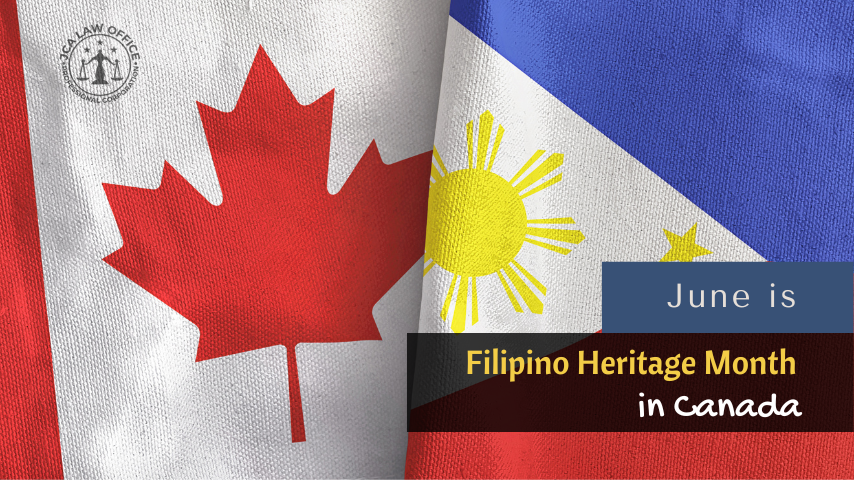

  • Celebrating Filipino Heritage Month: Empowering the Filipino Community Through Legal Representation

    Celebrating Filipino Heritage Month: Empowering the Filipino Community Through Legal Representation

    Celebrating Filipino Heritage Month

    Empowering the Filipino community through legal representation, diversity, and equitable access to justice.

    At JCA Law Office Professional Corporation, we believe in the power of diversity and inclusivity. As a law firm dedicated to supporting equity-seeking groups across Canada, we are proud to celebrate Filipino Heritage Month. This annual observance provides us with a unique opportunity to honor the rich cultural heritage of the Filipino community while shedding light on the need for increased legal representation within this vibrant group.


    The Filipino Community: A Pillar of Canadian Society

    Filipino Heritage Month is a time to recognize and appreciate the significant contributions of the Filipino community to the cultural, social, and economic fabric of Canada. With a long history of immigration to Canada, Filipinos have made Canada their home and continue to enrich the nation with their talents, skills, and vibrant traditions.


    Challenges in Legal Representation

    However, despite their growing numbers and undeniable impact, the Filipino community faces certain challenges, particularly when it comes to legal representation. The latest report from the Law Society of Ontario reveals that the Filipino community has the lowest ratio of lawyers to the population in Ontario. This disparity highlights the urgent need for increased support, access, and opportunities within the legal profession for aspiring Filipino lawyers.


    Empowering the Filipino Community

    At JCA Law Office, we are committed to promoting diversity and equality within the legal field. We recognize that diverse legal representation is essential for a fair and just society, and we strive to bridge the gap by empowering the Filipino community through legal services and advocacy.


    Our Dedication to Equity

    As part of our ongoing commitment to supporting equity-seeking groups, we actively seek to increase the representation of Filipino lawyers in our firm. By providing mentorship, guidance, and professional development opportunities, we aim to create a more inclusive legal profession that reflects the diversity of the communities we serve.


    Building Stronger Communities

    By celebrating Filipino Heritage Month, we hope to raise awareness about the importance of equitable representation within the legal system. Our efforts extend beyond providing legal services; we actively collaborate with community organizations, host educational events, and engage in outreach initiatives to empower and uplift the Filipino community.


    Join Us in Celebrating Filipino Heritage Month

    During Filipino Heritage Month, we invite everyone to join us in celebrating the rich culture, history, and achievements of the Filipino community in Canada. Together, we can work towards fostering a more inclusive and equitable society, where every individual, regardless of their background, has access to fair legal representation.


    Contact JCA Law Office

    If you are a member of the Filipino community and seeking legal assistance, or if you aspire to pursue a career in law, we encourage you to reach out to JCA Law Office Professional Corporation. Our team is here to support you and provide the guidance you need.

    Filipino Heritage Month is a time to honor the invaluable contributions of the Filipino community to Canada while acknowledging the need for increased legal representation. At JCA Law Office Professional Corporation, we are dedicated to empowering the Filipino community through our commitment to diversity, equity, and justice. Together, let us celebrate the Filipino heritage and work towards creating a more inclusive legal profession and society for all.

    Need Legal Assistance?

    JCA Law Office Professional Corporation is committed to serving the Filipino community with culturally sensitive legal representation in immigration, family law, real estate, and more.

  • Navigating Real Estate Inheritance in the Philippines: Transferring Property Titles from Deceased Relatives

    Navigating Real Estate Inheritance in the Philippines: Transferring Property Titles from Deceased Relatives

    Navigating Real Estate Inheritance in the Philippines: Transferring Property Titles from Deceased Relatives

    A comprehensive guide for Filipino-Canadian heirs on how to transfer property titles from deceased relatives in the Philippines, including legal requirements, tax obligations, and step-by-step procedures.

    In the Philippines, a common occurrence is finding a property that remains titled under the name of a deceased relative, usually a parent or grandparent. Despite the death of the original owner, these properties often continue to be utilized, maintained, or even transacted by surviving heirs without the legal paperwork having been updated. This situation can create legal and financial complexities that may potentially jeopardize ownership rights and the value of the property.

    If you are an heir to such a property, it is crucial to transfer the title officially to avoid future legal disputes and to ensure the proper valuation of your inheritance. Here, we will discuss the process, requirements, and potential challenges involved in transferring real estate titles in the Philippines from deceased relatives to their living heirs.


    Understanding the Importance of Title Transfers

    Property titles in the Philippines are legal documents that prove ownership over a piece of land or a building. When the owner of a property dies, the title does not automatically pass on to the heirs. Instead, it remains in the name of the deceased until the legal process of transfer is completed. This delay can lead to several problems:

    1. Potential for Disputes: The property might be subject to inheritance disputes among the potential heirs, which could lead to lengthy legal battles.
    2. Inability to Transact: The heirs may not be able to sell, mortgage, or lease the property since the title is still under the deceased’s name.
    3. Tax Liabilities: The property may incur estate taxes and penalties that could diminish the value of the inheritance.

    The Transfer Process: From Estate Tax Clearance to Title Transfer

    The process of transferring a title from a deceased person to the living heirs involves several legal and administrative steps. These steps are generally as follows:

    Step 1: Secure a Death Certificate

    Obtain a certified copy of the death certificate from the local civil registry or the Philippine Statistics Authority (PSA).

    Step 2: Probate of Will or Declaration of Heirs

    If the deceased left a will, it must be probated, i.e., approved by the court. If there is no will, the court will have to issue a Declaration of Heirs.

    Step 3: Payment of Estate Taxes

    Calculate the estate tax due based on the value of the estate at the time of the owner’s death and pay this to the Bureau of Internal Revenue (BIR). This step involves filing the estate tax return and submitting the necessary documents.

    Step 4: Secure a Tax Clearance

    After paying the estate tax, secure a Certificate of Tax Clearance from the BIR, indicating that the estate tax has been fully paid.

    Step 5: Judicial Partition or Extrajudicial Settlement of Estate

    If the heirs cannot amicably decide on the distribution of the property, a court-supervised partition is necessary. If they agree, they can execute an Extrajudicial Settlement of Estate among themselves.

    Step 6: Transfer of Title

    Once the property has been properly partitioned or settled, the title can be transferred to the heirs. This requires filing a Deed of Adjudication with the Registry of Deeds, paying the corresponding transfer taxes, and obtaining the new titles under the heirs’ names.


    Conclusion

    Transferring a property title from a deceased relative in the Philippines to living heirs might appear to be a daunting task due to the number of steps and legal complexities involved. However, it is a critical process to prevent disputes and protect the value of your inheritance. It is advisable to seek legal counsel to help navigate through this process to ensure you adhere to all the requirements of the law, thereby ensuring a smooth and successful transfer.

    Need Help with Philippine Property Inheritance?

    JCA Law Office assists Filipino-Canadians with estate settlement, property title transfers, and extrajudicial settlements in the Philippines. Contact us for a consultation.

    204-2323 Yonge St, Toronto | 1-855-522-5290

  • A Guide for Filipinos Who Want to Work or Live in Canada

    A Guide for Filipinos Who Want to Work or Live in Canada

    A Guide for Filipinos Who Want to Work or Live in Canada

    Everything you need to know about immigrating to Canada — from eligibility and documents to finding a job and embracing a new culture.

    Canada is known for its quality of life, excellent healthcare, and welcoming society. If you’re a Filipino who wants to work or live in Canada, there are several things you need to know before you make the move. Here’s a guide to help you navigate the process:


    1. Check Your Eligibility for Immigration to Canada

    The first step in moving to Canada is to determine your eligibility for immigration. There are several immigration programs you can apply for, including the Federal Skilled Worker Program, the Canadian Experience Class, and the Provincial Nominee Program. Each program has its own set of requirements, so make sure you do your research and find the one that best fits your qualifications.


    2. Gather All the Necessary Documents

    Once you’ve determined your eligibility for immigration, the next step is to gather all the necessary documents. These include your passport, birth certificate, educational credentials, work experience, language test results, and police clearance certificates. Make sure all your documents are up-to-date and translated into English or French if necessary.


    3. Learn English or French

    English and French are the two official languages in Canada, and being proficient in either one of them can increase your chances of finding work and settling into Canadian society. You’ll also need to take a language test to prove your proficiency in English or French when you apply for immigration. There are many language schools and courses you can take to improve your language skills.


    4. Find a Job in Canada

    If you’re planning to work in Canada, it’s a good idea to start looking for a job before you move. You can use job search websites like Job Bank or Indeed to find job openings in your field. You can also network with people in your industry or attend job fairs and recruitment events. Make sure your resume is updated and tailored to Canadian standards.


    5. Prepare for the Cost of Living

    Canada is a relatively expensive country to live in, especially in major cities like Toronto and Vancouver. Make sure you have enough savings to cover your living expenses for the first few months while you look for a job. You should also research the cost of housing, food, transportation, and healthcare in the city or province you plan to live in.


    6. Embrace Canadian Culture

    Canada is a multicultural country, and Filipinos are one of the largest visible minority groups in the country. However, Canadian culture is different from Filipino culture, and it’s important to be open-minded and respectful of Canadian customs and traditions. Embrace the differences and learn from them. Joining Filipino community organizations can also help you stay connected with your culture and make new friends.


    Conclusion

    Moving to Canada as a Filipino can be an exciting and rewarding experience. By checking your eligibility for immigration, gathering all the necessary documents, learning English or French, finding a job in Canada, preparing for the cost of living, and embracing Canadian culture, you can successfully work and live in Canada. Good luck!

    Need Help With Your Immigration to Canada?

    Our immigration lawyers can guide you through the process. Contact us today for a consultation.

  • Family Sponsorship in Canada: A Pathway to Reunification for Filipino Families

    Family Sponsorship in Canada: A Pathway to Reunification for Filipino Families

    Family Sponsorship in Canada

    A pathway to reunification for Filipino families through Canada’s family sponsorship immigration program.

    Family sponsorship in Canada has been a long-standing tradition, allowing families to reunite and start a new life in the country. For the Filipino community, this program has been an invaluable opportunity for countless individuals and families seeking a better future together. In this article, we will explore the process of family sponsorship in Canada, with a subtle focus on the unique experiences and needs of the Filipino community.


    Understanding Family Sponsorship in Canada

    Family sponsorship in Canada is a program that enables Canadian citizens and permanent residents to sponsor their eligible family members, such as spouses, partners, children, parents, and grandparents, to come and live in Canada as permanent residents. This program aims to help families reunite and maintain strong family bonds even as they start a new life in a foreign country.


    The Filipino Connection

    The Filipino community has been one of the largest immigrant groups in Canada, with their numbers consistently growing over the years. Due to the shared values of family-oriented culture and the warm, welcoming nature of Canadians, many Filipinos have chosen Canada as their new home. Family sponsorship in Canada has played a vital role in the growth of the Filipino community, allowing families to stay together and support one another in their pursuit of a better life.


    Eligibility Criteria and Application Process

    To apply for family sponsorship in Canada, the sponsor must be a Canadian citizen or permanent resident who is at least 18 years old. They should also be financially capable of supporting their sponsored family members upon their arrival in Canada. In addition, the family members to be sponsored must meet certain eligibility criteria, such as being a spouse, common-law partner, conjugal partner, dependent child, parent, or grandparent.

    For the Filipino community, the application process can be initiated either online or by mail. It involves submitting the necessary forms, documents, and fees to Immigration, Refugees and Citizenship Canada (IRCC). It is crucial to provide accurate and complete information to avoid delays or the rejection of the application.

    Note for Filipino Applicants: Some potential challenges may include obtaining documents from the Philippines, such as birth certificates and marriage certificates, or navigating language barriers during the application process. It is advisable to consult with an immigration consultant or lawyer familiar with Filipino culture and the nuances of the family sponsorship process to ensure a smooth application journey.


    Settlement and Integration

    Once the sponsored family members arrive in Canada, they will be granted permanent residency, allowing them to work, study, and access various social benefits. The Filipino community in Canada has a strong presence, with numerous cultural organizations and support networks in place to assist newcomers with their integration into Canadian society.

    Many cities in Canada have thriving Filipino communities, offering familiar foods, cultural events, and social connections. This makes the transition to life in Canada a more comfortable experience for Filipino newcomers, providing a sense of belonging and familiarity amidst the new environment.


    Conclusion

    Family sponsorship in Canada has been a life-changing opportunity for many Filipino families, enabling them to reunite and start anew in a welcoming and diverse country. By understanding the process and addressing potential challenges, Filipino sponsors and their families can successfully navigate the path to family reunification in Canada, strengthening both their familial bonds and the diverse fabric of Canadian society.

    Need Help with Family Sponsorship?

    JCA Law Office Professional Corporation specializes in helping Filipino families navigate the family sponsorship process in Canada, from eligibility assessment to application submission.

  • Finding the Right Filipino Immigration Lawyer in Canada: A Comprehensive Guide

    Finding the Right Filipino Immigration Lawyer in Canada: A Comprehensive Guide

    Finding the Right Filipino Immigration Lawyer in Canada: A Comprehensive Guide

    What to look for when choosing a culturally sensitive immigration lawyer who understands both Philippine and Canadian law.

    Are You Looking for a Filipino Immigration Lawyer in Canada?


    You’re in the right place. This article aims to provide a comprehensive guide to help you find the right legal representation for your specific needs. With an increasing number of Filipino immigrants in Canada, having a knowledgeable and culturally sensitive lawyer is essential. The right Filipino immigration lawyer can help make your journey to Canada more manageable, ensuring your legal needs are addressed while respecting your cultural values.

    Why Choose a Filipino Immigration Lawyer in Canada?

    Key Advantages

    • Cultural Understanding — A Filipino immigration lawyer understands the unique cultural nuances and values of the Filipino community. This understanding helps build trust and rapport, ensuring a more seamless legal process.
    • Language Bridge — Having a lawyer who speaks both English and Filipino (Tagalog) significantly helps in bridging communication gaps, ensuring you fully understand your rights, options, and obligations during the immigration process.
    • Dual Legal Knowledge — A Filipino immigration lawyer in Canada is familiar with both Philippine and Canadian laws, allowing them to provide accurate advice and representation tailored to your specific needs.

    How to Find a Filipino Immigration Lawyer in Canada

    a. Personal Recommendations

    Start by asking friends, family, or acquaintances who have immigrated to Canada if they can recommend a Filipino immigration lawyer. Word-of-mouth referrals are a valuable resource, as they provide firsthand experience and insight into the lawyer’s quality of service.

    b. Online Directories and Reviews

    Search for Filipino immigration lawyers in Canada using online directories, such as the Canadian Bar Association’s directory or Filipino community websites. Additionally, explore online reviews and testimonials from previous clients to gain insights into the lawyer’s expertise and client satisfaction.

    c. Local Filipino Community Centers and Associations

    Filipino community centers, associations, and cultural organizations can be excellent resources for finding a Filipino immigration lawyer in Canada. They often have connections to professionals in the community and may offer referrals or recommendations.

    Things to Consider When Choosing a Filipino Immigration Lawyer

    Important Selection Criteria

    • Expertise — Ensure the lawyer specializes in immigration law and has experience handling cases similar to yours. Check their credentials, certifications, and any professional affiliations.
    • Communication — Choose a lawyer who is responsive, attentive, and dedicated to your case. Good communication ensures you fully understand the process and that your concerns are addressed promptly.
    • Fees and Transparency — Before signing a retainer agreement, inquire about the fee structure and any additional expenses. Transparency in fees is crucial to avoid surprises.
    • Success Rate — While no outcome can be guaranteed, inquire about the lawyer’s success rate with cases similar to yours. A successful track record indicates expertise and competence.

    Get the Right Filipino Immigration Lawyer

    Finding the right Filipino immigration lawyer in Canada is crucial for a successful immigration process. By considering factors such as cultural understanding, language capabilities, expertise, and success rate, you can make an informed decision and secure the best possible legal representation. With the right Filipino immigration lawyer by your side, you can confidently navigate the complex world of Canadian immigration and start your new life in Canada.

    Looking for a Filipino immigration lawyer?

  • 10 Tips for Filipinos Planning to Work in Canada: A Comprehensive Guide

    10 Tips for Filipinos Planning to Work in Canada: A Comprehensive Guide

    10 Tips for Filipinos Planning to Work in Canada

    A comprehensive guide covering job search, visa process, credentials, and more for Filipino workers coming to Canada.

    If you are from the Philippines and considering working in Canada, it’s essential to be well-prepared and informed. Here are some tips to help you in this process:

    Essential Tips for Working in Canada


    1. Research job opportunities: Familiarize yourself with the Canadian job market, especially in your field of expertise. Visit job portals such as Job Bank, company websites, and LinkedIn to get a sense of available opportunities and requirements.
    2. Understand the visa process: Determine the appropriate type of visa or work permit you will need. The Temporary Foreign Worker Program (TFWP) and the International Mobility Program (IMP) are two popular pathways. Additionally, the Express Entry system is an option for skilled immigrants seeking permanent residency.
    3. Assess your qualifications: Evaluate how your education, work experience, and skills align with Canadian standards. You may need to have your credentials assessed through organizations like World Education Services (WES) or the International Credential Assessment Service (ICAS).
    4. Improve language proficiency: Strong English or French language skills are essential for working in Canada. Consider taking language courses or exams like IELTS (International English Language Testing System) or TEF (Test d’évaluation de français) to prove your proficiency.
    5. Network: Connect with other Filipino professionals working in Canada through online platforms, social media, or local organizations like the Philippine Embassy, as they may offer valuable insights and support.
    6. Prepare your job application: Tailor your CV and cover letter to match Canadian expectations and the specific job requirements. Highlight your skills, qualifications, and experiences relevant to the position.
    7. Research Canadian culture and workplace norms: Understanding Canadian culture, customs, and workplace expectations can help you integrate more effectively into your new work environment.
    8. Seek professional assistance: Consider hiring an immigration consultant or lawyer who specializes in Canadian immigration to help guide you through the process.
    9. Save money: Moving to another country can be expensive, so start saving early to cover expenses such as visa fees, credential assessments, language tests, and relocation costs.
    10. Be patient and persistent: The process of finding a job and immigrating to Canada can be lengthy and challenging. Stay focused, keep learning, and don’t give up.

    Remember

    Each individual’s circumstances and the specific requirements of their chosen immigration pathway may vary, so always do thorough research and seek professional advice when necessary.

    Ready to start your Canadian work journey?

  • Navigating the Filing of Estate Tax Return in the Philippines and the Implications of the Estate Tax Amnesty Act

    Navigating the Filing of Estate Tax Return in the Philippines and the Implications of the Estate Tax Amnesty Act

    Navigating the Filing of Estate Tax Return in the Philippines

    A comprehensive guide to estate tax filing requirements and the Estate Tax Amnesty Act

    The Estate Tax is a tax imposed on the transfer of the estate of a deceased individual to their heirs. In the Philippines, the process of filing an estate tax return can be complex and time-consuming. However, the introduction of the Estate Tax Amnesty Act has brought significant changes that can benefit taxpayers. This article provides a comprehensive guide to filing an estate tax return in the Philippines and discusses the implications of the Estate Tax Amnesty Act.

    I. Filing the Estate Tax Return in the Philippines

    1. Determining the Taxable Estate

    The first step is to determine the gross estate, which includes all the properties, rights, and interests of the deceased at the time of their death. This can be further categorized into real estate, personal properties, and intangible assets. After identifying the gross estate, certain deductions are allowed by law, such as:

    • Ordinary deductions: Funeral expenses, judicial expenses, and medical expenses.
    • Special deductions: Family home, standard deduction, and the share of the surviving spouse.

    2. Tax Rates and Exemptions

    The Tax Reform for Acceleration and Inclusion (TRAIN) Law sets the estate tax rate at 6% of the net estate value exceeding PHP 5,000,000. Estates worth PHP 5,000,000 or below are exempt from the tax.

    3. Filing the Estate Tax Return

    The estate tax return must be filed with the Bureau of Internal Revenue (BIR) within one year from the date of the decedent’s death. To do so, the following documents must be prepared:

    • BIR Form 1801: Estate Tax Return
    • Death certificate of the decedent
    • Notice of death filed with the BIR
    • List of properties and their respective values
    • Proof of claimed deductions
    • Tax Identification Number (TIN) of the decedent and the executor or administrator

    4. Payment of the Estate Tax

    The payment of the estate tax is due at the time of filing the return. It can be paid in full or by installment, depending on the circumstances of the estate.


    II. The Estate Tax Amnesty Act

    The Estate Tax Amnesty Act (Republic Act No. 11213) was signed into law in 2019, providing a one-time opportunity for taxpayers to settle outstanding estate tax liabilities at a reduced rate. The key features of the Act are:

    1. Amnesty Coverage

    The Act covers estate tax liabilities for decedents who passed away on or before December 31, 2017, with or without pending audit or investigation.

    2. Amnesty Rate

    The Act allows the payment of a 6% amnesty tax on the net estate, which is significantly lower than the previous estate tax rates of up to 20%.

    3. Immunities and Privileges

    Taxpayers who avail of the estate tax amnesty will be immune from payment of estate tax, civil, criminal, and administrative penalties. Additionally, they will not be subject to any further audit or investigation related to the estate tax liabilities.

    4. Amnesty Period

    The estate tax amnesty was initially available for two years from the effectivity of the Implementing Rules and Regulations (IRR). However, the government has extended the deadline due to the COVID-19 pandemic. Taxpayers should consult the BIR for the latest deadline.


    Conclusion

    The filing of an estate tax return in the Philippines can be a complex process, but understanding the requirements and procedures can help taxpayers efficiently navigate the system. The introduction of the Estate Tax Amnesty Act has provided a unique opportunity for taxpayers to settle their estate tax liabilities at a reduced rate and with significant immunities and privileges. It is crucial to consult tax professionals and the BIR for guidance on availing of the estate tax amnesty and ensuring compliance with the applicable laws and regulations.

    In summary, dealing with estate tax returns and the Estate Tax Amnesty Act in the Philippines requires a thorough understanding of the process and the related laws. By staying informed and seeking professional advice, taxpayers can maximize the benefits and minimize the risks associated with managing estate tax obligations in the country.

    Need Help With Estate Tax Filing?

    Our team can assist with estate tax matters, extrajudicial settlements, and Philippine legal requirements.

  • 10 Tips para sa mga Pilipinong Nagpaplanong Magtrabaho sa Canada: Isang Komprehensibong Gabay

    10 Tips para sa mga Pilipinong Nagpaplanong Magtrabaho sa Canada: Isang Komprehensibong Gabay

    10 Tips para sa mga Pilipinong Nagpaplanong Magtrabaho sa Canada

    Isang komprehensibong gabay para sa mga Pilipinong nais magtrabaho sa Canada — mula sa job search hanggang immigration.

    Kung ikaw ay nais magtrabaho sa Canada, mahalaga na maging handa at well-informed ka. Narito ang ilang tips upang matulungan ka sa prosesong ito:

    Mga Mahahalagang Tips


    1. Alamin ang mga job opportunities: Kilalanin ang job market ng Canada, lalo na sa iyong larangan ng kahusayan. Bisitahin ang job portals tulad ng Job Bank, company websites, at LinkedIn upang malaman ang mga oportunidad at requirements na available.
    2. Unawain ang proseso ng visa: Alamin ang tamang uri ng visa o work permit na kailangan mo. Ang Temporary Foreign Worker Program (TFWP) at International Mobility Program (IMP) ay dalawang popular na pathway. Bukod dito, ang Express Entry system ay isa pang opsyon para sa skilled immigrants na naghahanap ng permanent residency.
    3. I-assess ang iyong mga kwalipikasyon: Pag-aralan kung paano ang iyong edukasyon, work experience, at skills ay tumutugma sa mga pamantayan ng Canada. Maaaring kailanganin mong ipa-assess ang iyong mga credentials sa mga organisasyon tulad ng World Education Services (WES) o International Credential Assessment Service (ICAS).
    4. Pagbutihin ang language proficiency: Ang malakas na English o French language skills ay mahalaga sa pagtatrabaho sa Canada. Kumuha ng language courses o exams tulad ng IELTS (International English Language Testing System) o TEF (Test d’évaluation de français) upang patunayan ang iyong kakayahan sa wika.
    5. Mag-network: Kumuha ng koneksyon sa iba pang Filipino professionals na nagtatrabaho sa Canada sa pamamagitan ng online platforms, social media, o local organizations tulad ng Philippine Embassy, dahil maaaring magbigay sila ng mahalagang impormasyon at suporta.
    6. Ihanda ang iyong job application: I-customize ang iyong CV at cover letter upang maging akma sa mga inaasahan ng Canada at sa partikular na trabahong inaapplyan. Ipakita ang iyong mga kasanayan, kwalipikasyon, at karanasan na may kinalaman sa posisyon.
    7. Alamin ang Canadian culture at workplace norms: Ang pag-unawa sa kultura, mga kaugalian, at workplace expectations ng Canada ay makakatulong sa iyo na mas mabilis na makapag-adjust sa iyong bagong work environment.
    8. Humingi ng professional assistance: Isaalang-alang ang pagkuha ng immigration consultant o abogado na may espesyalisasyon sa Canadian immigration upang gabayan ka sa proseso.
    9. Mag-ipon ng pera: Ang paglipat sa ibang bansa ay maaaring magastos, kaya magsimulang mag-ipon ng maaga para sa mga gastusin tulad ng visa fees, credential assessments, language tests, at relocation costs.
    10. Maging matiyaga at determinado: Ang proseso ng paghahanap ng trabaho at pagi-immigrate sa Canada ay maaaring mahaba at mahirap. Manatiling nakatuon, patuloy na matuto, at huwag sumuko.

    Tandaan

    Ang sitwasyon ng bawat indibidwal at ang partikular na mga kinakailangan ng kanilang napiling immigration pathway ay maaaring magkakaiba, kaya laging magsaliksik at humingi ng propesyonal na payo kung kinakailangan. Sundin ang mga tips na ito upang mapadali ang iyong pagtahak sa landas patungo sa iyong pangarap na trabaho sa Canada at maging matagumpay sa iyong bagong kabanata ng buhay.

    Handa ka na bang magtrabaho sa Canada?

  • Migrate and Work in Canada: A Comprehensive Guide for Filipino Nurses

    Migrate and Work in Canada: A Comprehensive Guide for Filipino Nurses

    Migrate and Work in Canada: A Comprehensive Guide for Filipino Nurses

    A step-by-step guide for Filipino nurses on qualifications, licensing, immigration pathways, and job search in Canada.

    At JCA Law Office Professional Corporation, we understand the aspirations of Filipino nurses seeking to work and migrate to Canada. We provide expert assistance to help you navigate the process and ensure a successful transition.

    Follow Our Step-by-Step Guide


    1. Understand Canadian Requirements for Internationally Educated Nurses (IENs)

    Different provinces in Canada have specific requirements for IENs. Visit the official websites of the nursing regulatory bodies in your desired province to familiarize yourself with these requirements.

    2. Assess Your Nursing Qualifications and Experience

    Before applying, ensure your qualifications and experience meet Canada’s minimum requirements. Credential evaluations are often conducted by the National Nursing Assessment Service (NNAS) or the nursing regulatory body in your chosen province.

    3. Demonstrate Language Proficiency

    Canada requires IENs to be proficient in either English or French. Take a language proficiency test like IELTS, CELBAN, or TEF to meet the requirements.

    4. Register with the Nursing Regulatory Body

    Register with the nursing regulatory body in your chosen province. You may need to pass a nursing competency examination, such as the NCLEX-RN or CPNRE.

    Ready to Take the First Step?

    Contact us today and let us help you navigate the immigration process. Our team is here to assist you every step of the way.

    5. Explore Immigration Options

    Choose from several pathways to immigrate to Canada, including:

    • Express Entry — A federal immigration program for skilled workers
    • Provincial Nominee Program (PNP) — Province-specific immigration programs
    • Atlantic Immigration Pilot Program (AIPP) — An employer-driven program for the Atlantic provinces

    6. Search for Job Opportunities

    Utilize job search engines, nursing job boards, and healthcare organizations’ websites to find employment opportunities in Canada.

    7. Plan Your Move to Canada

    Once you’ve secured a job and the necessary permits or visas, start planning your move. Research living costs, housing options, and local customs for a smooth transition.

    At JCA Law Office Professional Corporation, we’re dedicated to helping Filipino nurses successfully work and migrate to Canada. Contact us today to discuss your options and start your journey.

    Filipino nurse planning to work in Canada?

  • Express Entry Canada 2026: Comprehensive Guide for Filipino Immigrants

    Express Entry Canada 2026: Comprehensive Guide for Filipino Immigrants

    Express Entry Canada 2026: Comprehensive Guide for Filipino Immigrants

    Last Updated: February 2026 | Express Entry remains the fastest and most popular pathway to Canadian permanent residence. If you are a Filipino professional, tradesperson, or international graduate looking to immigrate to Canada, this comprehensive guide covers everything you need to know about Express Entry in 2026 — from CRS scoring and category-based draws to the latest fee changes and Filipino-specific strategies.

    At JCA Law Office Professional Corporation, we have helped hundreds of Filipino families navigate Express Entry successfully. This guide reflects the latest IRCC policies, draw results, and the 2026-2028 Immigration Levels Plan.


    What Is Express Entry?

    Express Entry is Canada s flagship immigration management system, introduced in 2015. It is not a visa or immigration program itself — rather, it is an online system that manages applications for three federal economic immigration programs. Candidates create an online profile, receive a Comprehensive Ranking System (CRS) score, and enter a pool of candidates. The highest-ranking candidates receive Invitations to Apply (ITAs) for permanent residence through regular draws conducted by Immigration, Refugees and Citizenship Canada (IRCC).

    In 2025, IRCC issued a total of 114,102 Invitations to Apply — and the 2026-2028 Levels Plan targets approximately 380,000 new permanent residents per year, with economic immigration (including Express Entry) making up 64% of admissions by 2027-2028.

    The Three Express Entry Programs

    Express Entry manages applications for three distinct federal programs. Each has different eligibility requirements:

    1. Federal Skilled Worker Program (FSWP)

    The FSWP is designed for skilled workers with foreign work experience who want to immigrate to Canada permanently. This is the most common pathway for Filipino applicants applying from outside Canada.

    Key Requirements:

    • At least 1 year of continuous full-time skilled work experience (NOC TEER 0, 1, 2, or 3) within the last 10 years
    • Language proficiency: Minimum CLB 7 in all four abilities (speaking, listening, reading, writing) in English or French
    • Education: Canadian secondary or post-secondary credential, OR foreign credential with an Educational Credential Assessment (ECA)
    • Proof of settlement funds (unless you have a valid job offer or are already authorized to work in Canada)
    • Must score at least 67 out of 100 on the FSW points grid (separate from CRS)

    2. Canadian Experience Class (CEC)

    The CEC is for candidates who already have skilled work experience in Canada. This pathway has become increasingly important, as IRCC held 15 CEC-specific draws in 2025, reflecting the government s priority for in-Canada candidates.

    Key Requirements:

    • At least 1 year of skilled work experience in Canada (NOC TEER 0, 1, 2, or 3) within the last 3 years
    • Language proficiency: Minimum CLB 7 for NOC TEER 0 or 1 jobs; CLB 5 for NOC TEER 2 or 3 jobs
    • No education requirement (but education boosts your CRS score)
    • No proof of funds requirement

    3. Federal Skilled Trades Program (FSTP)

    The FSTP targets workers in skilled trades such as electricians, plumbers, welders, and heavy equipment operators. Filipino tradespeople with Canadian experience or a valid job offer should strongly consider this pathway.

    Key Requirements:

    • At least 2 years of full-time skilled trade work experience (NOC groups under TEER 2 or 3) within the last 5 years
    • Language proficiency: Minimum CLB 5 for speaking and listening; CLB 4 for reading and writing
    • A valid job offer of at least 1 year OR a certificate of qualification from a Canadian provincial or territorial authority
    • No education requirement (but education boosts your CRS score)

    Program Comparison Table

    FactorFederal Skilled Worker (FSW)Canadian Experience Class (CEC)Federal Skilled Trades (FSTP)
    Work Experience1 year foreign skilled work (last 10 years)1 year Canadian skilled work (last 3 years)2 years skilled trade work (last 5 years)
    Language (English)CLB 7 minimumCLB 5-7 depending on NOC TEERCLB 4-5 depending on ability
    EducationRequired (with ECA for foreign)Not requiredNot required
    Proof of FundsRequiredNot requiredRequired
    Job OfferNot requiredNot requiredRequired OR certificate of qualification
    Best ForFilipino professionals abroadFilipino workers already in CanadaFilipino tradespeople

    Comprehensive Ranking System (CRS) Scoring Breakdown

    Every Express Entry candidate receives a CRS score out of a maximum of 1,200 points. Your CRS score determines your rank in the Express Entry pool and whether you will receive an Invitation to Apply. The CRS evaluates four main categories:

    CRS Score Components

    ComponentWith Spouse (Max)Without Spouse (Max)
    A. Core / Human Capital460 points500 points
    — Age100110
    — Education140150
    — Language (1st official)128136
    — Language (2nd official)2224
    — Canadian Work Experience7080
    B. Spouse/Partner Factors40 pointsN/A
    C. Skill Transferability100 points (max)
    — Education + Language50
    — Education + Canadian Work Exp.50
    — Foreign Work Exp. + Language50
    — Foreign + Canadian Work Exp.50
    — Certificate of Qualification + Language50
    D. Additional Points600 points (max)
    — Provincial Nomination (PNP)600
    — French language proficiency (NCLC 7+)25-50
    — Canadian education15-30
    — Sibling in Canada (PR/citizen)15
    TOTAL MAXIMUM1,200 points

    Important 2025 Change — Arranged Employment Points Removed: As of March 25, 2025, IRCC removed the 50-200 bonus CRS points previously awarded for having a valid job offer supported by an LMIA. This was a temporary measure to address fraud in the LMIA system. While having a job offer may still be required for eligibility under certain programs (e.g., FSTP), it no longer adds CRS points. IRCC has not announced when this measure will end.

    Age Points Breakdown

    AgePoints (Without Spouse)Points (With Spouse)
    17 or under00
    189990
    1910595
    20-29110100
    3010595
    319990
    329485
    338880
    348375
    357770
    367265
    376660
    386155
    395550
    405045
    413935
    422825
    431715
    4465
    45+00

    Category-Based Selection Draws (2025-2026)

    Since 2023, IRCC has conducted category-based selection draws that target candidates with specific attributes or work experience aligned with Canada s economic priorities. These draws are in addition to general, CEC, and PNP draws. In 2025, category-based draws accounted for approximately 59% of all ITAs issued.

    Current Categories for 2026

    IRCC has confirmed the following seven categories for Express Entry in 2026:

    CategoryDescription2025 Draw ActivityTypical CRS Range
    French-Language ProficiencyCandidates with strong French skills (NCLC 7+ in all abilities)High — multiple draws, large ITAs379-446
    Healthcare and Social ServicesNurses, physicians, medical technologists, social workers, and related occupationsHigh — multiple draws462-510
    STEM OccupationsScience, technology, engineering, and math professionalsNo draws held in 2025N/A (expected 480-520)
    Trades OccupationsElectricians, plumbers, welders, heavy equipment operators, etc.1 draw (September 2025)~505
    Agriculture and Agri-FoodButchers and related agri-food workersNo draws held in 2025N/A
    Education OccupationsTeachers, early childhood educators (added Feb 2025)Minimal draws~480-510
    Physicians (NEW)Physicians with 12+ months Canadian work experience (added Dec 2025)Draws expected to begin early 2026TBD

    Why This Matters for Filipinos: Category-based draws for healthcare and French language consistently have the lowest CRS cutoffs. Filipino nurses, medical technologists, and caregivers who qualify under the healthcare category have a significant advantage. Similarly, Filipino professionals who invest in French language training can dramatically lower their required CRS score — with cutoffs as low as 379 points for French-language draws in 2025.

    Key Changes to Categories in 2025

    • Transportation category removed (February 2025)
    • Education category added with 5 eligible occupations (February 2025)
    • Healthcare expanded to include social services occupations
    • Trades expanded with additional NOC codes
    • Agriculture narrowed from 3 occupations to 1 (Butchers — retail and wholesale, NOC 63201)
    • Physicians category introduced (December 2025) — requires 12+ months Canadian work experience in one of three eligible NOCs

    Latest Express Entry Draw Results (2025-2026)

    The following table shows recent Express Entry draws from late 2025 through early 2026. Note the significant variation in CRS cutoffs depending on the draw type:

    DateDraw TypeITAs IssuedCRS Cutoff
    February 3, 2026Provincial Nominee Program (PNP)423749
    January 21, 2026Canadian Experience Class (CEC)6,000509
    January 20, 2026Provincial Nominee Program (PNP)681746
    January 7, 2026Provincial Nominee Program (PNP)423711
    January 6, 2026Canadian Experience Class (CEC)8,000511
    January 3, 2026Provincial Nominee Program (PNP)574739
    December 17, 2025French Language Proficiency6,000399
    December 3, 2025Provincial Nominee Program (PNP)1,123729
    December 2, 2025Canadian Experience Class (CEC)5,000515
    September 2025Trades Occupations1,250505

    2026 Trend: IRCC has focused heavily on in-Canada candidates in early 2026, with large CEC draws (8,000 and 6,000 ITAs) and steady PNP draws. The CEC cutoff dropped to 509 — the lowest in over a year. This is excellent news for Filipino workers and graduates already in Canada.

    2025 Year in Review

    • Total ITAs issued in 2025: 114,102
    • Category-based draws: ~59% of all ITAs
    • CEC draws: ~26% (15 draws total)
    • PNP draws: Regular, consistent draws throughout the year
    • No general (all-program) draws: The last general draw was April 23, 2024
    • No STEM or Agriculture draws were held in 2025
    • Largest single-month issuance: December 2025 (17% of all 2025 ITAs)

    How to Improve Your CRS Score

    Many Filipino applicants find their CRS score falls just below the cutoff. Here are proven strategies to boost your score by 30-100+ points:

    1. Improve Your Language Scores (Up to 80+ Additional Points)

    Language proficiency is the single biggest factor you can control. Retaking your IELTS or CELPIP test to achieve higher scores can yield dramatic CRS improvements.

    CLB Level ImprovementApproximate CRS Gain
    CLB 7 to CLB 8 (in all abilities)+20 to +30 points
    CLB 8 to CLB 9 (in all abilities)+30 to +50 points
    CLB 9 to CLB 10+ (in all abilities)+15 to +25 points

    Filipino-specific tip: Many Filipinos score well on IELTS reading and listening but lose points on writing and speaking. Invest in an IELTS preparation course that focuses on these two modules. Even a 0.5-band improvement in writing (e.g., 6.5 to 7.0) can add meaningful CRS points.

    2. Learn French (25-50 Additional Points + Category Access)

    This is one of the most powerful strategies available in 2026. Achieving NCLC 7+ in French gives you:

    • 25 bonus CRS points for French proficiency with English CLB 4 or lower
    • 50 bonus CRS points for French proficiency with English CLB 5+
    • Access to French-language category draws with CRS cutoffs as low as 379

    French-language draws consistently have the lowest CRS cutoffs of any draw type. IRCC targets Francophone admissions of 9% in 2026, 9.5% in 2027, and 10.5% in 2028 outside Quebec, making this an increasingly valuable pathway.

    3. Obtain a Canadian Education Credential (15-30 Points)

    • 1- or 2-year diploma/certificate: +15 CRS points
    • 3+ year degree or graduate degree: +30 CRS points
    • Also boosts your Skill Transferability cross-factor points

    4. Gain Canadian Work Experience (Up to 80 Points)

    Canadian work experience is heavily weighted in the CRS. Each additional year (up to 5 years) adds significant points:

    Canadian Work ExperiencePoints (Without Spouse)Points (With Spouse)
    1 year4035
    2 years5346
    3 years6456
    4 years7263
    5+ years8070

    5. Get a Provincial Nomination (+600 Points)

    A Provincial Nominee Program (PNP) nomination adds 600 CRS points to your profile, virtually guaranteeing an ITA regardless of your base score. PNP draws in 2026 have had CRS cutoffs of 711-749, meaning even candidates with base scores as low as 111-149 can receive an ITA with a nomination.

    6. Additional CRS Boosters

    FactorCRS PointsNotes
    Sibling in Canada (PR/citizen)+15Must be 18+ and a PR or citizen
    Higher education levelVariesMasters or PhD scores highest
    Spouse language scoresUp to +20If accompanying spouse has CLB 5-9+
    Spouse Canadian work experienceUp to +10If accompanying spouse has Canadian experience
    Spouse educationUp to +10If accompanying spouse has post-secondary

    Provincial Nomination Through Express Entry (+600 Points)

    A provincial nomination is the most impactful way to receive an Express Entry ITA. With +600 CRS points, it effectively guarantees you will be invited in the next PNP draw.

    How PNP Works with Express Entry

    1. Create your Express Entry profile and enter the pool
    2. Apply to a province through their PNP Express Entry stream (or receive a Notification of Interest from a province)
    3. If nominated, accept the nomination in your Express Entry profile
    4. Receive +600 CRS points, boosting your score well above any cutoff
    5. Receive your ITA in the next PNP-specific draw

    Best PNP Options for Filipino Immigrants

    ProvinceKey StreamsFilipino-Friendly Features
    Ontario (OINP)Human Capital Priorities, Skilled Trades, French-SpeakingLargest Filipino community; GTA job market; healthcare demand
    British Columbia (BC PNP)Skills Immigration, Express Entry BCStrong tech and healthcare sectors; Metro Vancouver Filipino community
    Alberta (AAIP)Alberta Express EntryLower cost of living; strong trade and healthcare demand
    Manitoba (MPNP)Skilled Workers Overseas, Skilled Workers in ManitobaLarge established Filipino community in Winnipeg
    Saskatchewan (SINP)International Skilled Worker, Express EntryIn-demand occupations list favors Filipino skill sets

    Step-by-Step Express Entry Application Process

    Step 1: Determine Your Eligibility

    Before creating a profile, confirm you meet the minimum requirements for at least one of the three Express Entry programs (FSW, CEC, or FSTP). Use the IRCC Come to Canada tool for a preliminary assessment.

    Step 2: Prepare Your Documents

    Gather all required documents before creating your profile:

    • Language test results: IELTS General Training or CELPIP-General (English); TEF Canada or TCF Canada (French). Results must be less than 2 years old.
    • Educational Credential Assessment (ECA): Required for foreign education. Use a designated organization such as WES (World Education Services). For Philippine degrees, WES typically requires authenticated documents from CHED and DFA. Allow 4-8 weeks.
    • Passport: Valid Philippine passport
    • Work experience documentation: Reference letters from employers detailing job title, duties, dates of employment, hours per week, and salary
    • Proof of funds: Bank statements or investment records (for FSW and FSTP applicants)

    Step 3: Create Your Express Entry Profile

    Create an account on the IRCC website and complete your Express Entry profile. Your profile includes information about your:

    • Skills, work experience, language ability, and education
    • Family members (spouse/partner, dependent children)
    • Job offer details (if applicable)
    • Provincial nomination (if applicable)

    Once submitted, you receive your CRS score and enter the Express Entry pool. Your profile remains active for 12 months.

    Step 4: Receive an Invitation to Apply (ITA)

    If your CRS score is above the cutoff in a draw, you receive an ITA. You then have 60 days to submit a complete application for permanent residence.

    Step 5: Submit Your PR Application

    After receiving your ITA, submit your full application online with:

    • All supporting documents (identity, education, work experience, language)
    • Police clearance certificates — including NBI Clearance from the Philippines
    • Medical examination from an IRCC-designated panel physician
    • Application fees (see fee breakdown below)
    • Proof of funds (if required)
    • Photos meeting IRCC specifications

    Need NBI Clearance? Filipino applicants need an NBI (National Bureau of Investigation) clearance as part of their police clearance requirements. Learn about the process in our NBI Clearance Guide.

    Step 6: Wait for Processing and Decision

    IRCC processes your application. During this time, they may request additional documents or schedule an interview. If approved, you receive your Confirmation of Permanent Residence (COPR) and permanent resident visa.


    Processing Times and Fees (2026)

    Current Processing Times

    IRCC s service standard for Express Entry applications is 6 months (80% of cases). However, actual processing times vary:

    ProgramService StandardTypical Processing Time (2025-2026)
    Federal Skilled Worker (FSW)6 months5-8 months
    Canadian Experience Class (CEC)6 months4-6 months
    Federal Skilled Trades (FSTP)6 months5-7 months

    Processing times can be longer if IRCC requests additional documents, medical re-examination, or enhanced background checks.

    Fee Breakdown (as of 2026)

    Fee TypePrimary ApplicantSpouse/PartnerDependent Child
    PR Application Processing Fee
    Right of Permanent Residence Fee (RPRF)N/A
    Biometrics (if 14-79)
    Total per Adult,610,610

    Fee Increase Alert: IRCC reviews and increases PR application fees periodically. The current processing fee took effect in 2025 (up from ). The next fee adjustment is expected April 30, 2026. We recommend submitting your application before this date to lock in current fees.

    Additional Costs to Budget For

    ItemApproximate Cost
    IELTS General Training test
    CELPIP-General test
    TEF/TCF French test
    Educational Credential Assessment (WES)– (plus authentication fees)
    Medical exam (IRCC panel physician)– per person
    NBI Clearance (Philippines)PHP 155-580 (~- CAD)
    Police clearance (other countries)Varies by country
    Document translation and notarization– per document
    Photos (IRCC specifications)

    Total estimated cost for a single applicant: ,500-,200 CAD (including all fees, tests, and documents)

    Proof of Settlement Funds (2025-2026)

    FSW and FSTP applicants must demonstrate they have enough funds to support themselves and their family in Canada. These amounts are based on 50% of the Low-Income Cut-Off (LICO) and are updated annually (most recently July 2025):

    Family SizeMinimum Funds Required (CAD)
    1 member (single applicant),263
    2 members,005
    3 members,370
    4 members,362
    5 members,164
    6 members,276
    7 members,392
    Each additional member+,112

    CEC applicants do not need to show proof of funds. FSW applicants with a valid Canadian job offer are also exempt.


    2026-2028 Immigration Levels Plan: Impact on Express Entry

    Canada s 2026-2028 Immigration Levels Plan sets the framework for permanent resident admissions over the next three years. Here is what it means for Express Entry applicants:

    Key Numbers

    YearTotal PR TargetEconomic ImmigrationEE Share of Economic
    2026380,000239,800~85,000-122,000
    2027380,000244,700~85,000-122,000
    2028380,000244,700~85,000-122,000

    What This Means for Filipino Applicants

    • Stable admissions: The plan holds total PR admissions steady at 380,000 per year (down from the previous plan s 500,000 target), providing more predictability
    • Economic immigration is the priority: Economic class makes up 64% of admissions by 2027-2028, meaning Express Entry and PNP remain the primary pathways
    • Temporary to permanent transitions: IRCC plans to accelerate the transition of up to 33,000 temporary workers to PR in 2026 and 2027 — excellent news for Filipino workers on work permits in Canada
    • Francophone targets increasing: 9% (2026) to 9.5% (2027) to 10.5% (2028) of admissions outside Quebec must be French-speaking, meaning more French-language draws at lower CRS cutoffs
    • CRS scores may fluctuate: With lower overall targets but consistent category-based draws, CRS cutoffs for general/CEC draws may remain in the 500-530 range, while category-based draws will likely stay lower

    Tips for Filipino Express Entry Applicants

    As lawyers who serve the Filipino-Canadian community, we have identified the most effective strategies for Filipino applicants:

    1. Start Your ECA Early

    The Educational Credential Assessment process for Philippine degrees involves multiple steps: DFA authentication (red ribbon), CHED authentication, and then submission to WES or another designated organization. The entire process can take 2-4 months. Start this immediately — do not wait until you are ready to create your profile.

    2. Maximize Your IELTS Score

    Filipino applicants typically have strong English foundations but often score lower on IELTS Writing (especially Task 1 — the letter/report). A score of CLB 9 (IELTS 7.0 in each band) versus CLB 7 (IELTS 6.0) can mean a difference of 50-80 CRS points. Invest in a 4-8 week IELTS preparation course, particularly for Writing and Speaking.

    3. Consider French as a Strategic Advantage

    With French-language draw cutoffs as low as 379 CRS points compared to 509+ for CEC draws, learning French is one of the most impactful investments you can make. Many Filipino professionals can achieve TEF/TCF B2 (NCLC 7) within 6-12 months of dedicated study. Alliance Francaise centres in Manila and online French courses through platforms like TV5Monde are good starting points.

    4. Filipino Healthcare Workers: Leverage Category-Based Draws

    If you are a nurse, medical technologist, physiotherapist, occupational therapist, or social worker, you may qualify for healthcare and social services category-based draws. These draws have CRS cutoffs of 462-510 — significantly lower than CEC draws. Ensure your NOC code matches the eligible occupations list.

    5. Work in Canada First (If Possible)

    Canadian work experience is one of the most valuable CRS factors. If you can obtain a work permit (e.g., through an LMIA employer, post-graduation work permit, or IEC), even 1 year of Canadian experience can boost your score by 40-80 points and make you eligible for CEC draws, which have lower cutoffs than general draws.

    6. Explore Provincial Nomination

    If your CRS score is below the cutoff for direct Express Entry draws, a PNP nomination adds 600 points and guarantees an invitation. Provinces like Manitoba, Saskatchewan, and Alberta have streams that are particularly accessible for Filipino applicants. Our Filipino Immigrant Guide to Canada provides detailed information about each province s PNP programs.

    7. Keep Your Profile Updated

    Your Express Entry profile is valid for 12 months. During that time, update it whenever your circumstances change: new language test scores, additional work experience, new education, or a provincial nomination. Each update recalculates your CRS score and could push you above the cutoff.

    8. Apply to Multiple Provinces Simultaneously

    There is no rule against having both an Express Entry profile and applications to multiple Provincial Nominee Programs. Cast a wide net — apply to 2-3 provinces while maintaining your federal Express Entry profile.


    Frequently Asked Questions (FAQ)

    What CRS score do I need to get an ITA in 2026?

    It depends on the draw type. In early 2026, CEC draws have required CRS scores of 509-511, PNP draws require 711-749 (which includes the 600-point PNP bonus), and category-based draws (French, healthcare) can be as low as 379-510. There have been no general all-program draws since April 2024.

    Can I apply to Express Entry from the Philippines?

    Yes. Express Entry is an online system, and you can create your profile and submit your application from anywhere in the world. However, note that IRCC has heavily favored in-Canada candidates (through CEC draws) in 2025-2026. Candidates outside Canada are primarily invited through category-based draws (French, healthcare, STEM, trades) or through PNP nominations.

    How long does the entire Express Entry process take?

    From start to finish, the typical timeline is:

    • Document preparation: 2-4 months (ECA, IELTS, police clearances)
    • Profile creation and time in pool: Varies (could be days to months)
    • After ITA: 60 days to submit full application
    • Processing: 4-8 months
    • Total estimate: 8-16 months from first steps to COPR

    Do I still get CRS points for a job offer?

    No. As of March 25, 2025, IRCC removed the 50-200 bonus CRS points for arranged employment (LMIA-supported job offers). This was a temporary measure to combat LMIA fraud. However, having a valid job offer is still required for eligibility under the Federal Skilled Trades Program, and you should still list any job offers in your profile.

    What happens if my CRS score is too low?

    If your score is below recent cutoffs, you have several options: (1) improve your language test scores, (2) gain Canadian work experience, (3) learn French, (4) pursue additional education, (5) apply for a Provincial Nominee Program nomination (+600 points), or (6) wait for category-based draws that match your occupation. Your profile stays in the pool for 12 months and can be renewed.

    Can my spouse or common-law partner be included in my application?

    Yes. Your spouse or common-law partner and dependent children (under 22 and unmarried) can be included in your PR application. Note that having a spouse may reduce your CRS score slightly (because points are shared between human capital factors), but if your spouse has strong language scores, education, or Canadian work experience, they can add points to your total CRS.

    Is Express Entry still worth it with lower immigration targets?

    Absolutely. While the 2026-2028 plan reduced total PR targets to 380,000 (from a planned 500,000), economic immigration — which includes Express Entry — now represents 64% of all admissions. Express Entry remains the fastest, most efficient pathway to Canadian permanent residence, with processing times of 6 months or less for most applicants.

    Do I need a lawyer for Express Entry?

    While Express Entry can be done independently, working with an experienced immigration lawyer significantly reduces the risk of errors that can lead to refusals or delays. Common issues include: incorrect NOC code selection, inadequate reference letters, incomplete proof of funds documentation, and missed deadlines. An immigration lawyer ensures your application is complete, accurate, and optimized for success.


    How JCA Law Office Can Help

    JCA Law Office Professional Corporation is a Toronto-based law firm that specializes in serving the Filipino-Canadian community. Our immigration team provides comprehensive Express Entry services:

    • Free initial assessment of your Express Entry eligibility and CRS score
    • Profile optimization — strategies to maximize your CRS score
    • Provincial Nominee Program applications to secure the +600 point boost
    • Complete application preparation and submission after receiving your ITA
    • Document review — ensuring reference letters, ECA, and supporting documents meet IRCC requirements
    • Category-based draw strategy — identifying which category draws you qualify for and optimizing your profile accordingly
    • Post-ITA support — medical exams, police clearances (including NBI), and final submission

    We understand the unique challenges Filipino applicants face, from Philippine document authentication (DFA red ribbon, CHED, PSA) to NBI clearance requirements. Our team communicates in English, Filipino, and Tagalog.

    Ready to Start Your Express Entry Journey?

    Book a consultation with our immigration team to assess your eligibility, calculate your CRS score, and develop a personalized strategy for permanent residence in Canada.

    BOOK A CONSULTATION

    JCA Law Office Professional Corporation | Serving the Filipino-Canadian Community in the GTA


    Related Resources

    Official Government Resources

    Disclaimer: This guide is for informational purposes only and does not constitute legal advice. Immigration laws and policies change frequently. For advice specific to your situation, please book a consultation with our immigration team. Information is current as of February 2026.

  • Why Canada is a popular destination among Filipino immigrants?

    Why Canada is a popular destination among Filipino immigrants?

    Why Canada is a Popular Destination Among Filipino Immigrants

    Understanding the factors that make Canada the top choice for Filipino families seeking a better life abroad

    Canada has been a popular destination for immigrants from all over the world, including the Philippines. According to the 2021 Census, there are approximately .96 million Filipinos living in Canada, making them one of the largest immigrant groups in the country. In this article, we will explore some of the reasons why Canada is among the top choice for Filipino immigrants.

    Ethnic or cultural origins reports by the population - Canada 2021
    Statistics Canada

    Economic Opportunities in Canada for Filipino Immigrants

    Canada’s robust economy is a primary magnet for Filipino immigrants seeking better livelihoods. As a member of the G7—an elite group representing seven of the world’s most advanced economies—Canada boasts a formidable economic status. This North American nation is renowned for its diverse and strong economy, offering a plethora of job opportunities in various sectors. Notably, sectors such as accommodation and food services, construction, and food manufacturing are thriving, presenting numerous prospects for skilled workers.

    Moreover, Canada’s commendable low unemployment rate underscores the consistent demand for skilled labor across multiple industries. This demand is a significant draw for Filipinos who are increasingly choosing Canada as their new home. The promise of economic stability and the opportunity to secure a prosperous future for their families are key factors driving their migration. By relocating to Canada, Filipino immigrants are positioned to significantly improve their living standards and achieve their career aspirations.


    Canada’s High Quality of Life and Stable Political Climate

    Canada is globally recognized for its exceptional quality of life, a factor that significantly contributes to its appeal among Filipino immigrants. The nation’s cities, particularly Toronto and Vancouver, are frequently celebrated in the top 10 rankings of the world’s best places to live. This high standard of living is supported by Canada’s stable political environment, ensuring safety and consistency for its residents.

    Moreover, Canada is distinguished by its top-tier healthcare and education systems, which are pivotal in providing a nurturing and progressive environment for families. The commitment to maintaining a clean and sustainable environment further amplifies Canada’s attractiveness as a destination. These elements collectively make Canada an ideal choice for Filipinos who are in pursuit of enhanced living conditions and a promising future for themselves and their families.


    Ready To Take The First Step Towards Your Canadian Dream?

    Contact us today and let us help you navigate the immigration process. Our team is here to assist you every step of the way.


    Embracing Safety and Security in Canada: A Haven for Filipino Families

    In the hearts of Filipinos seeking a serene and secure life abroad, Canada emerges as a beacon of safety and tranquility. Renowned for its impressively low crime rate, Canada represents not just a place but a promise—a promise of a nurturing environment where families can flourish without worry. The Canadian government’s steadfast commitment to safeguarding its citizens and residents plays a pivotal role in cultivating one of the safest havens on the global stage.

    For Filipinos, the sense of security in Canada transcends mere statistics; it is felt in the peaceful streets, the friendly neighborhoods, and the respectful, law-abiding communities. This profound peace of mind allows Filipino families in Canada to focus on what truly matters—nurturing relationships, fostering dreams, and building a future filled with hope and stability.


    Canada’s Embrace of Diversity: A Multicultural Home for Filipino Immigrants

    In the vibrant mosaic that is Canada, diversity and multiculturalism are not just policies but the very fabric of society. This great nation warmly opens its arms to immigrants from every corner of the globe, cherishing and celebrating the rich tapestry of cultures they bring. Filipinos, in particular, find a special sense of belonging in Canada’s inclusive atmosphere, where maintaining one’s cultural heritage is not just accepted but encouraged.

    The Canadian government’s proactive stance on diversity and inclusion fosters a society where every individual is valued and respected. This commitment to creating a harmonious and welcoming environment allows Filipinos to transition seamlessly into their new life, surrounded by communities that resonate with the warmth of their culture and traditions. In Canada, Filipinos can truly feel at home, empowered to be their authentic selves and enrich the multicultural landscape with their unique heritage.


    Canada’s Welcoming Immigration Policy: A Gateway for Filipino Immigrants

    Canada stands out on the global stage with one of the most open and accommodating immigration policies in the world, a policy that not only enriches its cultural tapestry but also bolsters its economy and societal strength. Acknowledging the profound contributions of immigrants, the Canadian government has established multiple pathways, including the Express Entry system, Provincial Nominee Programs, and Family Sponsorship, thereby simplifying the process for Filipinos to start their new journey in Canada.

    Central to Canada’s immigration framework is the points-based Express Entry Program, meticulously designed to evaluate candidates on critical factors such as education, work experience, language proficiency, and age. This systematic approach ensures that talents and skills are recognized and rewarded, paving a smoother path for Filipinos who aspire to build their future in Canada. With these well-structured programs, reuniting with family or starting afresh in Canada is not just a dream but a tangible reality for many Filipinos.


    The Heartbeat of Canada: A Strong and Vibrant Filipino Community

    Within the multicultural mosaic of Canada thrives a strong and vibrant Filipino community, a testament to the country’s welcoming spirit and inclusive ethos. Boasting a population of over 900,000, the Filipino community in Canada is a cornerstone of cultural richness and mutual support. For newly arrived Filipino immigrants, this thriving community offers an instant connection to fellow countrymen and a wealth of resources to ease their transition into their new home.

    The Filipino community in Canada is celebrated for actively preserving and promoting the rich tapestry of Filipino culture and traditions. Through various cultural events and festivals, the community ensures that the essence of the Philippines continues to resonate, providing a sense of home and familiarity amidst new surroundings.

    In conclusion, Canada represents an ideal destination for Filipino immigrants, attributing its appeal to a combination of factors: a welcoming immigration policy, a robust and resilient economy, an unparalleled quality of life, and a rich tapestry of diversity and multiculturalism. At the heart of this allure lies the strong Filipino community, a vital link that connects the past, present, and future, making Canada a prime choice for those seeking a new beginning.

    Start Your Canadian Journey Today

    Our immigration team is ready to help you explore pathways to Canada.

  • Bakit sikat ang Canada sa mga Pilipino na gusto mag abroad?

    Bakit sikat ang Canada sa mga Pilipino na gusto mag abroad?

    Bakit Sikat ang Canada sa mga Pilipino na Gusto Mag Abroad?

    Ang Canada ay kilalang destinasyon para sa mga migrante sa buong mundo, kasama dito ang mga Pilipino. Ayon sa census ng Canada noong 2021, nasa .96 milyong Pilipino ang nakatira sa Canada, sapat para mabilang ito sa mga pinakamalaking kumunidad ng mga imigrante sa bansa. Talakayin natin ang mga dahilan kung bakit ang Canada ay isa sa mga pangunahing destinasyon ng mga migranteng Pilipino.

    Ethnic or cultural origins reports by the population – Canada 2021
    Statistics Canada

    Malakas na Ekonomiya at Oportunidad sa Trabaho


    Ang malakas na ekonomiya ng Canada ay isa sa mga pangunahing dahilan kung bakit maraming migranteng Pilipino ang nais dumayo dito. Kabilang ang Canada sa G7, ang samahan ng pitong nangungunang ekonomiya sa mundo. Isa ang Canada sa may pinaka-maunlad na ekononmiya sa mundo at dahil dito, maraming oportunidad para sa mga gustong magtrabaho dito.

    Maayos na Pamumuhay


    Laging nangunguna ang Canada sa listahan ng mga bansang may pinaka mataas na kalidad ng pamumuhay. Dalawa sa mga lungsod nito, ang Toronto at Vancouver, taon-taon ay nasa listahan ng 10 pinaka magandang lugar para manirahan saan man sa mundo. Ang politika sa Canada ay balanse, mapayapa, at progresibo. Ang mga pulitiko ay mas madalas na nakikipagtulungan ibis na manira. Bukod dito, ang Canada ay mapag alaga sa kalikasan at ang sistema para sa edukasyon at kalusugan ay kinaiingitan pati na ng ibang mauunlad na bansa. Ang lahat ng ito ay dahilan para makaakit ang Canada ng mga Pilipinong naghahanap ng maayos na pamumuhay para sa kanilang mga sarili at pamilya.

    Kaligtasan at Seguridad


    Kilala ang Canada sa pagkakaroon ng mababang antas ng krimen at ligtas na pamayanan, mga bagay na mahalaga para sa pagbuo ng isang maayos na pamilya. Ang gubyerno ng Canada ay gumagawa ng mga hakbang para pangalagaan ang kaligtasan ng mga mamamayan at residente nito kaya kilala ito na isa sa mga pinaka ligtas na bansa sa buong mundo. Ramdam ng mga Pilipinong naninirahan sa Canada na sila ay ligtas at makakapamuo ng pamilya ng walang takot.

    Lipunan ng Iba’t ibang Kultura


    Ang Canada ay kilala sa pagkakaroon ng lipunan na kinabibilangan ng mga kultura mula sa iba’t ibang panig ng mundo. Malugod ang pagtanggap ng Canada sa mga imigrante at hinihikayat nito na panatilihin ang kanilang mga nakasanayan habang sila ay nakikisama sa lipunan ng Canada. Maigting na pinapatupad ng gubyerno ng Canada ang pagkakaiba-iba at pagsasama sa lipunan. Ito ay naglilikha ng isang mapagtanggap na kapaligiran para sa mga imigrante kung saan hindi nila ramdan ang pagiging dayuhan sa ibang bayan. “Feeling at home” ang mga Pilipino sa Canada dahil madali sila makahanap ng mga komunidad na may katulad na kultura at tradisyon na nakaka tulong sa pag handa sa buhay sa ibang bansa.

    Patakaran ng Canada sa Imigrasyon


    Ang Canada ay isa sa may pinaka mapagtanggap na patakaran sa imigrasyon sa buong mundo. Mas madali para sa isang dayuhan Pilipino ang maging imigrante o mamayan sa Canada. Aktibong hinihikayat ng gubyerno ng Canada ang imigrasyon bilang kasangkapan sa pagpapatatag ng kanilang ekonomiya at lipunan. Nagaalok ang bansa nang iba’t-ibang programa para sa pagpunta at pagtira sa Canada tulad ng Express Entry system, Provincial Nominee Programs, at Family Sponsorship. Ang Family Sponsorship Program ay nagpapadali para sa mga Pilipino na makarating sa Canada para makasama ang kanilang mga pamilya na naroroon na.

    “Point-based system” ang pinatutupad ng Canada para sa kanilang pangunahing programa na Express Entry Program kung saan sinusuri ang bawat taong nais makapunta sa Canada base sa kanilang edukasyon, karanasan sa trabaho, kasanayan sa wikang Ingles o Pranses, edad, at iba pa. Ang mga Pilipino na kayang tugunan ang mga pamantayang ito ay kuwalipikado para dumayo sa Canada.

    Matatag na Pamayanan ng mga Pilipino


    Ang Canada ay may matatag at masiglang pamayanan ng mga Pilipino na ngayon ay umaabot sa mahigit 950,000 na nakatira sa bansa. Ang bagong dating na Pilipino sa Canada ay madaling makakapagugnayan sa iba pang mga Pilipino para makakuha ng suporta. Maraming kaganapan at pagdiriwang ang inihahanda ng iba’t ibang Pilipinong organisasyon taon-taon para mapangalagaan ang tradisyon at kultura ng mga Pilipino.

    Sa konklusyon, ang Canada ay kaakit-akit na destinasyon para sa mga Pilipinong imigrante dahil sa mapagtanggap na patakaran nito sa imigrasyon, matatag na ekonomiya, mataas na kalidad ng buhay, multikultural na lipunan, at matatag na pamayanang Pilipino. Ito ang mga kadahilanan upang ang Canada ay maging mahusay na pagpipilian para sa mga Pilipinong gusto mag panibagong buhay sa ibang bayan.

  • Tips In Applying For Scholarships For International Students Studying in Canada

    Tips In Applying For Scholarships For International Students Studying in Canada

    Tips for Applying to Scholarships as an International Student in Canada

    A guide to government, non-government, and university scholarships available to international students studying in Canada.

    Introduction


    With Covid-19 restrictions easing up in Canada and the borders opening up to the world, more and more international students are getting encouraged to study abroad. However, the cost of attending a post-secondary education is no doubt expensive and this factor alone could be the reason why students will not pursue their studies abroad. If money is a huge obstacle in stopping you from getting an education outside of your home country, this article will guide and provide useful tips on getting a scholarship here in Canada as an International student.

    For those who need an explanation of what a scholarship is: it is financial aid for students who were awarded for their academic standings and met any other criteria that was necessary. The awarded money is then used to pay for your education.

    There are multiple ways to save and finance your money towards an education here in Canada, but it is more common for all students to apply for a scholarship. In Canada, there are three types of scholarships:

    Three Types of Canadian Scholarships

    1. Government Scholarships
    2. Non-Government Scholarships
    3. Canadian University/College Scholarships

    Government Scholarships


    International students who apply for this type of scholarship will be able to study in Canada at a reasonable price, while managing a good budget and healthy lifestyle. Global Affairs Canada is responsible for all major international scholarships and programs. You can check out their website to find various scholarship applications. You will also be able to plan your education and know the expenses of your program(s). Most of these types of scholarships offer assistance during your stay in Canada.

    Non-Government Scholarships


    These scholarships are not funded by the government and are owned by non-profit organizations or big corporations. They attract many international students because they could offer a lot of financial assistance depending on the type of career you want to pursue. You just need to invest a lot of time in researching and finding the legit organizations.

    University/College Scholarships


    Scholarships under this category are mostly merit-based, meaning a student is likely getting financial aid if they have an excellent academic, athletic, or artistic standings. If you have a high GPA and have a general idea of the career you want to pursue, it is recommended that you start researching for universities/colleges that have the programs you are interested in.

    Tips for Applying Towards a Scholarship


    To apply for scholarships in Canada, most organizations/schools will require an essay reflecting about your interest, work experiences and background, and of course getting impressive grades from your previous school. Depending on the scholarships, some will require additional responsibilities or duties to be eligible. All international students should utilize scholarship opportunities because managing school and a part-time job can really be stressful.

    Tip 1: Apply for Scholarships That You Are Eligible For

    There is no point in trying to apply for a scholarship that does not meet your or the scholarship’s requirements. Not only time and effort will be wasted in trying to apply, but you will also feel discouraged. It will take time looking for the right scholarship to apply for, so it is best to keep trying and be patient.

    Tip 2: Get Letters of Recommendations

    If possible, have teachers or professionals who share a strong relationship with you to write a letter of recommendation for your application. These people can vouch for you, your work/study ethics and explain your strengths and your ability to overcome your weaknesses. Ensure to provide additional information about yourself and the scholarship you are applying for to the recommender, so they can mention it in their letter. Give them at least two-weeks notice about the letter so they have time to write and figure out the right information they can provide in order to help you get that scholarship you are aiming for.

    Need Immigration Services?

    If you are an international student needing legal and immigration services, the Legal and Immigration Team of JCA LAW is ready to help you. Give us a call at 1-855-522-5290 during office hours, or send us a direct message on our Facebook or Instagram Page. You may also send your inquiries via our web form.

    Have questions about studying in Canada? Our immigration team can help.

  • How Immigration Shapes Canada’s Economy: 2026 Guide for Filipino Newcomers

    How Immigration Shapes Canada’s Economy: 2026 Guide for Filipino Newcomers

    Canada’s immigration system is one of the most significant forces shaping the national economy — and in 2026, the relationship between immigration and economic growth is undergoing its most dramatic shift in decades. For Filipino newcomers and prospective immigrants, understanding this evolving landscape is essential for making informed decisions about your future in Canada.

    Whether you are planning to apply through Express Entry, sponsoring family members, or already building your life in Canada, the economic forces tied to immigration policy directly affect your job prospects, housing costs, and long-term settlement success.

    This comprehensive guide breaks down the immigration-economy relationship in 2026, what the federal government’s policy pivot means for you, and how Filipino immigrants continue to be vital contributors to Canada’s workforce and communities.

    Canada’s Immigration-Economy Relationship: An Overview

    Immigration has been the primary engine of Canada’s population and labour force growth for decades. In fact, immigration accounts for nearly 100% of Canada’s labour force growth, making it indispensable for sustaining economic output, funding public services, and supporting an aging population.

    However, between 2022 and 2024, Canada experienced an unprecedented surge in both permanent and temporary immigration that strained housing, healthcare, and infrastructure. The result was a paradox: while aggregate GDP grew, real GDP per capita declined in five of the past six quarters and now sits approximately 2.5% below late-2019 levels. In other words, Canada’s economy got bigger, but the average Canadian did not get richer.

    This disconnect between overall economic growth and individual prosperity became a central political issue, prompting the federal government to fundamentally rethink its approach to immigration levels.

    Before the Pivot (2022-2024)

    • Record-high temporary and permanent immigration
    • Population growth exceeding 3% annually
    • Aggregate GDP growth, but declining per-capita GDP
    • Severe housing, rental, and healthcare pressure

    After the Pivot (2025-2028)

    • Reduced permanent and temporary resident targets
    • Near-zero population growth projected for 2026
    • Per-capita GDP recovery expected
    • Focus on economic-class immigrants and labour gaps

    The 2026-2028 Immigration Levels Plan: Canada’s Economic Pivot

    In late 2025, the federal government released the 2026-2028 Immigration Levels Plan, marking a continued recalibration of immigration targets after the initial cuts announced in October 2024. The plan prioritizes economic sustainability over raw population growth.

    Permanent Resident Targets

    YearPR TargetRangeChange from Previous Plan
    2025395,000370,000 – 420,000Down from 500,000
    2026380,000350,000 – 420,000Stabilized
    2027380,000350,000 – 420,000Stabilized
    2028380,000350,000 – 420,000Stabilized

    Temporary Resident Targets

    For the first time in Canadian history, the government set explicit targets for temporary residents:

    YearTotal New Temporary ResidentsWorkersStudents
    2026385,000230,000155,000
    2027370,000220,000150,000
    2028370,000220,000150,000

    This represents a 45% reduction in new temporary arrivals compared to 2025 levels of 673,650. The government’s goal is to reduce Canada’s total temporary resident population to below 5% of the total population by the end of 2027.

    The Economic Shift: More Economic Immigrants, Fewer Overall Numbers

    A critical change in the 2026-2028 plan is the increasing share of economic-class immigrants, rising from 59% to 64% of all permanent admissions by 2027-2028. This means:

    • Federal High Skilled (Express Entry): ~111,000 spaces annually
    • Provincial Nominee Program (PNP): ~92,500 spaces annually
    • Federal Economic Pilots: ~8,775 spaces annually
    • Family Reunification: ~81,000 (21-22% of admissions), including 15,000 for parents and grandparents
    • Refugees and Protected Persons: ~49,300 (13% of admissions)

    What This Means for Filipino Applicants: With economic immigration taking a larger share, having strong language skills (English or French), Canadian work experience, and in-demand occupation credentials becomes even more important. Express Entry and PNP pathways remain the most accessible routes for Filipino skilled workers.

    Labour Market Needs and Immigration

    Despite the reduction in overall immigration numbers, Canada still faces significant labour shortages across key sectors. The government’s approach has shifted from “more workers” to “the right workers” — targeting specific high-demand occupations that complement the domestic workforce.

    Key Sectors Facing Labour Shortages in 2026

    SectorShortage DetailsImmigration Response
    HealthcareQuadrupling of vacancies since 2015; 30%+ of nurses nearing retirementNew Express Entry category for doctors (5,000 spaces); 14-day expedited work permits; dedicated healthcare draws
    Construction & Skilled TradesCritical shortages in electricians, plumbers, weldersCategory-based Express Entry draws; PNP priority streams
    TechnologyStrong demand for software developers, data analysts, cybersecurityTech-specific Express Entry draws; Global Talent Stream
    Agriculture & Food ProcessingSeasonal and year-round shortagesTemporary Foreign Worker Program; Agri-Food Pilot
    EducationTeacher shortages, especially in rural areasPNP nomination pathways

    Healthcare: A Special Focus for 2026

    Canada’s healthcare sector faces a particularly acute crisis. By 2030, one in four Canadians will be over 65, creating enormous demand for hospitals, long-term care, and home health support. The government has responded with several targeted immigration measures:

    • New Express Entry Doctor Category (2026): 5,000 federal admission spaces reserved for provinces and territories to nominate licensed doctors with job offers
    • Expedited Work Permits: Nominated doctors receive 14-day work permit processing, allowing them to work while awaiting permanent residence
    • Healthcare Express Entry Draws: In December 2025, 1,000 invitations were issued specifically for healthcare and social services workers (CRS cutoff: 476)
    • Credential Recognition Funding: $77.1 million over four years starting in 2025-26 to help internationally educated health professionals integrate into the workforce

    Filipino Healthcare Workers Take Note: Filipinos represent over 34% of internationally trained nurses and 87-90% of migrant caregivers in Canada. With the government investing in credential recognition and creating new healthcare immigration pathways, 2026 presents significant opportunities for Filipino nurses, personal support workers, and other healthcare professionals.

    Housing Affordability and Immigration: The 2026 Debate

    The connection between immigration and housing costs has been one of the most contentious policy debates in recent Canadian history. For the first time, the federal government explicitly linked immigration reductions to housing affordability goals.

    What the Data Shows

    Research indicates that immigration is a factor, but not the dominant driver of rising housing costs:

    • New immigrant arrivals accounted for approximately 11% of the increase in housing prices and rents over a 15-year study period
    • Other factors — including supply constraints, zoning regulations, interest rates, and speculative investment — play larger roles
    • However, the pace of population growth between 2022-2024 did outstrip housing construction capacity, particularly in Toronto and Vancouver

    Expected Housing Market Effects in 2026

    Housing Indicator20242026 ProjectionImpact of Immigration Cuts
    Rent Growth6-7%3-3.5%Reduced demand, especially from international students
    Housing Supply GapSignificant deficitNarrowingCMHC estimates ~534,000 fewer units needed by 2030
    Home PricesModerate growthStabilizingLess demand pressure, but supply still constrained

    Important for Newcomers: While reduced immigration may slow rent growth, housing affordability in the GTA remains challenging. Filipino newcomers should factor housing costs into settlement planning and explore areas outside downtown Toronto where costs are more manageable. The rental market is expected to soften, but not dramatically — plan your budget carefully.

    Healthcare System and Immigration

    Canada’s healthcare system is deeply intertwined with immigration — both as a source of critical healthcare workers and as a system under pressure from population growth.

    The Challenge: Serving a Growing, Aging Population

    • Healthcare vacancies have quadrupled between 2015 and 2023
    • Over 30% of the current nursing workforce is nearing retirement age
    • Canadian colleges are not producing healthcare graduates fast enough to meet demand, especially in rural areas and provinces like Nova Scotia, Manitoba, and British Columbia
    • Wait times for family doctors and specialist care continue to increase

    The Solution: Targeted Immigration

    Rather than reducing healthcare immigration along with overall cuts, Canada is increasing targeted healthcare pathways. Between 2000 and 2022, 105,000 healthcare workers successfully transitioned from temporary to permanent residence in Canada. The government aims to accelerate this pattern through:

    1. Dedicated Express Entry draws for healthcare workers (10,250 healthcare workers invited in 2024 alone)
    2. Home Care Worker Immigration Pilots launched in March 2025
    3. Provincial Nominee Program priority streams for healthcare occupations
    4. $77.1 million federal investment in foreign credential recognition for health professionals

    Filipino Economic Contributions to Canada

    The Filipino community is one of the most economically active and impactful immigrant groups in Canada. With over 900,000 Filipino Canadians — the Philippines is the third-largest source country for immigration — the community’s contributions extend across virtually every sector of the economy.

    Healthcare: The Filipino Backbone

    Filipino immigrants have long been disproportionately represented in Canada’s healthcare system, filling critical gaps that would otherwise leave hospitals, long-term care facilities, and home care services severely understaffed:

    Healthcare RoleFilipino RepresentationContext
    Internationally Trained Nurses34.4%More than one-third of all foreign-trained nurses in Canada are Filipino
    Migrant Caregivers87-90%The vast majority of in-home caregivers under Canada’s caregiver programs
    Nurse Aides & PSWs30%Nearly one-third of immigrant nurse aides, orderlies, and patient service associates
    Total Healthcare Aide Workforce5.6%Share of Canada’s entire healthcare aide labour force

    Beyond Healthcare: Diverse Economic Impact

    Filipino Canadians contribute to the economy in ways that extend far beyond healthcare:

    • Skilled Trades and Construction: Increasing numbers of Filipino workers in electrician, plumbing, and welding trades — sectors with acute labour shortages
    • Hospitality and Food Services: A significant presence in hotels, restaurants, and food processing across Canada
    • Information Technology: Growing representation in tech roles, particularly in the GTA
    • Entrepreneurship: Filipino-owned businesses contribute to local economies, particularly in urban centres like Toronto, Vancouver, and Winnipeg
    • Remittances: Filipino Canadians send approximately $1.21 billion USD annually to the Philippines, strengthening transnational economic ties

    The Overqualification Challenge

    Despite their significant contributions, Filipino immigrants face a persistent challenge: 67% of nursing graduates from the Philippines are considered overqualified for their current jobs in Canada. This means many highly skilled professionals work in roles below their qualifications due to credential recognition barriers, costing both the individuals and the Canadian economy.

    The government’s $77.1 million investment in foreign credential recognition — alongside new pathways for internationally educated healthcare professionals — is a step toward addressing this gap, but significant work remains.

    Key Sectors Relying on Immigrant Workers

    Canada’s economy depends on immigrant labour across multiple sectors. For Filipino newcomers planning their immigration strategy, understanding where demand is highest can help you position yourself for success.

    In-Demand Sectors and Occupations for 2026

    SectorKey OccupationsImmigration PathwayFilipino Relevance
    HealthcareNurses, PSWs, doctors, pharmacists, medical technologistsExpress Entry (category draws), Caregiver Pilots, PNPStrongest sector for Filipino workers; 34%+ of international nurses
    Skilled TradesElectricians, plumbers, welders, carpenters, millwrightsExpress Entry (trades draws), PNP, LMIA-based work permitsGrowing Filipino representation; high demand in Ontario
    TechnologySoftware developers, data analysts, cybersecurity specialistsExpress Entry, Global Talent Stream, PNP tech streamsEmerging sector for Filipino professionals, especially in GTA
    TransportationTruck drivers, delivery drivers, logistics coordinatorsLMIA-based work permits, PNPSignificant Filipino workforce participation
    AgricultureFarm workers, food processing, agricultural techniciansAgri-Food Pilot, TFWPSeasonal and permanent opportunities, especially in rural areas

    Related Guide: Learn more about immigration pathways for Filipino skilled workers in our Comprehensive Filipino Immigrant Guide to Canada.

    The Economic Impact on Newcomers: Jobs, Wages, and Settlement

    How do the 2026 policy changes affect Filipino newcomers already in Canada or planning to arrive? The effects are mixed — but there are reasons for cautious optimism.

    Employment and Wages

    IndicatorCurrent Trend (2025-2026)What It Means for Newcomers
    Unemployment RateExpected to decline from 6.8% to 6.3% by Q4 2026Improving job market; less competition from temporary workers
    Wage GrowthTightening labour market expected to increase wagesBetter earning potential, especially in shortage sectors
    Median Entry Earnings$42,900 (2021 cohort, rising trend)Economic immigrants increasingly match or exceed Canadian-born wages
    Per-Capita GDP1.3% growth projected in 2026Standard of living improvement after two years of decline

    The Good News

    • Less competition: With fewer temporary residents arriving, there is less competition for entry-level and mid-level positions
    • Higher wages: A tighter labour market tends to push wages upward, benefiting workers in shortage sectors
    • Economic immigrants earn more: Data shows that principal applicants selected through economic programs surpass their Canadian-born counterparts in earnings soon after arrival
    • Rental market softening: Slower population growth is easing pressure on rental costs, with growth projected at 3-3.5% (roughly half of 2024’s rate)

    The Challenges

    • More competitive immigration selection: With fewer spots available, CRS scores and eligibility thresholds may remain high
    • Credential recognition delays: Despite new funding, internationally educated professionals still face barriers to practising in their fields
    • Gender gaps persist: Immigrant men report higher employment rates than Canadian-born men, but immigrant women report substantially lower rates than their Canadian-born peers
    • Settlement service demand: Ontario is strengthening employment-related programming in settlement and language training, but waitlists can be long

    The Bigger Picture: Zero Population Growth and What Comes Next

    In 2026, Canada is expected to experience zero population growth for the first time since the 1950s. This is a historic shift with far-reaching economic consequences:

    Economic MetricImpact of Zero Population Growth
    GDP GrowthForecast at 1.3% in 2026 (down from 1.7% in 2025); approximately $16.2 billion less GDP than without cuts
    Per-Capita GDPExpected to grow at 1.3% — the same rate as total GDP — a significant improvement over recent declines
    Labour MarketUnemployment expected to fall gradually; fewer workers needed to improve per-worker conditions
    Consumer SpendingWeaker population growth may depress household spending in the short term
    Rental MarketSofter rent growth, particularly in student-heavy areas

    The Conference Board of Canada estimates that reduced immigration will lower GDP by $7.9 billion in 2025 and $16.2 billion in 2026, shaving approximately 0.3 percentage points of growth annually. However, the trade-off is that average income per person (real GDP per capita) is expected to rise by about 1.4% by 2027, because economic output is divided among a smaller population.

    This is the core calculation behind the policy pivot: slower total growth, but better outcomes per person. Whether this strategy succeeds will depend on whether Canada can maintain productivity growth without the labour force expansion it has relied on for decades.

    What This Means for Filipino Immigrants in 2026

    For Filipino newcomers and prospective immigrants, the 2026 landscape presents both opportunities and challenges. Here is a practical summary of how these changes affect you:

    If You Are Planning to Immigrate

    1. Focus on economic pathways: With 64% of permanent admissions going to economic immigrants, Express Entry and PNP are your best routes. Strengthen your CRS score through language testing, education, and Canadian work experience.
    2. Target in-demand occupations: Healthcare, skilled trades, and technology offer the strongest prospects. Category-based Express Entry draws give you an advantage if you qualify.
    3. Consider provincial pathways: With ~92,500 PNP spaces annually, provinces like Ontario, BC, Alberta, Manitoba, and Saskatchewan offer alternative routes. Each province has streams aligned with its labour market needs.
    4. Healthcare professionals — act now: New immigration pathways specifically target doctors, nurses, and caregivers. The $77.1 million credential recognition investment makes this the best time to pursue healthcare careers in Canada.
    5. Be prepared for higher competition: Fewer total spots mean higher standards. Invest in IELTS preparation, credential assessments (WES/ECA), and skills upgrading before applying.

    If You Are Already in Canada

    1. Job market is improving: Less competition from temporary workers and a tightening labour market should improve employment prospects and wages.
    2. Explore credential recognition programs: If you are working below your qualifications, the new federal funding for foreign credential recognition may open doors to roles matching your expertise.
    3. Housing costs are stabilizing: While the GTA remains expensive, slower rent growth provides some relief. Consider secondary markets for better affordability.
    4. Transition to PR if possible: If you are on a temporary permit, prioritize your pathway to permanent residence. The government is focused on converting qualified temporary residents to PRs rather than bringing in new temporary arrivals.
    5. Access settlement services: Ontario is strengthening employment-related settlement programming, including women-only language classes, childcare support, and disability services.

    Frequently Asked Questions

    Is Canada reducing immigration because of economic problems?

    Not exactly. Canada is recalibrating immigration to better align with its economic capacity. The issue was not immigration itself, but the pace of growth — particularly in temporary residents — that outstripped housing, healthcare, and infrastructure capacity. The goal is sustainable immigration that improves per-capita outcomes rather than just aggregate GDP.

    Will it be harder for Filipinos to immigrate to Canada in 2026?

    It depends on your pathway. Economic immigration still has 64% of all permanent resident spots, and healthcare, skilled trades, and technology workers are in high demand. If you qualify for Express Entry or a PNP stream targeting your occupation, your chances remain strong. However, overall competition may increase due to fewer total spots available.

    How does reduced immigration affect the Canadian job market?

    With fewer temporary workers arriving, the labour market is tightening. Unemployment is expected to decline from 6.8% to 6.3% by the end of 2026, and wages in shortage sectors are expected to rise. For newcomers already in Canada, this generally means better employment prospects and earning potential.

    Will housing become more affordable for newcomers?

    Housing affordability is improving marginally. Rent growth is projected at 3-3.5% in 2026 (roughly half of 2024’s rate), and the housing supply gap is narrowing. However, the GTA remains one of the most expensive housing markets in North America. Newcomers should budget carefully and explore communities outside the downtown core.

    What about family sponsorship — is it affected by the economic focus?

    Family reunification remains a significant part of the plan at approximately 81,000 admissions (21-22% of total), including 15,000 spaces for parents and grandparents annually. While the economic class share is increasing, family sponsorship pathways are maintained. Spousal and partner sponsorship in particular remains a reliable pathway.

    Are Filipino caregivers still welcome in Canada?

    Yes. The government launched new Home Care Worker Immigration Pilots in March 2025, and caregiving remains a pathway to permanent residence. Filipino caregivers continue to fill a critical role in Canada’s home care system, representing 87-90% of migrant caregivers. The new pilots may offer improved conditions and clearer pathways to PR.

    How JCA Law Office Can Help

    Navigating Canada’s evolving immigration landscape requires expert guidance — especially as policies shift toward more targeted, competitive selection. At JCA Law Office Professional Corporation, we specialize in helping Filipino newcomers and families achieve their Canadian immigration goals.

    Our immigration services include:

    • Express Entry applications — Federal Skilled Worker, Canadian Experience Class, and Federal Skilled Trades
    • Provincial Nominee Program (PNP) — Ontario OINP, BC PNP, Alberta AAIP, Manitoba MPNP, and Saskatchewan SINP
    • Family sponsorship — Spousal, partner, parent, and grandparent sponsorship
    • Work permits and LMIA applications — Including healthcare worker and caregiver pathways
    • Study permits and PGWP — For international students and post-graduation work
    • Credential recognition guidance — Helping healthcare professionals and skilled workers navigate Canadian credential assessment
    • Philippine services — Dual citizenship (RA 9225), NBI clearance, consular documents

    As a firm rooted in the Filipino-Canadian community, we understand the unique challenges and opportunities facing Filipino immigrants. We provide services in English, Filipino, and Tagalog.

    Contact JCA Law Office

    Phone: (416) 838-8122
    Email: admin@jcalaw.ca
    Office: 168 Cannon Street East, Hamilton, Ontario
    Serving: Greater Toronto Area, Hamilton, and clients across Ontario


    Last Updated: February 2026. This guide is for informational purposes only and does not constitute legal advice. Immigration policies and economic conditions change frequently. For advice specific to your situation, please book a consultation with JCA Law Office.

    Sources: Immigration, Refugees and Citizenship Canada (IRCC); Statistics Canada; Conference Board of Canada; TD Economics; RBC Economics; Oxford Economics; CMHC; OECD International Migration Outlook 2025.

  • Tips on how to find work in Canada as an International Student

    Tips on how to find work in Canada as an International Student

    Tips on How to Find Work in Canada as an International Student

    A practical guide to understanding your study permit work conditions and landing your first job in Canada.

    Understanding Your Study Permit


    If you are an international student or know anybody that is interested in working while they study in Canada, this reading will help and guide you through some important aspects of your study permit as well as provide you helpful tips in getting a job.

    Before you start applying for jobs, it is important to understand what kind of permit you have. A work permit lets you work based on the conditions on it; i.e., the name of the specific employer who you can work for, the duration of the work period and sometimes the location of the work site. A study permit on the other hand can give the opportunity to find work, but there are strict requirements that must be complied.

    To Work With a Study Permit, You Must:

    • Have a valid Canadian Study Permit
    • Maintain an average academic standing
    • Study for six months or longer towards a degree, diploma or certificate in a professional academic or vocational college/university
    • Determine whether or not your study permit states if you are allowed to work on or off campus

    Once all requirements are met, you are able to head on and look for employment. As an international student, you might feel uneasy and overwhelmed about finding work since you are in a new environment away from home. The list below will provide you with some amazing tips and advice on getting your first job here in Canada.

    5 Tips for Finding Employment


    1. Make Your Resume Stand Out to Employers

    The resume is essentially the first impression of yourself outside of the interview as the employer will get a general idea of who you are. A resume briefly describes your past work and educational experiences along with your skills and accomplishments in one single document. What makes a good resume is relating all your past work/volunteer experience to the job you are applying for. For example, if you were applying to become a line cook you would not put on your resume “did administrative work for two months;” rather it would make sense to put “distributed meals at a local food bank” on your resume.

    Another important detail to remember when creating a resume is keeping the descriptions of your work experiences brief and very detailed. Employers have little time in reading long paragraph descriptions. Lastly, remember to put your name in big font and off to the side or below your name list all your updated contact information in little font.

    2. Write an Amazing Cover Letter

    It is highly recommended and beneficial to also submit a cover letter alongside your resume. A cover letter will explain your interest in the job as well as how you are the perfect candidate for the position. You could also write about how you wish to strive in their company and explain your current visa status. The cover letter talks more about your personal self versus the resume where it only covers work related experience.

    3. Look Out for Volunteer Opportunities

    The best and only way to build up your resume is to get out there and volunteer wherever you can. No matter what place you volunteer at, all volunteer opportunities are great experiences. A good place to start looking is your own school. They are constantly hosting networking events and have many creative clubs open for students to join. If interested in volunteering outside of school, a simple Google search will help you find countless volunteer opportunities near your area. Volunteering is all about going out there and giving back to the community, which employers love.

    4. Be Prepared for an Interview

    With a solid resume and cover letter, do not be surprised and nervous if the employer wants an interview with you. The best way to be prepared for an interview is to be confident in your strengths and acknowledge your weaknesses. Mention how you can overcome these weaknesses and prepare to elaborate more on some of the work experiences listed on your resume. Lastly, do some research on the company prior to the interview as employers will love it if you know what their company does and their goals.

    5. Network and Ask for Referrals

    Do not be afraid to spread the word that you are looking for work – get in touch with old friends, colleagues, schoolmates, and even family members. Make sure to update your LinkedIn profile especially if you would like to reconnect with them. Being referred by someone who knows the hiring manager gives you the edge and credibility, but of course you need to make sure that you are really capable to do the job and more than willing to learn the ropes. That way, the person who referred you knows that you respect and give importance to the work that you have been referred to, and that you appreciate the gesture he/she has done for you.

    Conclusion


    With these simple and straightforward steps, finding employment will be stress free and easy. An outstanding resume, a cover letter that highlights your interests and qualifications combined with worthwhile volunteer experiences and confidence will definitely get you employed in no time.

    Need Legal or Immigration Help?

    For all your legal and immigration matters, do not hesitate to get in touch with our amazing team – give us a call at 1-855-522-5290, or send us a direct message on our Facebook or Instagram page. You may also send your inquiries through our website online form.

    Need help with your study permit or work authorization? Our immigration lawyers are ready to assist.

  • How to Improve Your Express Entry CRS Score: 2026 Guide for Filipinos

    How to Improve Your Express Entry CRS Score: 2026 Guide for Filipinos

    If you’re a Filipino professional dreaming of permanent residence in Canada, your Comprehensive Ranking System (CRS) score is the single most important number in your immigration journey. Whether you’re applying through the Federal Skilled Worker Program (FSWP), Canadian Experience Class (CEC), or Federal Skilled Trades Program (FSTP), a higher CRS score means a better chance of receiving an Invitation to Apply (ITA) for permanent residence.

    This 2026 guide is written specifically for Filipino applicants — from nurses and healthcare workers to IT professionals and skilled tradespeople — with practical strategies to maximize your CRS score and get that ITA faster. Updated with the latest draw data, category-based selection changes, and the removal of job offer points effective March 2025.

    Understanding the CRS Scoring System

    The CRS assigns every Express Entry candidate a score out of 1,200 points, divided into four main components. Understanding how each factor contributes to your score is the first step toward improving it.

    CRS Points Breakdown Table

    FactorWith Spouse (Max)Without Spouse (Max)
    A. Core / Human Capital Factors
    Age100110
    Education140150
    First Official Language128136
    Second Official Language2224
    Canadian Work Experience7080
    Subtotal (A)460500
    B. Spouse / Common-Law Partner Factors
    Education10N/A
    First Official Language20N/A
    Canadian Work Experience10N/A
    Subtotal (B)40N/A
    C. Skill Transferability Factors
    Education + LanguageUp to 50
    Education + Canadian Work ExperienceUp to 50
    Foreign Work + LanguageUp to 50
    Foreign Work + Canadian Work ExperienceUp to 50
    Trade Certificate + LanguageUp to 50
    Subtotal (C) — Max 100100
    D. Additional Points
    Provincial Nomination (PNP)600
    French Language Bonus (NCLC 7+ all four skills, with CLB 5+ English)50
    French Language Bonus (NCLC 7+ all four skills, CLB 0-4 English)25
    Canadian Post-Secondary Education (3+ years)30
    Canadian Post-Secondary Education (1-2 years)15
    Sibling in Canada (citizen or PR)15
    Valid Job Offer (NOC 00)200 Removed March 2025
    Valid Job Offer (Other TEER)50 Removed March 2025
    Subtotal (D) — Max 600600
    GRAND TOTAL: 1,200 points maximum

    Key takeaway: Without a provincial nomination (which adds 600 points and virtually guarantees an ITA), most candidates compete for ITAs based on their Core + Skill Transferability scores, which max out at 600 points.

    Current CRS Cutoff Scores and Trends (2025-2026)

    Understanding recent draw trends helps you set realistic targets and choose the best strategy. Here’s what the data shows as of early 2026:

    Recent Express Entry Draws (2026)

    DateDraw TypeITAs IssuedCRS Cutoff
    February 6, 2026French Language Proficiency8,500400
    February 3, 2026Provincial Nominee Program423746
    January 21, 2026Canadian Experience Class6,000509
    January 7, 2026General (No Program Specified)8,000511

    2025 Trends That Shaped 2026

    In 2025, IRCC issued nearly 114,000 Invitations to Apply across 58 draws. The key trends that continue into 2026:

    • General draws (CEC/FSWP): CRS cutoffs ranged from 518-547, typically hovering around 510-520
    • French language draws: Dramatically lower cutoffs of 379-428 CRS — the lowest thresholds in Express Entry
    • Healthcare category draws: CRS cutoffs around 476-520, lower than general draws
    • PNP draws: CRS cutoffs of 667-802 (reflecting the automatic 600-point nomination bonus)
    • Category-based selection now dominates, with multiple parallel draw streams operating simultaneously

    What This Means for Filipino Applicants: If your CRS score is below 510, focus on category-based pathways (healthcare, French language) or provincial nomination. A general draw ITA now requires a very competitive profile — but the category-based system creates new opportunities for those who strategically position themselves.

    Top 10 Strategies to Boost Your CRS Score

    Below are the most effective strategies, ranked by potential impact. Many of these can be combined for maximum effect.

    1. Learn French — The Biggest Game-Changer (Up to 72+ Additional CRS Points)

    This is the single most impactful strategy available in 2026. Learning French can boost your score in three separate ways:

    • Second Official Language points: Up to 22-24 CRS points for CLB 5+ in French (even basic proficiency counts)
    • French language bonus: An additional 50 CRS points for achieving NCLC 7+ in all four French skills (if you also have CLB 5+ in English)
    • French-language category draws: Access to draws with CRS cutoffs as low as 379-400 — hundreds of points below general draws

    Filipino Advantage: Many Filipinos already speak English fluently, meeting the CLB 5+ requirement for the maximum 50-point French bonus. You only need to add French as a second language — you don’t need to be fluent. Achieving NCLC 7 (intermediate level) is realistic with 6-12 months of dedicated study. Accepted tests are TEF Canada and TCF Canada, and results must be less than 2 years old.

    Real impact example: A Filipino nurse with a CRS score of 430 could gain 50 bonus points (to 480) plus access to French-language draws where the cutoff is 400. That’s the difference between waiting indefinitely and receiving an ITA.

    2. Get a Provincial Nomination (+600 CRS Points)

    A Provincial Nominee Program (PNP) nomination adds a massive 600 CRS points to your profile, virtually guaranteeing an Invitation to Apply regardless of your base CRS score. This is the single largest point boost available.

    How it works:

    1. Apply to a province’s PNP stream that aligns with your skills and experience
    2. If nominated, the province sends you a nomination certificate
    3. You add the nomination to your Express Entry profile
    4. Your CRS score instantly increases by 600 points
    5. You receive an ITA in the next PNP-targeted draw

    Best PNP options for Filipinos in 2026:

    • Ontario (OINP): Human Capital Priorities stream targets Express Entry candidates with work experience in Ontario’s priority occupations
    • British Columbia (BC PNP): Skills Immigration stream for healthcare workers and tech professionals
    • Alberta (AAIP): Alberta Express Entry stream with lower requirements than federal draws
    • Manitoba (MPNP): Skilled Workers Overseas stream, especially strong for candidates with Manitoba connections
    • Saskatchewan (SINP): International Skilled Worker category with an in-demand occupation list that includes many healthcare roles

    Related Guides: Explore our detailed provincial guides — Ontario OINP Guide | BC PNP Guide | Alberta AAIP Guide | Manitoba MPNP Guide | Saskatchewan SINP Guide

    3. Leverage Category-Based Draws (Healthcare, STEM, Trades)

    Since 2023, IRCC has run category-based selection draws that target candidates with specific work experience. In 2026, the active categories are:

    CategoryTypical CRS CutoffKey NOC Codes
    French Language Proficiency379-428Any (must have NCLC 7+)
    Healthcare & Social Services476-52031301, 32101, 31120, 32111, 33102
    STEM Occupations480-53021211, 21231, 21232, 21234, 20012
    Trade Occupations480-52072010, 72011, 72020, 73200
    Agriculture & Agri-food470-51082030, 84120, 85100, 85101
    Education Occupations480-51041220, 41221, 42202
    Physicians (NEW 2026)TBD — First draws expected early 202631100, 31102

    Filipino Healthcare Workers: Nurses (NOC 31301 — Registered Nurses, NOC 32101 — Licensed Practical Nurses) are among the most in-demand occupations in Canada, with over 21,000 registered nurse vacancies nationwide. Healthcare category draws typically have lower CRS cutoffs than general draws, and you compete only against other healthcare professionals — not the entire Express Entry pool. If you have at least 6 months of full-time nursing experience in the last 3 years (including experience from the Philippines), you may qualify.

    4. Improve Your Language Test Scores (Up to 136 Points for First Language)

    Language proficiency is the highest-weighted single factor in CRS scoring. Small improvements in your IELTS or CELPIP score can yield significant CRS gains.

    CLB LevelIELTS ScorePoints per Skill (Without Spouse)Total (4 Skills)
    CLB 10+8.0-9.0 (varies by skill)34136
    CLB 97.0-8.0 (varies by skill)31124
    CLB 86.5-7.5 (varies by skill)2392
    CLB 76.0-7.0 (varies by skill)1768
    CLB 65.5-6.5 (varies by skill)936
    CLB 55.0-6.0 (varies by skill)624

    The jump from CLB 8 to CLB 9 is worth an extra 32 points (without spouse). Going from CLB 9 to CLB 10+ adds another 12 points. These are some of the easiest points to gain through test preparation.

    Pro Tip: Many Filipino applicants score CLB 8-9 in Speaking and Listening but fall short in Writing. Focus your preparation on your weakest skill — improving just one skill from CLB 8 to CLB 9 adds 8 points. Consider CELPIP as an alternative to IELTS; some test-takers find it more straightforward since it is fully computer-based.

    5. Earn a Canadian Education Credential (+15 to +30 Points)

    Completing a post-secondary program in Canada adds bonus CRS points on top of any education points you already have:

    • 1- or 2-year diploma or certificate: +15 CRS points
    • 3+ year degree, or master’s, or doctoral program: +30 CRS points

    This Canadian credential bonus stacks with your existing education score. For example, if you already hold a bachelor’s degree from the Philippines (120-140 CRS points for education), completing a 1-year Canadian post-graduate certificate adds 15 more bonus points. This strategy is especially effective for international students who can also gain Canadian work experience through a Post-Graduation Work Permit (PGWP).

    6. Gain Canadian Work Experience (Up to 80 Points + Skill Transferability)

    Canadian work experience is doubly valuable — it contributes directly to your core CRS score and unlocks additional Skill Transferability points when combined with other factors.

    Canadian Work ExperienceCore Points (Without Spouse)Additional Skill Transferability (with strong language or foreign experience)
    1 year40Up to 25
    2 years53Up to 50
    3 years64Up to 50
    5+ years80Up to 50

    Ways to gain Canadian work experience include temporary work permits, Post-Graduation Work Permits (PGWP), open work permits for spouses of skilled workers, and Bridging Open Work Permits (BOWPs).

    7. Understand the Job Offer Points Removal (March 2025 Change)

    Major 2025 Change: As of March 25, 2025, IRCC removed CRS points for arranged employment (job offers). Previously, a valid LMIA-backed job offer was worth 50-200 CRS points. This change was made to address LMIA system abuse and promote fairness. Job offers still matter for eligibility in some programs (like certain PNP streams), but they no longer add CRS points.

    What this means for your strategy: Do not spend money on an LMIA purely for CRS points — it will not help. Instead, redirect that investment toward language testing, education credentials, or French language courses, which now provide better returns.

    8. Maximize Spouse or Common-Law Partner Factors (Up to 40 Points)

    If you have a spouse or common-law partner included in your application, their profile contributes up to 40 CRS points:

    • Spouse’s education: PhD/Master’s = 10 points, Bachelor’s = 8 points
    • Spouse’s first official language: CLB 9+ in each skill = 5 points (up to 20 total)
    • Spouse’s Canadian work experience: 5+ years = 10 points, 1 year = 5 points

    Strategic consideration: Having a spouse in your application reduces your maximum Core/Human Capital points (from 500 to 460). If your spouse has a weak profile (low education, low language scores, no Canadian experience), you may actually score higher by not declaring them as your accompanying partner. However, this has implications for their PR application — consult with an immigration lawyer to understand the trade-offs.

    9. Get Your Education Credential Assessed (ECA)

    Foreign education credentials must be assessed by a designated organization to count for CRS points. For Filipino applicants, this means getting your Philippine degrees evaluated.

    • WES (World Education Services): Most popular choice, typically fastest processing
    • IQAS, CES, MCC, PEBC: Other designated assessment agencies
    • Processing time: Usually 4-8 weeks (plan ahead!)

    Ensure your ECA accurately reflects your highest credential. A 4-year Philippine bachelor’s degree should be assessed as equivalent to a Canadian bachelor’s degree (120-140 CRS points for education). If you have multiple credentials, getting them all assessed may unlock additional Skill Transferability points.

    10. Claim Your Sibling in Canada Bonus (+15 Points)

    If you have a brother or sister who is a Canadian citizen or permanent resident, you can claim an additional 15 CRS points. This is often overlooked but can make a real difference. Your sibling must be 18 years or older and must be related to you by blood, marriage, common-law partnership, or adoption.

    Many Filipinos have family members who previously immigrated to Canada — check if any qualify as a sibling for this bonus.

    Filipino-Specific Strategies and Advantages

    Filipino applicants have several unique advantages in the Express Entry system. Here’s how to leverage them:

    Healthcare and Nursing Pathway

    The Philippines produces world-class nurses and healthcare professionals, and Canada desperately needs them. With over 21,000 registered nurse vacancies across the country, healthcare is one of the strongest pathways for Filipino immigrants.

    Key NOC codes for Filipino healthcare workers:

    NOC CodeOccupationTEER LevelCategory-Based Draw Eligible
    31301Registered NursesTEER 1Yes — Healthcare
    32101Licensed Practical NursesTEER 2Yes — Healthcare
    33102Nurse Aides, Orderlies, Patient Service AssociatesTEER 3Yes — Healthcare
    31120PharmacistsTEER 1Yes — Healthcare
    32111Dental HygienistsTEER 2Yes — Healthcare
    31100Specialists in Clinical & Laboratory MedicineTEER 1Yes — Physicians (NEW)
    41300Social WorkersTEER 1Yes — Healthcare

    Important for nurses: While Express Entry handles your immigration application, you will also need to go through the NNAS (National Nursing Assessment Service) process for provincial nursing licensure. Start this process early — it runs in parallel with your immigration application but has its own timeline and requirements.

    IT and Tech Professionals

    The Philippines has a growing tech sector, and Filipino software developers, web designers, and IT professionals can leverage STEM category-based draws. Key NOC codes include 21211 (Data Scientists), 21231 (Software Engineers), 21232 (Software Developers), 21234 (Web Developers), and 20012 (Computer and Information Systems Managers).

    Skilled Trades Pathway

    Filipino skilled tradespeople — including welders, electricians, plumbers, and carpenters — can access trade occupation draws. The Federal Skilled Trades Program (FSTP) has lower language requirements (CLB 5 for speaking and listening, CLB 4 for reading and writing) than the FSWP.

    Family Networks and Community Support

    The Filipino community in Canada — especially in the GTA, Winnipeg, Alberta, and British Columbia — is well-established. This provides several advantages:

    • Sibling bonus: 15 CRS points if you have a sibling who is a Canadian citizen or PR
    • Settlement support: Access to established community organizations that assist with job searching, licensing, and integration
    • Provincial connections: Having family or community connections in specific provinces can strengthen PNP applications

    CRS Score Calculator Walkthrough

    IRCC provides a free CRS score calculator on its official website. Here’s how to use it effectively:

    1. Gather your documents first: Language test results, ECA report, work reference letters
    2. Be accurate: Enter your actual scores — inflating numbers on the calculator gives you a false target
    3. Run multiple scenarios: Try different combinations (with/without spouse, different language scores) to see which changes have the biggest impact
    4. Compare to recent draws: Once you have your score, compare it to the latest draw cutoffs (see table above) for your target program
    5. Identify the gap: If your score is below the cutoff, use the strategies in this guide to close the gap

    Example Scenario — Filipino Nurse, Age 30:

    FactorCurrent ScoreAfter Improvements
    Age (30, no spouse)110110
    Education (Bachelor’s, ECA)120120
    English (IELTS CLB 8)92124 (retake to CLB 9)
    French (None)050 bonus (TEF NCLC 7+)
    Canadian Work Experience00
    Foreign Work Experience (3 yrs)0 (core)0 (core)
    Skill Transferability5050
    Sibling in Canada015
    TOTAL372469

    In this scenario, improving IELTS from CLB 8 to CLB 9 (+32 points), adding French NCLC 7+ (+50 bonus), and claiming sibling points (+15) boosts the score by 97 points — enough to qualify for French-language draws (cutoff around 400) and close to healthcare category draw cutoffs.

    Frequently Asked Questions

    What is a “good” CRS score for Express Entry in 2026?

    It depends on the draw type. For general draws, you typically need 510+ CRS. For healthcare category draws, scores around 476-520 have been successful. For French-language draws, scores as low as 379-400 have received ITAs. With a provincial nomination, even a base score of 200 is enough (200 + 600 = 800, well above PNP draw cutoffs).

    How long does it take to improve a CRS score?

    It depends on the strategy. Retaking IELTS/CELPIP can be done within 1-2 months. Learning French to NCLC 7 typically takes 6-12 months of dedicated study. Obtaining a PNP nomination can take 3-12 months depending on the province. The fastest option is usually improving your language test scores.

    Can I still get Express Entry points for a job offer?

    No. As of March 25, 2025, CRS points for arranged employment (job offers) have been removed. However, having a valid job offer may still be required for eligibility in certain programs and PNP streams. Don’t spend money on an LMIA purely for CRS points.

    Is it worth learning French just for Express Entry?

    Absolutely. French language proficiency provides the best return on investment of any CRS-boosting strategy. The combination of bonus points (up to 50) and access to French-language category draws (with cutoffs 100+ points lower than general draws) makes it the single most impactful thing you can do. Canada is also targeting 9% Francophone immigration outside Quebec in 2026, meaning French-language draws will continue to be frequent and large.

    What’s the difference between category-based draws and general draws?

    General draws (also called “no program specified” or program-specific like CEC) invite the highest-scoring candidates regardless of occupation. Category-based draws target candidates with specific qualifications — like healthcare experience, French skills, or STEM backgrounds. Category-based draws typically have lower CRS cutoffs because you’re competing within a smaller pool of similar candidates.

    I’m over 35. Is it too late to apply through Express Entry?

    Not necessarily. While age points decrease after 30 (and reach zero at 45), you can compensate with strong language scores, education, Canadian work experience, or a provincial nomination. Category-based draws also help older candidates by lowering CRS cutoffs for those with in-demand skills. Many Filipino professionals receive ITAs in their late 30s and early 40s.

    Do I need to be in Canada to enter the Express Entry pool?

    No. You can create an Express Entry profile from anywhere in the world, including the Philippines. However, having Canadian work experience or education will significantly boost your CRS score. Some candidates choose to come to Canada first on a work or study permit to build their profile before entering the pool.

    How JCA Law Office Can Help

    At JCA Law Office Professional Corporation, we specialize in helping Filipino professionals navigate Canada’s Express Entry system. Our team understands the unique challenges and advantages that Filipino applicants bring to the process.

    Our Express Entry services include:

    • CRS Score Assessment: Detailed analysis of your current profile with personalized improvement recommendations
    • Express Entry Profile Creation: Ensuring your profile is optimized and accurately reflects your qualifications
    • Provincial Nomination Guidance: Identifying the best PNP pathway based on your skills, experience, and goals
    • Category-Based Draw Strategy: Positioning your profile for healthcare, STEM, French language, or trade draws
    • Document Preparation: Comprehensive support for ECA, language tests, reference letters, and supporting documents
    • ITA Response and PR Application: Full representation from ITA receipt through to PR approval

    Ready to Improve Your CRS Score?

    Book a consultation with our immigration team. We will assess your Express Entry profile, identify the fastest path to boosting your CRS score, and guide you through every step of the process — from profile creation to permanent residence.

    JCA Law Office Professional Corporation | Serving the Filipino-Canadian Community in the GTA and Across Canada

    Related Resources

    Last updated: February 2026. CRS cutoff scores and draw information are based on the most recent data available from IRCC. Immigration policies and programs are subject to change — consult with a licensed immigration professional for advice specific to your situation.

  • Enhanced Super Visa Canada 2026: Complete Guide for Filipino Parents & Grandparents

    Enhanced Super Visa Canada 2026: Complete Guide for Filipino Parents & Grandparents

    For Filipino families dreaming of reuniting with parents and grandparents in Canada, the Enhanced Super Visa offers one of the most generous visitor programs in the world. Since June 2023, Super Visa holders can stay in Canada for up to 5 years per visit — a major improvement over the previous 2-year limit. This comprehensive 2026 guide covers everything Filipino-Canadian sponsors and their parents need to know: updated income requirements, the new OSFI foreign insurer option, step-by-step application instructions, and tips tailored specifically to applicants from the Philippines.


    What Is the Super Visa and What Makes It “Enhanced”?

    The Super Visa is a special multi-entry visitor visa designed exclusively for the parents and grandparents of Canadian citizens and permanent residents. Unlike a regular visitor visa that typically authorizes stays of up to 6 months, the Super Visa provides:

    • Up to 5 years per visit — no need to leave and re-enter every 6 months
    • Multi-entry validity for up to 10 years (or until passport expiry)
    • Faster alternative to the Parents and Grandparents Program (PGP) — no lottery, no cap on applications
    • No limit on the number of times you can enter Canada during the visa’s validity

    What Changed in 2023 (The “Enhanced” Super Visa): On June 22, 2023, the Government of Canada enhanced the Super Visa by extending the authorized stay from 2 years to 5 years per visit. This means your parents or grandparents can live with you continuously for up to 5 years before needing to leave Canada, making it far more practical for long-term family reunification.

    Super Visa Eligibility Requirements (2026)

    Both the applicant (your parent or grandparent) and the host (the Canadian sponsor) must meet specific requirements.

    Applicant Requirements (Parent or Grandparent)

    • Must be the parent or grandparent of a Canadian citizen or permanent resident
    • Must be admissible to Canada (no criminal inadmissibility or security concerns)
    • Must pass an immigration medical exam conducted by a designated panel physician
    • Must hold a valid passport (should be valid for at least the duration of the requested stay)
    • Must demonstrate ties to their home country (proof they intend to return)
    • Must have private medical insurance meeting specific requirements (see below)
    • Must be outside Canada when applying

    Host (Sponsor) Requirements

    • Must be the applicant’s child or grandchild, at least 18 years old
    • Must be a Canadian citizen, permanent resident, or registered Indian
    • Must reside in Canada
    • Must meet or exceed the Minimum Necessary Income (MNI) threshold
    • Must provide a signed letter of invitation promising financial support

    Minimum Necessary Income (MNI) Requirements — Updated July 2025

    The Canadian host must demonstrate that their household income meets or exceeds the Low Income Cut-Off (LICO) threshold. These amounts were updated on July 29, 2025, reflecting a 3.9% increase to account for inflation. The income is calculated based on the total family size, which includes the host, their dependants, and the visiting parent(s) or grandparent(s).

    How to Calculate Family Size: Count the host + their spouse/partner + their dependent children + the parent(s)/grandparent(s) being invited. For example, if you are married with 2 children and inviting both parents, your family size is 6 (you + spouse + 2 children + 2 parents).

    Total Family SizeMinimum Necessary Income (CAD)
    1 person$30,526
    2 persons$38,002
    3 persons$46,720
    4 persons$56,724
    5 persons$64,336
    6 persons$72,560
    7 persons$80,784
    Each additional person+$8,224
    Source: IRCC — Effective July 29, 2025. Based on the Low Income Cut-Off (LICO) for urban areas with 500,000+ population.

    Important for Filipino Families: If multiple family members are pooling income to meet the threshold, only income earned by the host and their spouse or common-law partner counts. Income from the visiting parent or other relatives living in the household does not qualify. Your most recent Notice of Assessment (NOA) from the Canada Revenue Agency is the primary proof document.

    Acceptable Proof of Income Documents

    • Notice of Assessment (NOA) — most recent, issued by the Canada Revenue Agency
    • T4 or T1 tax returns — for the most recent tax year
    • Employment letter — confirming position, salary, and length of employment
    • Recent pay stubs — covering the last 12 months
    • Bank statements — showing regular income deposits
    • Employment Insurance (EI) statements — if applicable
    • Self-employment documentation — letter from accountant with income details
    • Pension or investment income statements

    Medical Insurance Requirements — Including the 2025 OSFI Change

    One of the key differences between a Super Visa and a regular visitor visa is the mandatory private medical insurance requirement. Here is what you need to know for 2026:

    Insurance Coverage Requirements

    RequirementDetails
    Minimum Coverage$100,000 CAD
    Validity PeriodMinimum 1 year from the date of each entry to Canada
    Coverage Must IncludeHealthcare, hospitalization, and repatriation
    Payment StatusPolicy must be fully paid or have a deposit paid (quotes are not accepted)
    Eligible ProvidersCanadian insurance companies OR OSFI-authorized foreign insurers

    2025 OSFI Change: Foreign Insurers Now Accepted

    New as of January 28, 2025: IRCC now accepts private health insurance policies from foreign insurance companies authorized by the Office of the Superintendent of Financial Institutions (OSFI). Previously, only Canadian-based insurance companies were accepted. This change makes the Super Visa more accessible and potentially more affordable for Filipino families.

    To qualify, the foreign insurer must:

    1. Be authorized by OSFI to provide accident and sickness insurance
    2. Appear on OSFI’s list of federally regulated financial institutions
    3. Issue the policy under its insurance business in Canada

    You can verify whether a foreign insurer is OSFI-authorized by checking OSFI’s website at www.osfi-bsif.gc.ca.

    Tip for Filipino Families: Super Visa medical insurance typically costs between $1,000 and $5,000 per year, depending on the applicant’s age and health conditions. Comparing quotes from both Canadian and OSFI-authorized foreign insurers can help you find the best rate. Applicants over 70 years old generally face higher premiums. Be sure your policy is paid (not just quoted) before submitting your application.


    Required Documents Checklist

    Prepare all of the following documents before submitting your Super Visa application:

    Documents from the Applicant (Parent/Grandparent in the Philippines)

    • Valid Philippine passport (valid for at least 1 year beyond planned entry date)
    • Completed application forms — IMM 5257 (Application for Visitor Visa) and IMM 5645 (Family Information Form)
    • Two recent passport-sized photos (per IRCC photo specifications)
    • Proof of relationship — birth certificate of the Canadian host showing the applicant as parent, or other official documents establishing the relationship
    • Immigration medical exam results — from an IRCC-designated panel physician in the Philippines
    • Private medical insurance policy — meeting all requirements listed above (paid, not quoted)
    • Proof of ties to the Philippines — property ownership, bank accounts, employment, pension, family members remaining
    • Travel history — previous visas or stamps in current and old passports
    • Biometrics — fingerprints and photo at a designated collection point

    Documents from the Host (Canadian Sponsor)

    • Signed letter of invitation — promising financial support for the duration of the visit, listing all family members included in the income calculation with their names, dates of birth, and relationship
    • Proof of Canadian status — Canadian citizenship certificate, permanent resident card, or Indian Status card
    • Proof of income — Notice of Assessment (NOA), T4/T1 forms, employment letter, pay stubs, bank statements
    • Proof of residence in Canada — utility bills, lease agreement, or mortgage statement
    • Birth certificate — showing relationship to the applicant (host’s birth certificate listing applicant as parent)

    Step-by-Step Application Process

    Follow these steps to submit a successful Super Visa application:

    Step 1: Confirm Eligibility and Calculate Family Size

    Before gathering documents, confirm that the Canadian host meets the MNI threshold. Count everyone who will be included in the family size: the host, their spouse or common-law partner, their dependent children, and the parent(s) or grandparent(s) being invited. Check the MNI table above to confirm the income requirement.

    Step 2: Schedule the Immigration Medical Exam

    The applicant must undergo a medical exam with an IRCC-designated panel physician in the Philippines. Medical results are valid for 12 months. You can find designated panel physicians in Manila and other Philippine cities on the IRCC website. Schedule this early as appointments may have wait times.

    Step 3: Purchase Medical Insurance

    Obtain a private medical insurance policy that meets all Super Visa requirements: minimum $100,000 coverage, at least 1 year validity, covering healthcare, hospitalization, and repatriation. The policy must be paid (or have a deposit paid) — insurance quotes alone are not accepted. You may now purchase from Canadian insurers or OSFI-authorized foreign insurers.

    Step 4: Gather All Supporting Documents

    Collect all documents from both the applicant and the host as listed in the checklist above. Ensure all documents are current and that translations are provided for any documents not in English or French.

    Step 5: Complete the Application Forms

    Fill out the required forms completely — do not leave any sections blank. Key forms include:

    • IMM 5257 — Application for Temporary Resident Visa
    • IMM 5645 — Family Information Form
    • IMM 5409 — Statutory Declaration of Common-Law Union (if applicable)
    • Document Checklist (IMM 5484)

    Step 6: Submit Online and Pay Fees

    Create an account on the IRCC online portal and submit the application with all supporting documents. Pay the application processing fee and biometrics fee online.

    Step 7: Provide Biometrics

    After submitting the application, you will receive a Biometrics Instruction Letter. The applicant must then visit a designated biometrics collection point in the Philippines to provide fingerprints and a photograph. Biometrics are valid for 10 years.

    Step 8: Wait for Processing and Decision

    IRCC will process the application. If approved, the applicant will be asked to submit their passport for visa stamping. If additional information is needed, IRCC will send a request letter.


    Processing Times and Fees

    Application Fees

    Fee TypeAmount (CAD)
    Application Processing Fee$100
    Biometrics Fee$85
    Total Government Fees$185
    Medical Exam (approximate, Philippines)$200 – $300
    Medical Insurance (annual, varies by age)$1,000 – $5,000
    Government fees are in Canadian dollars. Medical exam fees vary by panel physician. Insurance costs depend on age, health, and provider.

    Processing Times from the Philippines

    As of the most recent IRCC data, Super Visa applications from the Philippines are typically processed within 95 to 116 days (approximately 13 to 17 weeks). The IRCC service standard is 112 days, with a goal of processing 80% of applications within this timeframe.

    Planning Tip: Allow at least 4 to 5 months from the time you start preparing documents to when you expect your parents or grandparents to arrive. This accounts for medical exam scheduling, document gathering, application processing, and passport submission for visa stamping. If you are planning for a specific occasion (e.g., a grandchild’s baptism or graduation), start the process well in advance.


    Super Visa vs. Regular Visitor Visa: Comparison

    Understanding the differences between the Super Visa and a regular visitor visa helps you choose the right option for your family:

    FeatureSuper VisaRegular Visitor Visa (TRV)
    Who Can ApplyParents and grandparents onlyAnyone with a valid purpose of visit
    Authorized Stay Per VisitUp to 5 yearsUp to 6 months
    Visa ValidityUp to 10 years (multi-entry)Up to 10 years (multi-entry)
    Medical Insurance RequiredYes — $100,000 minimum, 1 yearNo (recommended but not required)
    Medical Exam RequiredYes — mandatoryNo (unless requested by IRCC)
    Host Income RequirementYes — must meet MNI/LICONo formal income threshold
    Application Fee$100 + $85 biometrics$100 + $85 biometrics
    Can Extend Stay in CanadaYesYes (must apply before status expires)
    Work Permit EligibilityNoNo
    Path to PRNo (separate PGP application needed)No

    Our Recommendation: If your parents or grandparents plan to stay for more than 6 months, the Super Visa is almost always the better choice. The additional requirements (medical insurance and income proof) are well worth the benefit of a 5-year authorized stay. For short visits of a few weeks or months, a regular visitor visa may be simpler and more cost-effective.


    Tips for Filipino Families Applying for the Super Visa

    Based on our experience helping Filipino-Canadian families with Super Visa applications, here are practical tips to improve your chances of approval:

    1. Demonstrate Strong Ties to the Philippines

    Even though the Super Visa allows a 5-year stay, your parents must still demonstrate they intend to return to the Philippines. Include evidence such as property ownership (land titles, tax declarations), active bank accounts, pension payments from SSS or GSIS, or family members remaining in the Philippines.

    2. Write a Strong Invitation Letter

    The letter of invitation is a critical document. It should be detailed and personal — explain why your parents are visiting (e.g., to help with a new baby, attend a family milestone, spend time with grandchildren). Include your commitment to financially support them during their stay.

    3. Prepare Income Documents Carefully

    If you are close to the MNI threshold, include multiple forms of income proof — not just your NOA. Supplementing with T4s, pay stubs, an employment letter, and bank statements creates a stronger financial profile. If your spouse also works, include their income documentation as well.

    4. Get the Medical Exam Done Early

    Schedule the immigration medical exam as soon as you begin the application process. Panel physician appointments in Manila and Cebu can have wait times, and results are valid for 12 months, so there is no disadvantage to completing this step early.

    5. Do Not Submit a Bare-Minimum Application

    Visa officers process thousands of applications. A well-organized, complete application with clear supporting documents stands out. Use a document cover page listing all enclosed items, and organize documents in the same order as the checklist.

    6. Compare Insurance Quotes — Including Foreign Insurers

    With the January 2025 OSFI change, you now have more options for medical insurance. Compare quotes from both Canadian and OSFI-authorized foreign insurers. Some Filipino families have found more affordable coverage through international providers. Just ensure the company is on the OSFI authorized list before purchasing.


    Common Reasons for Super Visa Refusal

    Understanding why applications get refused can help you avoid common pitfalls. In 2024, over 54% of all temporary resident visa applications to Canada were refused. The most common reasons for Super Visa refusals include:

    1. Insufficient Proof of Income

    The host’s income falls below the MNI threshold, or the income documentation is weak, inconsistent, or incomplete. Always verify your family size calculation and ensure your income clearly exceeds the minimum.

    2. Inadequate Ties to Home Country

    The visa officer is not convinced that the applicant will return to the Philippines. This is especially challenging for applicants who have children in Canada and few immediate family members remaining in the Philippines. Provide strong evidence of property, financial assets, community involvement, or obligations in the Philippines.

    3. Medical Insurance Issues

    The insurance policy does not meet requirements — it may have insufficient coverage, be from a non-qualifying insurer, not cover the required categories (healthcare, hospitalization, repatriation), or only be a quote rather than a paid policy.

    4. Incomplete or Inconsistent Application

    Missing forms (such as IMM 5257), blank fields, unsigned declarations, or information that conflicts between documents. Double-check every form before submission.

    5. Failed Medical Exam

    Certain medical conditions may result in inadmissibility. If your parent has a pre-existing condition, consult with an immigration lawyer before applying to understand the potential implications.

    6. Purpose of Visit Not Consistent with Super Visa

    If the officer believes the true purpose of the visit is not a family visit — for example, if there is evidence the applicant intends to work in Canada or not return to their home country — the application may be refused.


    Frequently Asked Questions

    Can my parents work in Canada on a Super Visa?

    No. The Super Visa is a visitor visa only. Your parents or grandparents are not authorized to work in Canada. If they wish to work, they would need a separate work permit, which is not typically available under these circumstances.

    Can I invite both parents at the same time?

    Yes. Each parent must submit a separate application with their own medical exam and insurance policy. Both parents are included in the family size calculation for the income requirement. For example, inviting both parents would add 2 to your family size.

    What happens if my parent’s insurance expires while they are in Canada?

    Super Visa holders must maintain valid medical insurance at all times while in Canada. If the policy expires, it must be renewed before it lapses. Failure to maintain insurance could affect future entries or extensions. Many Canadian insurers offer renewal options for existing policyholders.

    Can my parent apply for the Super Visa from inside Canada?

    No. Super Visa applications must be submitted from outside Canada. If your parent is already in Canada on a visitor visa, they would need to leave Canada, apply for the Super Visa from the Philippines (or another country), and wait for approval before re-entering.

    Is the Super Visa the same as the Parents and Grandparents Program (PGP)?

    No. The PGP is a permanent residence program that grants your parents PR status in Canada. The Super Visa is a temporary visitor visa that allows extended stays. Many families apply for the Super Visa while waiting for the PGP lottery or while their PGP application is in progress.

    Do visa-exempt nationals need a Super Visa?

    Citizens of visa-exempt countries (such as those with dual citizenship in countries like the US) can still apply for the Super Visa to get the 5-year authorized stay benefit. Without a Super Visa, visa-exempt nationals are typically only authorized to stay for 6 months. Note: Philippine passport holders are not visa-exempt and must obtain a visa.

    Can I sponsor my parents for the Super Visa if I am a temporary resident (e.g., on a work permit)?

    No. The host must be a Canadian citizen, permanent resident, or registered Indian. If you are on a work permit, study permit, or any other temporary status, you do not qualify to host a Super Visa applicant. You would need to obtain permanent residence first.

    What if my income is slightly below the MNI threshold?

    If your income is below the required threshold, your application will likely be refused. Consider whether your spouse or common-law partner’s income can be added (their income counts toward the household total). If you still fall short, you may need to wait until your income increases or explore a regular visitor visa instead.


    How JCA Law Office Can Help

    At JCA Law Office Professional Corporation, we have extensive experience helping Filipino-Canadian families reunite with their parents and grandparents through the Super Visa program. Our immigration team understands the unique challenges Filipino families face — from navigating Philippine document requirements to building strong applications that address common refusal reasons.

    Our Super Visa services include:

    • Eligibility assessment — We review your income, family size, and circumstances to confirm you meet all requirements
    • Document preparation — We prepare and organize all application forms and supporting documents
    • Invitation letter drafting — We help craft a compelling invitation letter that satisfies IRCC requirements
    • Insurance guidance — We advise on compliant insurance options, including OSFI-authorized foreign insurers
    • Application submission and follow-up — We submit the application and monitor its progress
    • Refusal response — If a previous application was refused, we analyze the refusal reasons and prepare a stronger re-application

    Book Your Super Visa Consultation Today

    Let our team guide your family through the Super Visa application process. We serve Filipino-Canadian families across the Greater Toronto Area and throughout Ontario.

    Book a Consultation

    Call us at (416) 838-8078 | Email: info@jcalaw.ca


    Continue exploring our immigration guides for Filipino-Canadians:

    Disclaimer: This guide is for informational purposes only and does not constitute legal advice. Immigration laws and policies change frequently. For advice specific to your situation, please consult with a qualified immigration lawyer. Information is current as of February 2026, based on IRCC policies and the MNI thresholds effective July 29, 2025.

  • What Filipinos Need to Know About Divorce in Canada

    What Filipinos Need to Know About Divorce in Canada

    What Filipinos Need to Know About Divorce in Canada

    Marriage is “forever” for most Filipinos. Divorce is not an option. The Philippines is one of only two countries in the world that do not allow divorce. The other is Vatican City. Thus, Filipinos who are separated from their spouses can only apply for divorce abroad. In Canada, home to close to a million Filipino expatriates, the divorce process is clear and simple. In contrast, getting an annulment in the Philippines is complicated and results are uncertain.

    Serine Wedding

    The grounds for the annulment of marriage in the Philippines are strict and must exist at the time of marriage. However, relationship breakdowns naturally happen after marriage. This is the reason most marriage breakdowns do not qualify for an annulment in the Philippines. Legal separation is a remedy but that is another topic for discussion. If you’re Filipino (or born Filipino) and are considering applying for a divorce in Canada, continue reading to know more.

    What is divorce?

    Divorce is the legal dissolution of a marriage by a court or other competent body. This means marriage no longer has an effect and a person with a “divorced” status can remarry as if their status is “single”. Many Filipinos are naturally confused by this because the concept is completely foreign to them. In the Philippines, marriage continues to have legal consequences even if the couple is in fact already separated. Filipinos have a Tagalog saying “ang kasal ay hindi parang mainit na kanin na pag napaso ka, iluluwa mo na”. Translate that into English and write your comments below. It is surprising for some Filipinos to learn that, outside the Philippines, divorce is allowed in every country except the Vatican.

    What is an annulment of marriage?

    Annulment is the declaration by a court that the marriage is null and void. Like divorce, this also means that the marriage is no longer in effect. However, unlike divorce, an annulled marriage is usually considered null and void from the beginning (at the start of marriage), not just when the annulment was granted. This is because the grounds for annulment must exist at the time of marriage.

    What’s the difference between Divorce in Canada and Annulment in the Philippines?

    The grounds for divorce in Canada are the following:

    • being separated for at least one year;
    • adultery; and
    • physical or mental cruelty.

    Some grounds for annulment of marriage in the Philippines are the following:

    • marriage between minors;
    • marriage solemnized without a marriage license;
    • marriage solemnized by a person not authorized;
    • psychological incapacity;
    • lack of parental consent;
    • consent obtained by fraud, force, intimidation, or undue influence;
    • either party was physically incapable of consummating the marriage with the other; and
    • either party was afflicted with a sexually transmissible disease.

    The most important distinction between the grounds for annulment or divorce is the timing.

    For divorce, the grounds can happen after the marriage. For annulment, the grounds must exist at the time of marriage. This explains why the effect of an annulment is that the marriage is void or without effect from the beginning. Also, note that being separated in fact for at least one year is sufficient grounds for divorce. It does not matter what caused the separation. In Canada, a married person can decide to separate for any reason. There is no need to explain or give reasons.

    Filipino Need To Know Divorce In Canada

    Looking For Advice About Divorce

    If you need further advice and assistance on how to get a divorce in Canada, you may give us a call at 1-855-522-5290 or send us a direct message on our Facebook Page.


    Frequently Asked Questions (FAQs)

    Can I get divorced in Canada even if I’m not a Canadian citizen?

    Yes. You may apply for a divorce order even if you’re not a Canadian citizen. Permanent and temporary residents including foreign students, workers, or visitors, may apply for a divorce if all other requirements are met.

    Can I get a divorce in Canada even if I’m only a visitor?

    Yes. A foreign visitor may apply for a divorce in Canada. The minimum requirement is that the applicant has been a resident of Canada for a least one year.

    Do I need a lawyer to file an application for divorce?

    No. Hiring a lawyer is not mandatory but is recommended if you are not familiar with the rules.

    Can I hire someone else, not a lawyer, to help me with the divorce application?

    No. Only licensed lawyers are allowed to advise and represent you for the divorce application.

    How long does it take to get a divorce?

    It used to take only a few months (less than a year) to get a divorce order (pre-COVID) but this can vary depending on many factors.

    What can cause a delay in getting a divorce?

    One of the most common causes of delay is the service of documents, especially if the respondent (your ex-spouse) lives outside of Canada. “Service” means providing a copy of your divorce application documents to the respondent. This is an essential part of the process and will cause a delay if not done according to the rules. Another cause of delay is if no reasonable arrangements have been made for the support of any children of the marriage.

    Do I have to be present in court for the divorce application?

    No. Generally, you do not need to attend court particularly if the divorce is uncontested. Uncontested means that your divorce application is not being opposed by the respondent.

    Do I need to get divorced if I’m applying for permanent residency in Canada and am already separated from my spouse in the Philippines?

    No. However, getting a divorce order can be useful in case you are applying to become a permanent resident in Canada and are already separated from your spouse. A divorce certificate is proof that you are no longer married to your ex-spouse and you need not included him or her in your application. It is recommended that you seek the advice of a qualified lawyer for a full discussion.

    Can I be charged with bigamy in the Philippines if I get married after a divorce?

    It depends. Since the Philippines has no divorce law, a second marriage can be considered bigamous even after getting divorced abroad. Your divorce order (which is a foreign judgment) may need to be recognized by a Philippine court. It is recommended that you seek the advice of a qualified lawyer for a full discussion.

    Will my divorce in Canada be recognized in the Philippines?

    It depends. Since there is no divorce law in the Philippines, divorce is recognized only for non-Filipino citizens. Your divorce may be recognized in the Philippines if you are no longer a Filipino citizen. This is a complicated topic involving conflicts of international laws. It is recommended that you seek the advice of a qualified lawyer for a full discussion.

    Is it cheaper to get a divorce in Canada than to get an annulment in the Philippines?

    Generally, yes. While costs vary depending on several factors such as your choice of lawyer, getting a divorce order in Canada is relatively inexpensive.

    Do I need to get divorced before I can be in another relationship?

    No. Getting separated from a spouse or being in another relationship is a personal decision. It is not affected by whether you are divorced.


    Related Topics

    Five Things You Need To Know About Divorce In Canada

    The uncomplicated guide on how to divorce your spouse learn more…. Read More

  • Atlantic Immigration Program (AIP) 2026: Complete Guide for Filipino Immigrants

    Atlantic Immigration Program (AIP) 2026: Complete Guide for Filipino Immigrants

    For Filipino workers and international graduates looking to build a future in Canada, the Atlantic Immigration Program (AIP) offers one of the most accessible and streamlined pathways to permanent residence. Designed specifically for Atlantic Canada’s four provinces — New Brunswick, Nova Scotia, Prince Edward Island, and Newfoundland and Labrador — the AIP connects skilled foreign workers with employers who need them, while providing personalized settlement support to help newcomers thrive.

    Unlike Express Entry’s competitive points-based ranking, the AIP is employer-driven — meaning a qualifying job offer from a designated employer is your ticket to permanent residence. With lower language requirements, no LMIA needed, and dedicated settlement services, the AIP is particularly well-suited for Filipino immigrants who have connections to Atlantic Canada or are open to building a new life in one of Canada’s most welcoming regions.

    Updated February 2026: The Atlantic Immigration Program (AIP) became a permanent program on January 1, 2022, replacing the Atlantic Immigration Pilot. Under Canada’s 2026-2028 Immigration Levels Plan, the AIP is allocated approximately 4,000 admissions annually, with priority given to healthcare, skilled trades, construction, and French-speaking workers.

    What Is the Atlantic Immigration Program (AIP)?

    The Atlantic Immigration Program is a permanent federal immigration pathway that helps employers in Atlantic Canada hire qualified foreign nationals for positions they have been unable to fill locally. Originally launched as the Atlantic Immigration Pilot Program (AIPP) in 2017, the program was made permanent on January 1, 2022, reflecting its success in attracting and retaining immigrants to the region.

    The AIP stands out from other Canadian immigration programs in several key ways:

    • Employer-driven: You need a job offer from a designated Atlantic employer — no points-based competition
    • No LMIA required: Designated employers are exempt from the Labour Market Impact Assessment (LMIA) process
    • Lower language requirements: As low as CLB 4 for intermediate-skilled positions (compared to CLB 7 for Express Entry)
    • Settlement support: Every applicant receives a personalized settlement plan through a designated service provider
    • Work while you wait: You can apply for an employer-specific work permit while your PR application is processed
    • Family included: Spouse/partner and dependent children are included in your PR application

    Eligible Provinces

    The AIP operates exclusively in Canada’s four Atlantic provinces:

    1. New Brunswick — Largest Atlantic province by land area, with growing healthcare and IT sectors
    2. Nova Scotia — Home to Halifax, the region’s largest city, with strong demand in healthcare and skilled trades
    3. Prince Edward Island (PEI) — Canada’s smallest province, prioritizing healthcare, construction, and manufacturing workers
    4. Newfoundland and Labrador — Resource-rich province with opportunities in healthcare, offshore energy, and aquaculture

    AIP Eligibility Requirements

    The Atlantic Immigration Program has unified eligibility requirements organized by NOC 2021 TEER categories (Training, Education, Experience, and Responsibilities). Your requirements depend on the TEER level of your job offer.

    Who Can Apply

    You may qualify for the AIP if you are a skilled worker with qualifying work experience, or a recent international graduate from a recognized post-secondary institution in Atlantic Canada. You can be living abroad or already in Canada as a temporary resident.

    Requirements by TEER Category

    The following table summarizes the eligibility requirements based on the TEER level of your job offer:

    RequirementTEER 0 & 1 (Management & Professional)TEER 2 & 3 (Technical & Skilled)TEER 4 (Intermediate)
    Language (CLB/NCLC)Minimum CLB 5Minimum CLB 5Minimum CLB 4
    EducationCanadian 1-year+ post-secondary credential OR foreign equivalent with ECACanadian high school diploma OR foreign equivalent with ECACanadian high school diploma OR foreign equivalent with ECA
    Work Experience1,560 hours (min. 12 months) in past 5 years in TEER 0-41,560 hours (min. 12 months) in past 5 years in TEER 0-41,560 hours (min. 12 months) in past 5 years in TEER 0-4
    Job Offer DurationMinimum 1 year from PR dateMinimum 1 year from PR datePermanent (no end date)
    Job Offer TypeFull-time (30+ hrs/week), non-seasonalFull-time (30+ hrs/week), non-seasonalFull-time (30+ hrs/week), non-seasonal

    Important Note for International Graduates: If you graduated from a recognized post-secondary institution in Atlantic Canada (program of at least 2 years), you are exempt from the work experience requirement — provided you completed your credential within the past 2 years and lived in the Atlantic region for at least 16 months during the last 2 years of study. This is a significant advantage for Filipino students studying in the Atlantic provinces.

    Language Requirements in Detail

    You must take an approved language test and achieve the minimum CLB level for your job offer’s TEER category. Test results must be less than 2 years old at the time of application.

    TestCLB 4 (TEER 4)CLB 5 (TEER 0-3)
    IELTS GeneralL: 4.5 / R: 3.5 / W: 4.0 / S: 4.0L: 5.0 / R: 4.0 / W: 5.0 / S: 5.0
    CELPIP GeneralL: 4 / R: 4 / W: 4 / S: 4L: 5 / R: 5 / W: 5 / S: 5
    TEF Canada (French)L: 145-216 / R: 121-150 / W: 181-225 / S: 181-225L: 217-248 / R: 151-180 / W: 226-270 / S: 226-270

    Work Experience Requirements

    You need a minimum of 1,560 hours of qualifying work experience accumulated over at least 12 months within the last 5 years. Your experience must be in a TEER 0, 1, 2, 3, or 4 occupation. The following types of work do not count:

    • Self-employment
    • Unpaid or volunteer work
    • Work performed while you were a full-time student (unless through a co-op program)

    Remember: International graduates from Atlantic Canadian institutions who meet the exemption criteria do not need to show work experience.

    Job Offer Requirements

    The AIP is an employer-driven program, which means you must receive a genuine job offer from a designated employer in one of the four Atlantic provinces. Your job offer must meet these criteria:

    • Full-time: At least 30 paid hours per week
    • Non-seasonal: Consistent, regularly scheduled employment throughout the year
    • TEER 0-3 positions: Job must last at least 1 year from the date you become a permanent resident
    • TEER 4 positions: Job must be permanent (no set end date)
    • NOC TEER 0 through 4: The position must fall within these skill levels under the NOC 2021 classification

    Good News for Filipino Workers: Many occupations commonly held by Filipino immigrants in Atlantic Canada qualify under the AIP, including positions in healthcare (personal care attendants, licensed practical nurses), food services, fish and seafood processing, trucking, and skilled trades. The AIP’s acceptance of TEER 4 occupations opens doors that programs like Express Entry do not.

    Employer Designation Process

    Before an employer can make you a job offer under the AIP, they must first become a designated employer through their provincial government. The designation process ensures that employers are legitimate and committed to supporting newcomers.

    Employer Requirements

    • Must have been operating in Atlantic Canada for at least 2 years
    • Must be in good standing and comply with employment standards and occupational health and safety legislation
    • Must not be in violation of the Immigration and Refugee Protection Act (IRPA) or its regulations
    • Must commit to working with a settlement service provider organization to support the newcomer
    • Must apply for designation through the province where the position is located

    How Designation Works

    1. The employer applies for designation through the provincial government website
    2. There is no cost to become a designated employer
    3. The province reviews the application and, if approved, grants designation
    4. Once designated, the employer can make job offers to foreign nationals under the AIP
    5. The employer then submits an endorsement application to the province on behalf of the candidate

    Each province manages its own designation process. You can find the application forms on the respective provincial websites:

    Settlement Plan Requirement

    One of the unique features of the AIP is the mandatory settlement plan. Before your employer can submit an endorsement application, you must connect with a designated settlement service provider organization to develop a personalized settlement plan.

    What the Settlement Plan Covers

    • Community orientation: Information about your new community, including housing, transportation, and local services
    • Language training: Assessment of language needs and referral to language programs if needed
    • Labour market information: Help understanding the local job market and workplace culture
    • Social connections: Introduction to community groups, cultural organizations, and support networks
    • Education: Information about schools for children and credential recognition
    • Healthcare: How to register for provincial health insurance and find a family doctor

    The settlement plan is developed at no cost to you. It is designed to help you and your family integrate successfully into your new community. This is particularly valuable for Filipino families who are new to Canada and want guidance navigating life in Atlantic Canada.

    For Filipino Families: The settlement plan is especially helpful if you are bringing your spouse and children. The service provider can help connect your family with Filipino community groups in Atlantic Canada, Tagalog-speaking support services, and cultural organizations that can ease the transition. The AIP’s retention rate of 78% in the second year — higher than other immigration pathways — is largely attributed to this settlement support.

    Settlement Funds (Proof of Funds)

    Unless you are already working in Canada on a valid work permit, you must demonstrate that you have sufficient funds to support yourself and your family when you arrive. The required amounts are based on 12.5% of Canada’s Low-Income Cut-Off (LICO) and are updated annually by IRCC.

    Minimum Settlement Funds (Effective July 29, 2025)

    Family SizeRequired Funds (CAD)
    1 member (applicant alone)$3,815
    2 members$4,749
    3 members$5,838
    4 members$7,090
    5 members$8,040
    6 members$9,069
    7 or more members$10,098
    Each additional member+$1,029

    Key rules for proof of funds:

    • Funds must be readily accessible (cash, savings, or guaranteed investment certificates)
    • Must consist of personal savings only — borrowed funds do not qualify
    • Cannot include non-liquid assets such as property, vehicles, or investments that cannot be quickly converted to cash
    • You must provide official bank letters showing current balances and transaction history
    • Funds must be available both when you apply and when your visa is issued
    • Exemption: You are exempt from proving settlement funds if you are already working in Canada on a valid work permit

    Required Documents

    Preparing a complete and well-organized application is critical to avoiding delays and refusals. Here is a comprehensive checklist of documents you will need:

    Identity and Status Documents

    • Valid passport (for you and all accompanying family members)
    • Birth certificate (PSA-issued for Filipino applicants)
    • Marriage certificate or proof of common-law relationship (if applicable)
    • Divorce or annulment documents (if applicable)
    • National identity card
    • Two passport-sized photographs meeting IRCC specifications

    AIP-Specific Documents

    • Provincial endorsement certificate (issued by the province after employer applies)
    • Job offer letter from designated employer (using IRCC form)
    • Settlement plan (from designated settlement service provider)

    Education Documents

    • Educational credential(s) — diploma, degree, or certificate
    • Educational Credential Assessment (ECA) report from a designated organization (for foreign credentials)
    • Transcripts

    Work Experience Documents

    • Reference letters from past employers (on company letterhead, detailing duties, hours, and dates)
    • Employment contracts
    • Pay stubs or proof of compensation

    Language and Financial Documents

    • Language test results (IELTS, CELPIP, TEF, or TCF — less than 2 years old)
    • Proof of funds — official bank letters with balances and transaction history

    Other Documents

    • Police clearance certificates (from every country you have lived in for 6+ months since age 18 — for Filipino applicants, this means NBI Clearance from the Philippines)
    • Medical examination results (from an IRCC-designated panel physician)
    • Biometrics (fingerprints and photo — provided at a collection point after receiving instructions from IRCC)

    Application Process: Step by Step

    The AIP application involves coordination between you, your employer, the province, a settlement service provider, and IRCC. Here is the complete process:

    Step 1: Find a Designated Employer and Receive a Job Offer

    Your employer must already be designated under the AIP (or apply for designation). Once they identify you as a candidate, they will provide you with a written job offer that meets AIP requirements. The job must be full-time, non-seasonal, and in an eligible NOC TEER category.

    Step 2: Develop Your Settlement Plan

    Connect with a designated settlement service provider in the province where you will be working. They will assess your needs and create a personalized settlement plan covering housing, language training, community integration, and more. This step is mandatory and must be completed before your employer can submit the endorsement application.

    Step 3: Employer Submits Endorsement Application

    Your employer submits an endorsement application to the provincial government, including your settlement plan and job offer details. The province reviews the application to ensure the position is genuine and the employer meets all requirements.

    Note: As of May 1, 2025, the AIP endorsement application process moved to a new online system called LaMPSS. Employers must now submit endorsement applications through this updated portal.

    Step 4: Receive Provincial Endorsement

    If approved, the province issues a provincial endorsement certificate. This certificate confirms that the province supports your application and is essential for your federal PR application. You will also receive a work permit support letter if you need to start working before your PR is approved.

    Step 5: Apply for Permanent Residence

    With your endorsement certificate in hand, submit your permanent residence application to IRCC online. Include all required documents, pay the applicable fees, and provide biometrics when requested.

    Step 6: Apply for a Work Permit (Optional)

    If you want to start working while your PR application is being processed, you can apply for an employer-specific work permit. You will need your job offer letter, provincial endorsement, and a work permit support letter from the province. This work permit is LMIA-exempt.

    Step 7: Medical Exam and Biometrics

    Complete your immigration medical examination with an IRCC-designated panel physician and provide biometrics (fingerprints and photo) at a designated collection point. IRCC will send you instructions after receiving your application.

    Step 8: Receive Your Confirmation of Permanent Residence (COPR)

    Once IRCC approves your application, you will receive your Confirmation of Permanent Residence (COPR) and, if applicable, a permanent resident visa. You can then travel to Canada (or confirm your PR status if already in Canada) and begin your new life in Atlantic Canada.

    Processing Times and Fees

    Processing Times

    IRCC’s service standard for AIP applications is 6 months (approximately 180 days). However, actual processing times have varied significantly in recent periods. As of January 2026, the reported processing time is approximately 33 months for some applications, though this reflects a backlog that IRCC is actively working to reduce.

    Important: Processing times fluctuate and depend on application volume, completeness of your application, and whether additional documents or verifications are required. The best way to minimize delays is to submit a complete and accurate application with all required supporting documents. Working with an experienced immigration lawyer can significantly reduce the risk of delays caused by incomplete or improperly prepared applications.

    Fee Breakdown

    Fee TypePrincipal ApplicantSpouse/PartnerDependent Child
    Processing Fee$1,525$950$260
    Right of Permanent Residence Fee (RPRF)$575$575Exempt
    Biometrics$85 per person / $170 maximum per family

    Total Cost Examples

    ScenarioGovernment Fees (CAD)
    Single applicant$2,185 (processing + RPRF + biometrics)
    Applicant + spouse$3,795 (both processing + both RPRF + family biometrics)
    Applicant + spouse + 1 child$4,055 (all processing + RPRF for adults + family biometrics)
    Applicant + spouse + 2 children$4,315 (all processing + RPRF for adults + family biometrics)

    Additional costs to budget for:

    • Language test (IELTS/CELPIP): approximately $300-$400
    • Educational Credential Assessment (ECA): approximately $200-$350
    • Police clearance certificates (NBI Clearance for Philippines): approximately $10-$20
    • Medical examination: approximately $200-$450 per person
    • Document translation and notarization: varies

    2026-2028 Immigration Levels Plan: AIP Allocations

    Under Canada’s 2026-2028 Immigration Levels Plan, the Atlantic Immigration Program is allocated approximately 4,000 admissions annually. This reflects the federal government’s continued commitment to supporting population growth and labour market needs in Atlantic Canada.

    YearTotal PR Admissions (Canada)AIP AllocationEconomic Class Share
    2026380,000~4,00064% by 2027-2028
    2027380,000~4,00064%
    2028380,000~4,00064%

    Key trends for AIP under the new levels plan:

    • Stable allocations: The 4,000 annual target provides predictability for employers and applicants
    • Priority sectors: Healthcare, skilled trades, construction, and French-speaking roles are prioritized
    • Focus on retention: The AIP’s built-in settlement support continues to produce strong retention rates
    • Workers already in Canada: IRCC has signaled a stronger focus on transitioning temporary workers already in Canada to permanent residence

    In-Demand Occupations in Atlantic Canada

    Atlantic Canada is experiencing significant labour shortages across multiple sectors. The following occupations are particularly in demand and align well with the skills many Filipino workers bring:

    Healthcare

    • Licensed Practical Nurses (LPNs)
    • Registered Nurses (RNs)
    • Nurse Practitioners (NPs)
    • Personal Care Attendants / Personal Support Workers
    • Home Support Workers
    • Medical Laboratory Technicians
    • Physicians (Family Medicine, Psychiatry, Internal Medicine)

    Skilled Trades and Construction

    • Carpenters
    • Electricians
    • Plumbers
    • Welders
    • Heavy equipment operators
    • Construction labourers

    Other In-Demand Sectors

    • Fish and seafood processing workers
    • Food service supervisors and cooks
    • Transport truck drivers
    • Manufacturing and production workers
    • IT professionals and software developers
    • Early childhood educators
    • Accounting and finance professionals

    AIP vs. Express Entry vs. Provincial Nominee Programs

    Understanding how the AIP compares to other major immigration pathways can help you determine the best route for your situation:

    FeatureAIPExpress Entry (CEC/FSW)Provincial Nominee (PNP)
    Points-based rankingNoYes (CRS)Varies by stream
    Job offer requiredYes (designated employer)No (but adds 50-200 CRS points)Varies by stream
    LMIA requiredNoYes (if claiming job offer points)Varies
    Min. language (CLB)CLB 4-5CLB 7 (FSW) / CLB 7 (CEC)Varies (often CLB 4-6)
    Settlement planYes (mandatory)NoNo
    Work experience needed1,560 hrs / 5 yrs (exemptions for grads)1 yr Canadian (CEC) or 1 yr foreign (FSW)Varies
    Geographic restrictionAtlantic Canada (4 provinces)Anywhere in CanadaNominating province
    Processing time (standard)6 months6 months15-22 months
    Best forWorkers with Atlantic employer connectionsHigh-scoring skilled workersWorkers with provincial ties

    When AIP Is the Better Choice

    • You have a job offer from an Atlantic Canada employer
    • Your CRS score is too low for Express Entry draws (typically 470+)
    • You work in a TEER 4 occupation that does not qualify for Express Entry
    • Your language scores are below CLB 7 but meet CLB 4 or 5
    • You are an international graduate from an Atlantic Canadian institution
    • You value the personalized settlement support the AIP provides

    Benefits for Filipino Applicants

    The Atlantic Immigration Program offers several distinct advantages for Filipino immigrants:

    Growing Filipino Community

    Atlantic Canada’s Filipino community has grown significantly in recent years. Cities like Halifax (Nova Scotia), Moncton and Saint John (New Brunswick), Charlottetown (PEI), and St. John’s (Newfoundland) all have active Filipino community organizations, churches, and cultural groups. The growing community means access to familiar food, cultural celebrations like Flores de Mayo and Noche Buena gatherings, and a support network of kababayan who have navigated the same immigration journey.

    Lower Cost of Living

    Compared to major metropolitan areas like Toronto and Vancouver, Atlantic Canada offers a significantly lower cost of living. Housing is more affordable, allowing Filipino families to save more and send remittances home. A family that might struggle to afford a condo in Toronto can often purchase a house in Atlantic Canada for a fraction of the cost.

    Skills Match

    Many of the occupations in highest demand in Atlantic Canada align with the professional backgrounds of Filipino workers — healthcare, caregiving, food services, skilled trades, and seafood processing. Filipino nurses, personal support workers, and caregivers are particularly well-positioned to find employment through the AIP.

    Pathway for Caregivers and Health Workers

    For Filipino caregivers and healthcare workers who may not qualify for other immigration programs, the AIP’s acceptance of TEER 4 occupations (with CLB 4 language requirement) provides a viable path to permanent residence that other programs do not offer.

    Frequently Asked Questions (FAQ)

    Can I apply to the AIP without a job offer?

    No. The AIP is an employer-driven program, and a valid job offer from a designated employer in Atlantic Canada is mandatory. You cannot apply independently without an employer. However, JCA Law Office can help you understand how to connect with designated employers and position yourself as a strong candidate.

    Can I bring my family with me?

    Yes. Your spouse or common-law partner and dependent children can be included in your permanent residence application. They will also benefit from the settlement plan services.

    Can I work while my PR application is being processed?

    Yes. Once you receive your provincial endorsement and a work permit support letter, you can apply for an employer-specific work permit that is LMIA-exempt. This allows you to start working for your designated employer while IRCC processes your PR application.

    Do I have to stay in Atlantic Canada permanently?

    The AIP is designed to address labour market needs in Atlantic Canada, and the expectation is that you will live and work in the province that endorsed you. However, as a permanent resident of Canada, you have the legal right to live and work anywhere in the country under the Canadian Charter of Rights and Freedoms. That said, maintaining ties to your endorsing province — especially during the early years — demonstrates good faith and supports the program’s goals.

    What happens if I lose my job after getting PR?

    Your permanent residence status is not tied to your specific employer. Once you become a permanent resident, you are free to seek other employment. The AIP settlement service provider can also assist you with job search support if needed.

    Is the AIP the same as the old Atlantic Immigration Pilot Program (AIPP)?

    The AIP replaced the AIPP on January 1, 2022, when it became a permanent program. While the core structure is similar, the permanent program has been refined with improved processes, updated TEER categories (replacing the old NOC skill levels), and the new LaMPSS endorsement portal.

    Can I apply from the Philippines?

    Yes. You can apply from abroad or from within Canada. If you are in the Philippines, you will need to obtain your NBI Clearance, complete your medical exam with an IRCC-designated panel physician in the Philippines, and provide biometrics at the nearest collection point. Your employer in Atlantic Canada will handle the endorsement process with the province.

    How JCA Law Office Can Help

    Navigating the Atlantic Immigration Program involves coordination between multiple parties — your employer, the provincial government, a settlement service provider, and IRCC. At JCA Law Office Professional Corporation, we provide comprehensive legal support at every stage of the process:

    • Eligibility assessment: We evaluate your qualifications, work experience, and language scores to determine if the AIP is the right pathway for you
    • Employer guidance: We help employers understand the designation process and endorsement requirements
    • Application preparation: We prepare your complete PR application package, ensuring all documents are properly organized and meet IRCC requirements
    • Document review: We review your job offer, settlement plan, and endorsement materials for compliance
    • Work permit applications: We assist with temporary work permit applications so you can start working while your PR is processed
    • Filipino-specific support: As a firm deeply connected to the Filipino-Canadian community, we understand the unique challenges Filipino applicants face — from obtaining NBI Clearances and PSA documents to navigating credential recognition
    • Ongoing communication: We manage correspondence with IRCC on your behalf and keep you informed of your application status

    Ready to Start Your AIP Application?

    Whether you are a skilled worker in the Philippines looking for opportunities in Atlantic Canada, or an international graduate from an Atlantic Canadian institution ready to settle permanently, JCA Law Office can guide you through every step of the Atlantic Immigration Program.

    Contact us today for a consultation:

    Related Resources

    Official Government Resources:


    This guide was last updated on February 8, 2026. Immigration programs, fees, and processing times are subject to change. Always verify current requirements with IRCC or consult with an immigration lawyer for personalized advice. JCA Law Office Professional Corporation provides immigration legal services to the Filipino-Canadian community in the Greater Toronto Area and across Canada.