Category: Document Authentication

Documents Authentication

What you need to know about the legalization and authentication of documents in Ontario, Canada

  • Filipinos, Take Note: Apostille in Canada Means Speed & Savings

    Filipinos, Take Note: Apostille in Canada Means Speed & Savings

    Apostille in Canada: Speed & Savings for Filipinos

    Canada’s accession to the Hague Apostille Convention means faster, cheaper document authentication for Filipinos — no more embassy legalization required for documents destined for the Philippines and 124 other member countries.

    Table of Contents

    1. Canada’s Journey to the Apostille Convention
    2. Implications for Filipinos in Canada
    3. Practical Steps for Availing Apostille Services
    4. Why Choose JCA Law Office?

    1. Canada’s Journey to the Apostille Convention


    Canada’s decision to join the Hague Apostille Convention represents a significant shift in its approach to document legalization. Historically, the process of authenticating Canadian public documents for international use involved a series of complex steps, often requiring multiple authentications and legalizations by different authorities, including foreign consulates or embassies in Canada.

    Historical Context

    Before the Apostille Convention, Canadians faced a cumbersome process to have their public documents such as birth certificates, marriage certificates, and educational documents recognized in other countries. Each document required verification by Canada’s foreign affairs department and then further legalization by the consulate or embassy of the destination country. This process was not only time-consuming but also costly.

    Global Affairs Canada’s Announcement

    On May 16, 2023, Global Affairs Canada formally announced Canada’s accession to the Apostille Convention. This move was aimed at simplifying the authentication of Canadian public documents for use abroad. The convention came into effect in Canada on January 11, 2024.

    The Apostille Convention allows for a standardized certificate, known as an ‘apostille’, to authenticate public documents. This certificate makes Canadian documents acceptable in any of the 124 member countries of the convention. The Philippines became a party to the Apostille Convention on May 14, 2019. This change promised a more cost-effective and streamlined method for Canadian citizens and businesses, with over 200,000 Canadian public documents being authenticated annually.

    Reasons Behind the Adoption

    The Government of Canada’s decision to join the Hague Apostille Convention was driven by a desire to provide a more efficient and cost-effective method for legalizing documents for international use. This was in response to the growing need for global legal cooperation and the increased mobility of citizens and businesses.

    Decentralizing Authentication Services

    A significant aspect of this transition was the decentralization of the authentication process. Starting January 11, 2024, provinces such as Alberta, British Columbia, Ontario, Quebec, and Saskatchewan took responsibility for issuing apostilles for documents issued or notarized within their jurisdictions. Global Affairs Canada continued to issue apostilles for documents from the remaining provinces, the territories, and the Government of Canada itself.

    The Impact of the Change

    This change in the authentication process in Canada is a reflection of the country’s commitment to aligning with global practices for legal cooperation. It not only simplifies the process for Canadians but also aligns Canada with international standards in document legalization.

    2. Implications for Filipinos in Canada


    Here are some specific examples illustrating how the new system benefits Filipinos in Canada:

    Handling Property Transactions in the Philippines

    • Scenario: Elena, a Filipino-Canadian in British Columbia, plans to sell her inherited property in the Philippines. She needs to authenticate legal documents, including a Deed of Sale, a Special Power of Attorney, and a Deed of Extrajudicial Settlement.
    • Before: Elena would have required multiple authentications — first from Canadian authorities, then further legalization by the Philippine embassy or consulate in Canada.
    • After: Elena simply submits her documents to the relevant authority in British Columbia for an apostille. The apostilled documents are then recognized in the Philippines without additional embassy legalization.

    Family Reunification

    • Scenario: Ana, a Filipino permanent resident in Canada, is sponsoring her husband from the Philippines for Canadian residency. She needs to authenticate her marriage certificate and other personal documents.
    • Before: The process involved multiple steps including authentication by Canadian authorities and possible additional verification by the Philippine embassy in Canada.
    • After: Ana gets an apostille for her marriage certificate, which simplifies the document verification process for her husband’s residency application.

    Student Applying for Study Abroad

    • Scenario: Maria, a Filipino student in Canada, plans to pursue further studies in Spain, a member of the Apostille Convention. She needs to authenticate her Canadian university transcripts and diploma.
    • Before: Maria would have needed documents authenticated by Canadian authorities and then go through the Spanish consulate for further legalization.
    • After: Maria simply submits her documents to the relevant Canadian authority, which issues an apostille. The apostilled documents are readily accepted in Spain.

    Entrepreneur Establishing a Business Overseas

    • Scenario: Carlos, a Filipino entrepreneur in Ontario, is expanding his business to the Philippines. He needs to authenticate his business incorporation documents, corporate powers of attorney, and other legal documents.
    • Before: Carlos would have had to go through a lengthy process of authentication by Canadian authorities, followed by legalization at the Philippine embassy or consulate.
    • After: Carlos obtains an apostille for his documents, which are then immediately valid for use in the Philippines, streamlining his business expansion.

    Professional Credentials Recognition

    • Scenario: Jose, a Filipino nurse working in Canada, wants to apply for a job in France. He needs to authenticate his Canadian nursing degree and professional certifications.
    • Before: This would involve several steps of authentication and legalization through both Canadian and French authorities.
    • After: Jose gets his documents apostilled in Canada, which are then readily accepted in France, facilitating his job application.

    Documents Commonly Eligible for Apostille

    • Birth Certificates — Vital for proving identity, applying for passports, and other legal processes
    • Marriage Certificates — Essential for spousal sponsorship, immigration, and legal recognition of marital status
    • Death Certificates — Necessary for estate settlements, insurance claims, and legal matters involving the deceased
    • Diplomas and Degrees — Crucial for employment or further education abroad
    • Transcripts and Academic Records — Often required for admission into educational institutions or job applications
    • Special Power of Attorney (SPA) — Important for legal representation in property, financial, or document matters
    • Court Documents — Includes divorce orders, adoption papers, and other legal judgments
    • Corporate Powers of Attorney — For business transactions where a representative is appointed
    • Business Registration Documents — Crucial for international trade and business expansions
    • Medical Records — Used for immigration, employment, or education
    • Police Clearance Certificates — Needed for immigration or employment requiring security clearance

    SPA Authentication Guide: Apostille vs Consularization: Which Path for Your Philippine SPA? — A detailed comparison to help you choose the right authentication method for your Special Power of Attorney.

    Cost Breakdown: How Much Does an SPA Cost? Complete Fee Guide for Canada to Philippines — Know exactly what to budget for SPA preparation, notarization, and authentication fees.

    3. Practical Steps for Availing Apostille Services


    The documents for apostille should be sent to the proper authority. The following is a guide on where to bring your documents for apostille services:

    Global Affairs Canada

    Global Affairs Canada (GAC) is responsible for issuing apostilles for documents originating from the Government of Canada (federal level) or for documents issued or notarized in:

    • Manitoba
    • New Brunswick
    • Newfoundland and Labrador
    • Northwest Territories
    • Nova Scotia
    • Nunavut
    • Prince Edward Island
    • Yukon

    Provincial Governments

    Each province may have its own procedure for issuing apostilles. The primary offices responsible are usually the ones that handle notarizations and official records:

    Ontario: The Official Documents Services (ODS) handles the apostille process.

    British Columbia: BC Notaries Public or the Society of Notaries Public of British Columbia.

    Alberta: Specific process through the Ministry of Justice and Solicitor General.

    Quebec: Chambre des notaires du Québec or OTTIAQ for certain types of documents.

    Saskatchewan: The Ministry of Justice handles the apostille process.

    4. Why Choose JCA Law Office?


    Since 2016, JCA Law Office Professional Corporation has specialized in providing comprehensive authentication services for documents destined for use in the Philippines. This longstanding expertise underscores our firm’s commitment to delivering high-quality legal support tailored to the specific needs of those requiring authenticated documents.

    Document Review & Consultation
    Thorough document review to ensure all documents meet the criteria for the apostille process, minimizing rejections or delays.

    Legal Advice on Authentication
    Expert legal advice on requirements and procedures under the new apostille system, particularly for complex or unusual documents.

    Application Assistance
    Help completing and submitting apostille applications, ensuring compliance with all requirements.

    Notarization Services
    If documents require notarization before the apostille process, we provide a convenient one-stop solution.

    Liaising with Government Bodies
    Professional handling of communications and follow-ups during the apostille process.

    Cultural Understanding
    Deep understanding of both Canadian and Filipino cultures and legal systems, ensuring culturally relevant advice.

    Language Support
    Services available in Tagalog and other Filipino regional languages, breaking down language barriers.

    Philippines-Specific Guidance
    Specific guidance for documents intended for use in the Philippines, considering local legal requirements and practices.

    Community Outreach & Education
    Dedicated to providing the Filipino community with current and relevant information about the Apostille Convention.

    Get Your Documents Apostilled Today

    Contact JCA Law Office for expert apostille and document authentication services.
  • Documents Authentication Toronto

    Documents Authentication Toronto

    All You Need To Know About Authentication Of Documents In Canada For Use In The Philippines

    A detailed guide on the authentication or “consularization” process of legal documents in Canada for use in the Philippines.

    If you are confused as to which documents must undergo consular notarization and authentication here in Canada so they may be used in the Philippines, worry not, because you are not alone. Everyday, we encounter clients unaware about what they need to do or where to go to have their documents properly authenticated. So, for everyone’s peace of mind, here’s a detailed guide on the authentication or “consularization” process of legal documents in Canada for use in the Philippines.

    Documents Authentication in Canada | Notary Public

    Why Do I Need To Authenticate A Document In Canada For Use In The Philippines?

    An important thing to know is that neither Canada nor the Philippines is a signatory to the Hague Apostille Convention**, and therefore does not issue apostilles. This means that for documents that were executed, signed, or issued in Canada to take legal effect in the Philippines, these documents must undergo consular notarization (or authentication, as the case may be) at the Philippine Embassy, or one of its consulates, in Canada.


    What Is The Purpose Of Authentication Of Legal Documents?

    Laws vary with each jurisdiction (which can be a city, province, or country). The requisites for the execution of legal documents (such as affidavits, special power of attorney, contracts, and wills) are primarily governed by the jurisdiction where the document is to be used. For example, if a legal document is intended for use in the Philippines, it must comply with the requirements under Philippine law.

    Let us say that one of the requirements under Philippine law is that the document must be notarized. This means the document must be signed or executed before a notary public. But which notary public? In the Philippines, documents can be notarized only within the jurisdiction of the notary where they have been appointed. So, what if you need a notarized document and you live in Canada as a student, worker, visitor, permanent resident, or citizen? Then you go to the office of a notary public appointed by the Province where you live. In Ontario, a notary public is appointed by the Minister of the Attorney General.

    But there’s the problem. The notary public is not appointed by Philippine authorities. The Philippines does not maintain a registry of appointed notaries public in Canada. How can people in the Philippines rely on your legal documents? How will they know if it was notarized by a duly appointed notary public in Canada?

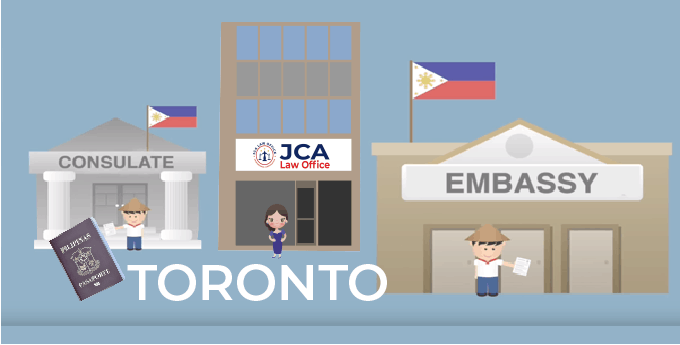
    This is where the authentication process comes in. The Philippine Consulates General in Canada (Philippine Consulate Toronto, Philippine Consulate Vancouver, and Philippine Consulate Calgary) and the Philippine Embassy in Ottawa act as the representative of the Philippine Government and administers various programs to serve Filipinos in Canada. Authentication of documents is one of the services they provide.


    What Legal Documents Need To Be Authenticated?

    Common documents for authentication are Affidavits, Special Powers of Attorney (SPAs), General Powers of Attorney (GPAs), Deeds, Contracts, and official documents issued by authorities in Canada. Contact the Philippine Embassy in Ottawa or any of the Philippine Consulate General near you or visit their website to get the latest information. Please be advised that restrictions due to COVID-19 may be in place.

    Make sure your documents are already prepared and ready for signing. Do not sign your documents unless you are instructed. You must sign in front of the officer. Please note that the Consulates or Embassy does not draft documents such as SPAs on behalf of applicants but they can provide a form that you can fill in.

    Related Guide: Apostille vs Consularization: Which Path for Your Philippine SPA? — Understand the key differences between the apostille and consularization processes and which one applies to your Special Power of Attorney.


    What Do I Need To Bring To The Philippine Consulate Or Embassy?

    Make sure that you have the following requirements prior to going to the Philippine Embassy or Philippine Consulate:

    • Document(s) such as Special Power of Attorney (SPA), Affidavit, Contract, Deed, or any legal papers you need to be notarized
    • 2 government-issued IDs such as a valid passport, driver’s license, Canadian citizenship card, permanent residence card, or Ontario photo ID; make sure that you have a photocopy with you since it will be used as an attachment to the document for authentication
    • Cash, bank draft, or money order (Debit/credit cards or personal cheques are NOT accepted)
    • “Personal appearance” of all signatories to the document
    • DO NOT SIGN YOUR DOCUMENT(S) UNLESS YOU ARE GIVEN INSTRUCTIONS

    Processing is done on a first-come, first-served basis. Since June 15, 2019, the Philippine Embassy or any of the Philippine Consulates in Canada no longer affixes “red satin ribbons” on its authenticated/notarized documents, pursuant to instructions from the Department of Foreign Affairs.

    Philippine Consulate Toronto

    Steps For Authentication Of Legal Documents At The Philippine Consulate Or Embassy

    Before the COVID-19 pandemic and the related government restrictions on mobility and in-person services, you can simply walk-in without an appointment and have your documents submitted for authentication at the Philippine Consulate or Embassy of your choice. You need to come back another day to pick up or have it mailed to you if you have a self-addressed mailing envelope from Canada Post (Xpresspost).

    It is important to note that person(s) executing the legal document(s) (SPA, Affidavit, General Powers of Attorney, etc.) for use in the Philippines must personally appear before a consular officer to acknowledge and sign the document. If for some reason, the said individual who executes the legal document is unable to personally appear, the following steps are needed to be done to have the document authenticated.

    5 Steps For Authentication Of Legal Documents For Use In The Philippines

    Step 1: Prepare your legal documents

    You can prepare them yourself, fill-in a template, or have them drafted by a professional.

    Step 2: Have the documents notarized

    Have them notarized by a duly commissioned and authorized commissioner of oath or notary public. Each province or territory may have different rules on who are authorized to notarize your document so make sure you go to the right professional.

    Step 3: Submit for certification of signature

    Submit the notarized document to the appropriate office (depending on the province or territory in Canada under which authority your documents were notarized) for certification of signature and authority of the lawyer or notary public.

    Provincial and Territorial Offices for Document Certification

    Alberta

    Deputy Provincial Secretary’s Office
    Room 111, Bowker Building
    9833 109 Street
    Edmonton, Alberta T5K 2E8

    British Columbia

    If the notary public is a lawyer:
    The Law Society of British Columbia
    845 Cambie Street
    Vancouver, BC V6B 4Z9

    If the notary public is not a lawyer:
    The Society of Notaries Public of British Columbia
    625 Howe Street, Suite 700
    Vancouver, BC V6C 2T6

    Ontario

    Official Documents Services
    Main Floor
    222 Jarvis Street
    Toronto Ontario M7A 0B6

    Global Affairs Canada
    Authentication Services Section (JLAC)
    125 Sussex Drive
    Ottawa, ON K1A 0G2

    Manitoba

    Commissioner for Oaths/Notary Public Office
    Room 1034 – 405 Broadway
    Winnipeg, MB R3C 3L6

    New Brunswick

    Justice and Office of the Attorney General
    PO Box 6000
    Fredericton, NB E3B 5H1

    Newfoundland and Labrador

    Confederation Building
    4th Floor, East Block
    P.O. Box 8700
    St. John’s, NL A1B 4J6

    Nova Scotia

    Department of Justice, Legal Services Division
    1690 Hollis Street
    Joseph Howe Building
    Halifax, NS B3J 1V7

    Prince Edward Island

    Justice and Public Safety
    Legal Services Section
    PO Box 2000
    95 Rochford St., 4th Fl. Shaw S.
    Charlottetown, PE C1A 7N8

    Saskatchewan

    Ministry of Justice and Attorney General
    Authentication Services
    800 – 1874 Scarth Street
    Regina SK S4P 4B3

    Northwest Territories

    1st Floor Stuart M. Hodgson Building
    5009 49th Street
    P.O. Box 1320
    Yellowknife, NT X1A 2L9

    Nunavut

    Nunavut Court of Justice
    P.O. Box 297
    Iqaluit NU X0A 0H0

    Yukon

    Societies Clerk, Corporate Affairs Territorial
    2130 2nd Ave.
    Whitehorse, YT Y1A 2C6

    Disclaimer: The information posted here is for reference only and subject to change without prior notice. Get up-to-date information by visiting their website.

    Note that in-person transactions usually have a much quicker turn-around time compared to mailed-in transactions. However, restrictions due to COVID-19 may be in place. Contact the office where you intend to have your documents authenticated for up-to-date information.

    Step 4: Submit to the Philippine Consulate or Embassy

    Submit your certified document and other requirements to the Philippine Consulate or Embassy which has consular jurisdiction over the province or territory you went to in Step 3 above. Contact them for up-to-date information.

    Philippine Consulate and Embassy Offices in Canada

    Philippine Consulate General Toronto
    7th Floor, 160 Eglinton Ave. East
    Toronto, Ontario, Canada M4P 3B5

    Philippine Consulate General Vancouver
    999 Canada Place, Suite 660
    Vancouver, BC V6C 3E1

    Philippine Consulate General Calgary
    Suite # 100, 1001 – 1st St. SE
    Calgary, AB, T2G 5G3

    Philippine Embassy
    30 Murray Street
    Ottawa ON K1N 5M4

    Step 5: Obtain your fully authenticated document

    Obtain your fully authenticated document and send it to your representative in the Philippines.


    How Can JCA Law Office Help You?

    If you don’t have time for a personal appearance at the consulate or find the authentication process to be tedious and stressful, worry not. JCA Law Office can do it on your behalf. Our friendly Filipino-Canadian lawyers and professional staff will take care of all your needs.

    JCA Law Office is a one-stop-shop for all your legal document needs going to the Philippines and have served thousands of happy clients since its foundation in 2016. Whether you require document preparation, notary, certification, authentication, and even courier services, we have all the services you need under one roof.

    You may book your appointment by calling us at 1-855-522-5290 or book it online:


    **Hague Apostille Convention is an international treaty drafted by the Hague Conference on Private International Law which came into effect in 1965. It governs the process through which a document issued in one country is legally certified for use in other countries. This treaty specifies that any signatory country can issue a certification called an “apostille”. A document that has been “apostilled” is legally certified for use in any country that has signed the Hague Apostille Convention.

    References:
    https://www.idocscanada.ca/hague-apostille-convention-canada/
    https://jcalaw.ca/learn-more-about-our-philippine-consulate-offices-in-canada/

    Follow us on our Social Media accounts:
    Facebook: @JCALawOffice | Instagram: @jcalawoffice | Twitter: @JCALawOffice

    Need Help With Document Authentication?

    JCA Law Office is your one-stop-shop for document preparation, notarization, certification, and authentication for use in the Philippines.

  • A Closer look at Philippine Consulate General in Toronto

    A Closer look at Philippine Consulate General in Toronto

    A Closer Look at Philippine Consulate General in Toronto

    A feature story about the PCG Toronto — its history, services, Consul General, and the Philippine government agencies under one roof.

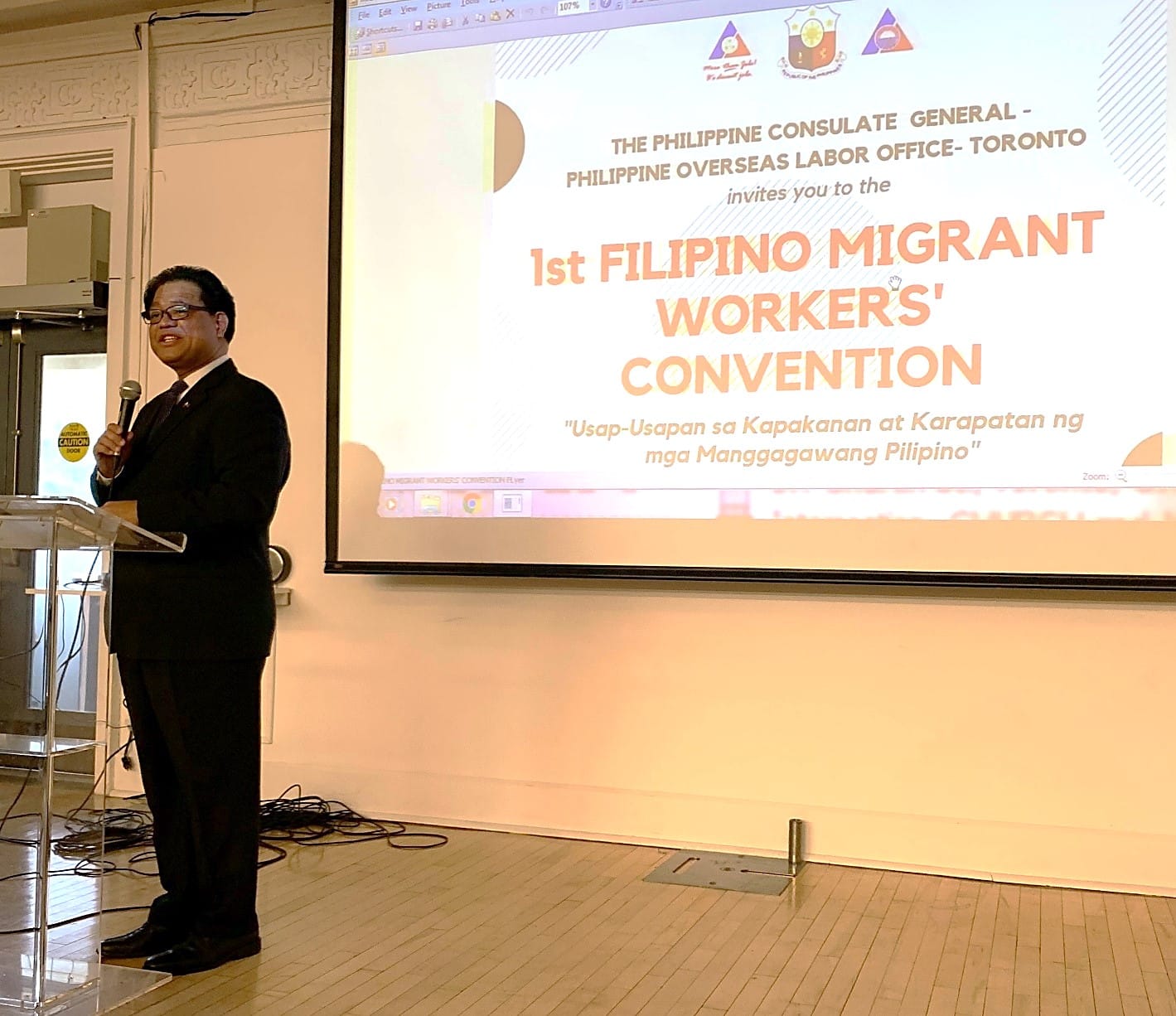
    1st Filipino Migrant Workers convention
    Photo Credit: Philippine Consulate Toronto

    Feature Story: Philippine Consulate General in Toronto

    Being away from our birth country has not always been easy. We get homesick a lot of times, and as Filipino-Canadians, we are always eager to learn more about the Philippines, our fellow kababayans, as well as the latest updates regarding the consulate office of the Philippines in Toronto. In order to provide more information to all our fellow Filipino Canadians, JCA LAW OFFICE have decided to create a feature story about the Philippine Consulate General (PCG) in Toronto, their history, the services they provide, information about our newly appointed Consul General and latest updates regarding the other Philippine government agencies located within the same premises.


    History of Philippine Consulate General (PCG) in Toronto

    The Philippine Consulate General in Toronto opened its doors to the public on September 5th, 1978 at 111 Avenue Road, Toronto under Principal Officer Leovegildo Anolin. After 10 years, in 1988, they moved to 151 Bloor Street West Suite 365, and in 2003 found their way at Eglinton Avenue East and transferred to Suite 800 of 161 Eglinton Avenue East. In 2014, PCG Toronto moved to its present office at 7th floor of 160 Eglinton Avenue East and has stayed in the premises since then.

    Hey Kuya! JCA Law Office
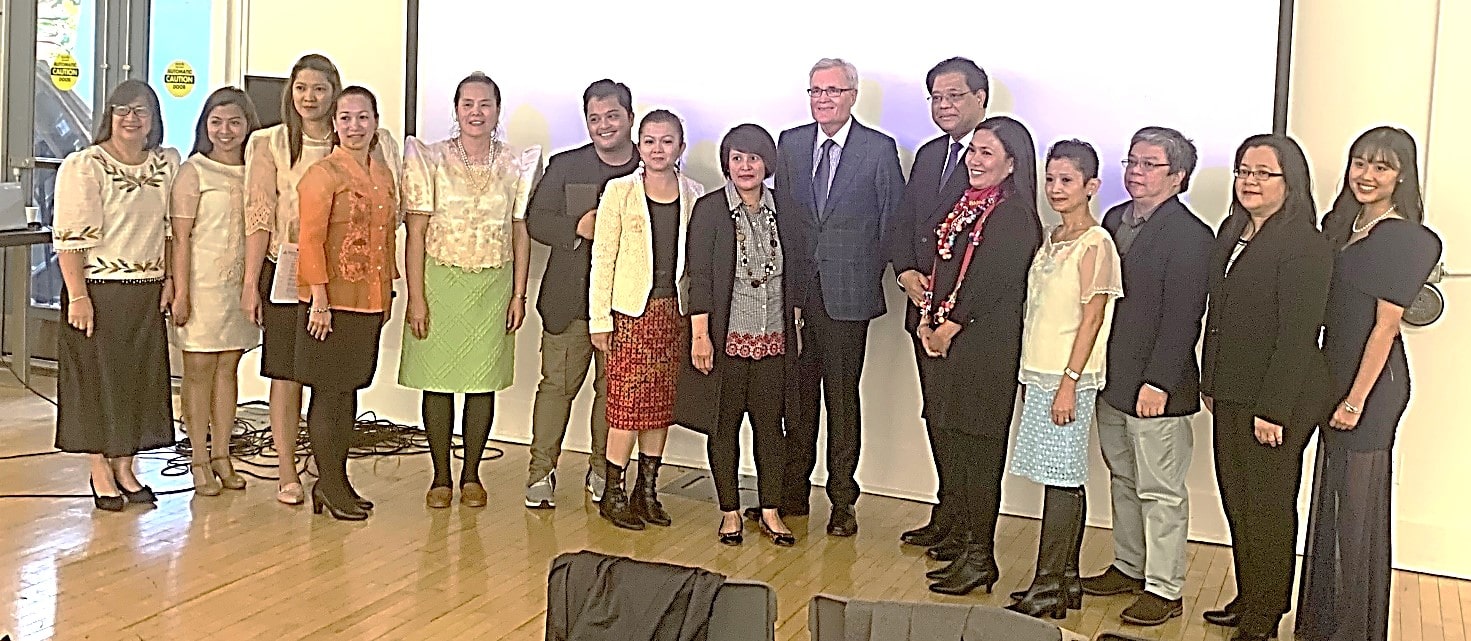
    Consulate staff and community partners
    Photo Credit: Philippine Consulate Toronto

    Orontes V Castro

    Getting to Know the Current Philippine Consul General

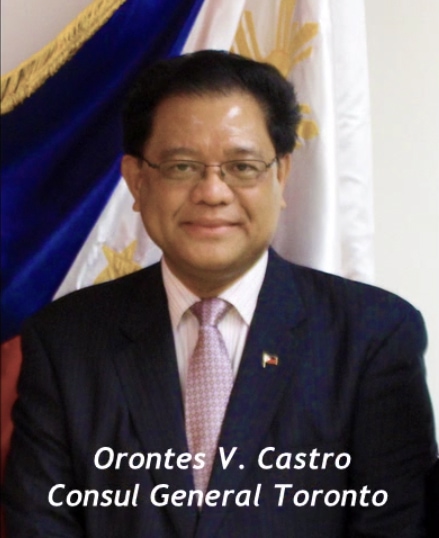
    The current Philippine Consul General is Hon. Orontes “Ron” V. Castro, who recently assumed his diplomatic post last September 17th, 2019, replacing Consul General Rosalita S. Prospero who passed away in May 2019.

    Consul General Castro was the Deputy Consul General at the Philippine Consulate in Chicago from 2007 to 2013. Prior to that, he served as Vice Consul and eventually appointed as the Consul at the Philippine Consulate General in New York from 2000 to 2003. His first foreign assignment was as Third Secretary and Vice Consul at the Philippine Embassy in Beirut, Lebanon from 1996 to 2000.

    Prior to being a diplomat, Consul General Castro worked as an auditor for Sycip, Gorres & Velayo (SGV) right after university and passing the Certified Public Accountant (CPA) Board Exams. He also worked for several years as Division Chief of the accounting department of Philippine International Trading Corp (PITC), the Philippine government’s state trading firm, as well as an accountant lecturer at the Philippine School of Business Administration (PSBA).

    He was born in San Fernando, Pampanga and graduated as Cum Laude with a degree in Business Administration major in Accounting at University of the East in 1983. Consul General Castro recently received his Masters in Business Administration (MBA) with Cum Laude honors at the Graduate School of University of Santo Tomas last June 8th, 2019. He also completed some units in taxation and business law from the Indiana University.

    Fluent in Filipino, English, and French, Consul General Castro is honored to be assigned in Toronto and wants to continue and enhance the cultural and heritage projects of the late Consul General Rosalita Prospero who also happens to be his close friend. You may get in touch with Consul General Ron Castro at consul.general@philcongen-toronto.com.


    Consular Services Available at the PCG Office in Toronto

    • Issuance of Passport
    • Issuance of Visa
    • Notarial and other Legal Services
    • Report of marriage, birth, death, and shipment of remains/urn
    • Registration of Nationals
    • Application for Travel Document

    For more information about the most common services that PCG is providing, you may check out our previous article regarding the Consulate Offices in Canada.

    Payment of Fees

    The Consulate ONLY accepts Cash, Bank Draft, Money Orders or Certified Cheques (No Debit or Credit Card).


    Office Hours & Holiday Schedule

    Regular Hours: Monday to Friday, 9:00 AM to 4:00 PM (No lunch break)

    Saturday Hours: Every 1st Saturday of the month, 9:00 AM to 12:00 PM. Kindly take note that there will be many applicants on Saturdays. Clients are advised to prepare for a long waiting period.

    Philippine Holidays (PCG Closed)

    New Year’s Day – January 1
    Araw ng Kagitingan – April 9
    Maundy Thursday – April 18
    Good Friday – April 19
    Labor Day – May 1
    Philippine Mid-term Election – May 13
    Independence Day – June 12
    National Heroes Day – August 26
    Additional Special Non-Working Day – December 24
    Christmas Day – December 25
    Rizal Day – December 30
    Last Day of the Year – December 31

    Canadian Statutory Holidays (PCG Closed)

    Family Day – February
    Easter Monday – April
    Victoria Day – May
    Canada Day – July 1
    Civic Holiday – August
    Labour Day – September
    Thanksgiving Day – October
    Remembrance Day – November 11
    Boxing Day – December 26


    PCG Toronto Office Address

    Philippine Consulate General
    7th Floor, 160 Eglinton Ave. East
    Toronto, Ontario, Canada M4P 3B5
    Tel: (416) 922.7181
    Fax: (416) 922.2638
    Email: consularmatters@philcongen-toronto.com


    Other Philippine Government Agencies at 160 Eglinton Ave. East

    Philippine Overseas Labor Office (POLO) – Toronto

    2nd Floor, 160 Eglinton Ave. East, Toronto, Ontario M4P 3B5
    Tel: (416) 975.8252 | Fax: (416) 975.8277
    Email: polotrt@bellnet.ca | polotoronto.2019@gmail.com

    The Overseas Workers Welfare Administration (OWWA) is tasked with ensuring the Filipino workers’ welfare by documenting and processing contracts when they leave the Philippines and work abroad. OWWA offers a two-year membership for a US$25 contribution chargeable to the employer even if the employment contract is for one year. Membership can be renewed if the necessary documents are provided, which includes the work permit, contract, visa, and passport. Last year, the agency allowed the voluntary membership of permanent residents. Benefits include death benefits, repatriation, educational benefits for dependents in the Philippines and other services listed on the website https://www.owwa.gov.ph/

    Every first Saturday of the month, the POLO office conducts a mandatory Post Arrival Orientation Seminar and networking session for newly landed workers and settlement workers. For information on services and upcoming seminars call 416-975-8252 or email POLO at polotoronto.2019@gmail.com or polotrt@bellnet.ca. Workers may also send their questions about overseas exit clearances at polotrt@bellnet.ca.

    Services for Filipino Workers
    • OEC issuance (Overseas Employment Certificate)
    • Help for abused workers: withheld passport or belongings, harassment, hostile or unsafe work environment
    • Assistance regarding labor issues: unpaid wages, illegal termination, illegal deductions
    • Clarifying Canadian employment laws
    • Work permit renewal assistance
    • OWWA membership renewals
    • Free skills training
    • Free informational seminars
    • Connecting workers to free government-funded resources
    Services for Canadian Employers
    • Application for Temporary Foreign Worker (approval needed by the Philippine government)
    • Clarifying Philippine laws and regulations, especially the Labor Code
    • Help with temporary Filipino workers who violate their employment contract
    • Clarifying POLO’s role in Provincial Nomination Program regulations
    • Assistance regarding cases of illegal recruiters, illegal agencies, and non-licensed immigration consultants

    Social Security System (SSS)

    2nd Floor, 160 Eglinton Ave. East, Toronto, Ontario M4P 3B5
    Tel: (416) 485.2999 | (416) 485.2888
    Fax: (416) 485.2881
    SSS Toronto Representative: Roberto V. Roldan
    Email: roldanrv@sss.gov.ph

    Good news to all our fellow Pinoys especially those living in the GTA, there is no need to travel to PCG in Toronto to update your contributions since you can now go online (www.sss.gov.ph) or download the SSS mobile app in your phone. Also, kindly take note that dual citizenship is not a requirement to avail of your pension. Everyone who has ever worked for an employer in the Philippines and paid their contributions to SSS even for a short period of time (as short as one month), is entitled to claim benefits.

    Aside from the regular SSS coverage program, the SSS Flexi-fund is available exclusively to OFWs who would like to contribute more. For more information, you may visit the SSS Toronto office at 2nd Floor, 160 Eglinton Ave. East, Toronto, Ontario M4P 3B5. Weekday office hours are from 9:00 am to 4:00 pm and closed during Canadian and Philippine holidays. For any inquiries please send an email to SSS Toronto representative Roberto “Bobby” Roldan at roldanrv@sss.gov.ph.

    Pag-IBIG Fund

    Representative: Ms. Elizabeth V. Borres, Member Services Officer – Canada
    Tel: (647) 642-3694
    Email: pagibigcanada@gmail.com

    The latest reports say that 90% of members who migrated to Canada are not aware that their PAG-IBIG savings have grown while they were away. Pag-IBIG is searching for many members who have yet to claim their funds. The list of names is on their website at https://www.pagibigfund.gov.ph/

    Additionally, members whose contributions were restricted to a certain amount when they were working in the Philippines are now allowed to contribute more. The Pag-IBIG’s website is capable of processing online membership registration and can accept payments for membership dues using Mastercard and Visa credit. Tracking of a member’s savings is also possible via the site’s online verification system. You may visit their website for more information.


    JCA Law Office

    JCA LAW OFFICE provides assistance regarding your NBI Process Renewal and application, notarization and authentication of your SPA, POA and other legal documents, as well as your application for marriage, birth and death certificates.

    Address: 168B Eglinton Ave East, Toronto, ON M4P 1A6
    Hours: Mon–Fri 9AM–6PM | Sat 9AM–2PM | Closed Sun & Canadian Holidays
    Call: 1-855-522-5290 | Text: 1-647-367-1634
    Email: info@filipinolawyer.ca

    Disclaimer: Please take note that JCA LAW OFFICE is not affiliated in any way with the Philippine Consulate Office. You always have a choice where to get and apply for your NBI clearance and notarization or authentication of your legal documents.


    References

    Need Help?

    Send us a direct message on Facebook Messenger, and we’ll tell you how we can help, or give us a call at 1-855-522-5290